




Jesse Bloom PRO
Scientist studying evolution of proteins and viruses.
Fred Hutch Cancer Center / HHMI
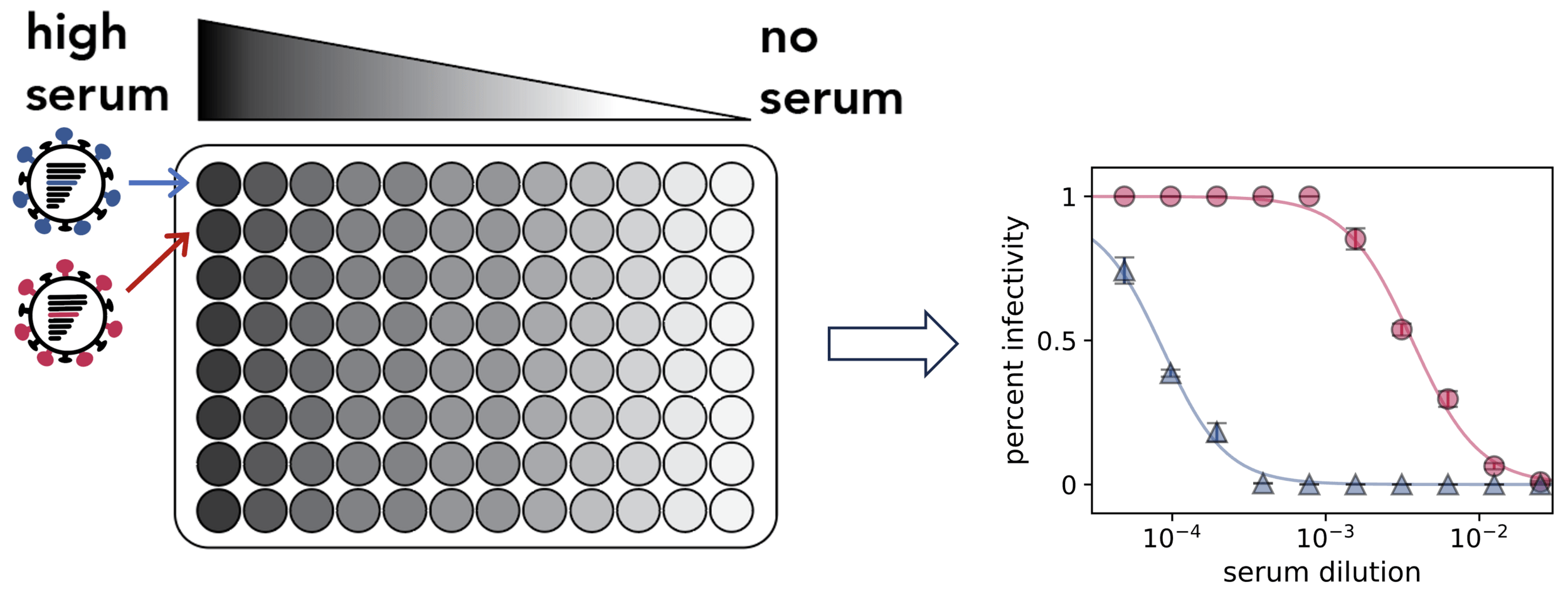
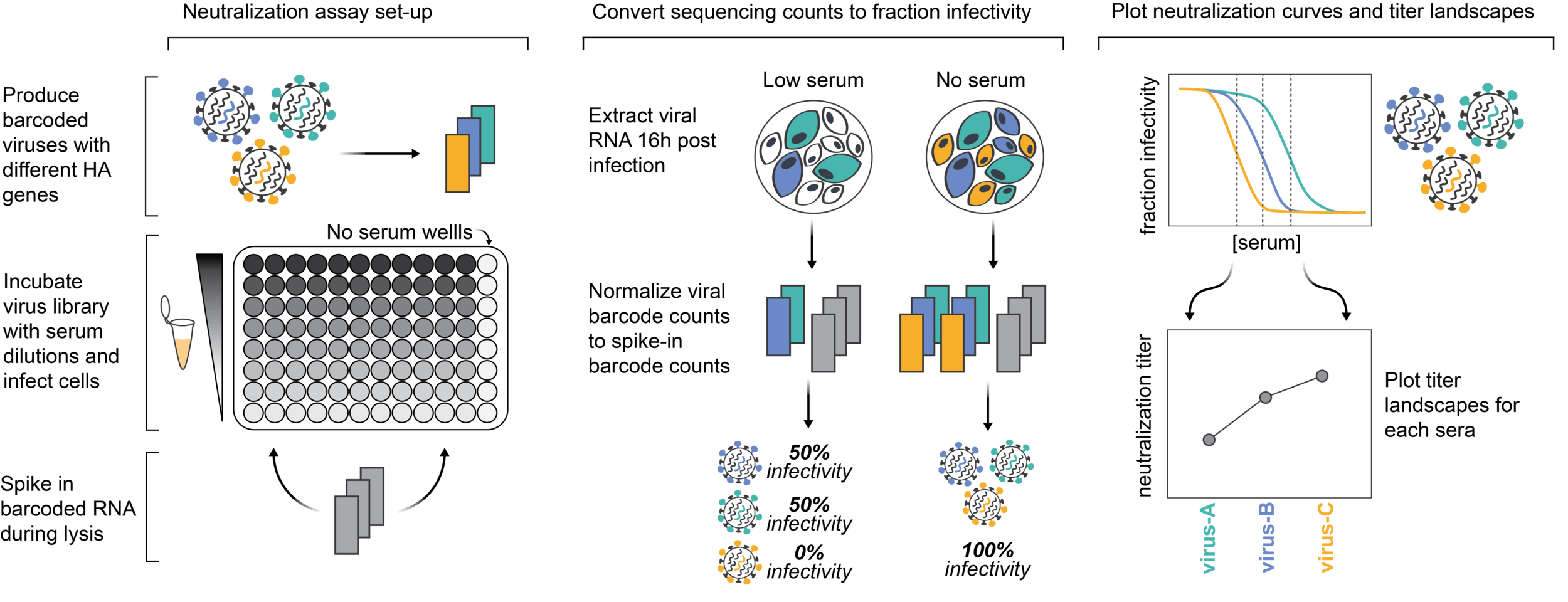
1) Sequencing-based neutralization assays to rapidly measure how human serum antibodies neutralize many viral strains.
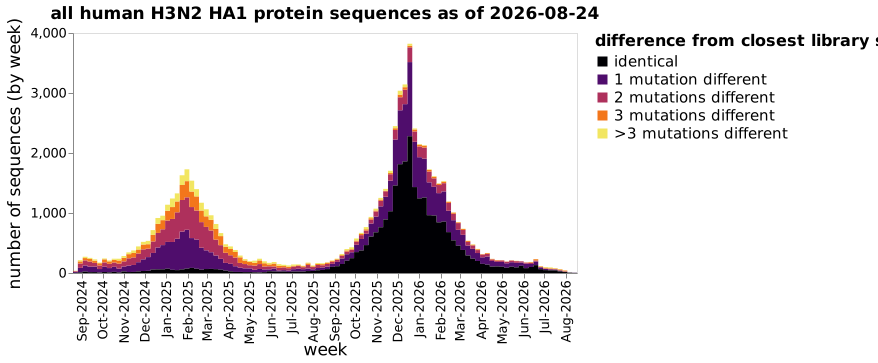
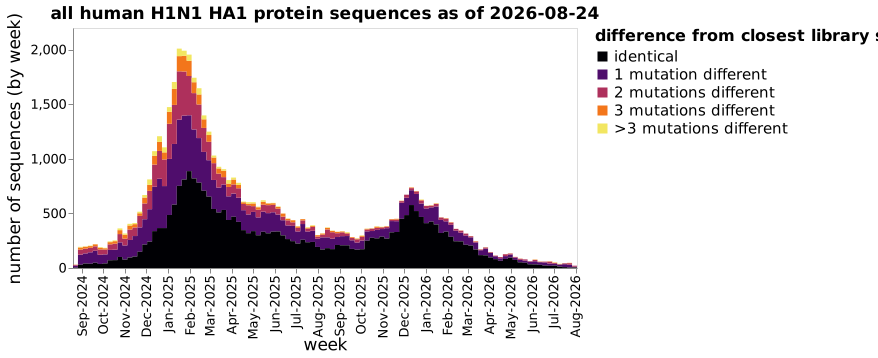
2) Near real-time data on the current human neutralizing antibody landscape.
fraction infectivity
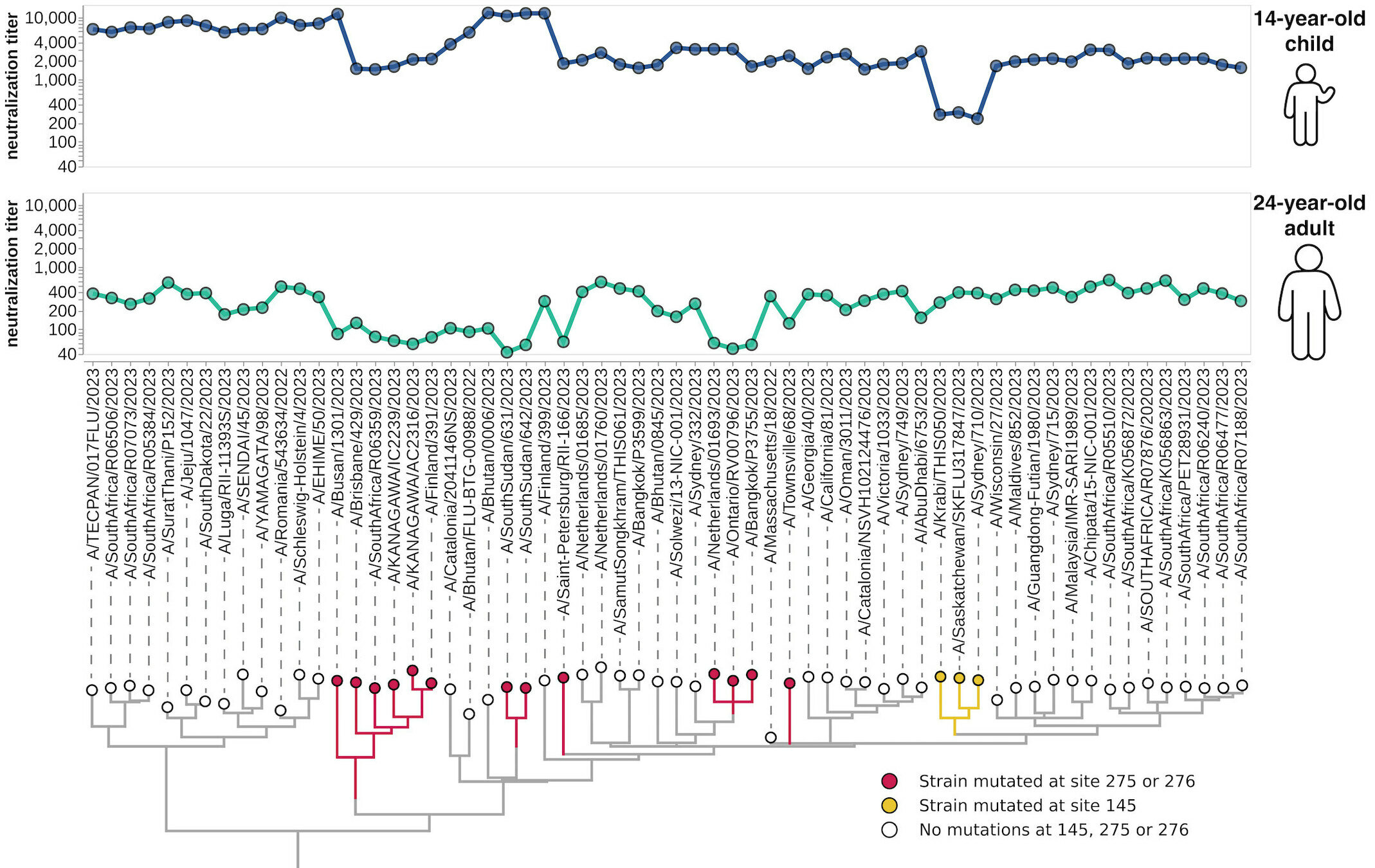
different recent H3N2 viral strains
child has low titers to these strains
different recent H3N2 viral strains
child has low titers to these strains
adult has low titers to these strains
All data openly shared as it is collected, so anyone can analyze it to inform vaccine-strain selection and advance public health.
Currently generating data for A/H3N2 and A/H1N1; hope to expand to influenza B.
Data shared so far:
I will discuss latest data, much of which was generated in last month
Human sera collected between April and June of 2026:
Lowest titers are to subclade K variants with mutation at sites 222 or 223.
See also:
Mutations at these sites likely erode residual antibodies not already escaped by earlier subclade K mutations; see Liu et al (2026).
Most D.3.1.1 strains have lower titers than current D.3.1 vaccine.
Titers lowest to strains with G155E.
See also:
Sequencing-based neutralization assays can measure the neutralization of recent strains by current human antibodies in near real time.
We are generating and sharing large datasets twice per year.
Current data suggests:
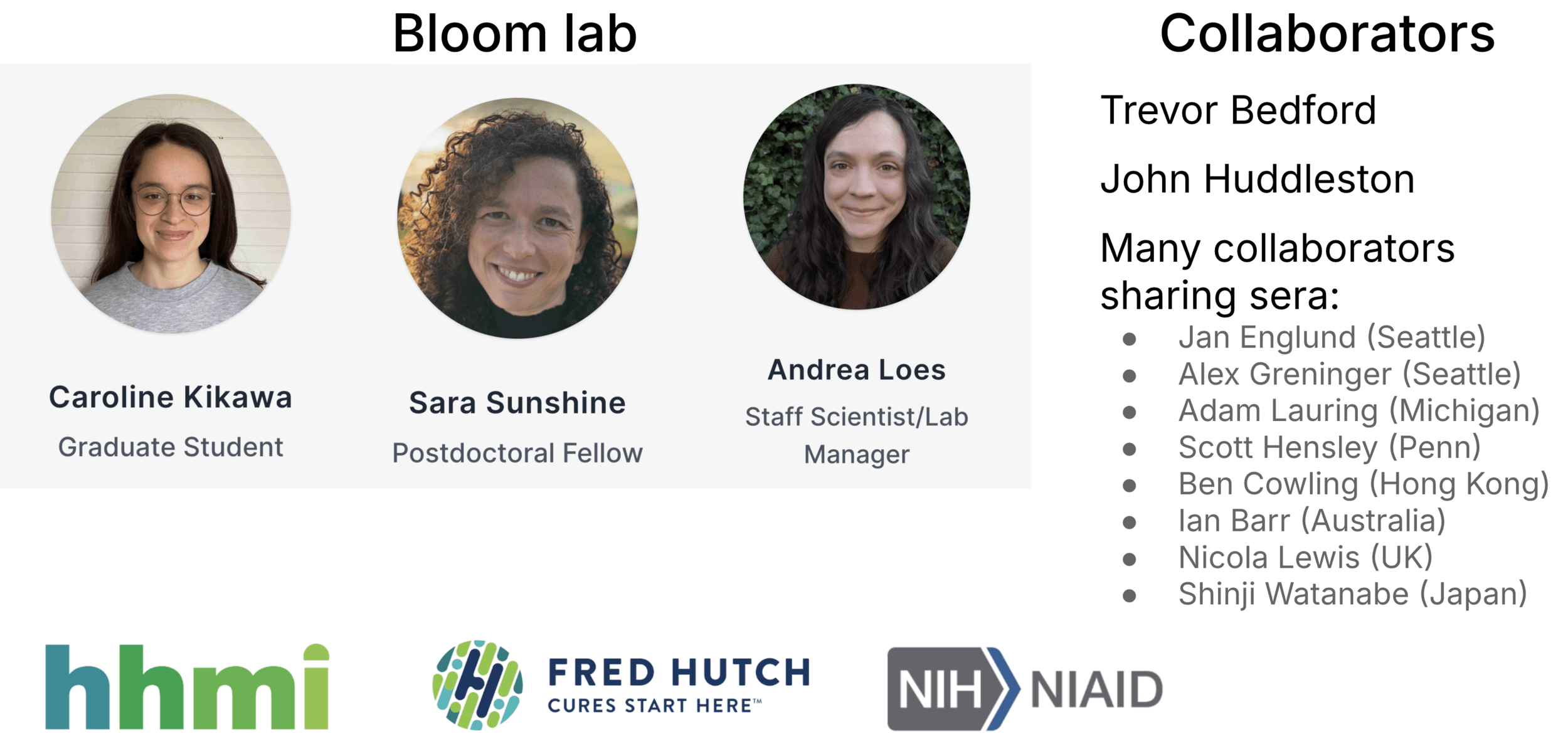
Fred Hutch / Seattle Childrens: Trevor Bedford, Janet Englund, Kirsten Lacombe
University of Washington: Alex Greninger
Penn: Scott Hensley, Jiaojiao Liu, Sydney Gang, Elizabeth Drapeau, Tachianna Griffiths
Cambridge: Sam Turner, Derek Smith
Basel: Richard Neher
EPI-HK: Ben Cowling, Nancy Leung, Faith Ho
NIID Japan: Shinji Watanabe, Hideki Hasegawa
CTS / UCSF: Michael Busch, Marion Lanteri, Mars Stone, Bryan Spencer
By Jesse Bloom
Near-real time mapping of the human neutralizing antibody landscape to influenza to inform vaccine selection