Remote psychology teaching
Matt Jarvis C.Psychol, AFBPsS, CMALT
July 2021 University of Sussex
Aims of the talk
- NOT to tell you how to do it, more to get you thinking
- To showcase some good practice and offer some tips
- To consider the balance between generic and subject-specific apps
- To consider the balance between synchronous and asynchronous teaching & learning
- To apply some psychology to understanding effective remote teaching strategies
Critical concepts 1
Synchronous vs asynchronous

Synchronous = real time

Most teachers report they are working longer hours in lockdown
Critical concepts 1
Synchronous vs asynchronous
asynchronous = not real time i.e. independent learning
Critical concepts 1
Synchronous vs asynchronous
| strengths | limitations | |
|---|---|---|
| synchronous | > a dynamic, engaging experience > meets social needs > real-time assessment > real-time clarification |
> risks becoming didactic > very tiring for teacher > inefficient use of preparation time > lack of clarity over best practice > cognitive mislabelling of relief at getting the tech to work as satisfaction with the lesson quality! |
| asynchronous | > repeated tasks or lessons > suits introverts / ASD > student self-timetabling > tasks & sequences easily recyclable next year |
> students prefer synchronous > delay in assessment & clarification > adaptivity requires careful planning > limited space for reflection |
Synchronous teaching is a DfE requirement, but no-one said a live lesson should only contain synchronous comms and tasks
The psychology bit
Effective learning is likely to be:
active - involves deep information processing OR repeated low cognitive load processing
interactive - guided through a zone of proximal development
salient - involves content that is inherently interesting, self-relevant or otherwise engaging
differentiated by individual need and current expertise - i.e. the expertise reversal effect
synchronous asynchronous
The psychology bit 2
JJ Gibson's concept of affordances
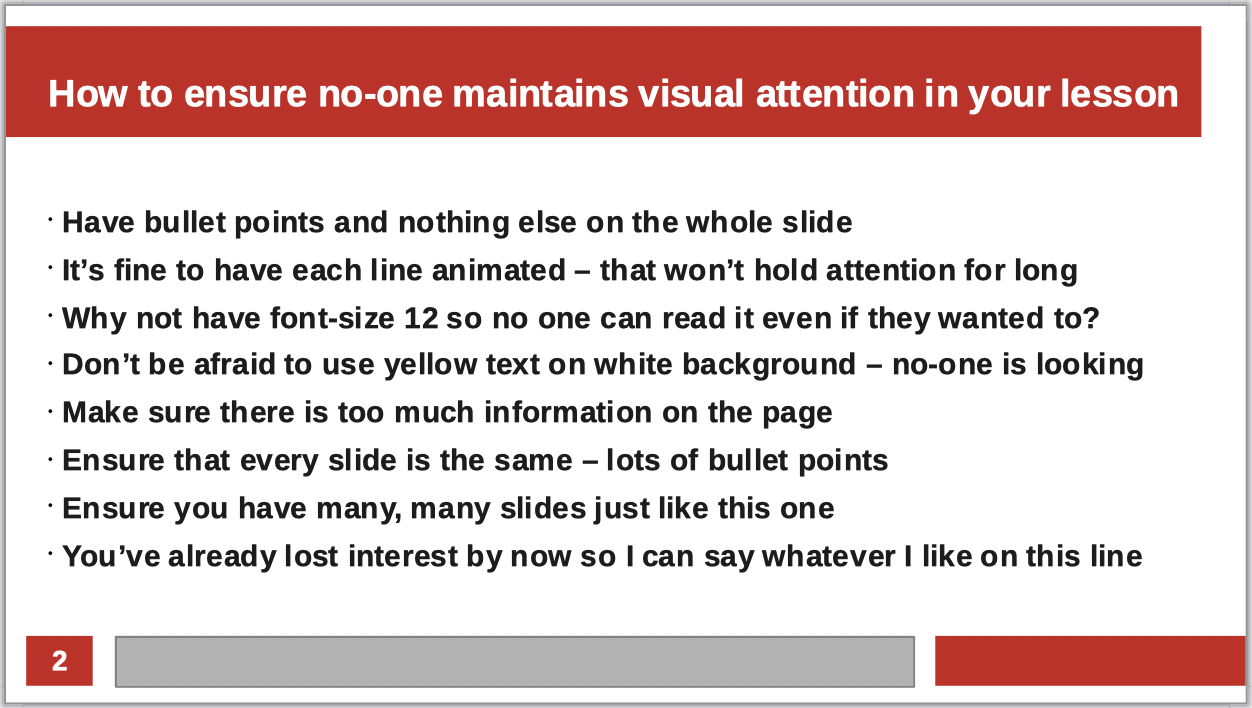
Everything we look at contains rich visual information that gives us clues what purposes an object or situation has and how to use it

The psychology bit 2
JJ Gibson's concept of affordances
The same thing applies to remote teaching tools
Teams & Meet look like tools for speaking to people. So that's what we do.... and overdo. We tend to talk too much in remote teaching.
The policy bit
It is generally agreed that the current emphasis on digital education will have a lasting impact on teaching and learning.
BUT that may not be mostly remote digital education.

Currently assuming that teaching will return to pre-Covid styles
The policy bit
There will definitely be exceptions



BUT in general preparing asynchronous resources and activities will be a more efficient use of your time
I suggest that many of us are focusing too much on synchronous tasks. This is exhausting for teachers in the short term and much of the preparation will be wasted after lockdowns...
Critical concepts 2
Subject-specific vs generic
Critical concepts 2
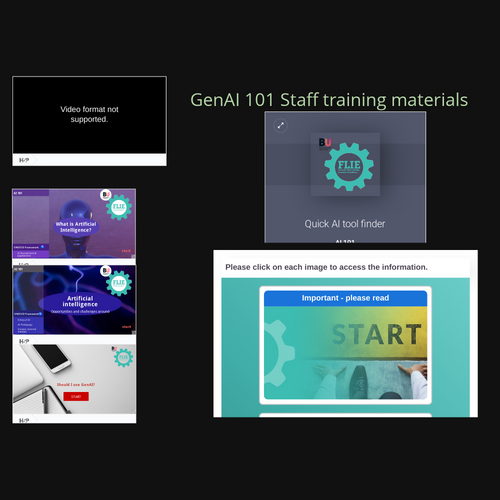
You can make active-learning resources with common technology
Critical concepts 2
and with less familiar but free technology
Critical concepts 3
The remote teaching technology itself

most popular with students
best security
best integrations
Best features
Some practical tips & lessons learned
The Zoom honeymoon i.e. the novelty of synchronous teaching apps will pass
Different tools have slightly different capabilities and limitations. Use that to your advantage and think outside the box
In the excitement around generic apps, remember there is a place for subject-specific tools
Develop practice that will be sustainable after Covid and for extended lockdowns
Above all else remember the psychology of what makes learning effective still applies to remote teaching
deck
By Matt Jarvis