10 minute learns
FutureWeb:
Progressive Web Apps, WebAssembly
& More
Progressive Web Apps (PWA's)

What & !What
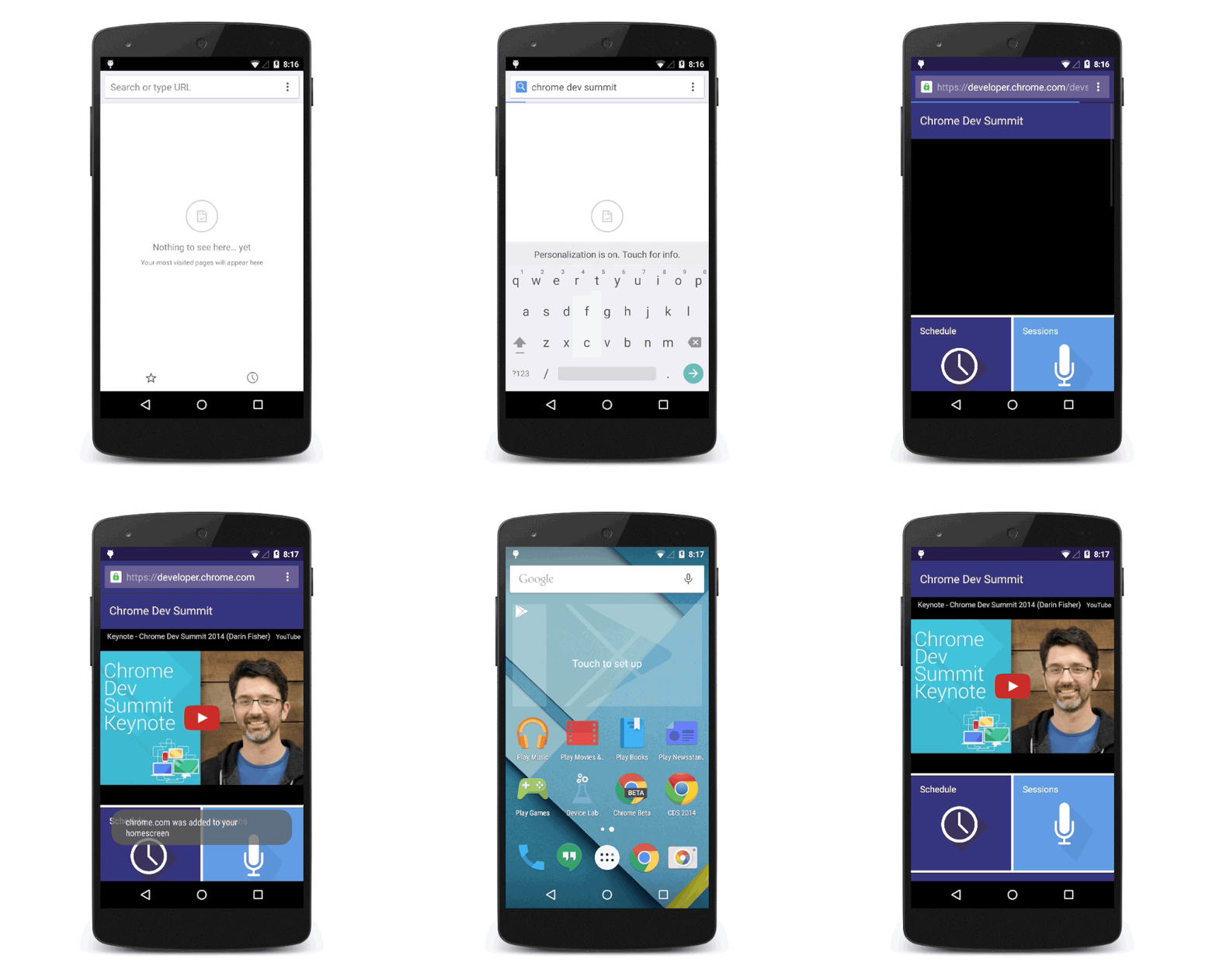
- 🌴 Deliver a native-like experience directly via the browser on all platforms (support for modern browsers and OS versions)
- 🎁 Let's you treat and deliver your website like a native app, right to users home screens + desktops
- 📸 Utilise hooks into platform + hardware e.g., biometrics, cameras
- 👫 Not a replacement for mobile development frameworks (yet) such as Ionic + React-Native, for now they are supplementary / independent
- 🔫 Not a silver bullet to replace rich native mobile experiences (yet), platforms will always have new features available to themselves first
Why
- UX: Deliver a better, faster and more reliable user experience
- SEO: Google favours PWA enabled websites
- Secure: HTTPS only
- Multithreading: Offload expensive tasks to service workers i.e., re-engage with desktop push notifications
- Fast and reliable: hand off browser cache control, offline support, unlimited (😅) storage capabilities
- DRY: Write once (literally), deploy anywhere. Microsoft will be the first marketplace to accept all PWA's in their app store with Google hinting they will follow. Your move Apple.
- Support: Any browser and any device
How
- Add a service-worker.js file to your application
- Include service-worker.js file in your index.html
-
Voila!
Take it to the next level with Google Workbox, a tool which you can add to your webpack build process which gives you all of the basic benefits out of the...workbox...with very little effort
Demo
Starbucks:
Resources
-
Service Workers Cookbook
https://serviceworke.rs/ -
PWA examples
https://pwa.rocks/ -
Google Workbox
https://developers.google.com/web/tools/workbox/guides/get-started -
Getting started w/Cleveroad
https://www.cleveroad.com/blog/how-to-build-a-progressive-web-app-best-tools-and-examples
WebAssembly
What & !What
-
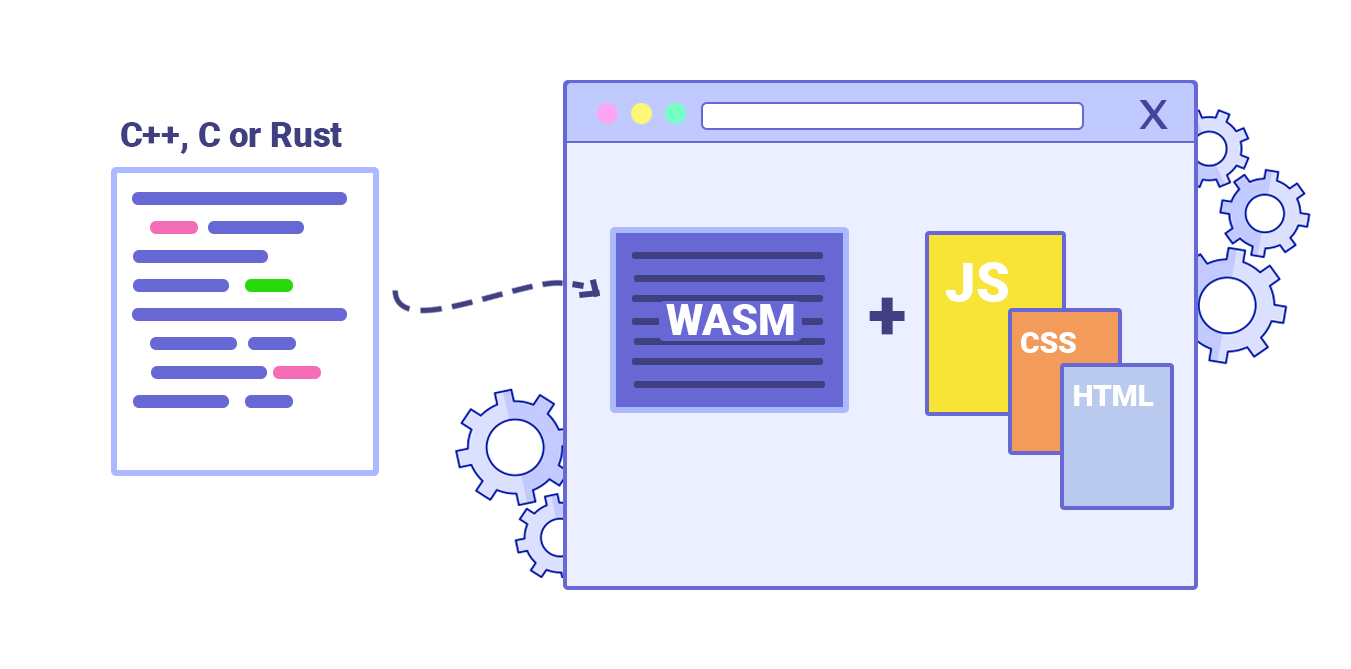
⚙️ New type of code that can be run in browsers, which traditionally only supported JavaScript
-
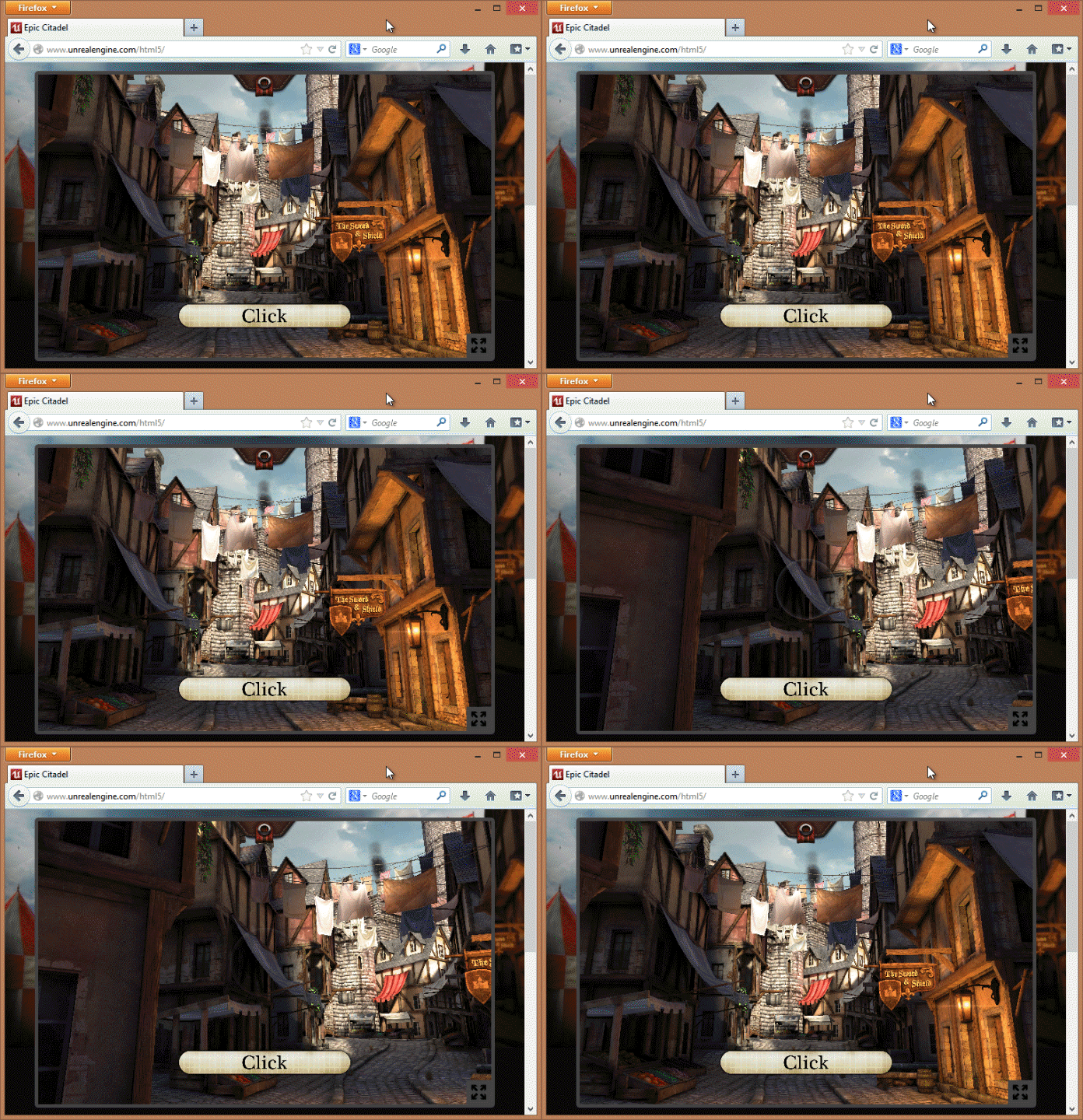
Write in higher level languages e.g., C, C++, Rust and compile to WebAssembly bytecode, which is then run on the client (browser) where it is translated to native machine code and executed at high speed
Why
-
Gives ability to perform highly expensive computational procedures, such as 3D rendering and artificial intelligence algorithms, in realtime all in a browser
How
- Write: Write something in C, C++, or Rust
- Compile: Compile it into WebAssembly, giving you a binary .wasm file
- Include: Get that .wasm file into a project
- Instantiate: Write a bunch of asynchronous JavaScript that will compile the .wasm binary and instantiate it into something that JS can play nicely with.
Demo
Zen Garden (Mozilla): https://s3.amazonaws.com/mozilla-games/ZenGarden/EpicZenGarden.html
Resources
- Getting started with WebAssembly: https://medium.freecodecamp.org/get-started-with-webassembly-using-only-14-lines-of-javascript-b37b6aaca1e4
& More: WebAuthn
-
Access superior hardware security, such as mobile device biometrics, to authenticate your users in browsers
Demo & Resources
- W3C Demo:
https://webauthn.org/ - Google Sample code:
https://github.com/google/webauthndemo
& More: MediaSource()
-
Perform media streaming, such as live video chats, seamlessly in the browser via JavaScript
Demo & Resources
FutureWeb: Progressive Web Apps & More
By Matt Rowles
FutureWeb: Progressive Web Apps & More
What does the next few years of building web apps look like? Progressive Web Apps, Service Workers, Web Assembly, and more have overpowered web apps to the point where they are challenging native iOS and Android apps.