Web Development Training
Accelerated
About me
Damian Sosnowski
working as a UI Architect @GFT Poland in Poznań

JavaScript developer for 5 - 6 years.
I've worked with multiple frameworks like: jQuery, Backbone, ExtJS, Sencha Touch, Angular...
About me
Now working mostly in Angular (2.x - 4.x), creating enterprise SPA.
Head of the Digital Family (UX and UI development)
- Multiple internal trainings at GFT
- External trainings for other companies and communities
- Trainings and workshops performed for GFT Clients, including Barclays: London, Prague, Kiev
- Lectures on the University in Poznań
Trainings
Your turn!
Tell me about yourself.
Let's start with a...
test! :)
https://github.com/sosnowski/trainings
JavaScript Quiz
./tasks/basics/quiz
Run test.html to check results, edit quiz.js to provide the solution
Map Array
./tasks/basics/map_array
Run test.html to check results, edit code.js to provide the solution
Event Emitter
./tasks/basics/event_emitter
Run test.html to check results, edit ee.js to provide the solution
BMI Counter
./tasks/basics/dom_bmi
Run index.html to check results, edit app.js to provide the solution
JavaScript
Language of the web
JavaScript:
- It's not Java! ;)
- Dynamic, scripting language
- No strict typing
- First-class functions
- Object Oriented (but users prototypes)
Variables
//Variables declaration

var a = 2;
var s = "hello!";

var b = 3, c = 'test', d;

gl = 'this is global variable'; //no "var"! Always creates global variable
Scope
var a = 2; // global
function test () {
    var b = 3; // local
    var a = 4; //local
};

console.log(a); // 2
Functional scope
function test () {
    if (true) {
        var b = 3;
    }
    var a = 2;
    console.log(a); // 2
    console.log(b); // 3
};
function test () {
var a, b;
if (true) {
b = 3;
}
a = 2;
console.log(a); // 2
console.log(b); // 3
};Ecma Script 6 / TypeScript
let a = 2; //block scope!

function test () {
    if (true) {
        let b = 3;
    }
    let a = 2;
    console.log(a); // 2
    console.log(b); // undefined
};
Types in JavaScript
var a = 12; //Number
var b = 1.234; //Number
var c = "some string"; //String
var d = true; //Boolean
var e = null; //null
var f; // undefined
var g = undefined;
var h = 2 * "duck"; //NaN
typeof 12; // "number"
typeof "12"; // "string"
typeof "smth"; // "string"
typeof true; // "boolean"
typeof undefined; // "undefined"Be careful
typeof null; // .... "object"
typeof NaN; // "number"
Operators
a = 2 + 2;
a = 2 - 2;
a = 2 * 2;
a = 2 / 2;
a += 2;
a -= 2;


//Be careful with strings

a = "test" + "smt"; //testsmth
a = "test" + 2; "test2"
a = "3" - 2;
a = "duck" - 5;
a = + "3" + 2;
Operators
2 == 2; // true
"test" == "test"; //true

"2" == 2; // true
0 == ""; // true
0 == false; // true
2 === 2; // true
"2" === 2; // false
0 === false; // false
false === false; // true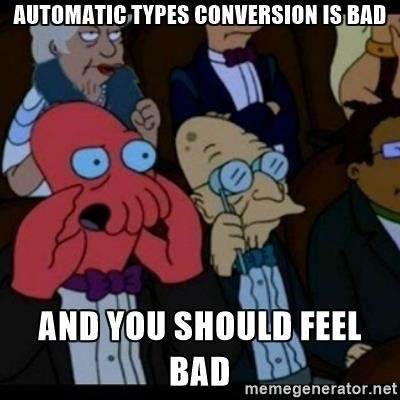
0 == +[]; // trueLogical operators
//for boolean values
false || true || false // true
true && false // false
true && true // true
//can be used with other values as well
false || 0 || "" || "hello" || 23 // "hello"
{} && "false" && 0 // 0!true; //false
!!true; //true
!"something"; // true
!!0; //falseFalsy values
false, 0, null, undefined, "", NaN;Arrays
var arr = [];
var arr2 = [1, 2, "tet", null, []];
arr.push("test");

arr.length; // 1;
Objects
var obj = {};
var obj2 = {
    key: 'value',
    smth: [],
    method: function () {}
};
obj.foo = 'bar';
obj2.key; // value;
obj2['key'] // value;
var key = 'smth';
obj2[key]; // []Functions
Declaring a function
function funcName() {
    //function declaration
}

var func = function () {
    //function expression
}

(function () {
    //IIFE
}())
funcName();
func();Returning values
var sum = function (arg1, arg2) {
  return arg1 + arg2;
};

sum(5, 4); // 9
Arguments
var sumAll = function () {
  var sum = 0;
  for (var i = 0; i < arguments.length; i++) {
      sum += arguments[i];
  }
  return sum;
};
Functions in ES6
var sum = (arg1, arg2) => {
    return arg1 + arg2;
};
Arguments in ES6
let sumAll = (...args) => {
    return args.reduce((start, number) => {
        return start + number;
    }, 0);
};

let res = sumAll(1, 2, 3, 4, 5);
console.log(res);
Closure
var times = function (t) {
   return function (number) {
     return t * number;
  };
};

var timesTwo = times(2);
timesTwo(5); // 10
timesTwo(4); //8
var addListener = function (eventName, listener) {
//...
collectionOfListeners.add(eventName, listener);
//...
return function () {
collectionOfListeners.remove(eventName, listener);
}
};
//register listener
var removeListener = addListener('click', someFunction);
//when you don't want to listen for events anymore, you can remove the listener
//Thanks to closue, you don't have to provide any arguments
removeListener();Function context
var obj = {
    method: function () {
        console.log(this);
    }
}
obj.method(); // obj
var func = function () {
console.log(this);
};
func(); // window (global object);Context is dynamic
obj.method(); // obj
var func = obj.method;

func(); // window
var obj = {
method: function () {
console.log(this);
(function () {
console.log(this);
}());
}
}
obj.method(); // obj; window;Every function has its own context
Context can be modified
var obj = {}, func = function () {
    console.log(this);
};

func(); // window
func.apply(obj); //obj
func.call(obj); //obj

func(); //window
var func2 = func.bind(obj);
func2(); // obj
func2(); // obj
// but
func(); //globalContext in ES6
function Person(){
  this.age = 0;

  setInterval(() => {
    this.age++; // |this| properly refers to the person object
  }, 1000);
}

var p = new Person();
function Person(){
this.age = 0;
setInterval((function () {
this.age++; // |this| properly refers to the person object
}).bind(this), 1000);
}
var p = new Person();translated to ES5
Object Oriented JavaScript
The story about prototypes
Objects in JS are simple
var obj = {};
obj.name = 'Jack';
obj.sayHello = function () {
return 'Hi, ' + this.name;
};
obj.sayHello(); // Hi, Jackvar obj = {
name: 'Jack',
sayHello: function () {
return 'Hi, ' + this.name;
}
};But inheritance is confusing
PROTOTYPES
Create object with a prototype
var Person = {
    sayHello: function () {
        return 'Hi ' + this.name + '!';
    }
};
var obj = Object.create(Person);
obj.name = 'Damian';
var obj2 = Object.create(Person);
obj2.name = 'Zdzichu';
obj.sayHello(); // Hi Damian!
obj2.sayHello(); // Hi Zdzichu!obj !== obj2
obj.sayHello === obj2.sayHelloInheritance - no classes
var Dog = {
    run: function () {
        return 'I run!';
    },
    bark: function () {
        return 'Hau! Hau!';
    }
};

var dog = Object.create(Dog);
dog.bark(); // Hau! Hau!
var SmallDogProto = Object.create(Dog);
SmallDogProto.bark = function () {
return 'pi pi pi';
}var smallDog = Object.create(SmallDogProto);
smallDog.run(); // I run!
smallDog.bark(); // Pi pi piInheritance = prototype chain
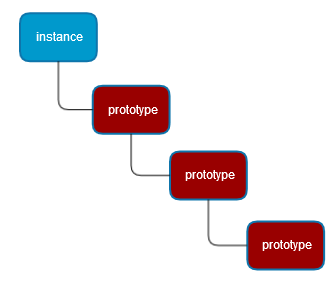
Prototype and multiple instances
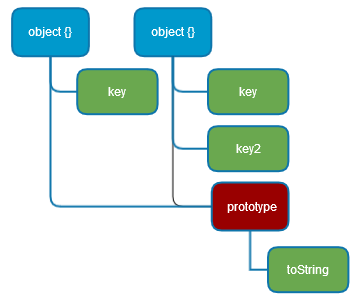
Where is prototype?
obj.prototype; // NO!
obj.__proto__;
Object.getPrototypeOf(obj);

obj.hasOwnProperty(prop)
Classes
var arr = new Array();
var obj = new Object();

var myInst = new MyClass();
Class in JavaScript is a function...
function MyClass() {

}

var inst = new MyClass();
Instance attributes
var Person = function (name) {
    this.myName = name;
    this.age = 18;

    this.doSmth = function () {}
}
var inst1 = new Person('Gucio'), inst2 = new Person('Zdzisio');
inst1.myName; // Gucio
inst1.doSmth();
inst1.doSmth !== inst2.doSmth; // truePrototype to the rescue!
var Person = function (name) {
	this.myName = name;
}

Person.prototype.sayHello = function () {
	return 'Hi I am ' + this.myName + '.';
};
var dev1 = new Person('Damian');
var dev2 = new Person('Pawel');
dev1.sayHello === dev2.sayHello;
dev1.sayHello(); // Hi I am Damian.
dev2.sayHello(); // Hi I am Pawel.If the class is just a function
How does it work? How the object is created with a proper prototype?
var inst = MyClass('Damian'); //no "new"!!
//No error!

inst === undefined;

window.myName; // 'Damian'
The "new" operator!
- If constructor returns some object, return it. If not, return the initially created object
- Execute the constructor function in the context of the created object
- Take prototype property of the contructor function and make it a part of prototype chain of the object
- Create object
Intro & JavaScript
By sosnowsd