


*chto@uchicago.edu

Robust photometry for Roman HLWAS

Chun-Hao To*

Paper: 2607.09849

Roman

Rubin

Photometry

Galaxy and galaxy cluster selections 

Tomographic bins

Redshift distribution characterizations

Cosmology

Roman cosmology requires robust photometry

Requirements: 

  • Reliable color and color error estimates.
  • Performance is minimally correlated with observational properties (such as depth, crowdedness, observing conditions, etc).
  • Noise properties in Roman are different from those of ground-based telescopes.
    • Read-noise limited vs sky-limited.
    • Coadd from a few exposures vs multiple exposures. 
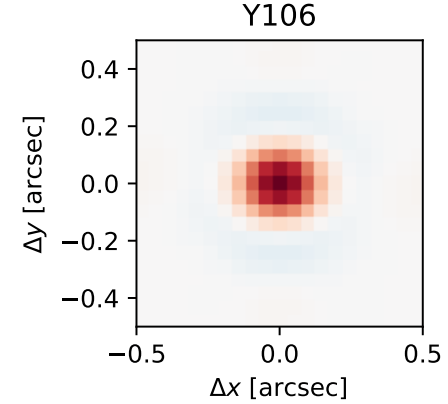
  • Noise in Roman HLIS' image will be significantly correlated.
     
  • Roman HLIS' cosmology will rely on photometry based on Rubin, which has different resolution and depth. 

Roman's unique challenges

Roman

Rubin

Photometry

Galaxy and galaxy cluster selections 

Tomographic bins

Redshift distribution characterizations

Cosmology

We tackle these challenges using simulations

OpenUniverse24
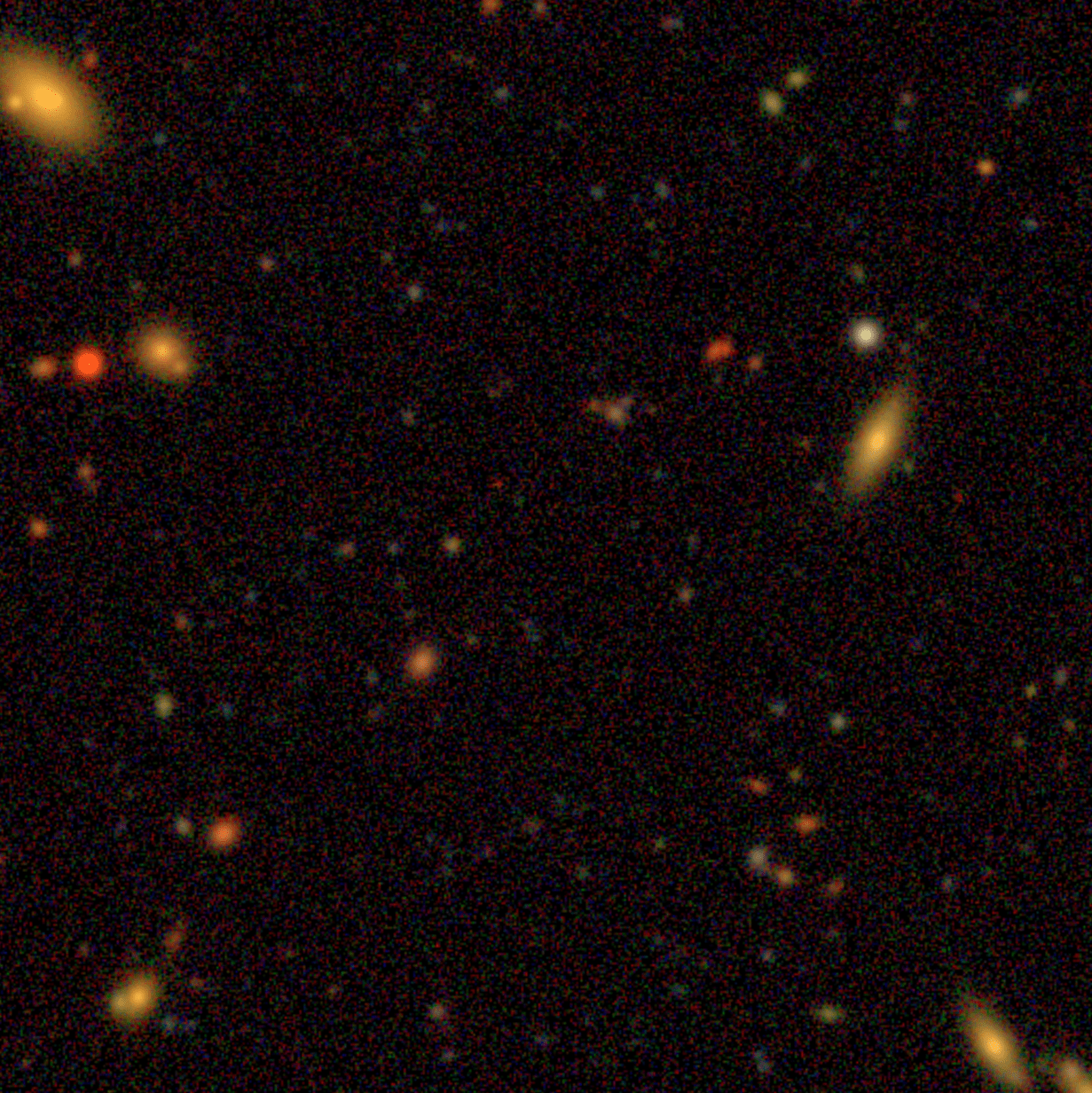
+ DC25 effort: Simulated HLIS coadd

HLIS's CAS working group has built pipelines for this.

Slimfarmer: A photometry pipeline that

  • Jointly fits overlapping objects in Roman.
  • Uses the Roman models for forced Rubin photometry.
  • Careful error quantification and tests of impact on downstream analyses.

Roman challenge 1: Correlated noise

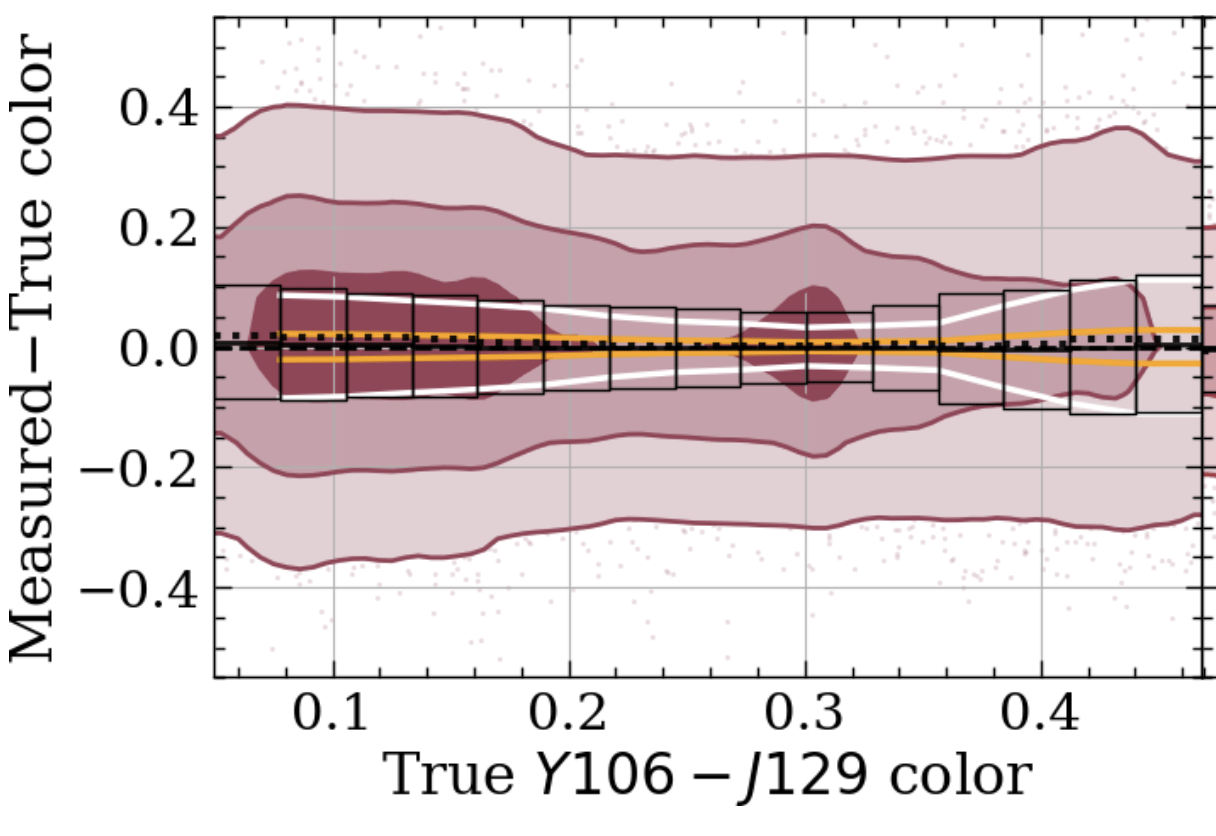
  • Correlated noise can lead to an underestimation of color uncertainties by 3x. 
  • Slimfarmer solves this using simulated noise realizations. 

Out-of-the-box uncertainty

Slimfarmer uncertainty

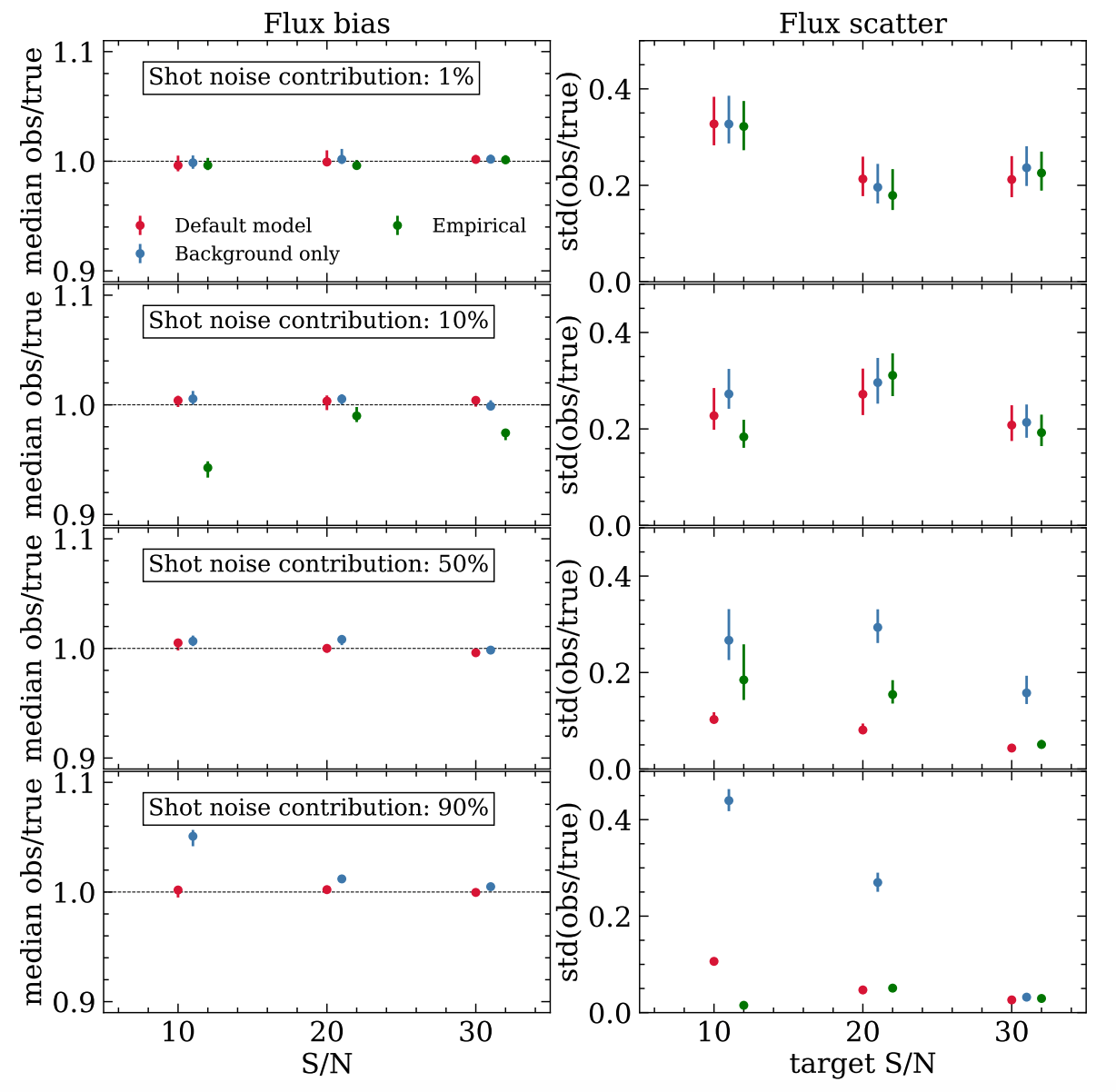
Roman challenge 2: Poisson shot noise

\text{Noise} \approx \sqrt{N_{\text{galaxy}} + N_{\text{sky}} + N_{\text{readout}}^2}
  • The Farmer and LSST-DM: From the image itself
  • FitvD: Estimate from the residual map.  
  • Slimfarmer (Default model):
    • Estimated from the modeled flux at each optimization step.
    • The noise is scaled using residual map (empirical way to correct additional noise in DES)

Roman challenge 2: Poisson shot noise

Rubin

Roman

Default model: Slimfarmer 


Empirical:
Farmer/LSSTDM


Background only:
FitvD

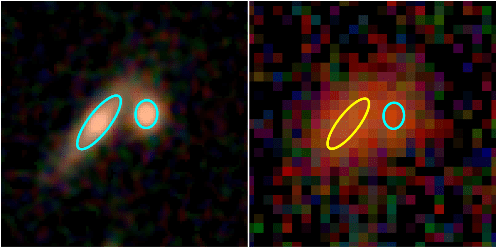
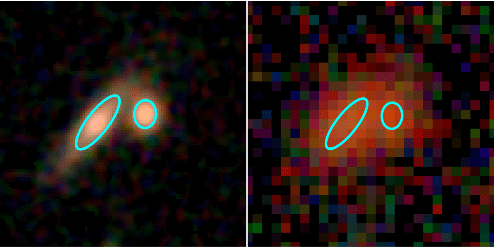
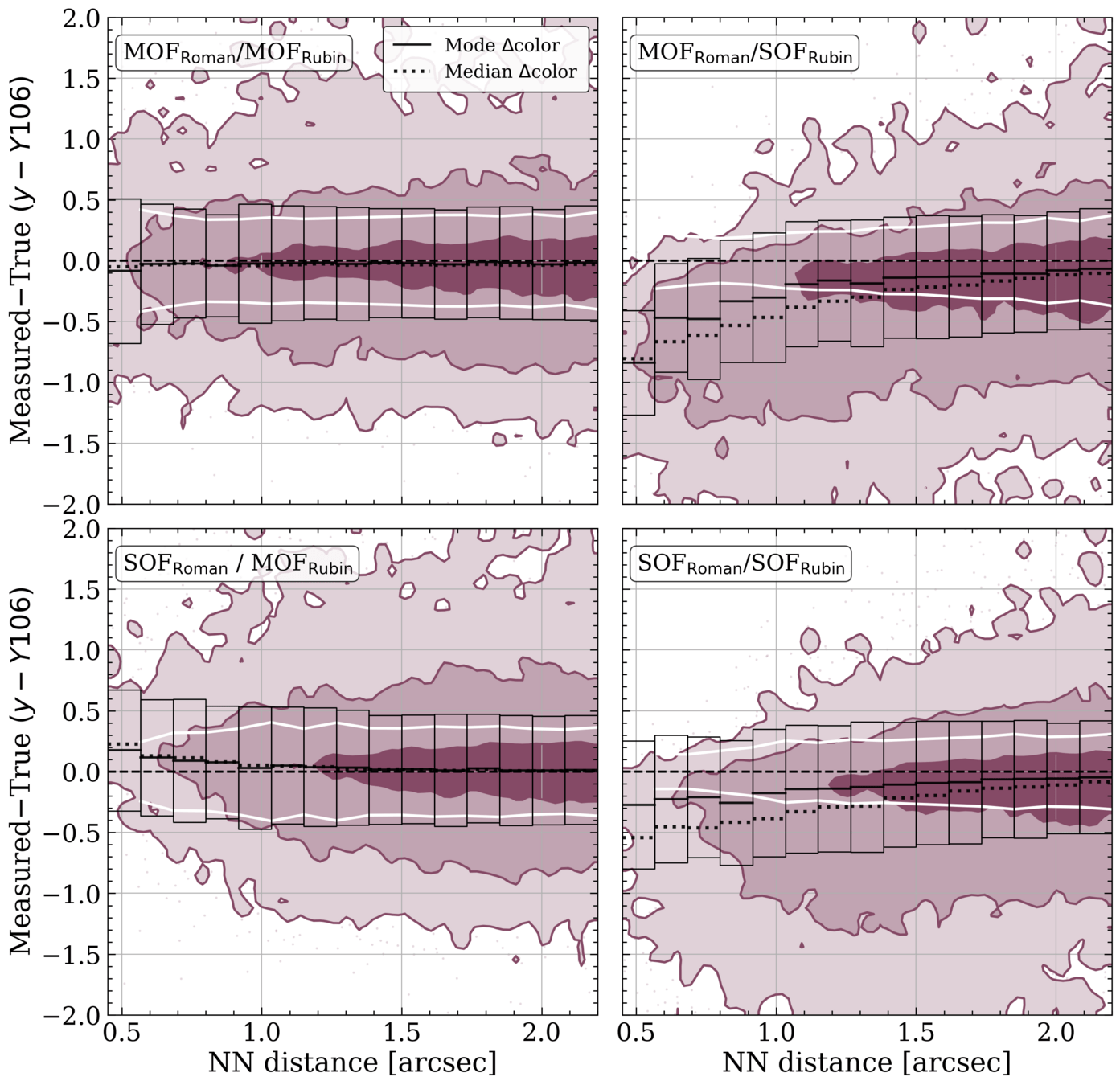
  • Multi-object fitting (MOF): Fit overlapping objects jointly.
  • Single-object fitting (SOF): Fit each object separately.

Roman MOF

Rubin MOF

Roman MOF

Rubin SOF

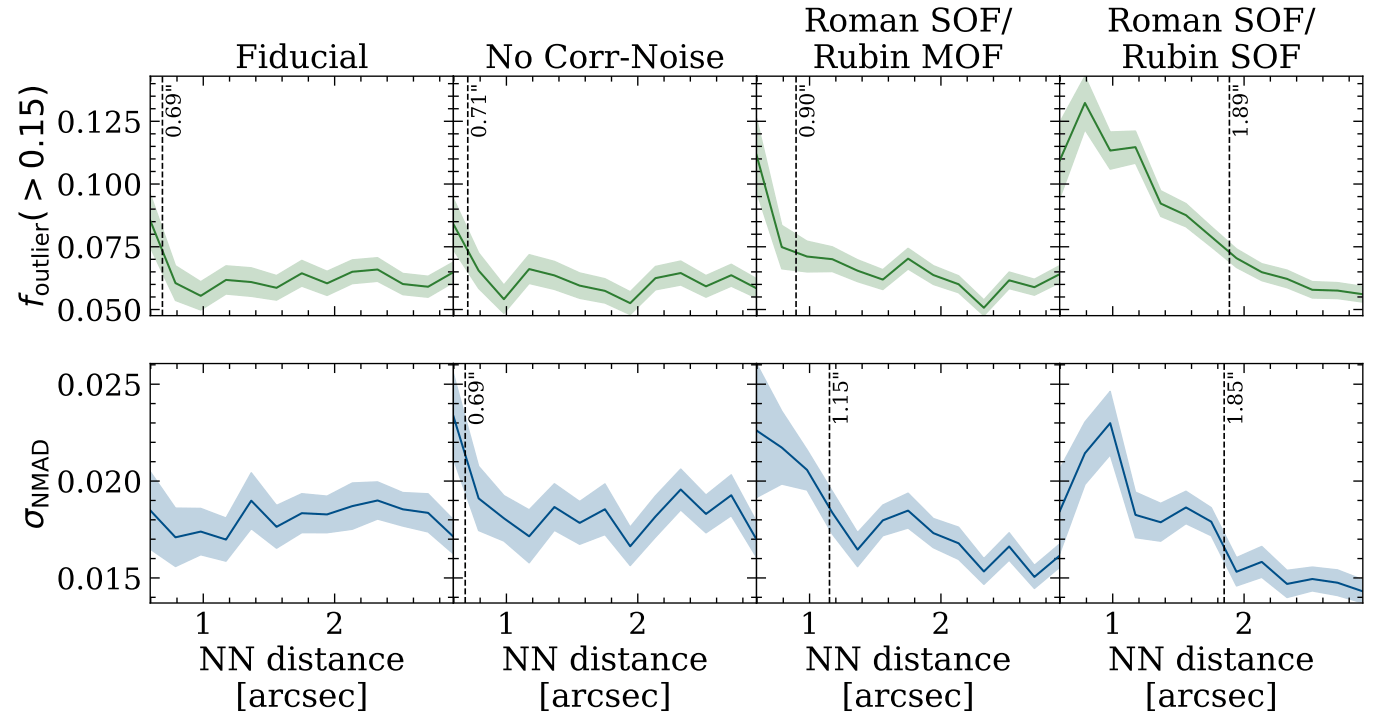
Roman Challenge 3: Forced photometry with different resolutions

More Crowded

Less Crowded

Impacts on downstream analyses

Galaxy clusters and galaxy clustering analyses

Weak gravitational lensing analyses

Conclusions

  • Slimfarmer is a simple photometry pipeline that only does detection and photometry 
    • Correlated noise 
    • Multi-object fitting (MOF)
    • Forced Rubin photometry 
    • Tuned to work on Roman-like images
  • Using SlimFarmer, DC25 sim, and Roman-SOMPZ, we find:
    • MOF is only important for absolute photometry but not colors
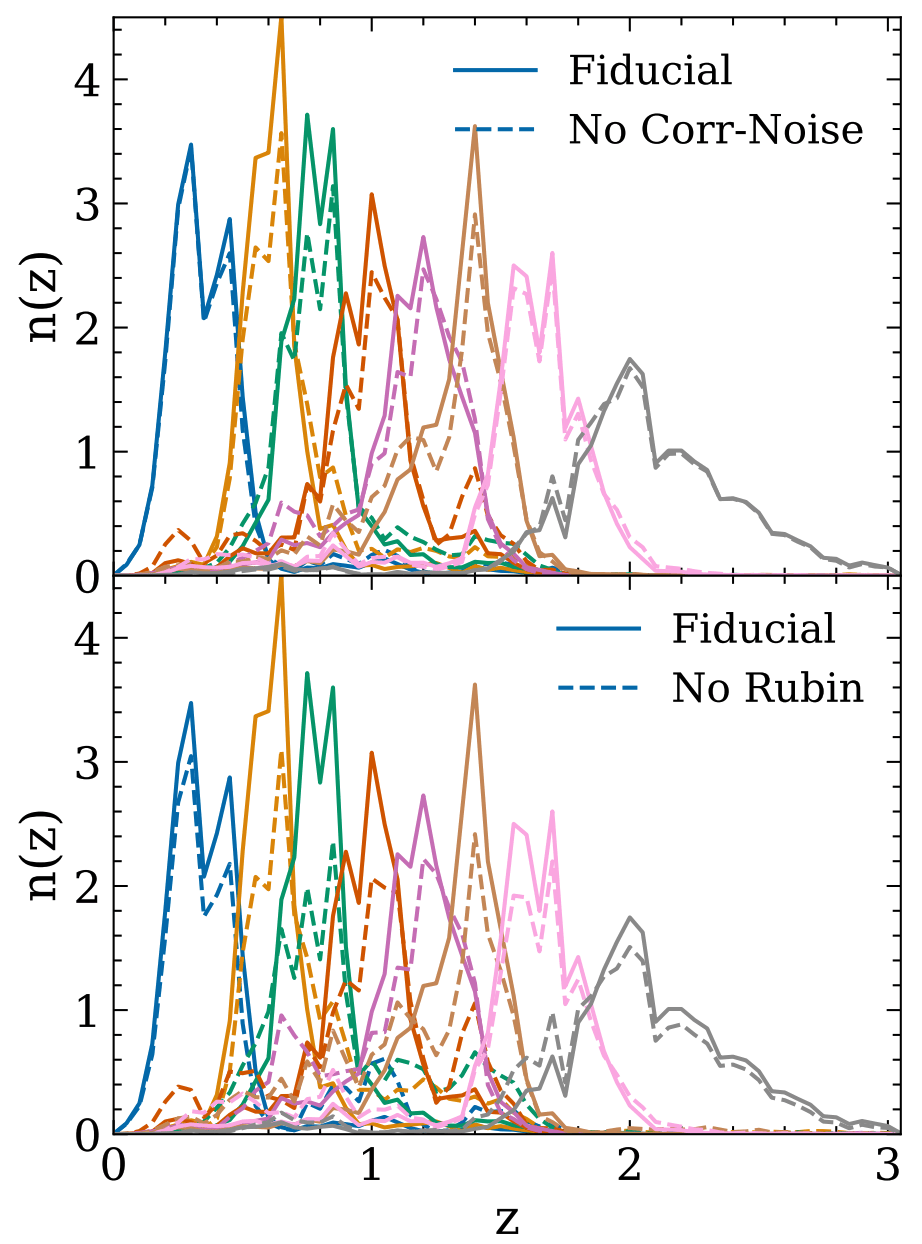
    • Failure to account for correlated noise can underestimate flux uncertainties by several factors, but has only a small impact on SOMPZ.
    • Rubin photometry will be important for Roman weak lensing photo-z. 
  1. We leverage the OpenUniverse24 simulations to develop slimfarmer, a multi-object fitting photometry pipeline for Roman HLIS.
     
  2. We identify and mitigate three unique challenges for Roman HLIS
    • Correlated noise:
      Failure to account for this will significantly underestimate flux uncertainties.
    • Poisson shot noise:
      Failure to account for this could lead to biased flux estimates. 
    • Forced photometry on ground-based observations:
      Consistent multi-object fitting across surveys is essential for preventing environment-dependent color biases.

Roman_software_working_group

By CHUN-HAO TO

Roman_software_working_group

  • 41