Python

class
講師 - 呂家睿
- 建中資訊38屆學術長+副社
- 玩原神跟雀魂
- 頭像是應急食品
- 被電爛
- 有問題歡迎來問我啊

- C++
- python
競程是什麼可以吃嗎?- 數學好難
- 雖然很菜但喜歡遊戲開發
- 打開電腦
學術力

class
類別
class
- 類別有點像自己寫一個資料型態
- 寫一個藍圖
- 有成員(Member)和方法(Methods)
Ex : int, str, dict
教室
類別
Object

物件
類別

資料型態
變數


物件導向 (OOP)
用很多object(class)來寫出程式的一種寫扣方法
- 把大的專案拆成一個個小部份去寫
- debug比較快
可以偷別人的來用
Imagine:

小兵
HP、x座標、y座標、動作、速度、攻擊頻率、掉落金錢 blah blah
假設你有10隻小兵,那你就要為這隻小兵的每個屬性都設一個變數
7x10 = 70

class 小兵
HP
x座標
y座標
動畫
速度
攻頻
掉落金錢
......
Imagine:
class 小兵
HP
x座標
y座標
動畫
速度
攻頻
掉落金錢
......
小兵也會攻擊,或走路,通常我們會寫一個函式來處理
攻擊
移動
......
每個小兵就可以各自執行他們的函式和計算自己的變數數值
藍圖
小兵(物件)x10
coding time
coding time
class Car():
    price:        int = 100
    color:        str = "red"
    horse_power:  int = 100
    brand :       str = "toyota"
a = Car()
print(a.price)
print(a.color)
print(a.horse_power)
print(a.brand)
輸出結果:
宣告一個物件
把這個物件的變數印出來
宣告一個class(類別)叫做Car
一些代表車子性能的變數
coding time
a = Car()
print(a.price)
a.price = 200
print(a.price)
記憶體位置
class

輸出結果:
輸出結果:

可以改物件成員的值
a = Car()
print(a)
你們可以試試看把物件拿去print
建構式
class Car():

    wheels = 4;

    def __init__(self, price: int, color: str,
                 horse_power: int, brand: str):
        self.price        = price
        self.color        = color
        self.horse_power  = horse_power
        self.brand        = brand
有沒有辦法創建物件的時候直接把成員的數值搞定呢?
a = Car(1000, "blue", 200, "honda")
print(a.price)
print(a.color)
print(a.horse_power)
print(a.brand)
constructor(建構式)
物件被創造的時候會跑這個函式
一個特殊的關鍵字,代表這個物件自己
對他一定要叫這個名字
class property
instance property
Method(方法)
class Car():

    wheels = 4;

    def __init__(self, price: int, color: str,
                 horse_power: int, brand: str):
        self.price        = price
        self.color        = color
        self.horse_power  = horse_power
        self.brand        = brand

    def info(self):
        print(f"price: {self.price}")
        print(f"color: {self.color}")
        print(f"horse_power: {self.horse_power}")
        print(f"brand: {self.brand}")
class裡面的函式
a = Car(1000, "blue", 200, "honda")
a.info()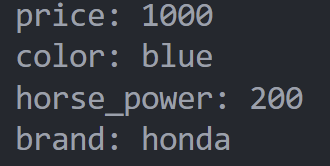
輸出結果:
method(方法)
物件可以執行這個函式
練習題
- 寫一個類別(class)叫做People
- 要有處存身高、體重、名字和喜歡的食物的成員(member)
- 有一個方法(method)可以自我介紹
me = People(178, 49, "ray", "pizza")
me.intro()
輸出結果:
物件的建構和使用:
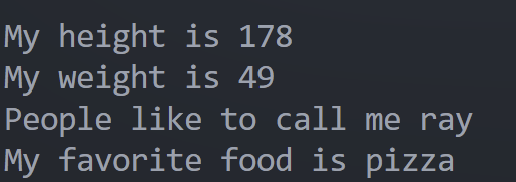
答案
class People():
    def __init__(self, height: int, weight: int, name: str, fav_food: str):
        self.height = height
        self.weight = weight
        self.name = name
        self.fav_food = fav_food

    def intro(self):
        print("My height is", self.height, "cm")
        print("My weight is", self.weight, "kg")
        print("People like to call me", self.name)
        print("My favorite food is", self.fav_food)

me = People(178, 49, "ray", "pizza")
me.intro()
encapsulation
封裝
物件導向四大特性
Encapsulation(封裝)
Inheritance(繼承)
Polymorphism(多形)
Abstraction(抽象化)
封裝(Encapsulation)
所以剛剛用class寫了半天,感覺他也沒有很厲害。現在我們多加幾個物件試試看
class Car():

    wheels = 4;

    def __init__(self, price: int, color: str,
                 horse_power: int, brand: str):
        self.price        = price
        self.color        = color
        self.horse_power  = horse_power
        self.brand        = brand

    def info(self):
        print(f"price: {self.price}")
        print(f"color: {self.color}")
        print(f"horse_power: {self.horse_power}")
        print(f"brand: {self.brand}")
剛剛我們寫的扣
a = Car(1000, "blue", 200, "honda")
b = Car(2000, "white", 300, "BMW")
c = Car(5000, "red", 400, "Ferari")
a.info()
b.info()
c.info()
加成三個物件
封裝(Encapsulation)
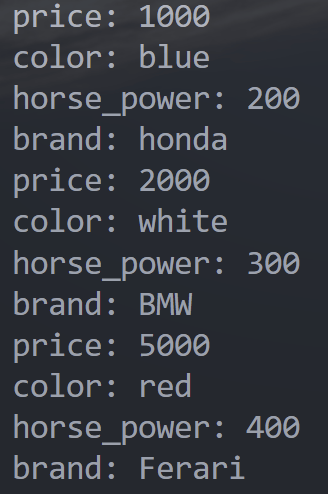
可以看到每個物件的變數和函式是獨立的,不會互相影響
a
b
c

物件
private
public
protected
- 預設是public
- 在class裡面、外面都可以用
- 前面加上__(兩個底線)
- 只有在這個class裡面可以用
- child class不能用
- 前面加上_(一個底線)
- 原則上不會在class, child class外使用
- 不是強制
飯粒

class Car():
    def __init__(self, price: int, color: str,
                 horse_power: int, brand: str):
        self.price        = price
        self.__color        = color
        self.__horse_power  = horse_power
        self.brand        = brand

    def info(self):
        print(f"price: {self.price}")
        print(f"color: {self.__color}")
        print(f"horse_power: {self.__horse_power}")
        print(f"brand: {self.brand}")
a = Car(1000, "blue", 200, "honda")
a.info()
print(a.price)
print(a.brand)
print(a.__color)
print(a.__horse_power)把color跟horse_power改成private
在class裡面執行
在class外面執行
飯粒
class Car():
    def __init__(self, price: int, color: str,
                 horse_power: int, brand: str):
        self.price        = price
        self.__color        = color
        self.__horse_power  = horse_power
        self.brand        = brand

    def info(self):
        print(f"price: {self.price}")
        print(f"color: {self.__color}")
        print(f"horse_power: {self.__horse_power}")
        print(f"brand: {self.brand}")
        print(f"This car is {self.__rate()}")

    def __rate(self):
        if (self.__horse_power > 250):
            return "fantastic"
        else:
            return "ok"
a = Car(1000, "blue", 200, "honda")
a.info()
a.__rate()private method
算這個人的bmi
在class外面執行
在class裡面執行
繼承(Inheritance)
多型(Polymorphism)
下一堂課
下課!!!!!

python-6
By ck11300111呂家睿