Simulation-Based Inference for Precision Cosmology
Every Pixel Counts!


Justine Zeghal
Mila, Université de Montréal
PIML workshop 2026, Heraklion, Crete, GreeceWhy do we need SBI in cosmology?
Why do we need SBI in cosmology?
Goal: Get the value of the cosmological parameters
p(\theta \mid x_0)
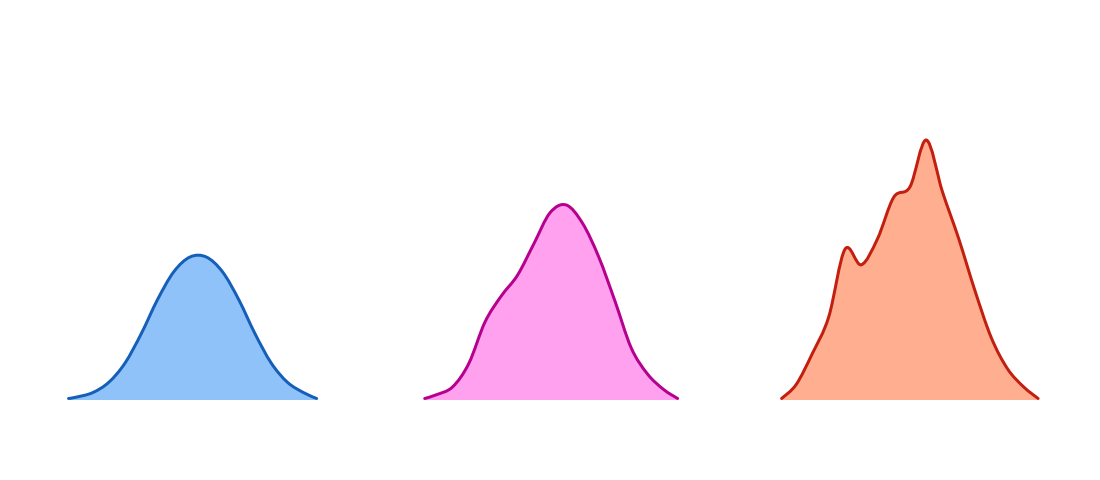
with the uncertainty!
x_0
\Omega_c,\: \Omega_b,\:\Omega_\Lambda,\: h_0, \: n_s, \sigma_8,\: w_0
\theta
\theta
\underbrace{p(\theta|x=x_0)}_{\text{posterior}}
\underbrace{p(\theta)}_{\text{prior}}
\underbrace{p(x = x_0|\theta)}_{\text{likelihood}}
\propto
Bayes theorem:
\underbrace{p(x = x_0|\theta)}_{\text{likelihood}}
Why do we need SBI in cosmology?
x_0
p(\theta \mid x_0)
\theta
Why do we need SBI in cosmology?
x_0
p(\theta \mid x_0)
\theta
The power spectrum is near gaussian so we have an approximation of the likelihood
\mathcal{N}(t(x_0), \sigma) \approx p(x_0\mid\theta)
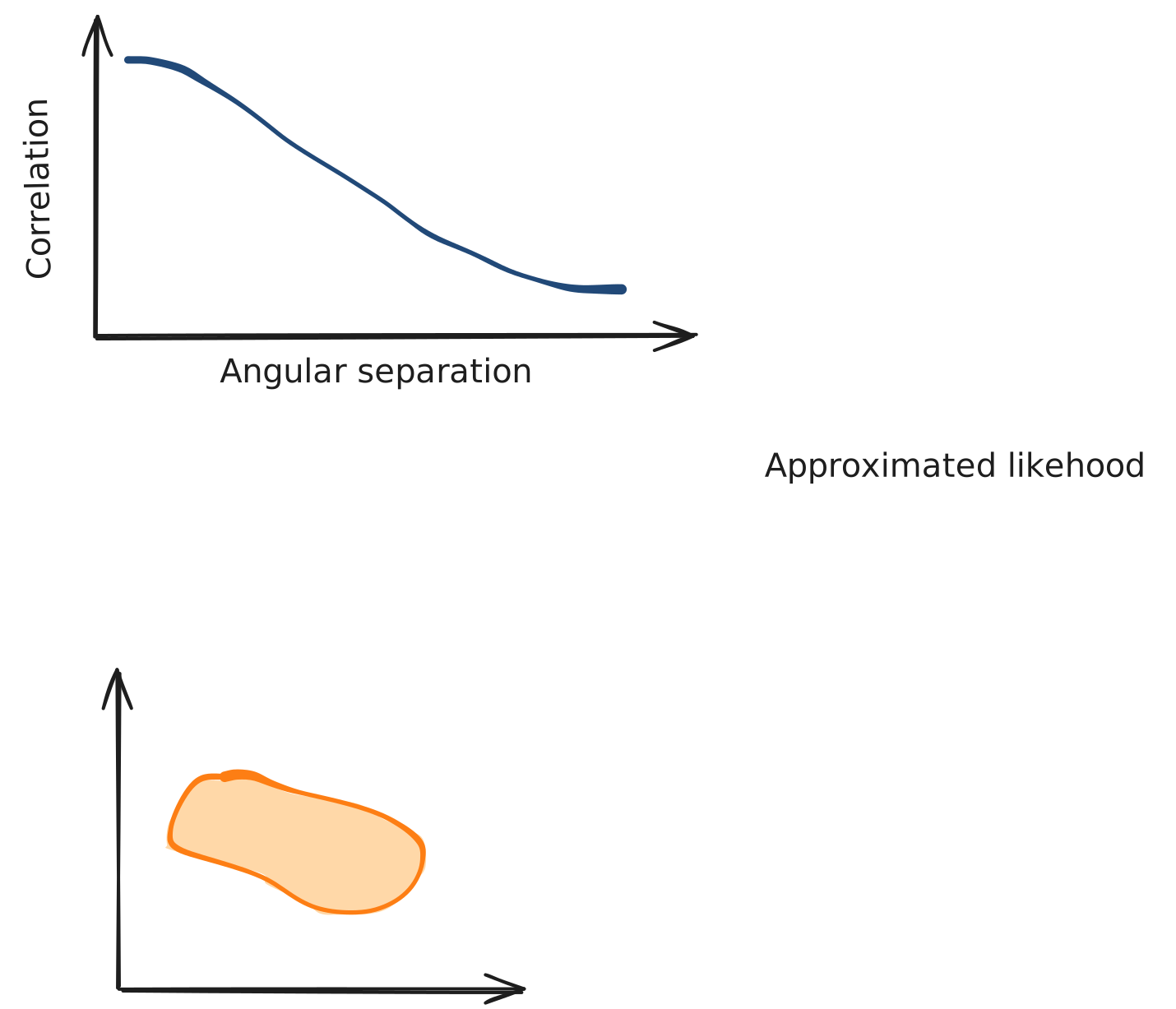
t_0 :=
Why do we need SBI in cosmology?
The power spectrum is near gaussian so we have an approximation of the likelihood
\mathcal{N}(t(x_0), \sigma) \approx p(x_0\mid\theta)
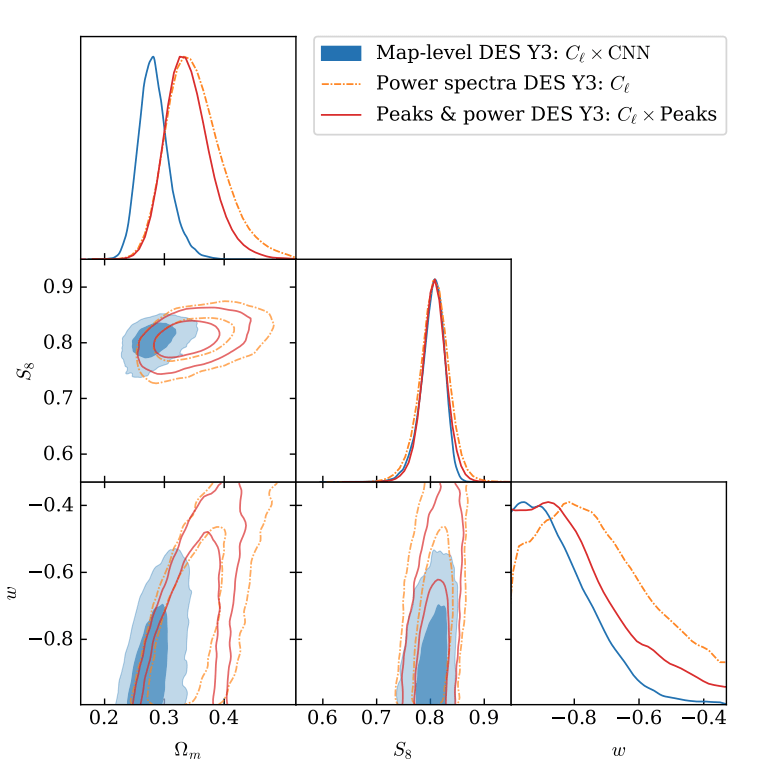
DES Y3 WL Results (with SBI).
The power spectrum is not a sufficient statistics for non gaussian field
t_0 :=
Why do we need SBI in cosmology?

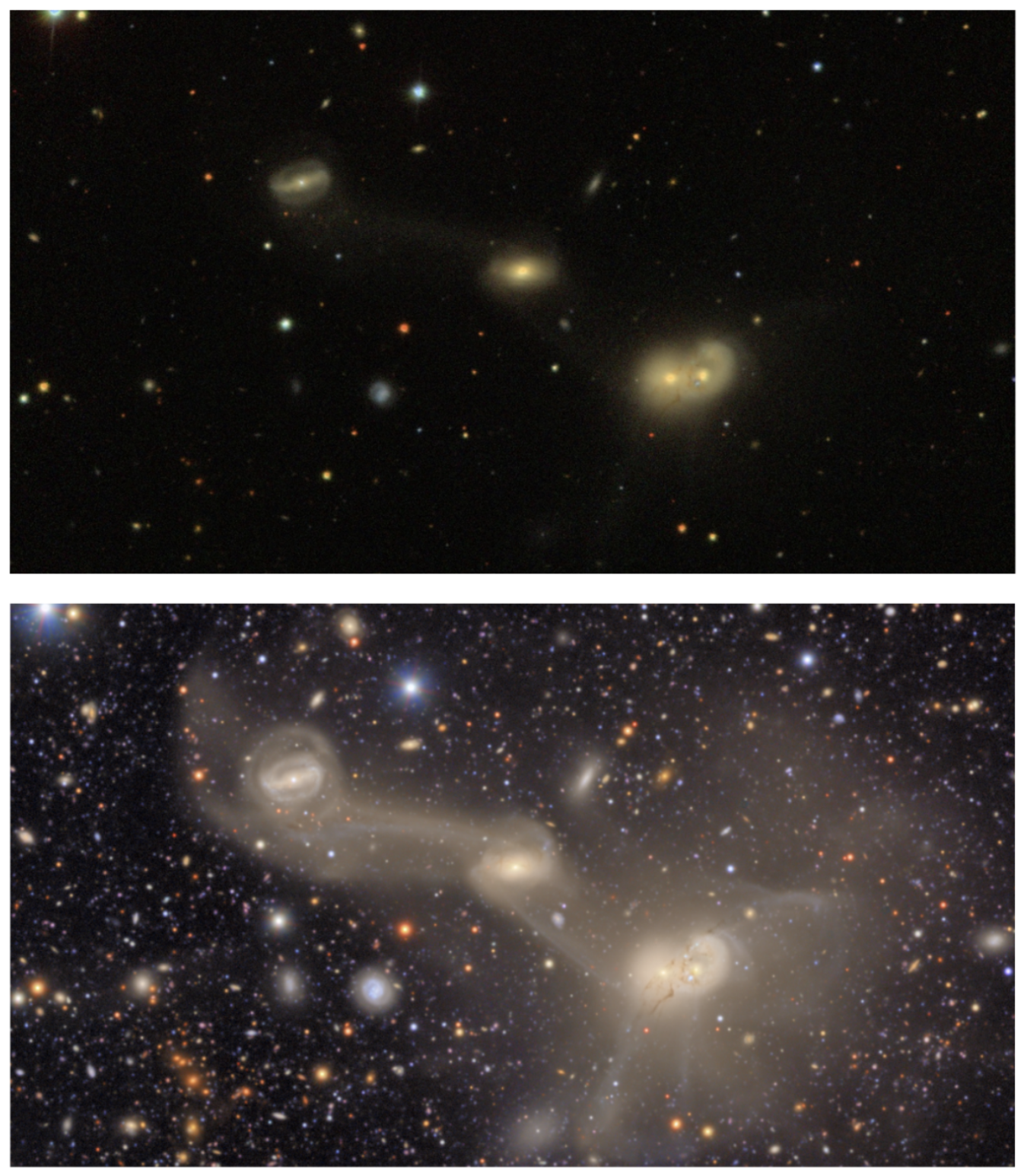



Stage III
Stage IV
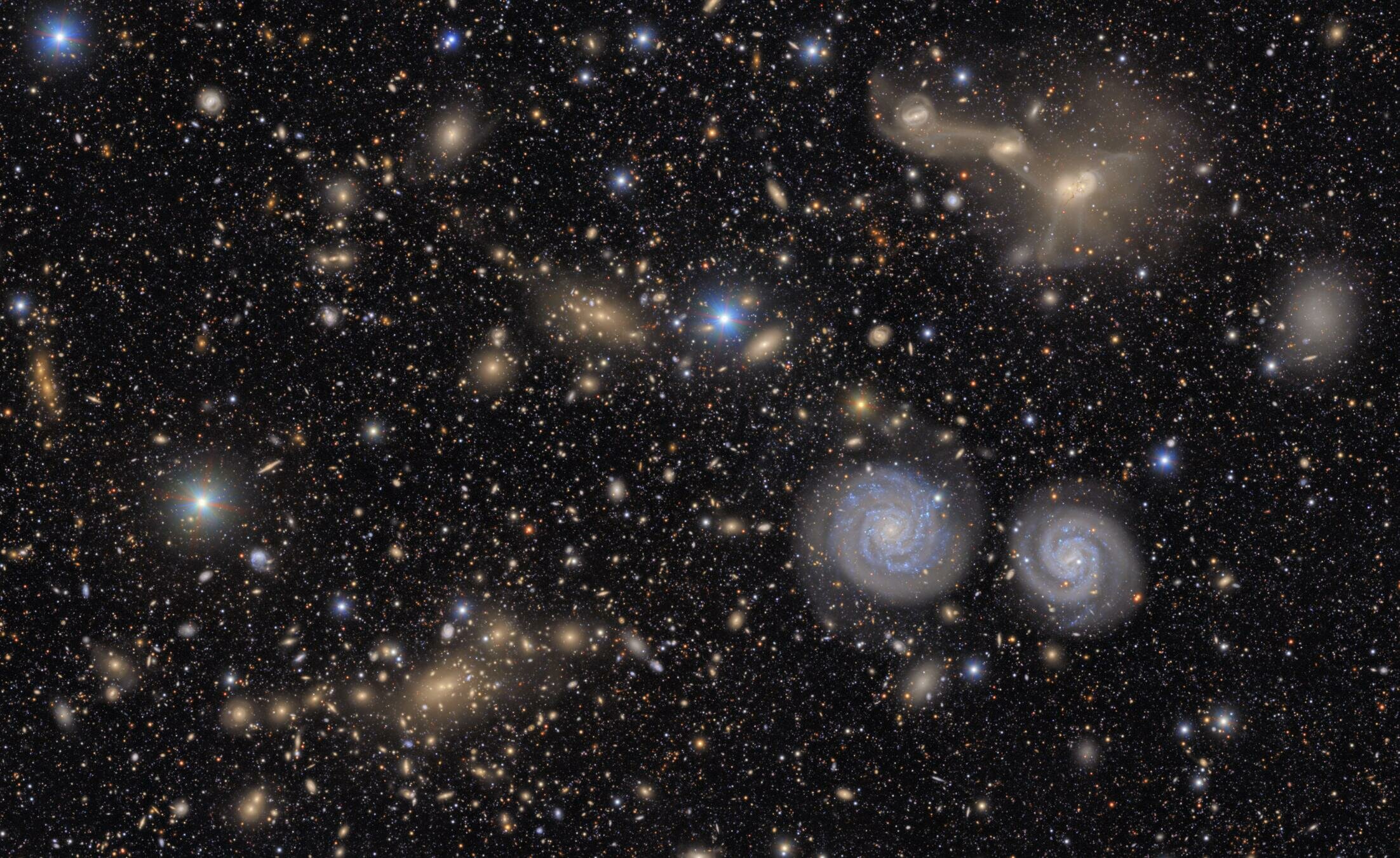
Portion of the Virgo cluster, zoom on RSCG 55
Portion of the Virgo cluster, zoom on RSCG 55
Access to new non gaussian small scales. We don't want to lose this new information!
What is SBI?
What is SBI?
What is SBI?
\theta
x
f
z_1
z_2
Simulator
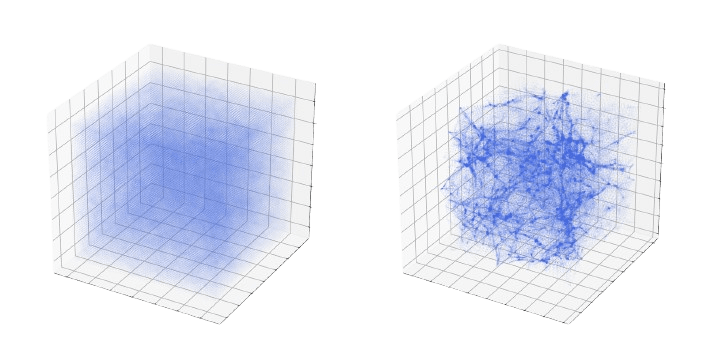
z
x
Initial conditions
Large Scale Structure
\theta
Prediction
Inference
p(x| \theta, z)
Explicit inference
p(\theta, z \: | \: x) \propto
p(z\:|\:\theta) p(\theta)
Needs an explicit simulator to sample the joint posterior through MCMC:
p(x| \theta, z)
p(\theta, z \: | \: x) \propto
Implicit inference
(\theta_i, x_i)_{i=1...N}
We use simulations to
learn
p(\theta \mid x)
Instead of relying on an analytical model to describe the phenomenon, we can simulate it.
Two ways of performing inference from simulations:
What is SBI?
Explicit inference
p(\theta, z \: | \: x) \propto
p(z\:|\:\theta) p(\theta)
Needs an explicit simulator to sample the joint posterior through MCMC:
p(x| \theta, z)
p(\theta, z \: | \: x) \propto
Implicit inference
(\theta_i, x_i)_{i=1...N}
We use simulations to
learn
p(\theta \mid x)
Instead of relying on an analytical model to describe the phenomenon, we can simulate it.
Two ways of performing inference from simulations:
Because we work at the map level, considering all cosmological information, we call this inference:
Field-level inference / Pixel-level inference / Full-field inference
Most precise inference!

How implicit inference works?
How implicit inference works?
From the dataset we can learn:
(\theta_i, x_i)_{i=1...N}
p(x\mid\theta)
- the marginal likelihood
p(\theta \mid x)
- the posterior
r(x, \theta) = \frac{p(\theta \mid x)}{p(\theta)}
- the likelihood to evidence ratio
We use generative models
Most of the time: Normalizing Flows
p_0
p_t
p_1
f^{-1}_2
f_2
f^{-1}_1
f_1
How implicit inference works?
f^{-1}_1
f^{-1}_2
f_1
f_2
p_0
p_1
p_t
How implicit inference works?
f_1
p_0
p_1
p_t
How implicit inference works?
f_1
p_0
p_1
p_t
How implicit inference works?
f_1
f_2
p_0
p_1
p_t
How implicit inference works?
f_1
f_2
f^{-1}_2
p_0
p_1
p_t
How implicit inference works?
f_1
f_2
f^{-1}_2
f^{-1}_1
p_0
p_1
p_t
How implicit inference works?
f_1
f_2
f^{-1}_2
f^{-1}_1
p_0
p_1
p_t
\log p_0(f^{-1}(x))
+ \log
\displaystyle\left\lvert det \frac{\partial f^{-1}(x)}{\partial x}\right\rvert
Change of Variable Formula:
\log p_1(x)
=
f^{-1} = f_1^{-1} \circ ... \circ f_{k-1}^{-1} \circ f_k^{-1}
Should be easy to compute
We need to learn the mapping to approximate the complex distribution
How implicit inference works?
Credit: François Lanusse
We need a tool to compare distributions:
the Kullback-Leiber Divergence
How implicit inference works?
\begin{array}{ll}
D_{KL}(\color{#479af7}{p_x(x)}\color{black}{||}\color{#479af7}{p_x^{\phi}(x)}\color{black}{)} &= \mathbb{E}_{p_x(x)}\Big[ \log\left(\frac{p_x(x)}{p_x^{\phi}(x)}\right) \Big] \\
\end{array}
\begin{array}{ll}
= \mathbb{E}_{p_x(x)}\left[ \log\left(p_x(x)\right) \right]
\end{array}
\begin{array}{ll}
- \mathbb{E}_{p_x(x)}\left[ \log\left(p_x^{\phi}(x)\right) \right]\\
\end{array}
\begin{array}{ll}
= \mathbb{E}_{p_x(x)}\left[ \log\left(p_x(x)\right) \right]
\end{array}
\begin{array}{ll}
- \mathbb{E}_{p_x(x)}\left[ \log\left(p_x^{\phi}(x)\right) \right]\\
\end{array}
How implicit inference works?
\begin{array}{ll}
D_{KL}(\color{#479af7}{p_x(x)}\color{black}{||}\color{#479af7}{p_x^{\phi}(x)}\color{black}{)} &= \mathbb{E}_{p_x(x)}\Big[ \log\left(\frac{p_x(x)}{p_x^{\phi}(x)}\right) \Big] \\
\end{array}
\begin{array}{ll}
= \mathbb{E}_{p_x(x)}\left[ \log\left(p_x(x)\right) \right]
\end{array}
\begin{array}{ll}
- \mathbb{E}_{p_x(x)}\left[ \log\left(p_x^{\phi}(x)\right) \right]\\
\end{array}
\begin{array}{ll}
= \mathbb{E}_{p_x(x)}\left[ \log\left(p_x(x)\right) \right]
\end{array}
\begin{array}{ll}
- \mathbb{E}_{p_x(x)}\left[ \log\left(p_x^{\phi}(x)\right) \right]\\
\end{array}
\begin{array}{ll}
= \mathbb{E}_{p_x(x)}\left[ \log\left(p_x(x)\right) \right]
\end{array}
\begin{array}{ll}
- \mathbb{E}_{p_x(x)}\left[ \log\left(p_x^{\phi}(x)\right) \right]\\
\end{array}
\begin{array}{ll}
= \mathbb{E}_{p_x(x)}\left[ \log\left(p_x(x)\right) \right]
\end{array}
\begin{array}{ll}
- \mathbb{E}_{p_x(x)}\left[ \log\left(p_x^{\phi}(x)\right) \right]\\
\end{array}
\phi
We want to minimize the Kullback-Leiber Divergence wrt
How implicit inference works?
\begin{array}{ll}
D_{KL}(\color{#479af7}{p_x(x)}\color{black}{||}\color{#479af7}{p_x^{\phi}(x)}\color{black}{)} &= \mathbb{E}_{p_x(x)}\Big[ \log\left(\frac{p_x(x)}{p_x^{\phi}(x)}\right) \Big] \\
\end{array}
\begin{array}{ll}
= \mathbb{E}_{p_x(x)}\left[ \log\left(p_x(x)\right) \right]
\end{array}
\begin{array}{ll}
- \mathbb{E}_{p_x(x)}\left[ \log\left(p_x^{\phi}(x)\right) \right]\\
\end{array}
\begin{array}{ll}
= \mathbb{E}_{p_x(x)}\left[ \log\left(p_x(x)\right) \right]
\end{array}
\begin{array}{ll}
- \mathbb{E}_{p_x(x)}\left[ \log\left(p_x^{\phi}(x)\right) \right]\\
\end{array}
\begin{array}{ll}
= \mathbb{E}_{p_x(x)}\left[ \log\left(p_x(x)\right) \right]
\end{array}
\begin{array}{ll}
- \mathbb{E}_{p_x(x)}\left[ \log\left(p_x^{\phi}(x)\right) \right]\\
\end{array}
\begin{array}{ll}
= \mathbb{E}_{p_x(x)}\left[ \log\left(p_x(x)\right) \right]
\end{array}
\begin{array}{ll}
- \mathbb{E}_{p_x(x)}\left[ \log\left(p_x^{\phi}(x)\right) \right]\\
\end{array}
\phi
We want to minimize the Kullback-Leiber Divergence wrt
How implicit inference works?
\begin{array}{ll}
D_{KL}(\color{#479af7}{p_x(x)}\color{black}{||}\color{#479af7}{p_x^{\phi}(x)}\color{black}{)} &= \mathbb{E}_{p_x(x)}\Big[ \log\left(\frac{p_x(x)}{p_x^{\phi}(x)}\right) \Big] \\
\end{array}
\begin{array}{ll}
= \mathbb{E}_{p_x(x)}\left[ \log\left(p_x(x)\right) \right]
\end{array}
\begin{array}{ll}
- \mathbb{E}_{p_x(x)}\left[ \log\left(p_x^{\phi}(x)\right) \right]\\
\end{array}
\begin{array}{ll}
= \mathbb{E}_{p_x(x)}\left[ \log\left(p_x(x)\right) \right]
\end{array}
\begin{array}{ll}
- \mathbb{E}_{p_x(x)}\left[ \log\left(p_x^{\phi}(x)\right) \right]\\
\end{array}
\begin{array}{ll}
= \mathbb{E}_{p_x(x)}\left[ \log\left(p_x(x)\right) \right]
\end{array}
\begin{array}{ll}
- \mathbb{E}_{p_x(x)}\left[ \log\left(p_x^{\phi}(x)\right) \right]\\
\end{array}
\begin{array}{ll}
- \mathbb{E}_{p_x(x)}\left[ \log\left(p_x^{\phi}(x)\right) \right]\\
\end{array}
= \text{constant}
\begin{array}{ll}
- \mathbb{E}_{p_x(x)}\left[ \log\left(p_x^{\phi}(x)\right) \right]\\
\end{array}
\phi
We want to minimize the Kullback-Leiber Divergence wrt
How implicit inference works?
\begin{array}{ll}
D_{KL}(\color{#479af7}{p_x(x)}\color{black}{||}\color{#479af7}{p_x^{\phi}(x)}\color{black}{)} &= \mathbb{E}_{p_x(x)}\Big[ \log\left(\frac{p_x(x)}{p_x^{\phi}(x)}\right) \Big] \\
\end{array}
\begin{array}{ll}
= \mathbb{E}_{p_x(x)}\left[ \log\left(p_x(x)\right) \right]
\end{array}
\begin{array}{ll}
- \mathbb{E}_{p_x(x)}\left[ \log\left(p_x^{\phi}(x)\right) \right]\\
\end{array}
\begin{array}{ll}
= \mathbb{E}_{p_x(x)}\left[ \log\left(p_x(x)\right) \right]
\end{array}
\begin{array}{ll}
- \mathbb{E}_{p_x(x)}\left[ \log\left(p_x^{\phi}(x)\right) \right]\\
\end{array}
\begin{array}{ll}
= \mathbb{E}_{p_x(x)}\left[ \log\left(p_x(x)\right) \right]
\end{array}
\begin{array}{ll}
- \mathbb{E}_{p_x(x)}\left[ \log\left(p_x^{\phi}(x)\right) \right]\\
\end{array}
\begin{array}{ll}
- \mathbb{E}_{p_x(x)}\left[ \log\left(p_x^{\phi}(x)\right) \right]\\
\end{array}
= \text{constant}
Simulations only!
Change of variable formula
\begin{array}{ll}
\implies Loss = - \mathbb{E}_{x \sim p_x(x)}\left[ \log\left(p_x^{\phi}(x)\right) \right]\\
\end{array}
\begin{array}{ll}
\implies Loss = - \mathbb{E}_{x \sim p_x(x)}\left[ \log\left(p_x^{\phi}(x)\right) \right]\\
\end{array}
\phi
We want to minimize the Kullback-Leiber Divergence wrt
How implicit inference works?
\begin{array}{ll}
\implies Loss = - \mathbb{E}_{x \sim p_x(x)}\left[ \log\left(p_x^{\phi}(x)\right) \right]\\
\end{array}
\begin{array}{ll}
\implies Loss = - \mathbb{E}_{x \sim p_x(x)}\left[ \log\left(p_x^{\phi}(x)\right) \right]\\
\end{array}
\begin{array}{ll}
\implies Loss = - \mathbb{E}_{x \sim p_x(x)}\left[ \log\left(p_x^{\phi}(x)\right) \right]\\
\end{array}
How implicit inference works?
\begin{array}{ll}
Loss = - \mathbb{E}_{x, \theta \sim p(x, \theta)}\left[ \log\left(p^{\phi}(x \mid \theta)\right) \right]\\
\end{array}
\begin{array}{ll}
\implies Loss = - \mathbb{E}_{x \sim p_x(x)}\left[ \log\left(p_x^{\phi}(x)\right) \right]\\
\end{array}
\begin{array}{ll}
\implies Loss = - \mathbb{E}_{x \sim p_x(x)}\left[ \log\left(p_x^{\phi}(x)\right) \right]\\
\end{array}
\begin{array}{ll}
\implies Loss = - \mathbb{E}_{x \sim p_x(x)}\left[ \log\left(p_x^{\phi}(x)\right) \right]\\
\end{array}
Likelihood approximation (e.g. Papamakarios et al., 2019)
\begin{array}{ll}
\implies Loss = - \mathbb{E}_{x \sim p_x(x)}\left[ \log\left(p_x^{\phi}(x)\right) \right]\\
\end{array}
How implicit inference works?
\begin{array}{ll}
Loss = - \mathbb{E}_{x, \theta \sim p(x, \theta)}\left[ \log\left(p^{\phi}(x \mid \theta)\right) \right]\\
\end{array}
Likelihood approximation (e.g. Papamakarios et al., 2019)
\begin{array}{ll}
Loss = - \mathbb{E}_{x, \theta \sim p(x, \theta)}\left[ \log\left(p^{\phi}(\theta \mid x)\right) \right]\\
\end{array}
Posterior approximation (e.g. Papamakarios et al., 2016)
\begin{array}{ll}
\implies Loss = - \mathbb{E}_{x \sim p_x(x)}\left[ \log\left(p_x^{\phi}(x)\right) \right]\\
\end{array}
Both methods require a lot of costly simulations!
Implicit inference with few simulations
Implicit inference with few simulations
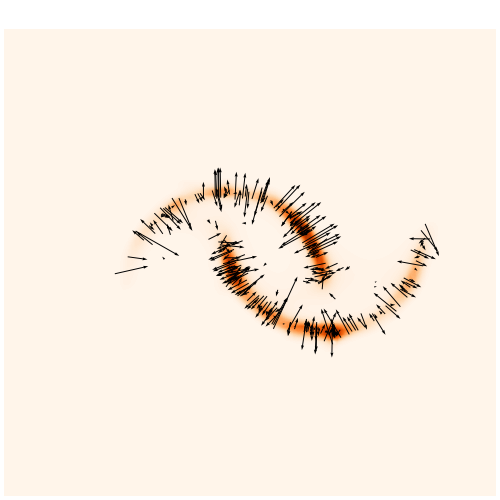
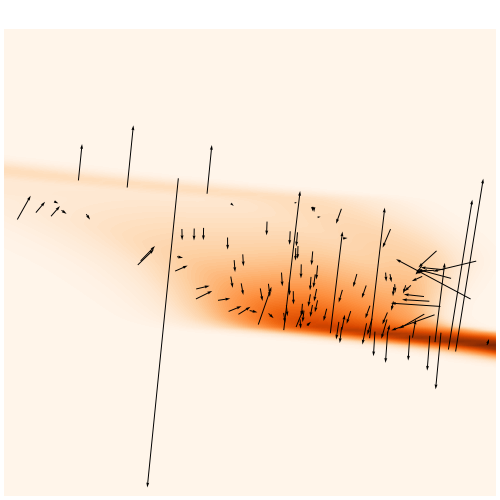
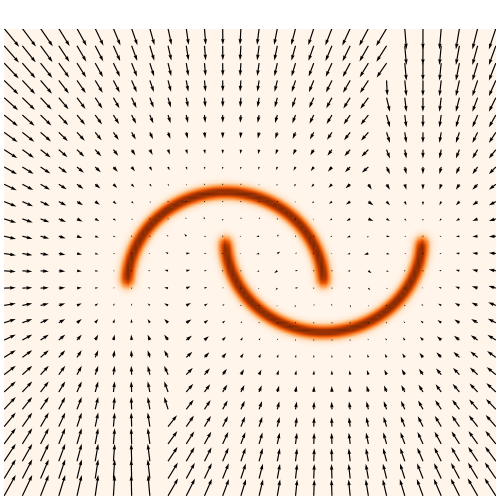
Brehmer et al. (2018), Zeghal et al. (2022)
\displaystyle \mathbb{E}\left[ \parallel \nabla_{\theta} \log p^{\phi}(\theta |x) - \nabla_{\theta} \log p(\theta, z |x)\parallel_2^2 \right]
\begin{array}{ll}
Loss = - \mathbb{E}_{x, \theta \sim p(x, \theta)}\left[ \log\left(p
^{\phi}(\theta \mid x)\right) \right]\\
\end{array}
For instance for NPE:
Neural-based SBI
?
❌
✅



\nabla_{\theta} \log p^{\phi}(\theta |x) \approx \nabla_{\theta} \log p(\theta|x)
We also want to use the simulator's gradients information:
\nabla_{\theta} \log p(\theta, z |x)
and we want to learn the marginal posterior but
\nabla_\theta \log p(\theta|x)
= \nabla_\theta \log \int p(\theta,z|x)dz
\color{black}{\neq \int} \color{#b6008e}{\nabla_{\theta} \log p(\theta, z |x) dz}
Minimized by
Implicit inference with few simulations
\displaystyle \mathbb{E}\left[ \parallel \nabla_{\theta} \log p^{\phi}(\theta |x) - \nabla_{\theta} \log p(\theta, z |x)\parallel_2^2 \right]
\begin{array}{ll}
Loss = - \mathbb{E}_{x, \theta \sim p(x, \theta)}\left[ \log\left(p
^{\phi}(\theta \mid x)\right) \right]\\
\end{array}
Neural-based SBI
+ \lambda
Lack expressivity!
Brehmer et al. (2018), Zeghal et al. (2022)
Implicit inference with few simulations
Neural-based SBI
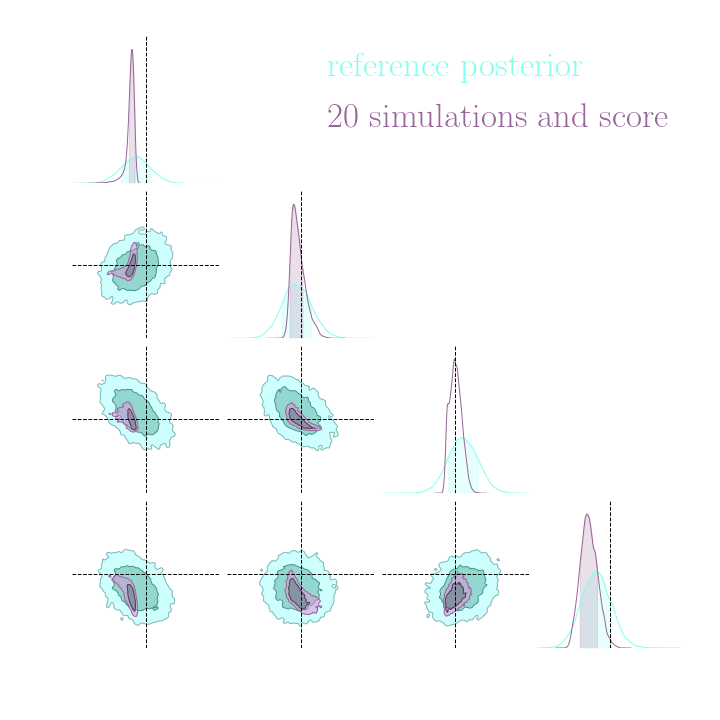
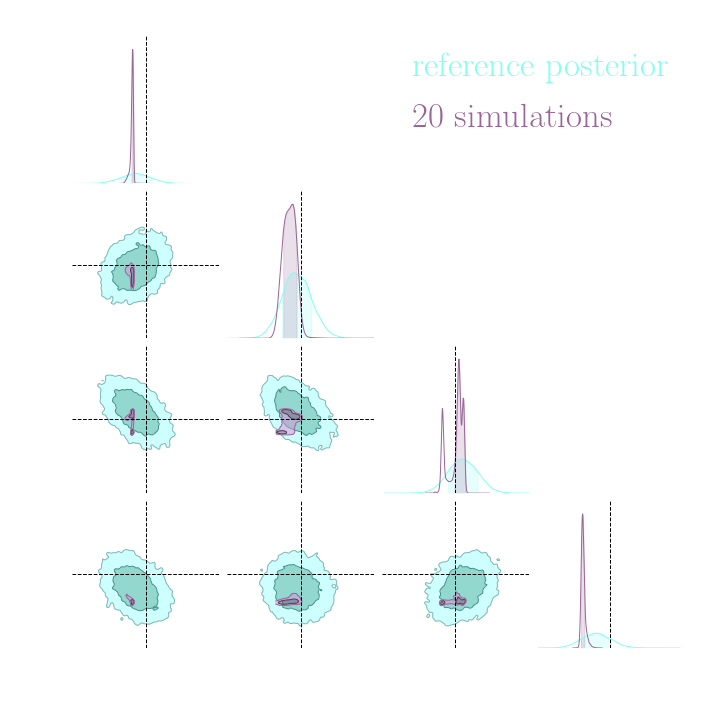
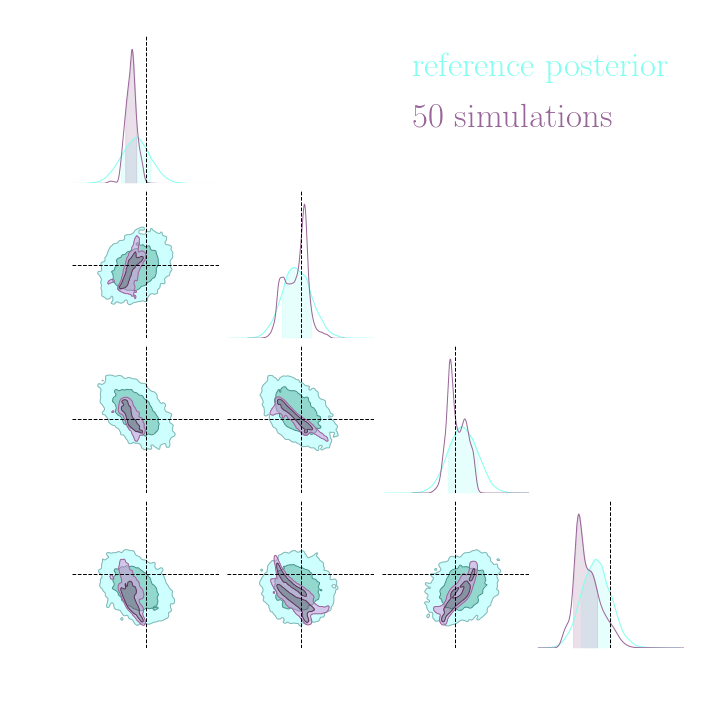
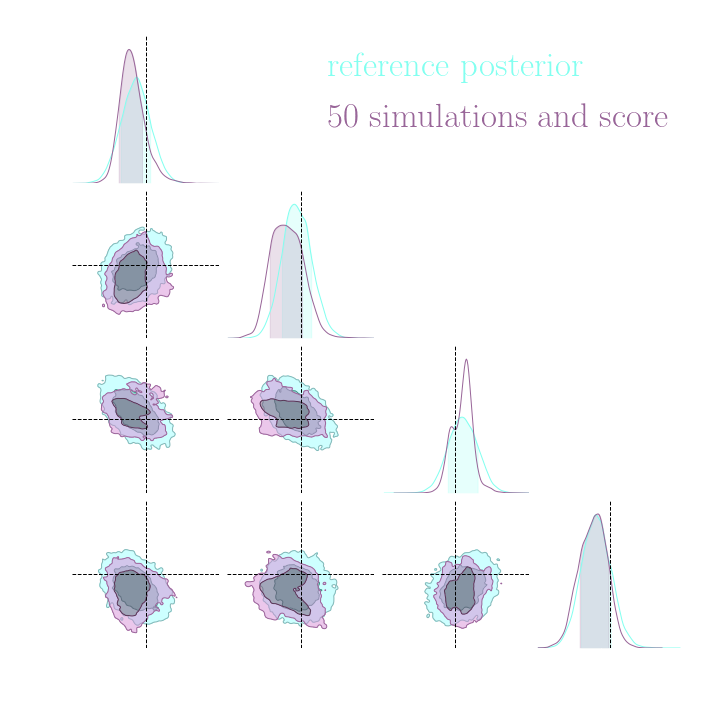
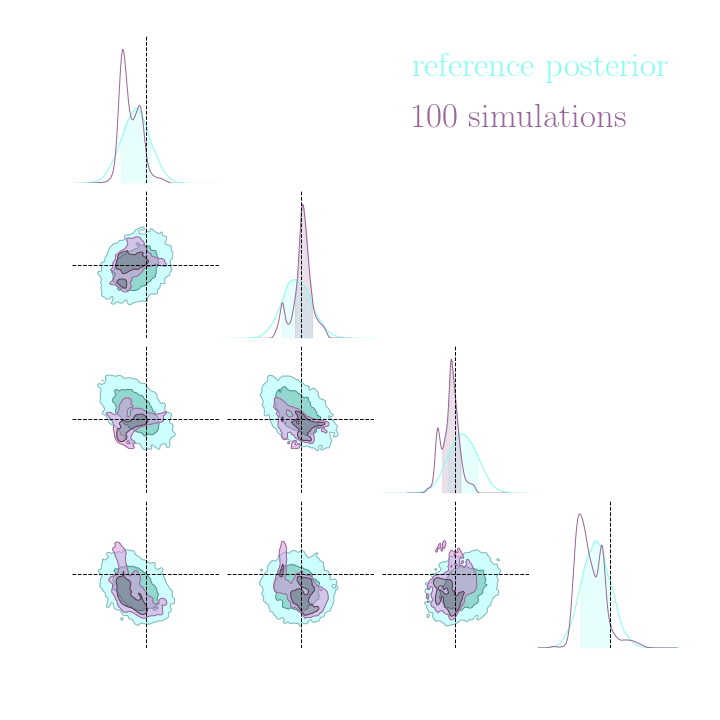
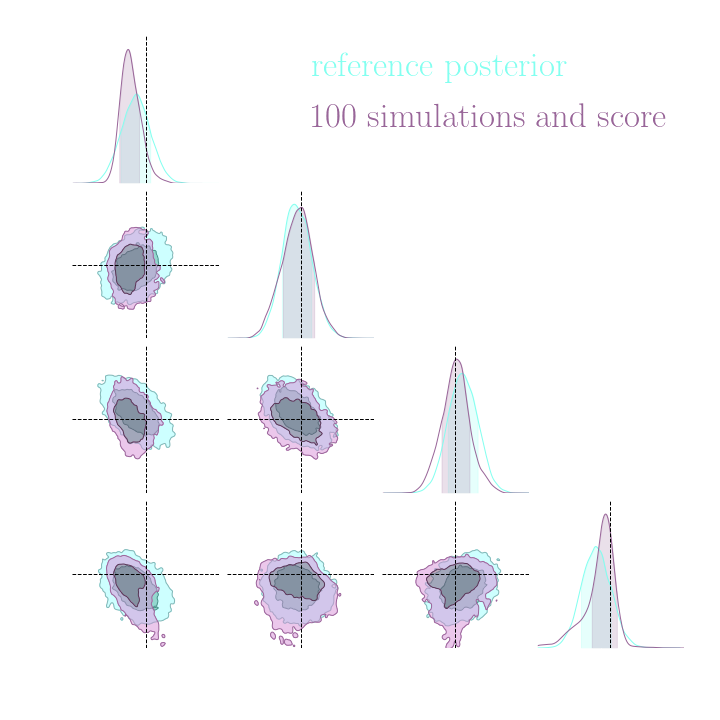
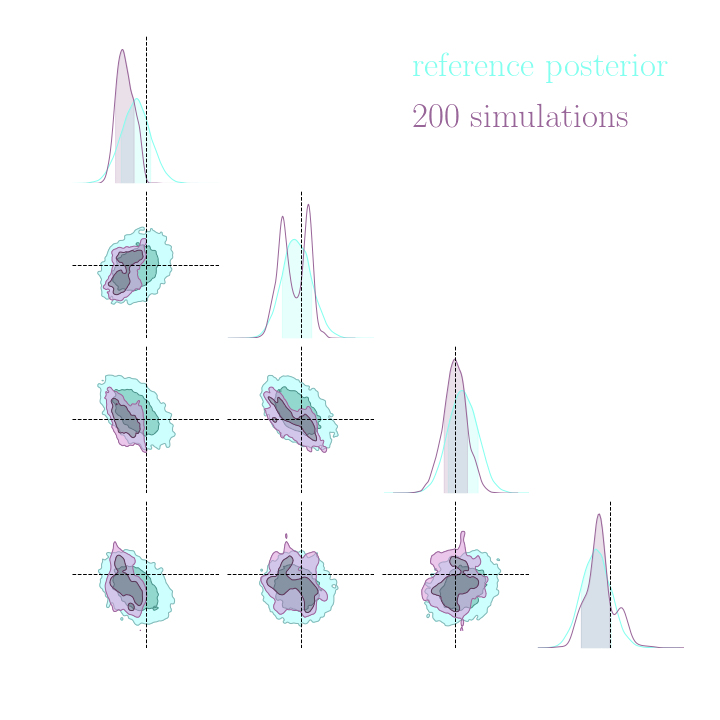
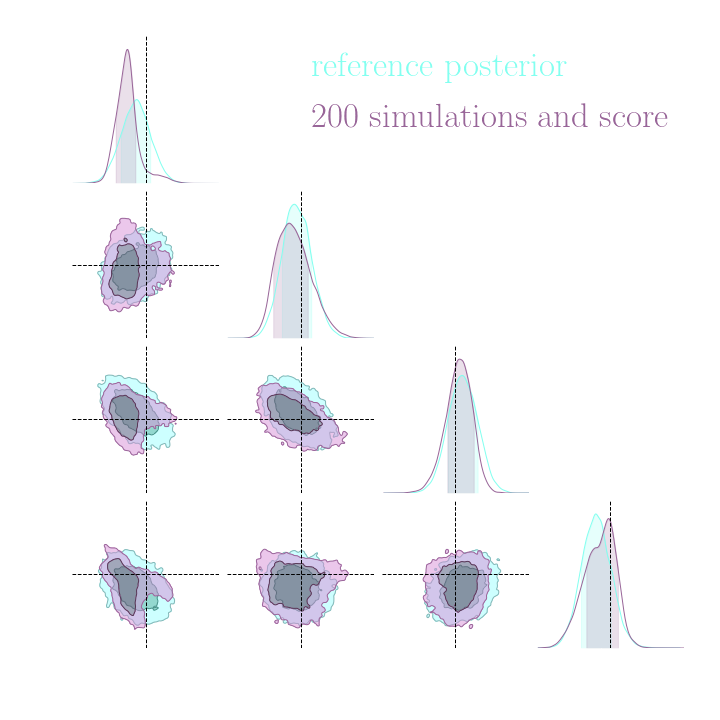
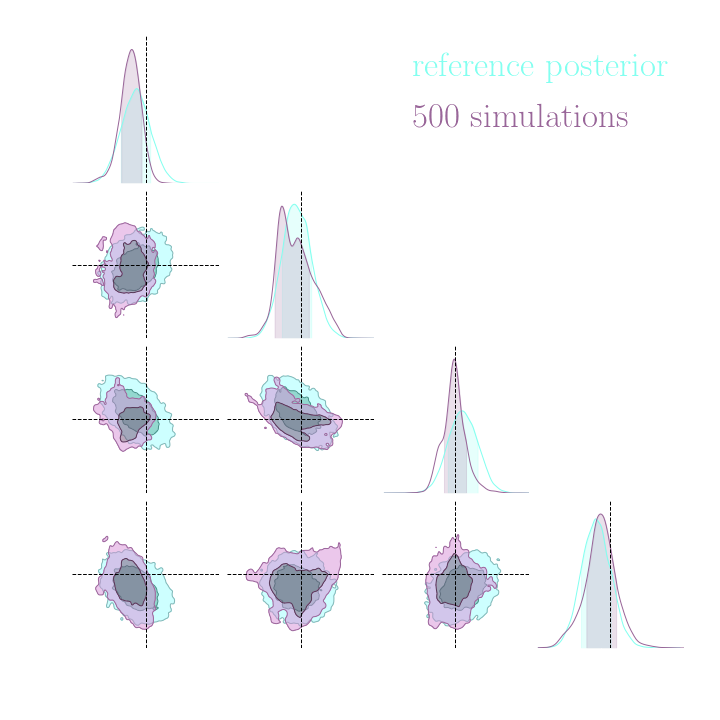
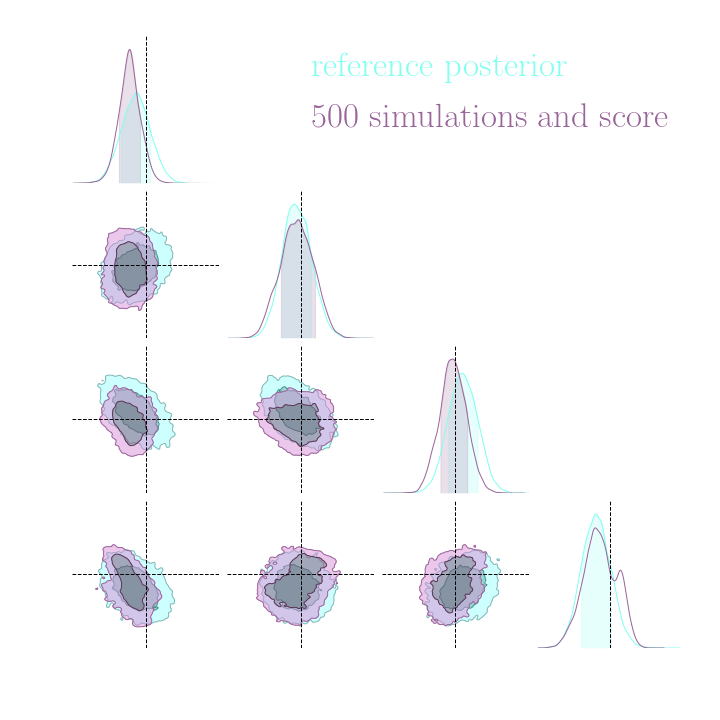
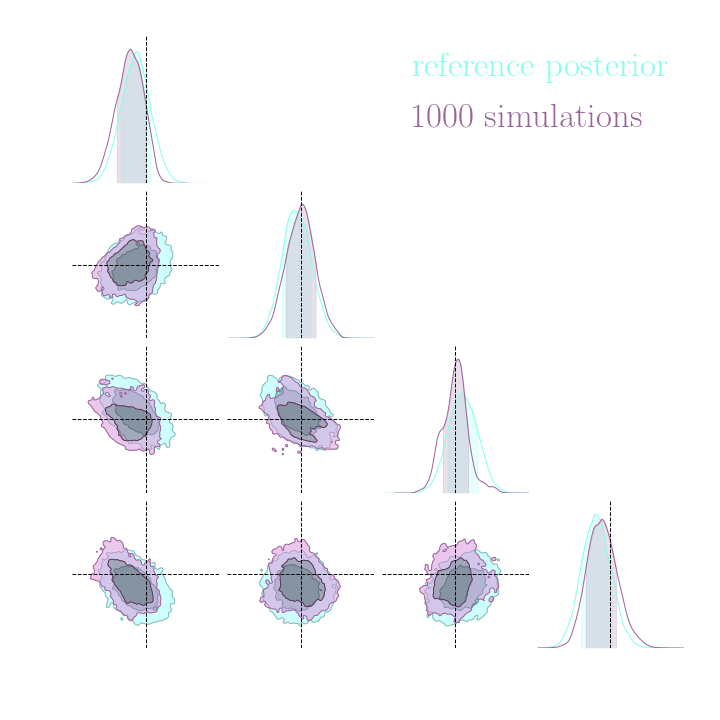
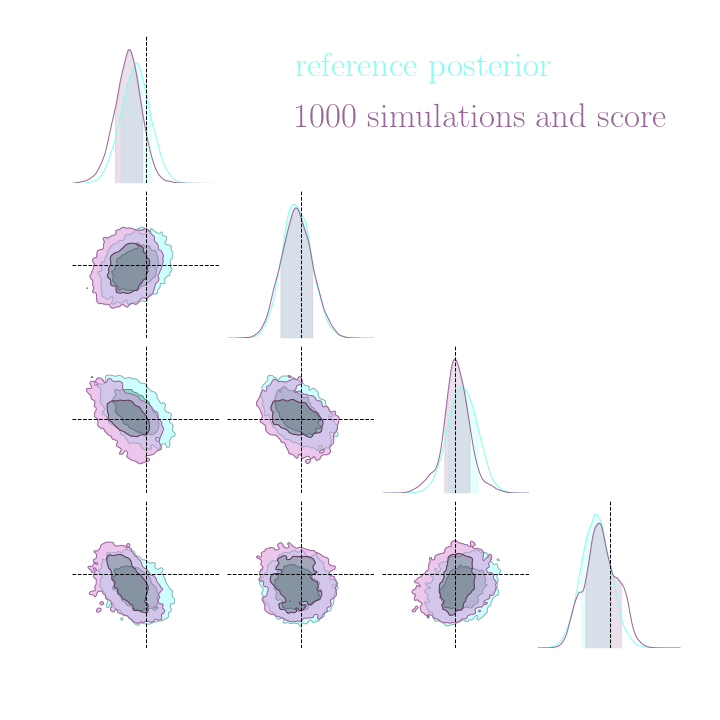
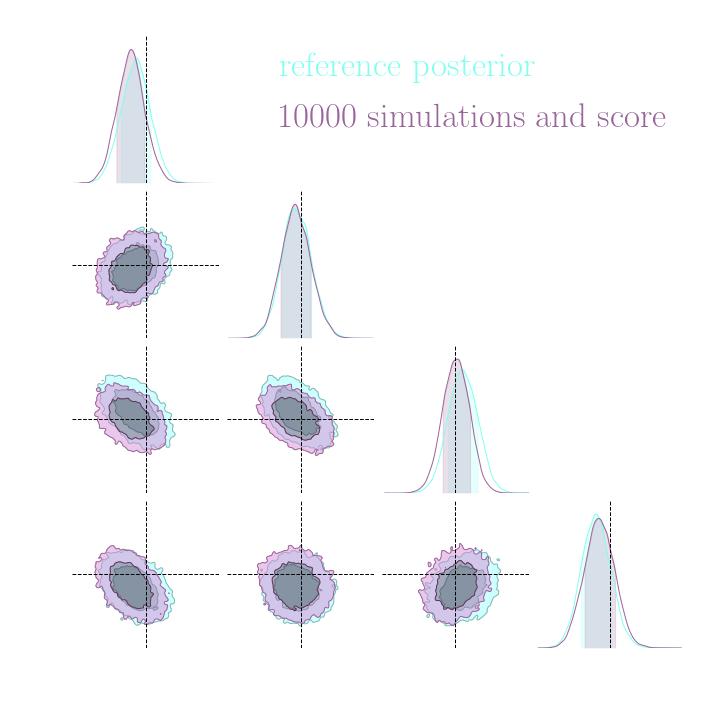
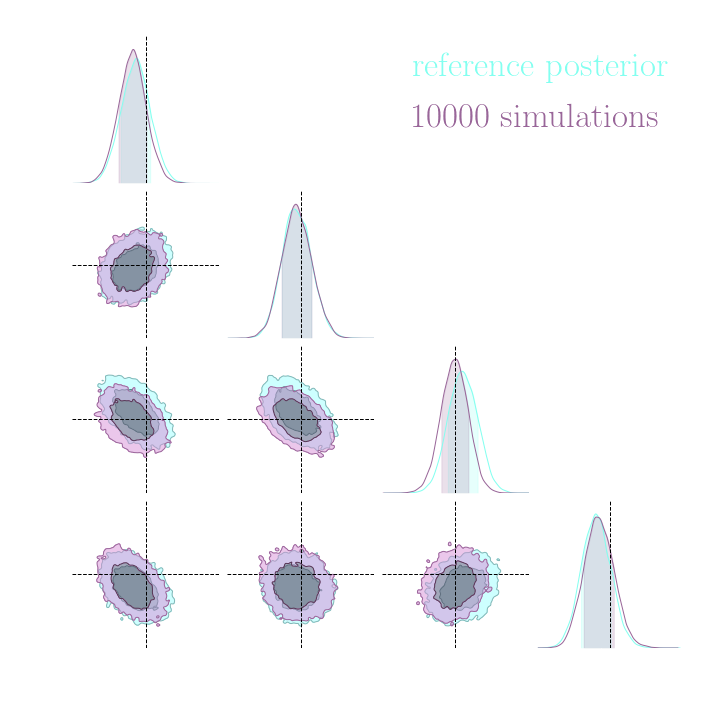
Without gradients
With gradients
Some results
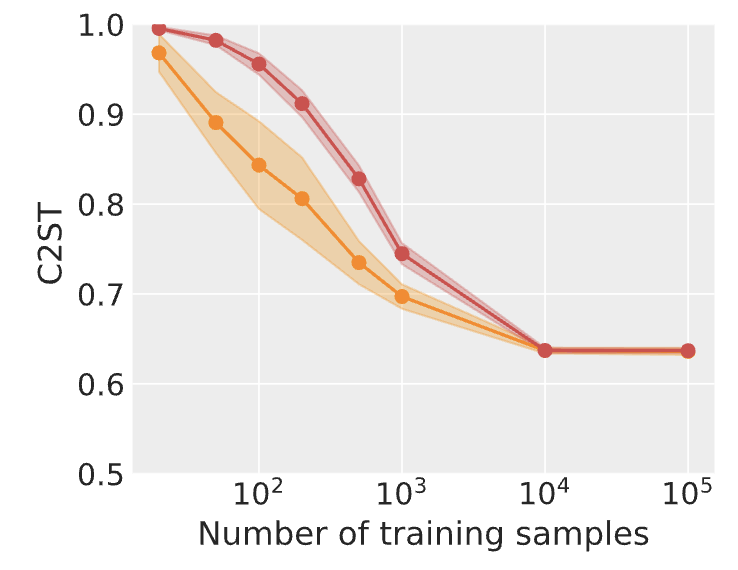
Without gradients
With gradients
Brehmer et al. (2018), Zeghal et al. (2022)
Implicit inference with few simulations
Neural-based SBI
Application to Weak Lensing Cosmology
Zeghal et al. (2024)
Implicit inference with few simulations
Neural-based SBI
Application to Weak Lensing Cosmology
Zeghal et al. (2024)
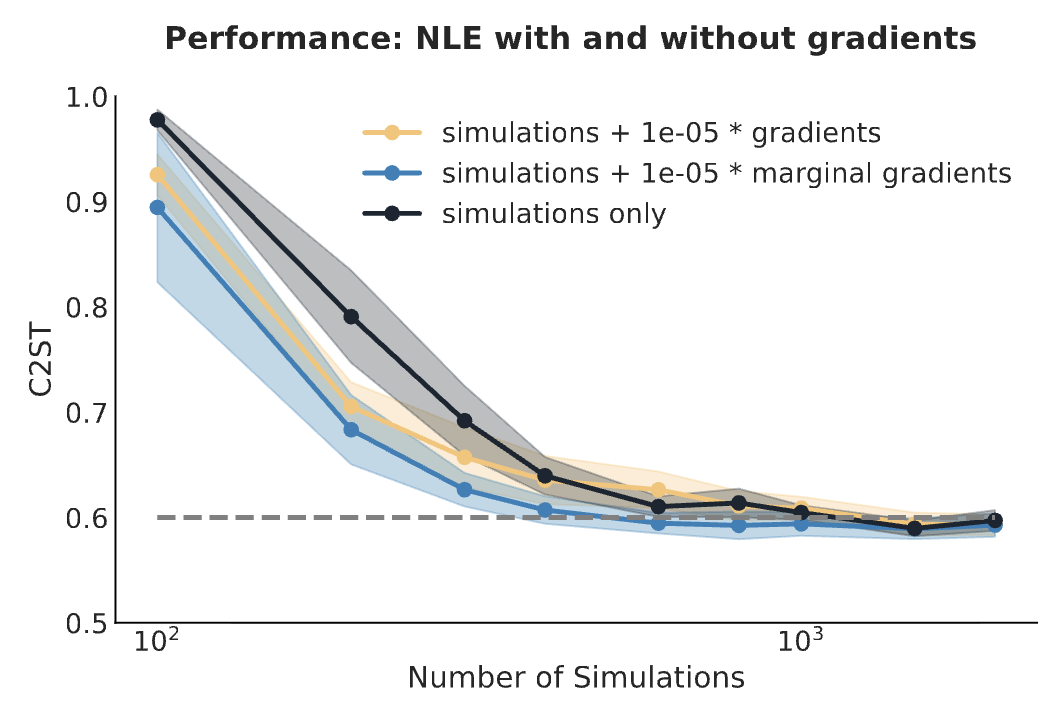
No improvements when using the gradients.
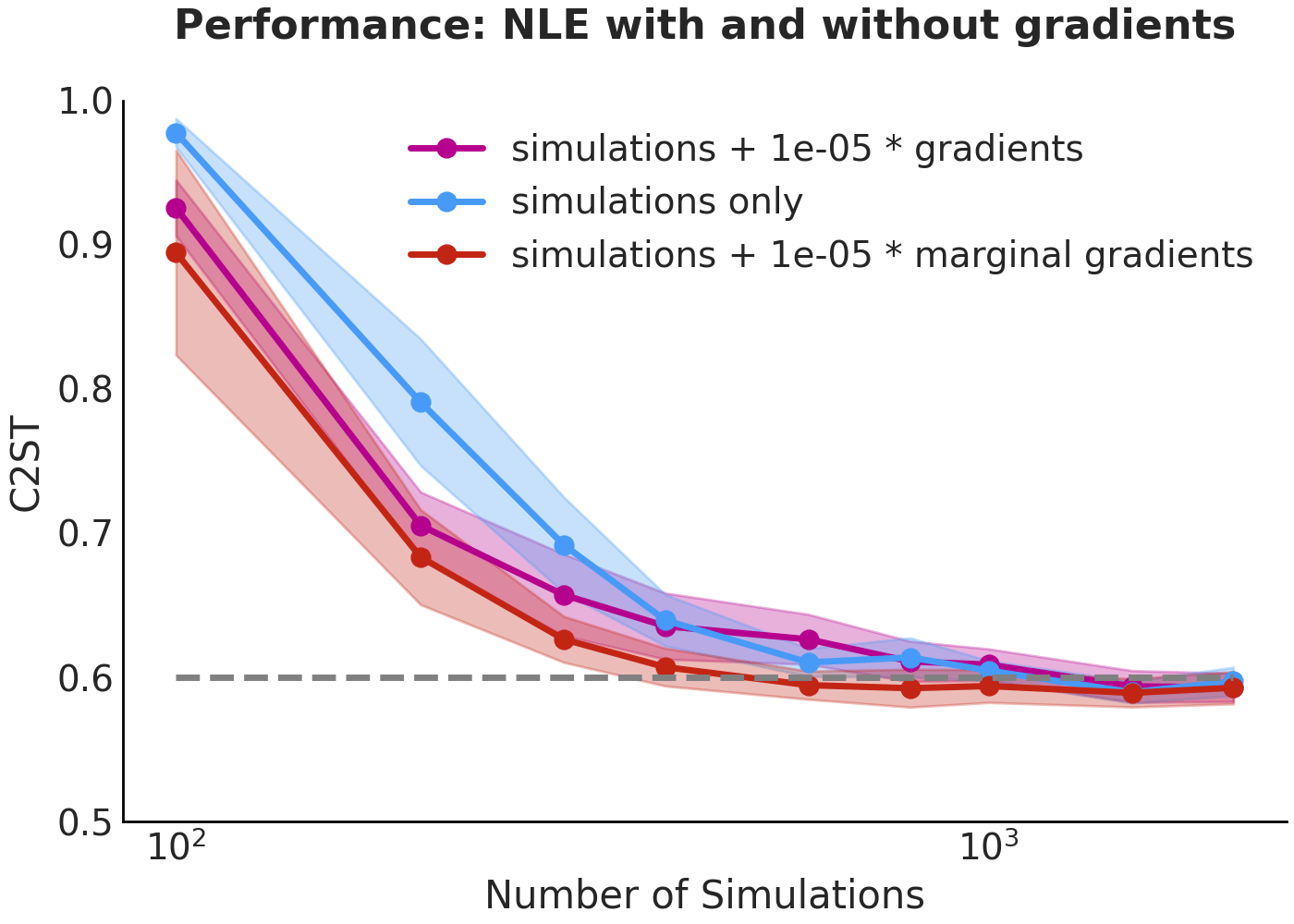
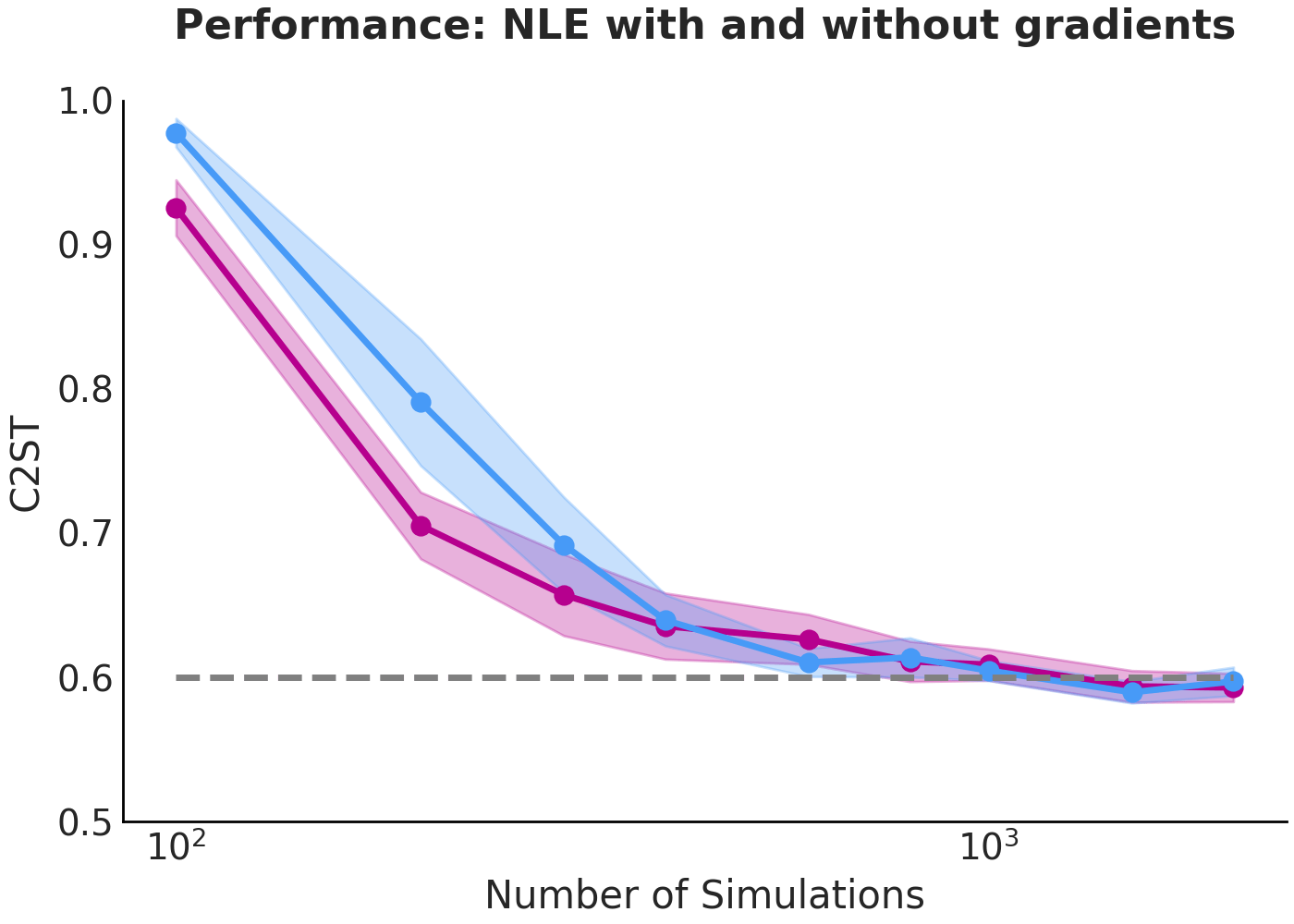
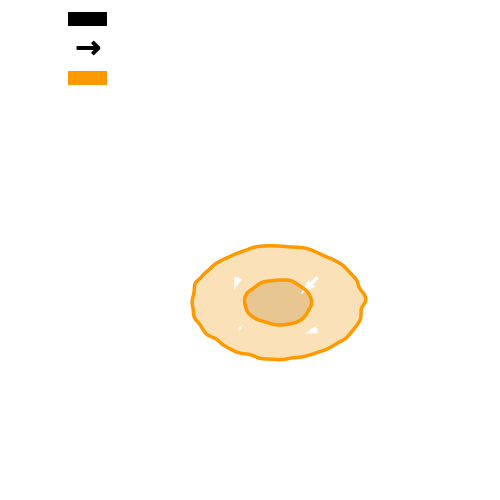
We are using the joint gradients:
\nabla_{\theta} \log p(\theta, z |x) \neq
\nabla_\theta \log p(\theta|x)
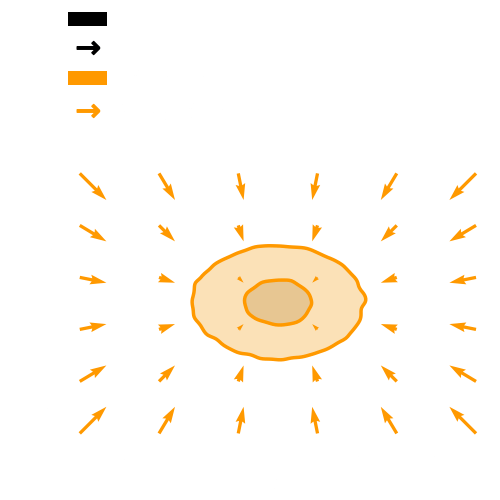
Need to check your gradients before. And maybe use variance reduction techniques.
Building more simulations at low cost
Building more simulations at low cost
Building more simulations at low cost
→ e.g. log-normal, LPT, PM
| O(ms) runtime | ✅ |
| differentiable | ✅ |
| realistic | ❌ |
Fast simulations
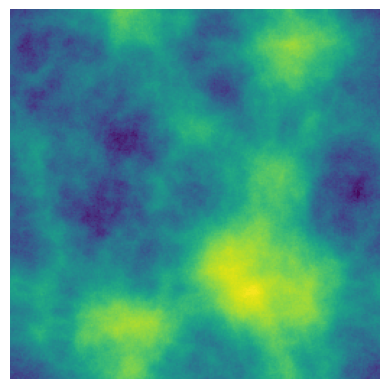
→ e.g. full nbody, hydro
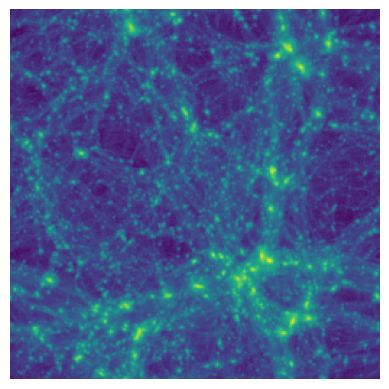
Costly simulations
| O(ms) runtime | ❌ |
| differentiable | ❌ |
| realistic | ✅ |
f_\varphi
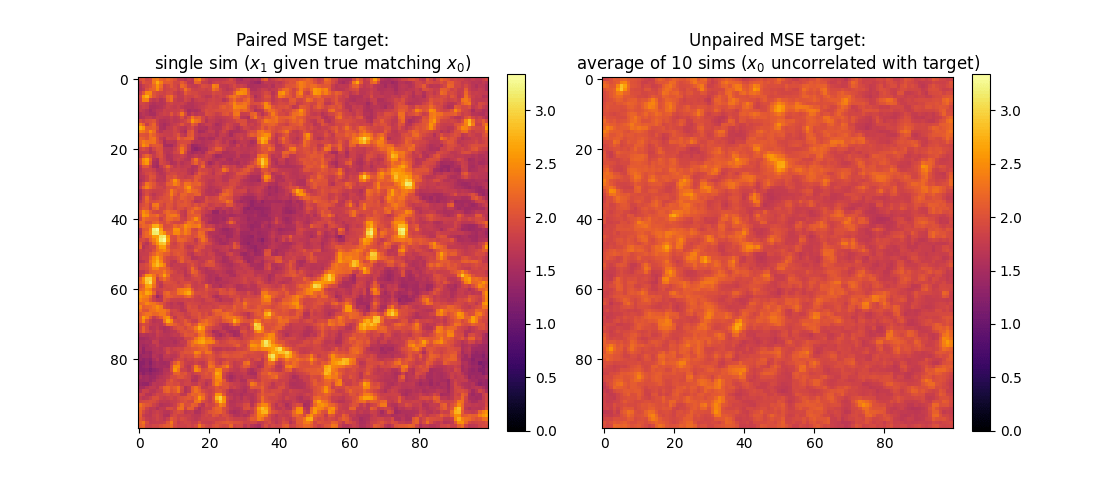
We can learn the mapping between a cheap and a realistic simulation
Easier to learn a small correction & requires fewer simulations
One way to do:
\mathbb{E}_{p(x_1,x_0)} \Big[ \| \color{#b6008e}{f_\varphi} \color{black}{(x_0)- x_1 \|^2 \Big]}
minimized by
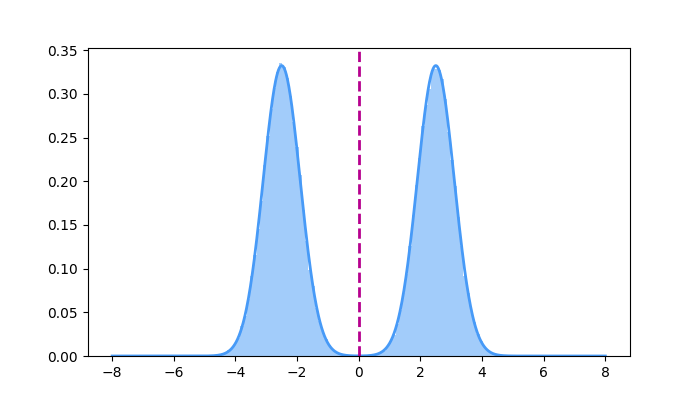
\color{#b6008e}{f_\varphi}^* \color{black}{(x_0)=\mathbb{E}_{p(x_1\mid x_0)} [x_1] }
which is fine if, for instance , is a dirac
p(x_1 \mid x_0)
Building more simulations at low cost
p(x_1\mid x_0)
\color{#b6008e}{f_\varphi}^* \color{black}{(x_0)}
We can learn the mapping between a cheap and a realistic simulation
Easier to learn a small correction & requires fewer simulations
One way to do:
\mathbb{E}_{p(x_1,x_0)} \Big[ \| \color{#b6008e}{f_\varphi} \color{black}{(x_0)- x_1 \|^2 \Big]}
minimized by
\color{#b6008e}{f_\varphi}^* \color{black}{(x_0)=\mathbb{E}_{p(x_1\mid x_0)} [x_1] }
which is fine if, for instance , is a dirac
p(x_1 \mid x_0)
Building more simulations at low cost
Building more simulations at low cost
We can learn the mapping between a cheap and a realistic simulation
Easier to learn a small correction & requires fewer simulations
One way to do:
\mathbb{E}_{p(x_1,x_0)} \Big[ \| \color{#b6008e}{f_\varphi} \color{black}{(x_0)- x_1 \|^2 \Big]}
minimized by
\color{#b6008e}{f_\varphi}^* \color{black}{(x_0)=\mathbb{E}_{p(x_1\mid x_0)} [x_1] }
which is fine if, for instance , is a dirac
p(x_1 \mid x_0)
p(x_1\mid x_0)
\color{#b6008e}{f_\varphi}^* \color{black}{(x_0)}
p(x_1\mid x_0)
x_1 \sim p(x_1)
when is not a dirac we should use generative models to get probable samples
Building more simulations at low cost
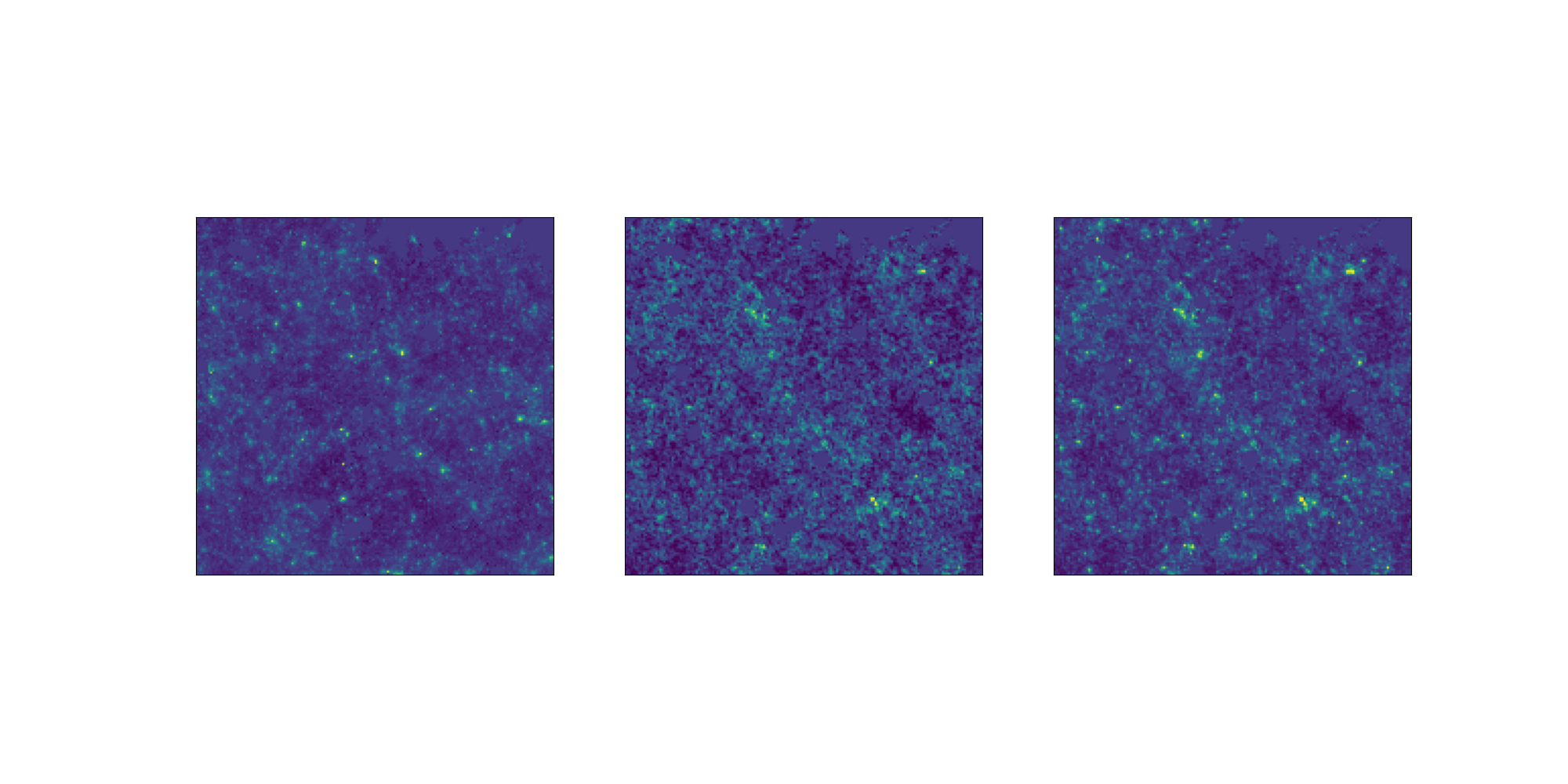
For instance, in Zeghal et al. (2025) we aim to approximate
p(x_1\mid \theta)
from unpaired simulations
- is not a dirac
p(x_1 \mid x_0)
- how to benefit from the approximate simulations?
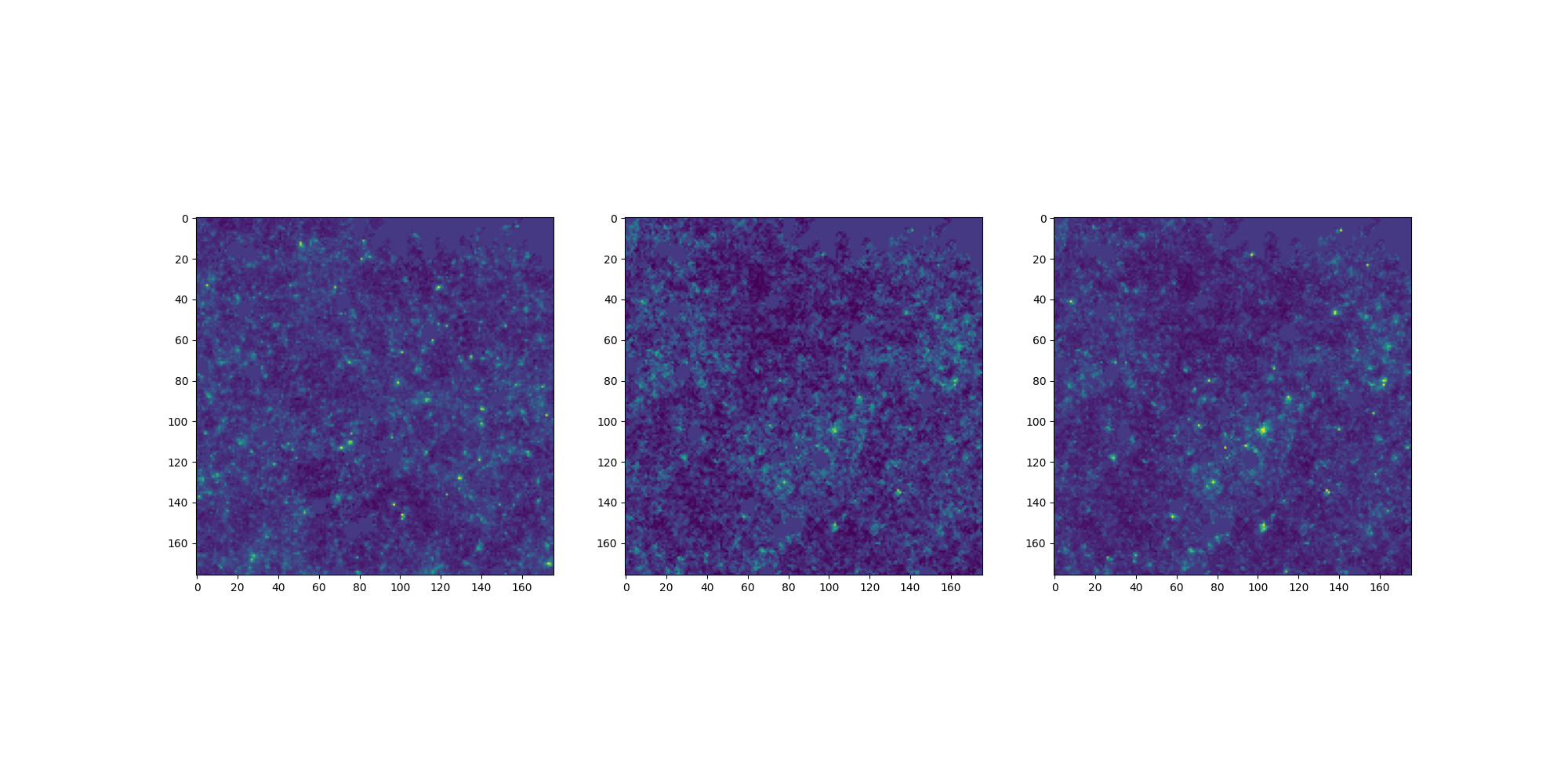
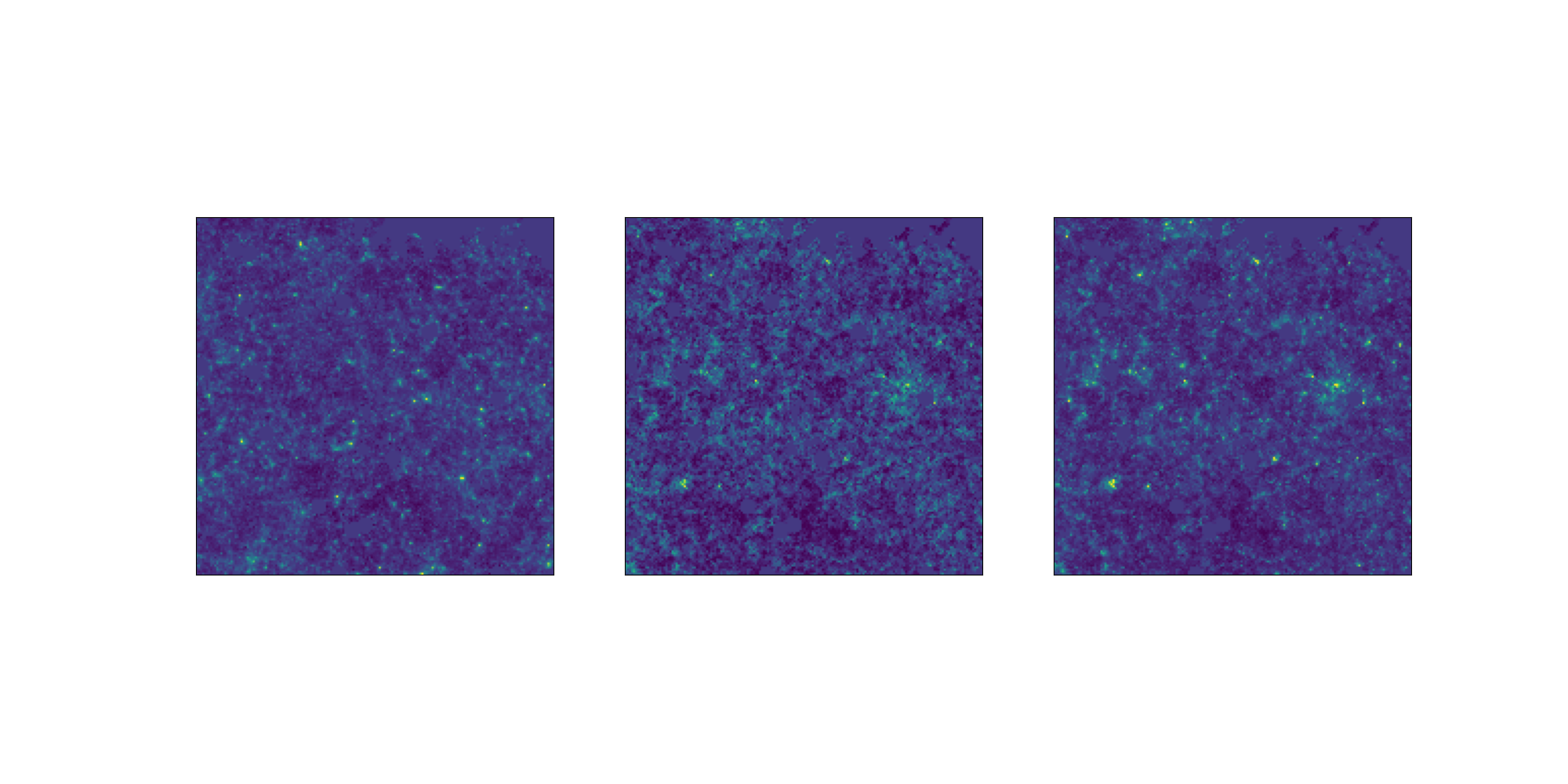
Dataset 2
x^D_1
x^E_1
x^F_1
\theta^D
\theta^E
\theta^F
Dataset 1
x^A_0
x^B_0
x^C_0
\theta^A
\theta^B
\theta^C
unlearning dataset 1 would requires more simulations than starting from gaussian noise
Conditional Optimal Transport Flow Macthing (Kerrigan et al. 2024)
Building more simulations at low cost
Conditional Optimal Transport Flow Macthing (Kerrigan et al. 2024)
Building more simulations at low cost
p_0
p_1
p_t
We need to learn a continuous transformation solution of the ODE
f_t
\frac{d x}{dt} = \color{#479af7}{v}\color{black}{(x, t)}
velocity field
More flexible!
Conditional Optimal Transport Flow Macthing (Kerrigan et al. 2024)
Building more simulations at low cost
\frac{d x}{dt} = \color{#479af7}{v}\color{black}{(x, t)}
Conditional Optimal Transport Flow Macthing (Kerrigan et al. 2024)
Building more simulations at low cost
\frac{d x}{dt} = \color{#479af7}{v}\color{black}{(x, t)}
Credit: Gagneux et al. 2025
Conditional Optimal Transport Flow Macthing (Kerrigan et al. 2024)
Building more simulations at low cost
\mathcal{L}_{FM} = \mathbb{E}_{p(t)q(x_0,x_1)p_t(x_t\mid x_0,x_1)} \Big[ \| \color{#b6008e}{v_\varphi} \color{black}{(x_t,t)- v(x_t) \|^2 \Big]}
Lipman et al. (2023)
\frac{d x}{dt} = \color{#479af7}{v}\color{black}{(x, t)}
Conditional Optimal Transport Flow Macthing (Kerrigan et al. 2024)
Building more simulations at low cost
Lipman et al. (2023)
\frac{d x}{dt} = \color{#479af7}{v}\color{black}{(x, t)}
Conditional Optimal Transport Flow Macthing (Kerrigan et al. 2024)
\mathcal{L}_{FM} = \mathbb{E}_{p(t)q(x_0,x_1)p_t(x_t\mid x_0,x_1)} \Big[ \| \color{#b6008e}{v_\varphi} \color{black}{(x_t,t)- v(x_t|x_0,x_1) \|^2 \Big]}
Building more simulations at low cost
Lipman et al. (2023)
\frac{d x}{dt} = \color{#479af7}{v}\color{black}{(x, t)}
Conditional Optimal Transport Flow Macthing (Kerrigan et al. 2024)
\mathcal{L}_{FM} = \mathbb{E}_{p(t)q(x_0,x_1)p_t(x_t\mid x_0,x_1)} \Big[ \| \color{#b6008e}{v_\varphi} \color{black}{(x_t,t)- v(x_t|x_0,x_1) \|^2 \Big]}
p(x_t\mid x_0,x_1) = \mathcal{N}((1-t)x_1 + t x_0, \sigma)
v(x_t| x_0,x_1) = x_1 - x_0
with:
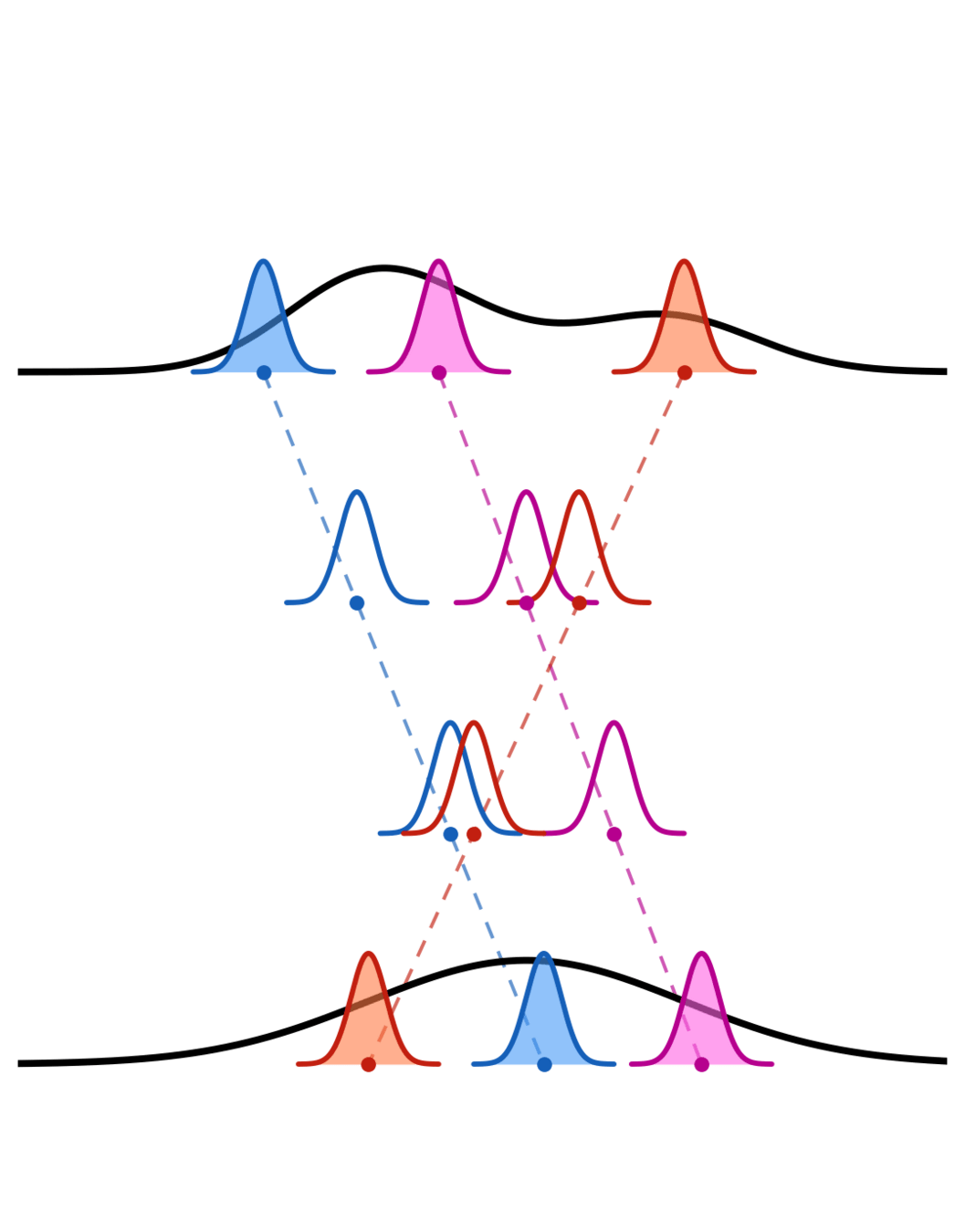
Tong et al. 2023
Building more simulations at low cost
\frac{d x}{dt} = \color{#479af7}{v}\color{black}{(x, t)}
Conditional Optimal Transport Flow Macthing (Kerrigan et al. 2024)
\mathcal{L}_{FM} = \mathbb{E}_{p(t)q(x_0,x_1)p_t(x_t\mid x_0,x_1)} \Big[ \| \color{#b6008e}{v_\varphi} \color{black}{(x_t,t)- v(x_t|x_0,x_1) \|^2 \Big]}
p(x_t\mid x_0,x_1) = \mathcal{N}((1-t)x_1 + t x_0, \sigma)
v(x_t| x_0,x_1) = x_1 - x_0
with:
Tong et al. 2023
- Continuous transformation + simulation-free training: high dimension ✅
- Interpolants framework: arbitrary source distribution ✅
Building more simulations at low cost
Conditional Optimal Transport Flow Macthing (Kerrigan et al. 2024)
- Continuous transformation + simulation-free training: high dimension ✅
- Interpolants framework: arbitrary source distribution ✅
Unlearning dataset 1 would requires more simulations than starting from gaussian noise
OT to find the minimal effort mapping
Building more simulations at low cost
Conditional Optimal Transport Flow Macthing (Kerrigan et al. 2024)
- Continuous transformation + simulation-free training: high dimension ✅
- Interpolants framework: arbitrary source distribution ✅
Unlearning dataset 1 would requires more simulations than starting from gaussian noise
OT to find the minimal effort mapping
Building more simulations at low cost
Conditional Optimal Transport Flow Macthing (Kerrigan et al. 2024)
- Continuous transformation + simulation-free training: high dimension ✅
- Interpolants framework: arbitrary source distribution ✅
Unlearning dataset 1 would requires more simulations than starting from gaussian noise
OT to find the minimal effort mapping
Building more simulations at low cost
Conditional Optimal Transport Flow Macthing (Kerrigan et al. 2024)
- Continuous transformation + simulation-free training: high dimension ✅
- Interpolants framework: arbitrary source distribution ✅
Unlearning dataset 1 would requires more simulations than starting from gaussian noise
OT to find the minimal effort mapping
Building more simulations at low cost
Conditional Optimal Transport Flow Macthing (Kerrigan et al. 2024)
x^A_0
x^D_1
❌
Building more simulations at low cost
Conditional Optimal Transport Flow Macthing (Kerrigan et al. 2024)
x^D_1
x^E_1
x^F_1
OT will find the "closest" map!
x^A_0
Building more simulations at low cost
Conditional Optimal Transport Flow Macthing (Kerrigan et al. 2024)
x^E_1
✅
x^A_0
Building more simulations at low cost
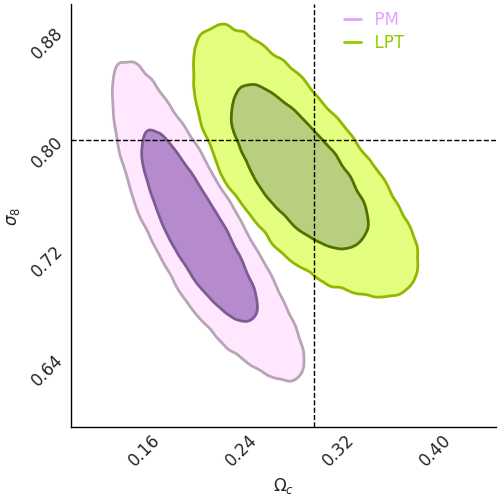
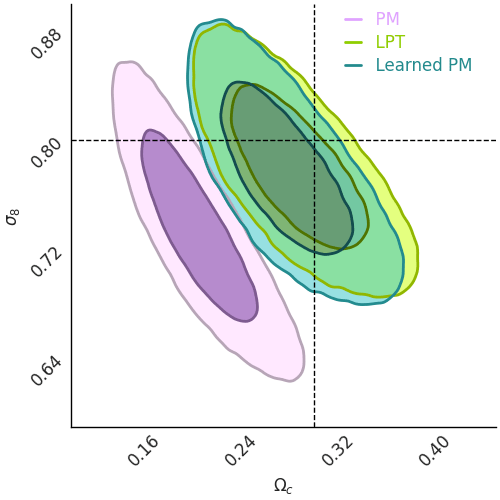
Zeghal et al. (2025)
p_{\text{cheap}}(\theta \mid x_{\text{cheap}} = x_{\text{realistic}})
p_{\text{realistic}}(\theta \mid x_{\text{realistic}} = x_{\text{realistic}})
p_{\text{emulated}}(\theta \mid x_{\text{emulated}} = x_{\text{realistic}})
Building more simulations at low cost


LogNormal
Emulated

Challenge simulation
VS
🥳

Zeghal et al. (2025)
Implicit inference with high dimensional data
Implicit inference with high dimensional data
Implicit inference with high dimensional observations is hard
p(x \mid \theta)
- NLE needs to learn
- NLE needs to learn
p(\theta \mid x)
- NPE needs to learn
NF are not good in high dimensions
Goal: to build sufficient statistics as a first step, and then run the NPE or NLE method.
t := f(x)
x
The NF needs to learn the distribution for each AND the complex relation between and
x
x
\theta
t := f(x)
x
I(\theta,t)
H(\theta)
H(t)
H(\theta|t)
H(t|\theta)
I(\theta,t) = H(t) - H(t|\theta)
p(\theta \: | \: x) = p(\theta \: | \: f(x))
\Leftrightarrow I(\theta, x) = I(\theta, f(x))
Sufficient Statistic:
Mutual information
Implicit inference with high dimensional data
p(\theta \: | \: x) = p(\theta \: | \: f(x))
\Leftrightarrow I(\theta, x) = I(\theta, f(x))
Sufficient Statistic:
Mutual information
x
Only a matter of the loss function we use!
t := f(x)
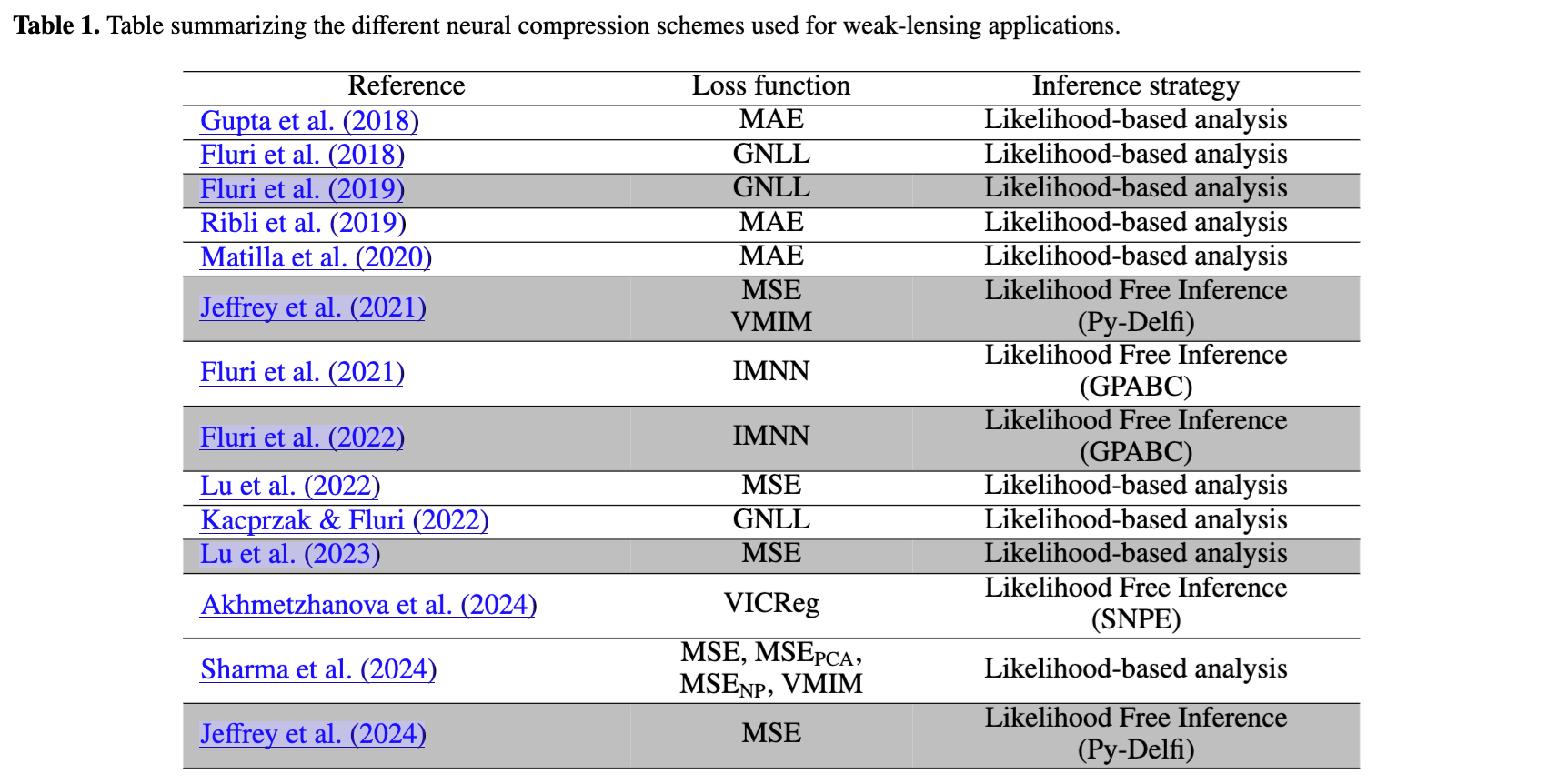
Lanzieri & Zeghal et al. (2025)
Implicit inference with high dimensional data
Regression Losses
Information-based Losses
p(\theta \mid x_0)
p(\theta \mid x_1)
p(\theta \mid t = t_0= t_1 =....=t_N)
I(\theta, x) = I(\theta, f(x))
\mathcal{L}_{\text{MIM}} =\underset{f}{\text{ max }} I(\theta, f(x))
→ Build sufficient statistics by definition.
Mean Squared Error (MSE) loss:
\mathcal{L}_{\text{MSE}} = \mathbb{E}_{p(x,\theta)} \left[\parallel \theta - f_\varphi(x) \parallel ^2 \right]
→ Approximate the mean of the posterior.
p(\theta \: | \: x) = p(\theta \: | \: f(x))
\Leftrightarrow I(\theta, x) = I(\theta, f(x))
Sufficient Statistic:
Implicit inference with high dimensional data
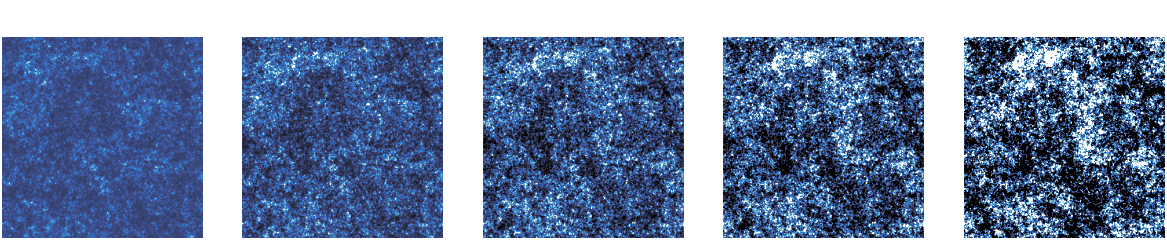
t = f_{\varphi}(x)
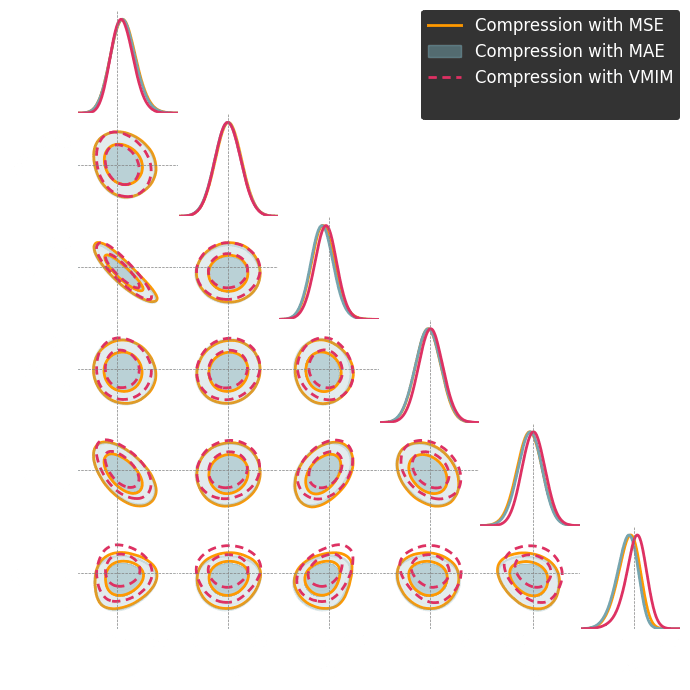
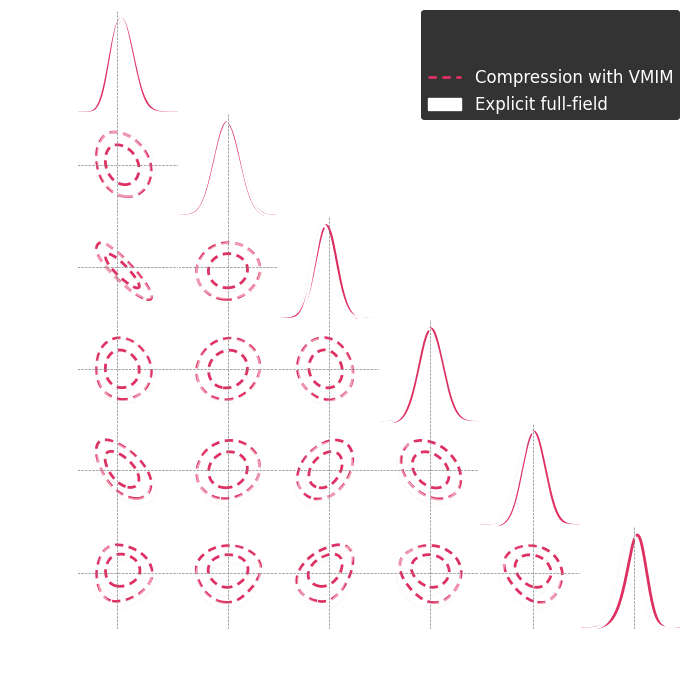
Lanzieri & Zeghal et al. (2025)
Implicit inference with high dimensional data
How to validate the inference?
How to validate the inference?
\hat{p}(y\mid x)
p(y\mid x)
Biased
\hat{p}(y\mid x)
p(y\mid x)
Overconfident
\hat{p}(y\mid x)
p(y\mid x)
Underconfident
Sharief & Zeghal et al. (2026)
How to validate the inference?
\hat{p}(y\mid x)
p(y \mid x)
.
Theorem:
Two distributions are equal if their probability measures are the same over all measurable sets.
6 pink samples
5 blue samples
✅
6 pink samples
5 blue samples
✅
Sharief & Zeghal et al. (2026)
How to validate the inference?
\hat{p}(y\mid x)
p(y \mid x)
.
Theorem:
Two distributions are equal if their probability measures are the same over all measurable sets.
6 pink samples
5 blue samples
✅
6 pink samples
5 blue samples
✅
6 pink samples
✅
6 pink samples
7 blue samples
✅
Sharief & Zeghal et al. (2026)
How to validate the inference?
\hat{p}(y\mid x)
p(y \mid x)
.
Theorem:
Two distributions are equal if their probability measures are the same over all measurable sets.
6 pink samples
5 blue samples
✅
6 pink samples
5 blue samples
✅
6 pink samples
✅
6 pink samples
7 blue samples
✅
✅
8 pink samples
7 blue samples
✅
Sharief & Zeghal et al. (2026)
How to validate the inference?
\hat{p}(y\mid x)
p(y \mid x)
Theorem:
Two distributions are equal if their probability measures are the same over all measurable sets.
6 pink samples
5 blue samples
✅
6 pink samples
5 blue samples
✅
6 pink samples
✅
6 pink samples
7 blue samples
✅
✅
8 pink samples
7 blue samples
✅
.
Sharief & Zeghal et al. (2026)
How to validate the inference?
\hat{p}(y\mid x)
p(y \mid x)
.
Bayesian approach: what is the probability that the true sample lies inside or outside the region given than n samples from the proposed one are inside?
p(k\mid n)
Theorem:
\text{If } \hat{p}(y \mid x) = p(y \mid x) \text{ then }\: p(k \mid n) \sim Beta(2,1)
Lemma:
\text{If } \hat{p}(y \mid x) = p(y \mid x) \text{ then }
\mu_{Mira} = \mathbb{E}_{p(k,n)}\left[p(k \mid n)\right] = 2/3
= \frac{n+1}{N+2}1_{(k=1)}+ \frac{N-n+1}{N+2}1_{(k=0)}
Sharief & Zeghal et al. (2026)
How to validate the inference?
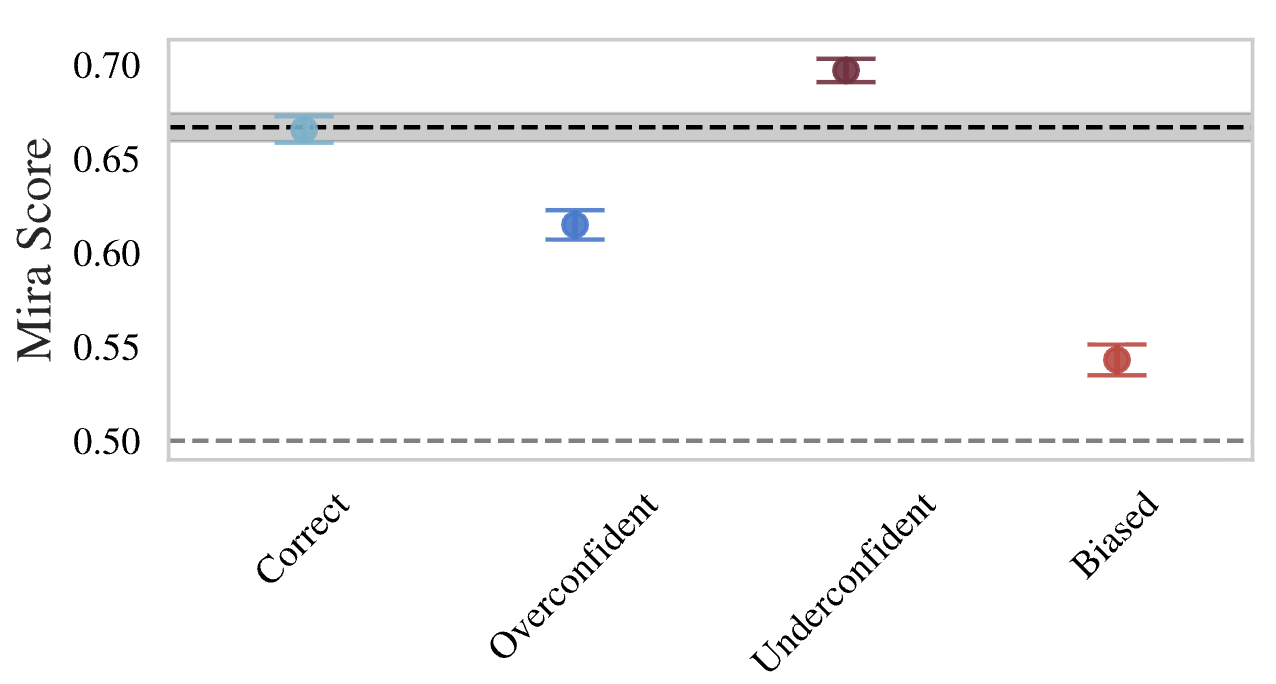
Is it working?
Check the paper for other examples!
Sharief & Zeghal et al. (2026)
How to validate the inference?
Benefits
- Sample-based
- Can work with few samples
- Works in high dimension
- Does not rely on training a model
- Detect miscalibration even when other scores fail
- It is a scalar value
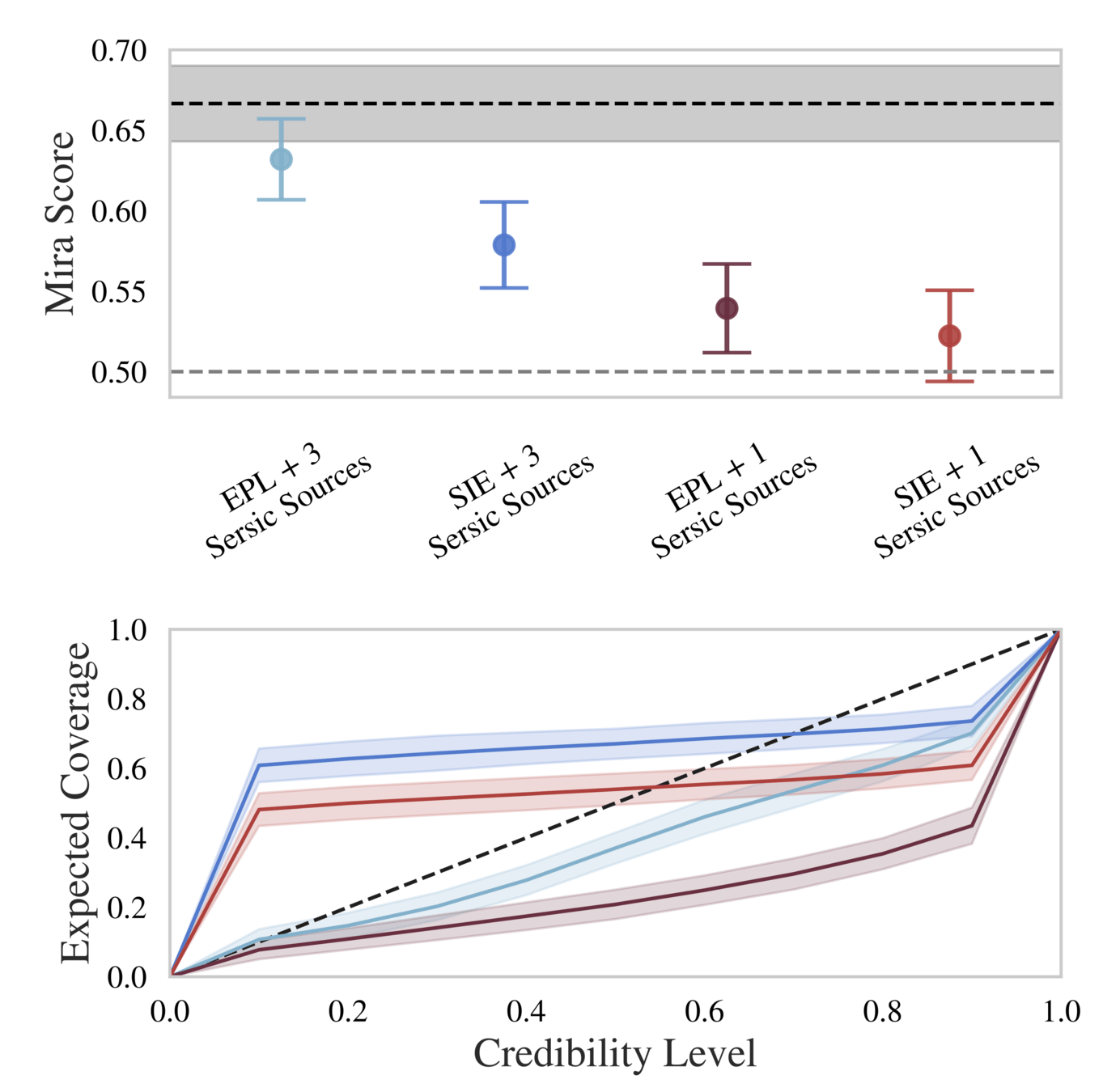
Which posterior is the best?
Sharief & Zeghal et al. (2026)
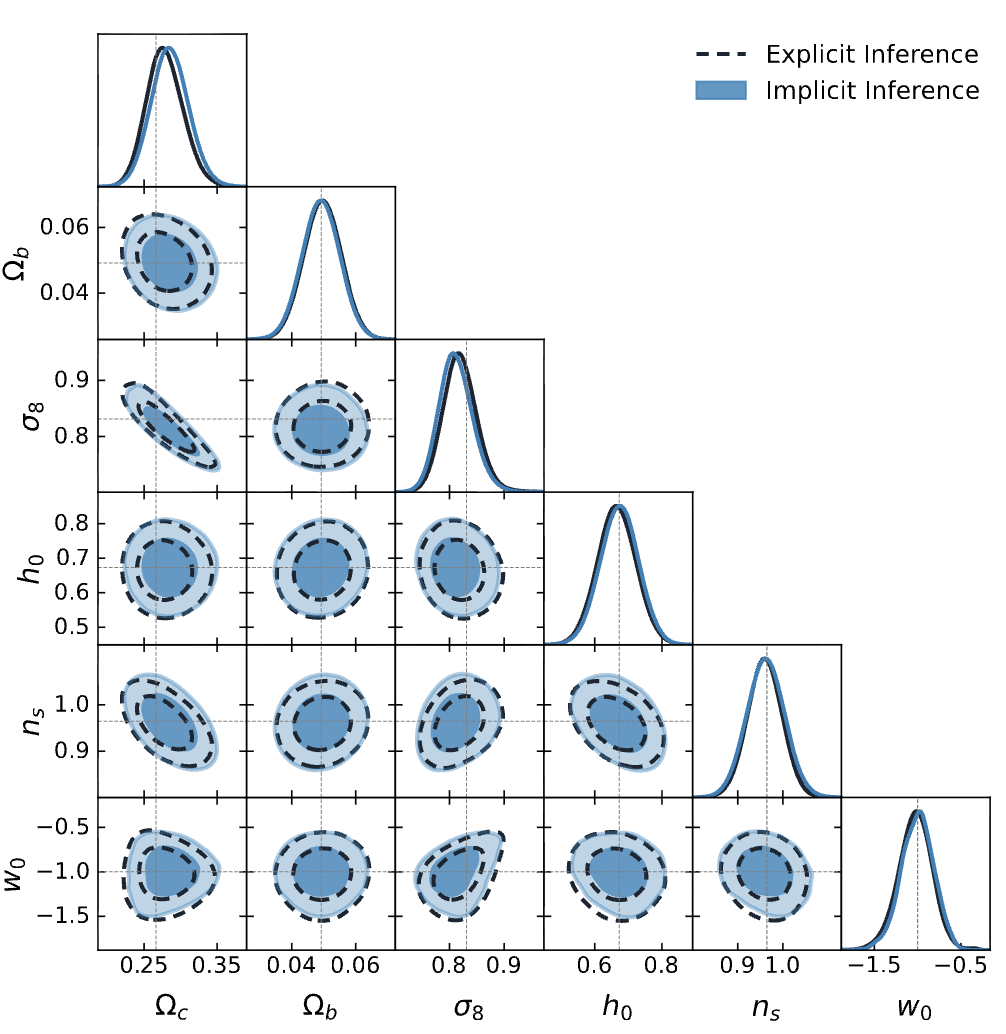
Best validation method: Comparing Explicit and Implicit
Comparing Explicit and Implicit
Omori & Zeghal et al. (2026)
Explicit inference becomes more challenging as the realism (i.e. the complexity) of the simulator increase
In WL: we infer 3D ICs from a 2D field
Before us in WL: only LPT simulators have been used but never validated against implicit
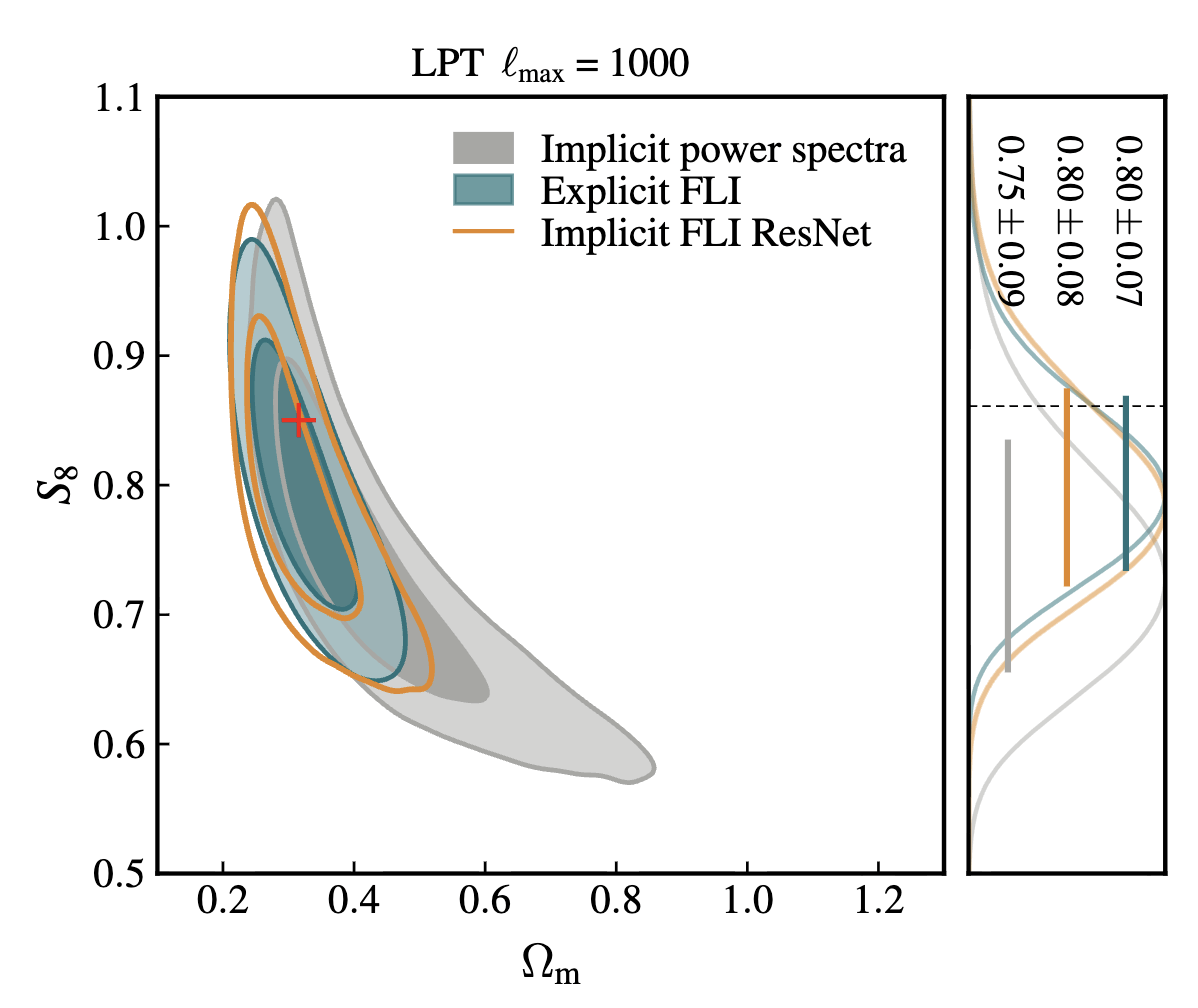
LPT sampling works fine
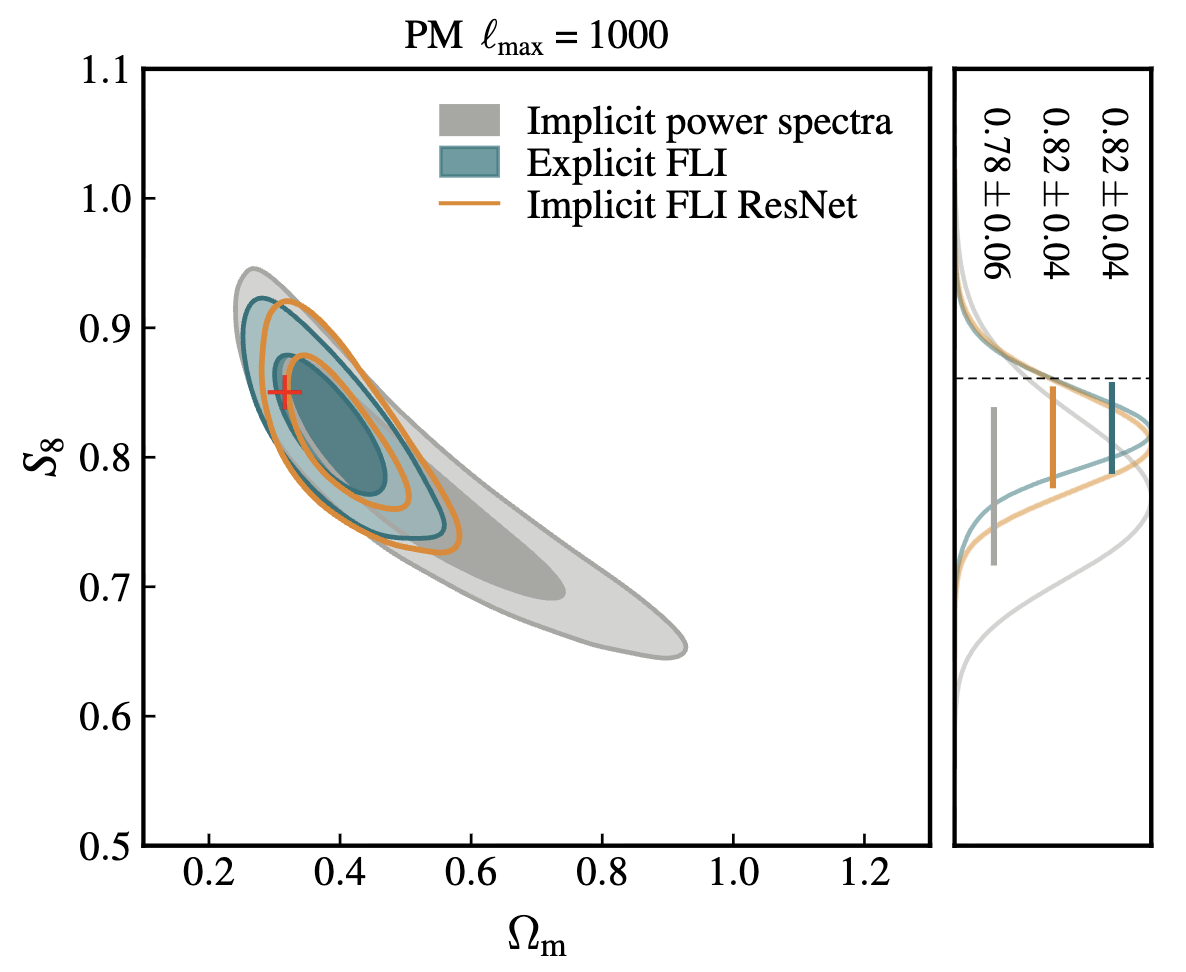
We pushed the comparison to PM Nbody simulators
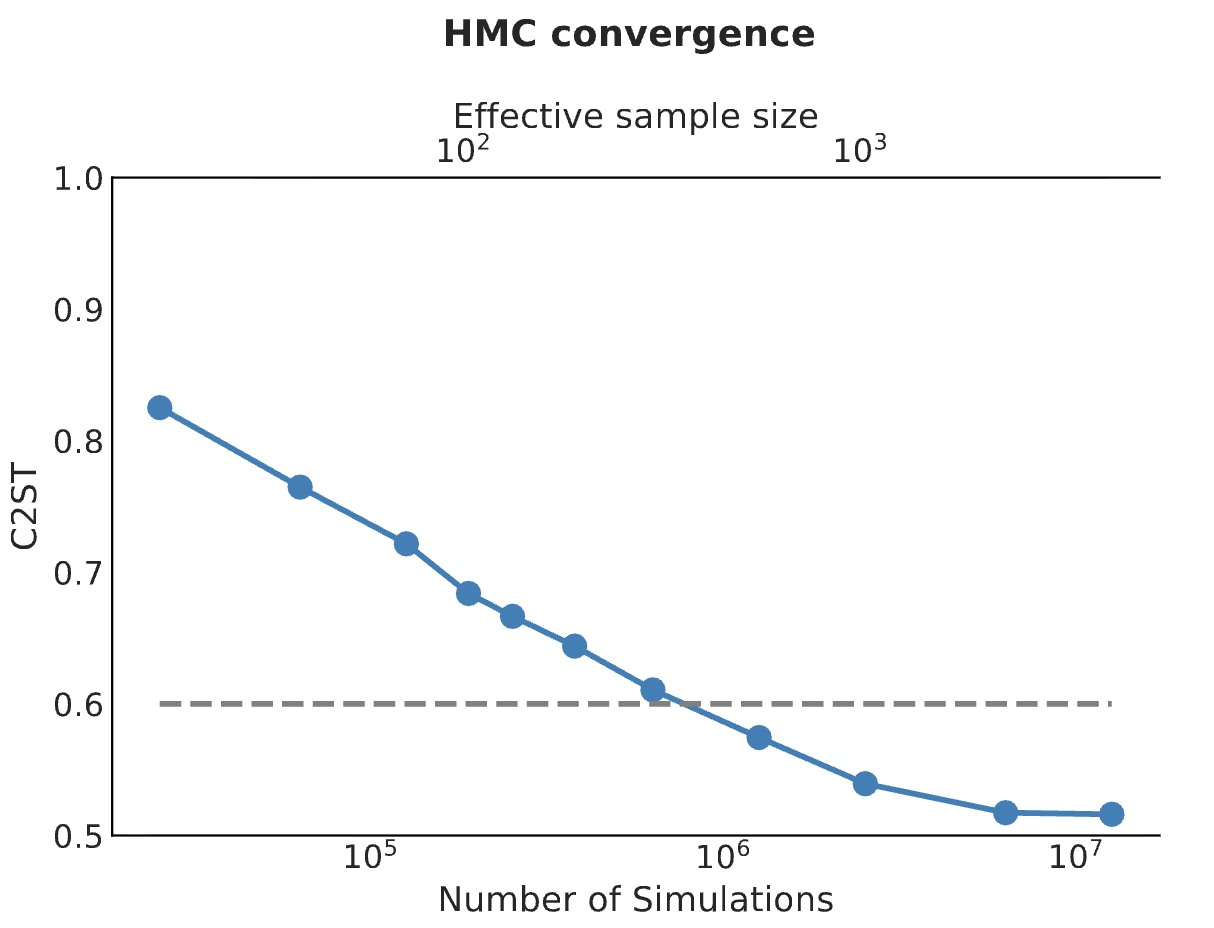
PM sampling works fine but it is very challenging
We need better sampling methods
We need explicit inference methods that can perform with fewer simulations
Zeghal et al. (2024)
Thank you for your attention!
PIML2026
By Justine Zgh