Basement Tanking Membrane: When a Cavity Drain System Is Used

Basement Tanking Membrane: When a Cavity Drain System Is Used — a practical guide to Type C studded membranes for below-ground rooms, using Terrain TM3 from Kingfisher Building Products.


A basement tanking membrane does not hold water back like a slurry coat. It creates a drained cavity so groundwater can be collected and taken away.


Kingfisher Building Products · Ulverston, Cumbria

Kingfisher Building Products logo

What a basement tanking membrane is

A basement tanking membrane is a studded sheet, often called an eggbox-profile or cavity drain membrane, used as part of a Type C waterproofing system.

  • The studs stand the membrane off the wall or floor and form a cavity behind it.
  • Water that reaches the structure is directed into perimeter drainage channels and, where required, a sump.
  • This is different from a bonded Type A slurry, which tries to hold water out of the room rather than drain it.
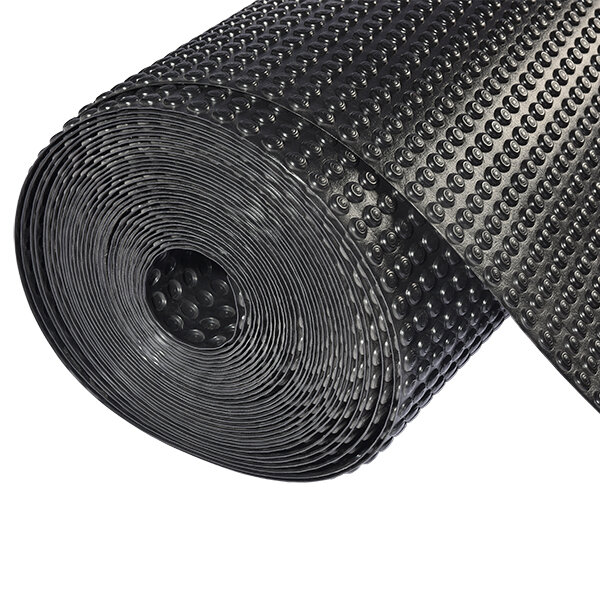
  • Terrain TM3 Membrane 2 Metres x 20 Metres - Mesh is a water-resistant studded membrane with polypropylene mesh on the finish face, so the wall can be rendered, plastered or dot-and-dab boarded on top.

When a membrane is the right choice

Kingfisher’s basement-tanking guidance describes Type C systems as a fit where water is managed rather than blocked:

  • New-build basements, high water-table sites, and refurbishment projects with significant groundwater.
  • Poor or uneven substrates, or structures where movement would put a bonded coat at risk.
  • Conversions where you need a dry internal face without relying on a slurry to resist hydrostatic pressure on its own.

A membrane is not a substitute for fixing obvious external defects: pointing, render, gutters and ground levels still matter. Partial coverage is high risk — water will often migrate around untreated areas.

How Type C differs from Type A tanking

Both are recognised in BS 8102, the code of practice for protecting below-ground structures against water ingress.

  • Type A (barrier / tanking slurry): a bonded coat on the walls and floor that resists water. It needs a sound, prepared substrate and the correct thickness. It does not relieve pressure; it only resists it.
  • Type C (drained protection / basement tanking membrane): the membrane and drainage manage water that reaches the structure, relieving hydrostatic pressure and leaving a dry internal face.
  • Type C is typically faster to install over large areas and needs less preparation of the wall surface, but it must be designed as a system (channels and, where required, a pumped sump) and then maintained.
  • Kingfisher notes that when a Type C system is used on an external new build, a Type A system is required as a backup.

Building Regulations guidance on resistance to moisture is in Approved Document C on GOV.UK.

Design the drainage, not just the sheet

A basement tanking membrane only works as part of a drained system.

  • Plan a continuous membrane on the walls and floor, detailed at junctions, doors, windows and service entries.
  • Provide perimeter drainage channels that can take water to a collection point.
  • Where gravity drainage is not available, a sump and pump will be required — and that pump needs power and ongoing maintenance.
  • Kingfisher states that a Type C system must be correctly designed by a competent specialist. If the structure is complex or the water pressure is high, get that design in place before you order rolls.

See cavity drain membranes for the current wall and floor membrane range.

Wall membrane: Terrain TM3 mesh

Terrain TM3 Membrane 2 Metres x 20 Metres - Mesh is supplied as a 2 m × 20 m roll (a 1 m × 20 m mesh roll is also listed). Product facts from the Kingfisher product page:

  • Studs form a regular pattern on one face; polypropylene mesh is bonded to the other.
  • Tough but pliable; cut to size with a sharp blade; easy to fold around windows and doors.
  • Suitable above and below ground.
  • Once fixed, the mesh face can be rendered, plastered or dot-and-dab boarded.
  • Described as waterproof, salt-inhibiting, and root- and contaminant-resistant, and as part of a Type C cavity drain membrane system in line with BS 8102.
  • Minimal preparation of wall surfaces; no slurry drying-out period, so finishes can follow once the system is installed.

Always follow the current technical data sheet for the roll you buy.

Official Terrain TM3 Mesh Membrane product image from Kingfisher.

Official Kingfisher Terrain TM3 mesh cavity drain membrane

Floor membrane: 3 mm stud

Floors need a membrane detailed into the same drained system as the walls.

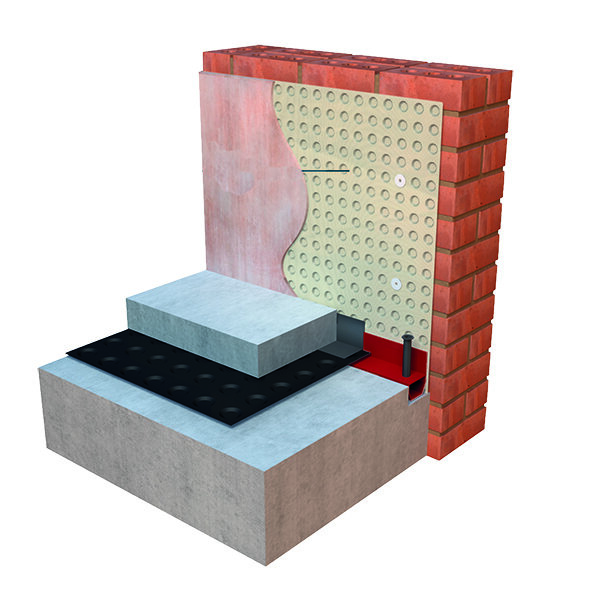
  • Kingfisher lists a Terrain TM3 floor membrane as a high-performance waterproofing membrane with a 3 mm stud, for use on walls and floors as part of a Type C cavity drain membrane waterproofing system.
  • The floor membrane and the wall membrane have to meet at the perimeter so water can reach the drainage channel.
  • Check the live product listing and data sheet before specifying a floor roll — availability and the exact accessory set can change.
  • Do not overlay a membrane on a floor that still has unresolved structural defects; the drainage path has to stay open.

Official Terrain TM3 Floor Membrane product image from Kingfisher.

Official Kingfisher Terrain TM3 floor membrane with 3 mm studs

Installation overview

This is a system outline, not a substitute for the data sheet or a waterproofing design:

  • Strip failed finishes only as far as the design requires. Type C typically needs less substrate preparation than a bonded slurry, but the drainage path must stay clear.
  • Fix the membrane with the correct plugs, tapes and sealing accessories for that system — do not invent centres or seal details.
  • Detail every junction, penetration, window and door reveal so water cannot bypass the cavity.
  • Connect the floor and wall membranes into the perimeter channel, then to the sump or drain.
  • Only then apply render, plaster, dot-and-dab board or a floor finish on the dry face of the membrane.

If you cannot get a clear drainage run or a maintained pump, stop and revisit the design rather than hanging a membrane with nowhere for the water to go.

When a membrane is the wrong starting point

  • Rising damp on an above-ground wall is a DPC problem, not a basement tanking membrane job.
  • A sound masonry cellar that can be fully stripped and coated may be a better fit for Type A slurry tanking, with no pump to maintain.
  • If you only need to hold back minor residual moisture on an otherwise dry wall, do not specify a full drained system by default — get advice first.
  • A membrane alone, with no designed drainage, is not a Type C system.

Preparation checklist

Before you order rolls, confirm:

  • □ The room is below ground and the problem is groundwater / soil moisture, not rising damp or a simple rain leak.
  • □ A Type C drained system is the right approach for this structure and water table.
  • □ Wall and floor areas, openings and junctions have been measured so you can order enough membrane and accessories.
  • □ Perimeter drainage and, if needed, a sump and power supply are designed in.
  • □ A competent specialist has reviewed the design where the risk is high.
  • □ You will follow the current data sheet for fixing, sealing and finishing the membrane you buy.

Get advice before you specify

Kingfisher Building Products manufactures tanking, cavity-drain membranes and damp-proofing products in the UK and offers free technical advice. Share the size of the room, the wall construction and what you are seeing so the team can help you choose the right system.

Kingfisher Building Products is not connected with Kingfisher plc or B&Q.

Kingfisher Building Products
Cooper Lane, Ulverston, Cumbria LA12 9RA
Tel: 01229 869100
office@kingfisheruk.com
Mon–Thu 08:30–17:00, Fri 08:30–16:30
https://www.kingfisheruk.com/

Basement Tanking Membrane: When a Cavity Drain System Is Used

By Kingfisher Building Products

Basement Tanking Membrane: When a Cavity Drain System Is Used

Basement Tanking Membrane: When a Cavity Drain System Is Used — when a studded Type C membrane is the right way to keep a below-ground room dry, how it differs from bonded slurry tanking, and which Kingfisher Terrain TM3 membranes are used on walls and floors. Category: https://www.kingfisheruk.com/shop-basement-tanking/cavity-drain-membranes

  • 44