How to Use DPC Injection Cream for Rising Damp

How to Use DPC Injection Cream for Rising Damp: a practical diagnosis, cream-injection and re-plastering guide using Dri-Wall from Kingfisher Building Products.

Confirm rising damp first. Inject cream into the mortar bed. Re-plaster for residual salts.

Kingfisher Building Products · Ulverston, Cumbria

Kingfisher Building Products logo

Start with DPC injection cream

Dri-Wall DPC Injection Cream is a ready-to-use chemical cream for forming a moisture barrier in masonry where rising damp is the confirmed problem.

  • The cream migrates through mortar beds and, once cured, forms an effective damp proof course (DPC) within the wall.
  • It is designed for solid and cavity walls, including single-brick (4.5 inch / 115 mm) and double-brick (9 inch / 230 mm) walls — follow the current data sheet for the pack you buy.
  • DIY kits are available so a powered injection pump is not required.

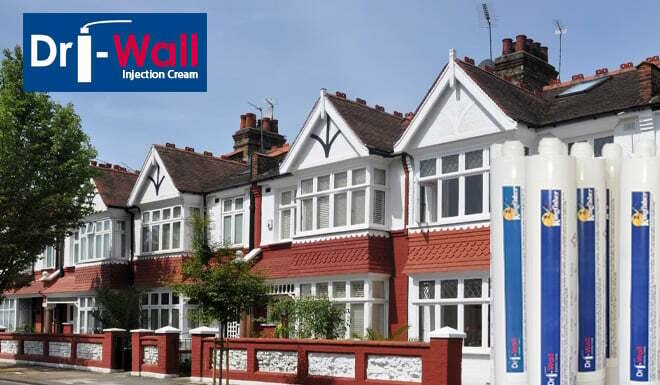
Official Dri-Wall cream product image from Kingfisher.

Official Kingfisher Dri-Wall DPC injection cream 380 ml cartridge

Diagnose before you drill

Damp at the base of a wall has several causes. DPC injection cream only addresses rising damp.

  • Rising damp: moisture moving up from the ground; low-level tide marks, salt deposits and deteriorating plaster.
  • Penetrating damp: rain or leaks through pointing, render, gutters or roofs — can appear at any height.
  • Bridged DPC / splashback: external ground, paths or render carrying moisture around an existing DPC.
  • Condensation: black mould on cold surfaces usually points to indoor humidity, not rising damp.

See DPC injection products once the cause is clear. Below-ground walls need tanking or a cavity-drain system, not a DPC.

Confirm rising damp carefully

  • Do not rely on a single moisture-meter reading; salts in contaminated plaster can make meters unreliable.
  • Building Regulations guidance on resistance to moisture is in Approved Document C on GOV.UK.
  • If you are unsure, an independent damp survey that looks at the whole building is worth considering before drilling.
  • Conservation advice for traditionally built properties often cautions against installing a DPC that is not needed.

Preparation checklist

Before opening a cartridge, check each item:

  • ☐ Confirm the damp is rising damp, not leaks, bridging, splashback or condensation.
  • ☐ Measure wall length and thickness so you order enough cream.
  • ☐ Remove damp-contaminated plaster from the affected area (product guidance: it will be contaminated even if it looks dry).
  • ☐ Plan the injection line in a mortar joint, ideally about 150 mm above outside ground level (per Dri-Wall product-page instructions).
  • ☐ Decide whether to work from inside or outside — both are described as acceptable.
  • ☐ Have a suitable applicator gun and the correct nozzle for the wall thickness ready.

Choose cream or a kit

Kingfisher supplies cream cartridges and kits with no powered pump required:

  • 380 ml tubes: fit most good-quality skeleton guns for smaller jobs; nozzle suitability depends on wall thickness — use the companion nozzle for thicker or cavity walls as the product page describes.
  • 1 litre cartridges: for larger / professional work; need the dedicated gun and nozzle.
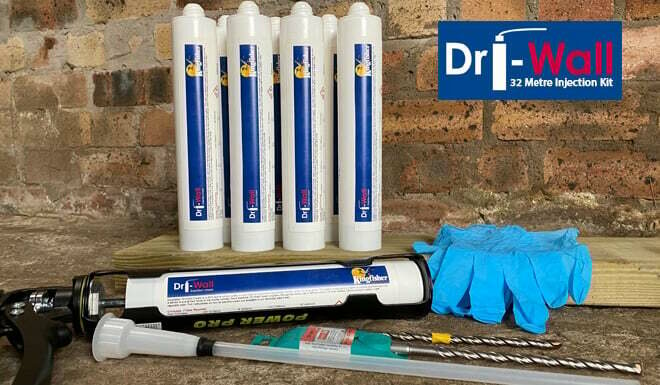
  • 32 m Mini Kit: 8 × 380 ml Dri-Wall tubes, Power Pro sealant gun, Dri-Wall nozzle, two HSS drill bits (10 mm × 260 mm and 10 mm × 160 mm) and latex gloves.
  • 80 m Professional Kit: for larger jobs such as several rooms or a whole ground floor.

Official 32 m Mini Kit product image from Kingfisher.

Official Kingfisher 32 metre Dri-Wall DPC injection kit

How much cream?

Coverage figures from the Dri-Wall product page (per cartridge / tube):

Pack Approx. treatment length
380 ml tube Up to 4.4 m at 4.5" (115 mm) wall thickness
380 ml tube Up to 2.2 m at 9" (230 mm) wall thickness
1 litre cartridge Up to 11 m at 4.5" (115 mm) — confirm remaining thicknesses on the current product page / data sheet

Thicker walls need more cream per metre. Measure before ordering; ask the technical team with length and thickness if unsure.

Inject cream into the mortar bed

Process overview from the Dri-Wall product-page instructions (always follow the current data sheet):

  1. Remove contaminated plaster from the affected area.
  2. Mark the injection line in a mortar joint, ideally about 150 mm above outside ground level.
  3. Drill holes into the mortar bed at roughly 120 mm intervals (product-page instruction).
  4. Inject / "load" each hole with Dri-Wall cream using the correct gun and nozzle for the wall thickness.
  5. Allow the wall to dry — masonry dries slowly; residual moisture and salts remain for a while.
  6. Re-plaster with a salt-resistant renovating plaster, not ordinary gypsum plaster.

Re-plaster for residual salts

  • Treating the source is only half the job. Moisture and salts already in the wall can keep damaging the surface while it dries.
  • Kingfisher recommends a salt-resistant renovating plaster such as Limelite as part of the remedial specification.
  • Ordinary "off-the-shelf" browning plasters often cannot cope with the drying-out process on salt-contaminated walls.
  • Once dry enough, finishing with an appropriate breathable coating can help the wall release residual moisture.

When cream injection is the wrong fix

  • The damp is from leaks, defective pointing, bridging or splashback — fix the source instead.
  • The problem is condensation and mould — ventilation, heating and mould treatment are the answer.
  • The wall is below ground (cellar / basement) — use a tanking or cavity-drain system, not a DPC.
  • You are not sure of the diagnosis — get a survey before drilling.

Check with the manufacturer before you buy

Have wall length, thickness and what you are seeing ready when asking for advice.

  • Choose cream or a kit to match the job size and wall build-up.
  • Confirm diagnosis before ordering.
  • Follow the current technical data sheet for the pack you buy.

Kingfisher Building Products supplies DPC injection creams, kits and technical guidance.

Kingfisher Building Products is not connected with Kingfisher plc or B&Q.

Kingfisher Building Products, Cooper Lane, Ulverston, Cumbria LA12 9RA, 01229 869100, office@kingfisheruk.com, Mon–Thu 08:30–17:00, Fri 08:30–16:30, https://www.kingfisheruk.com/

Legal footer: Kingfisher Building Products Ltd (SC249720), Ulverston LA12 9RA. Sealants, coatings & damp-proofing. Not connected with Kingfisher plc or B&Q.

How to Use DPC Injection Cream for Rising Damp

By Kingfisher Building Products

How to Use DPC Injection Cream for Rising Damp

How to Use DPC Injection Cream for Rising Damp: diagnose rising damp correctly, choose a cream kit, inject into the mortar bed and re-plaster with a salt-resistant renovating plaster, using Kingfisher Dri-Wall product guidance. Category: https://www.kingfisheruk.com/shop-damp-proofing/damp-proofing-walls-dpc-injection
  • 163