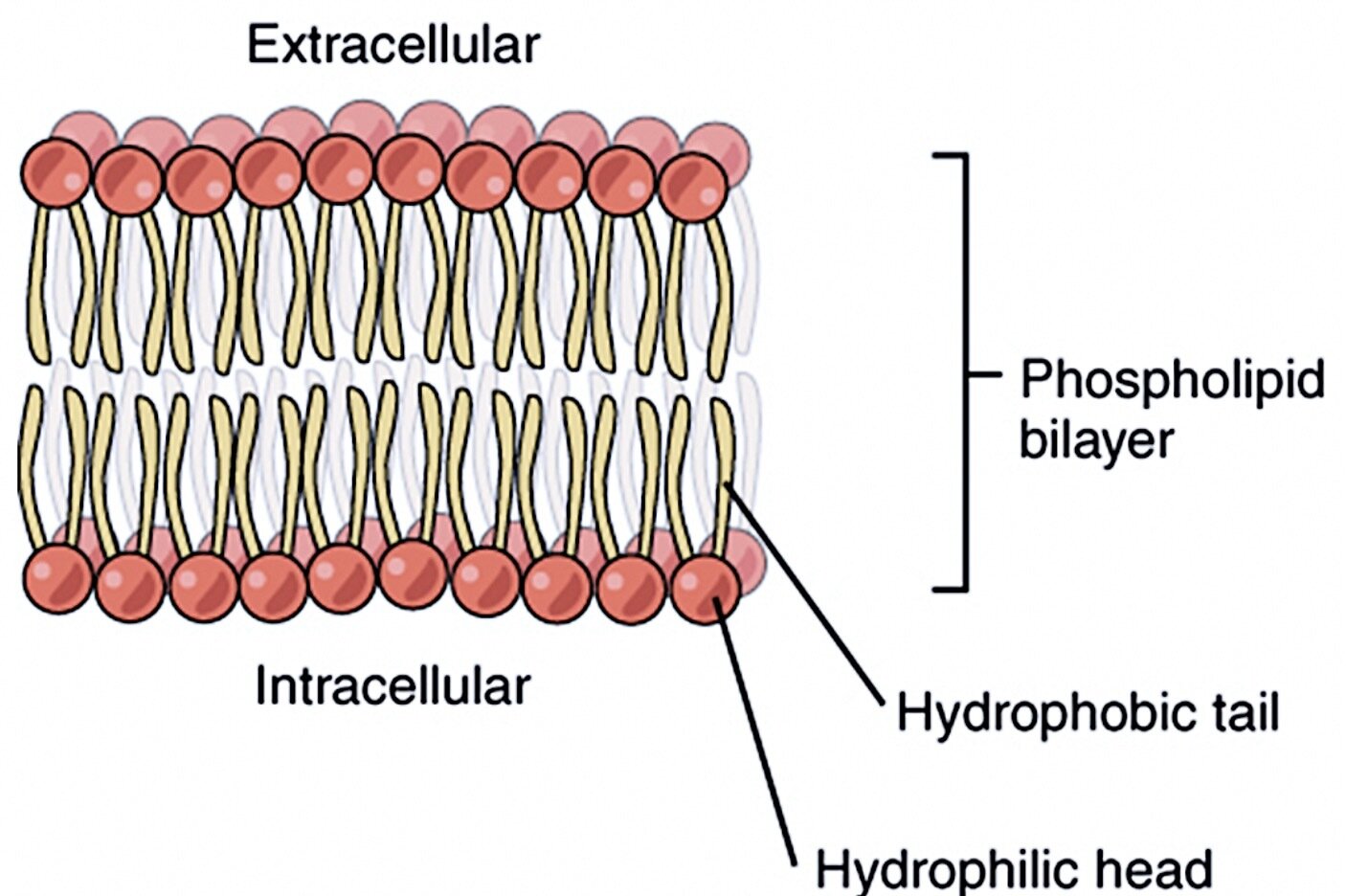
Biological Membranes
- Molecular size
- Charge
- Polarity
Factors
- Biological membranes are selectively permeable
- They allow some substances to pass through, while others cannot.
Permeability
- Process information
- Harness energy
- Organize reactions
- Mediate interactions
- Facilitate transport
Membrane Functions
- When particles continue to move but there is no net change in distribution.
- Concentration of substance is the same throughout.
Equilibrium
- NO energy is used to make the molecules move.
- Depends on the inherent kinetic energy (vibrational movement) of molecules.
Passive Movement
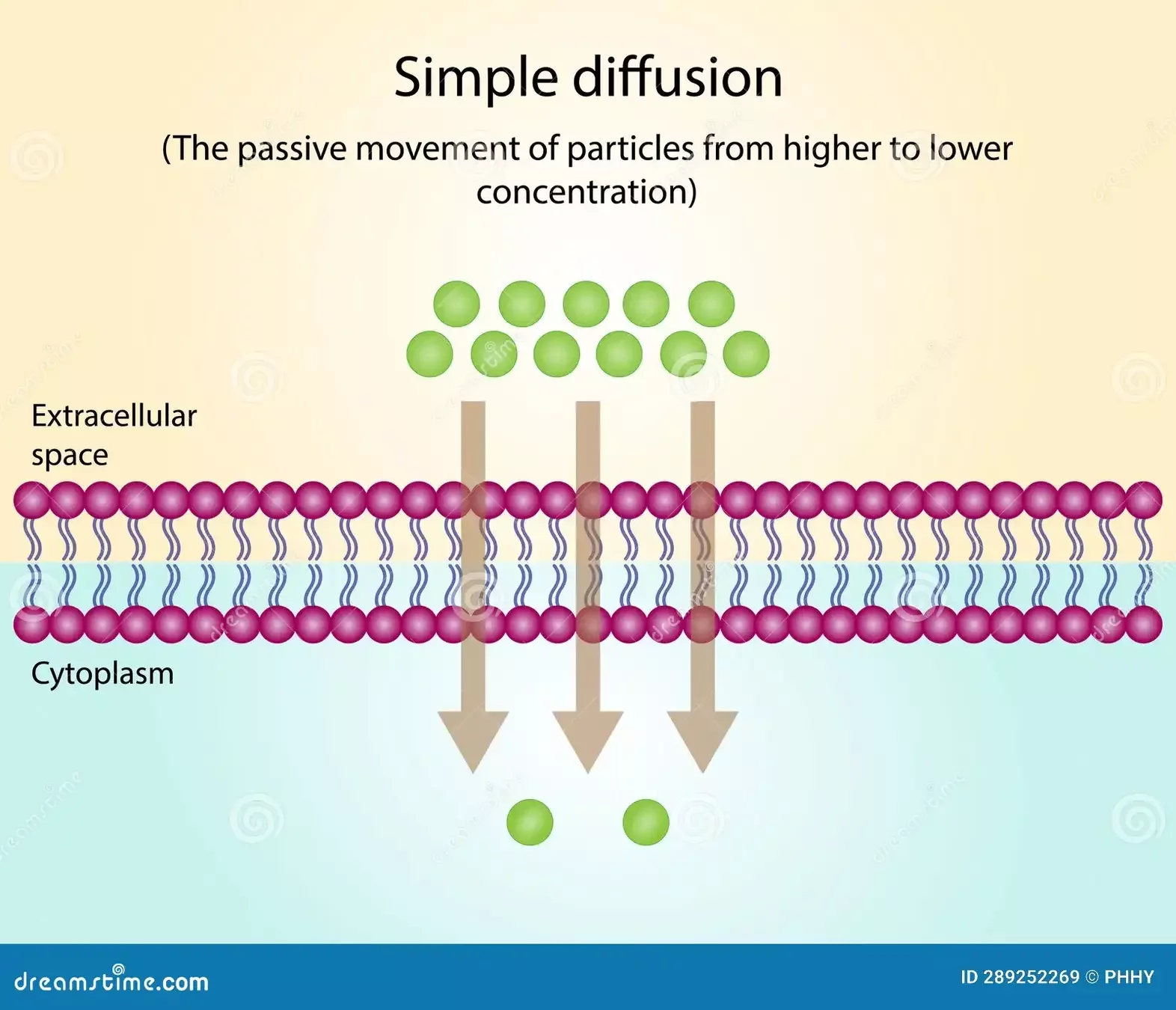
Diffusion is a passive motion
- Diffusion is the movement of particles from areas of high concentration to areas of low concentration.
- Down the concentration gradient.
- Diameter, temperature, electrical charges, and concentration effect rate of diffusion
Diffusion
- Cell interior is hypertonic
- This makes them susceptible to bursting since water always flows in toward hypertonic (high concentraiton environment)
- Cell Walls prevent cells from bursting
- Contractile Vacuoles are organelles that pump water out of the cell
Bursting Risk
- Diffusion of a solvent across a semi-permeable membrane.
- Passive process (no energy required)
- How the water (solute) moves across the membrane.
- Water moves toward high concentration until equilibrium is reached.
- Particle amount matters rather than particle
Osmosis
Diffusion of molecules across membranes via a protein
- Passive Process (no energy required)
Facilitated Diffusion
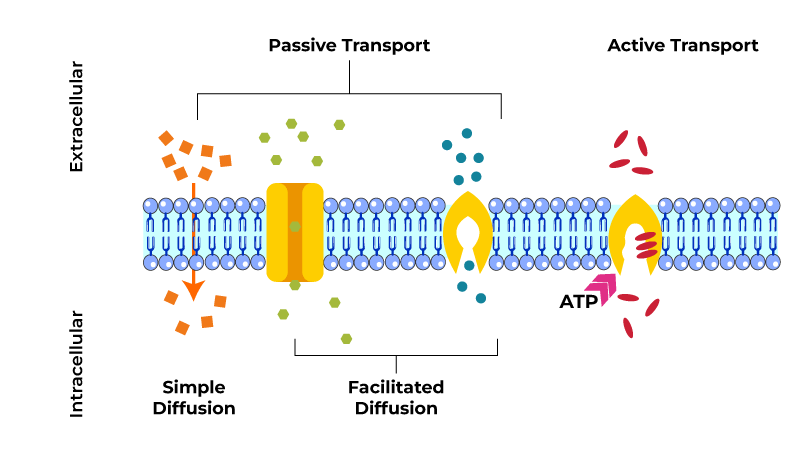
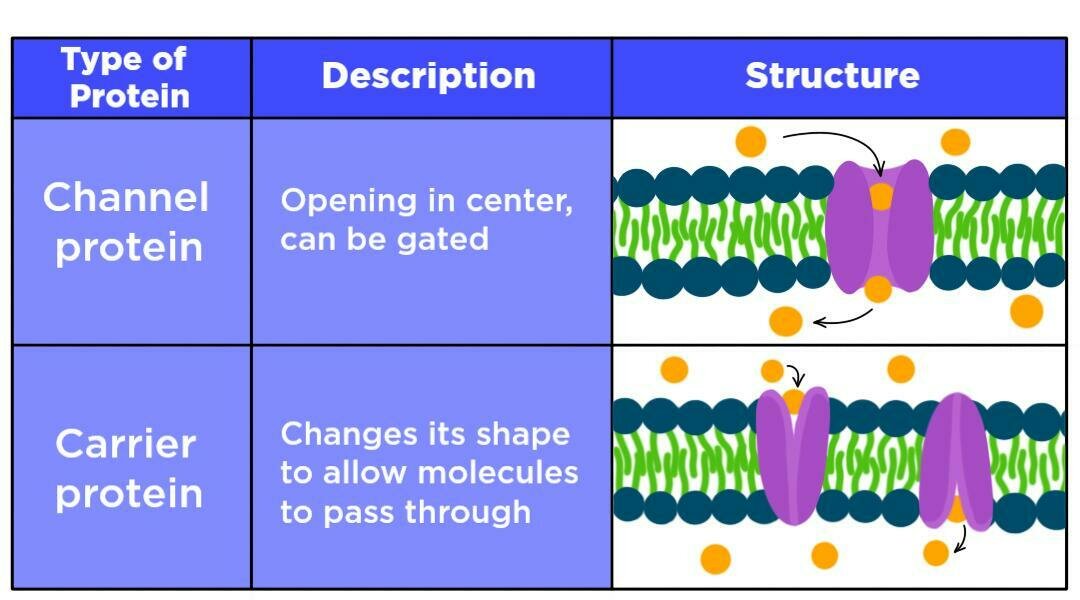
- Bind a solute and undergo a conformational change
- Mediate transport of polar molecules (sugars & amino acids)
- Only bind to specific molecules
- Channels are bidirectional
Carrier Proteins
- Integral transmembrane proteins
- Contain a pore for molecules to cross the membrane through.
- Ion selective & may be gated
- Only move molecules along conc. gradient (not used in active transport).
- Channels are bidirectional
Channel Proteins
-
Requires Energy
- Move against concentration gradient (low to high concentration)
- Involves a "pump"
Active Transport
- Energy for transport comes from ion concentration gradient that is established by primary active transport.
- Move solutes against concentration gradient
Secondary Active Transport
- Requires direct hydrolysis of ATP
- Move solutes against concentration gradient
Primary Active Transport
Sodium/Potassium Pump of Active Transport
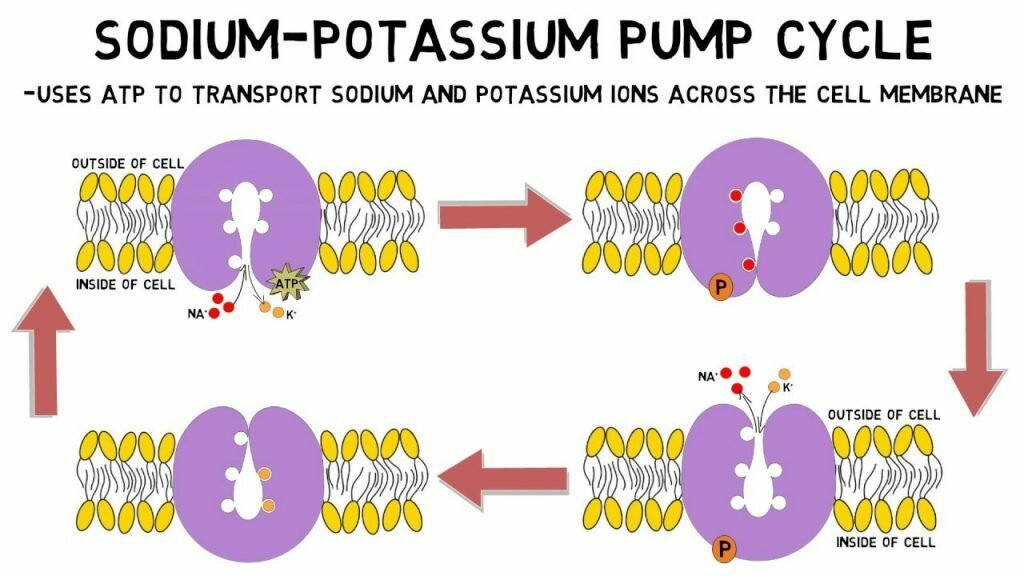
- Essential to animal life
- Uses about 30% of your energy is used for this pump
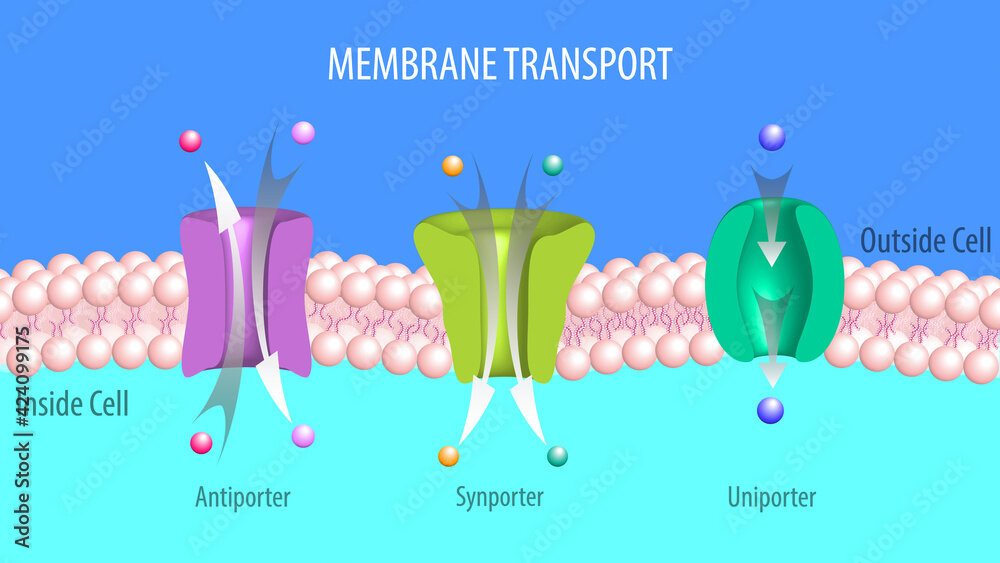
- 2 solutes
- Go in opposite directions
Antiport
- 2 Solutes
- Go in the same direction
Symport
- Transport only one solute
Uniport
proteins, polysaccharides, nucleic acids.
Macromolecule Diffusion
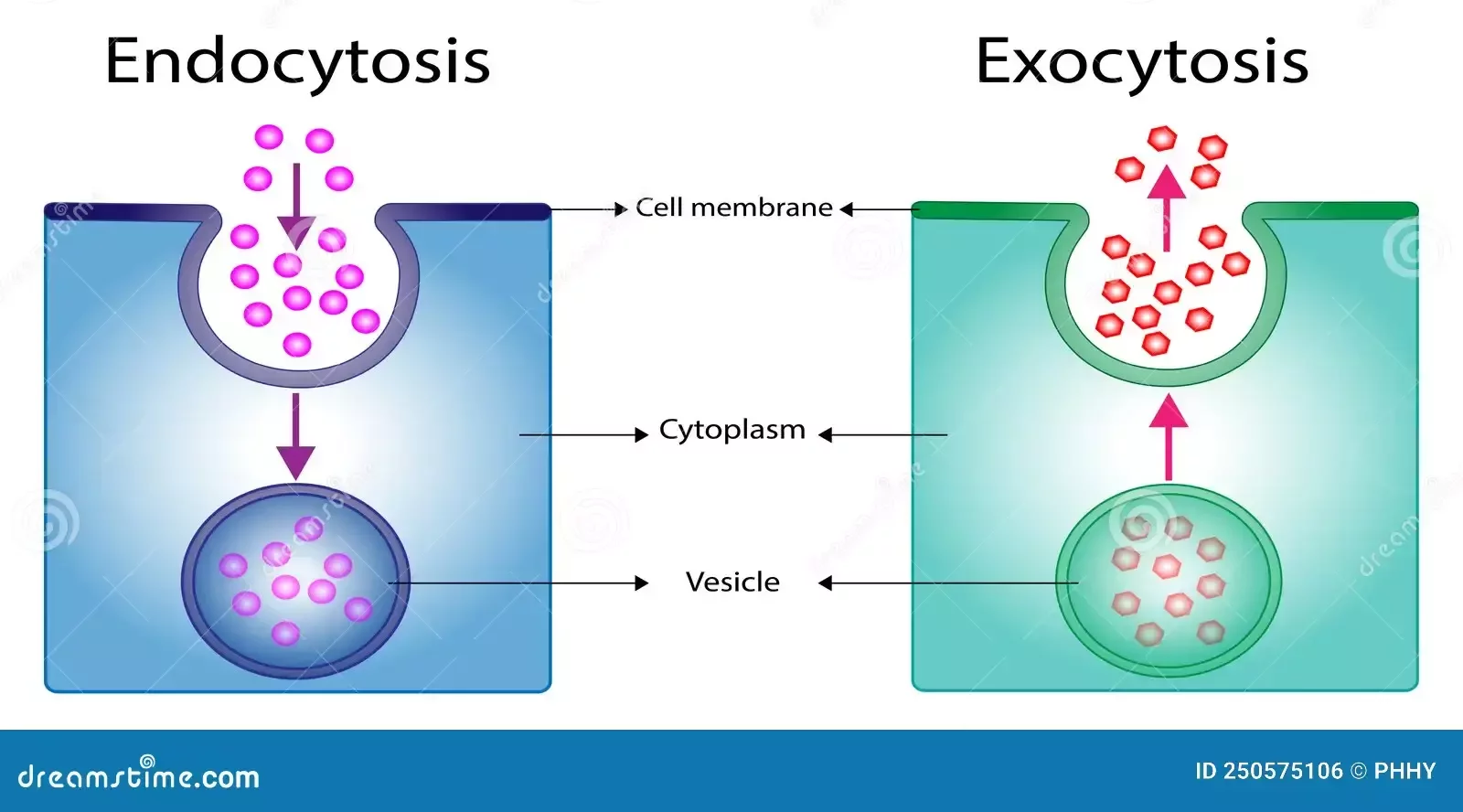
- Secretion of vesicle-packaged cell products or wastes out of cells.
Exocytosis
- Process by which molecules are brought into eukaryotic cells via vesicles
Endocytosis
-
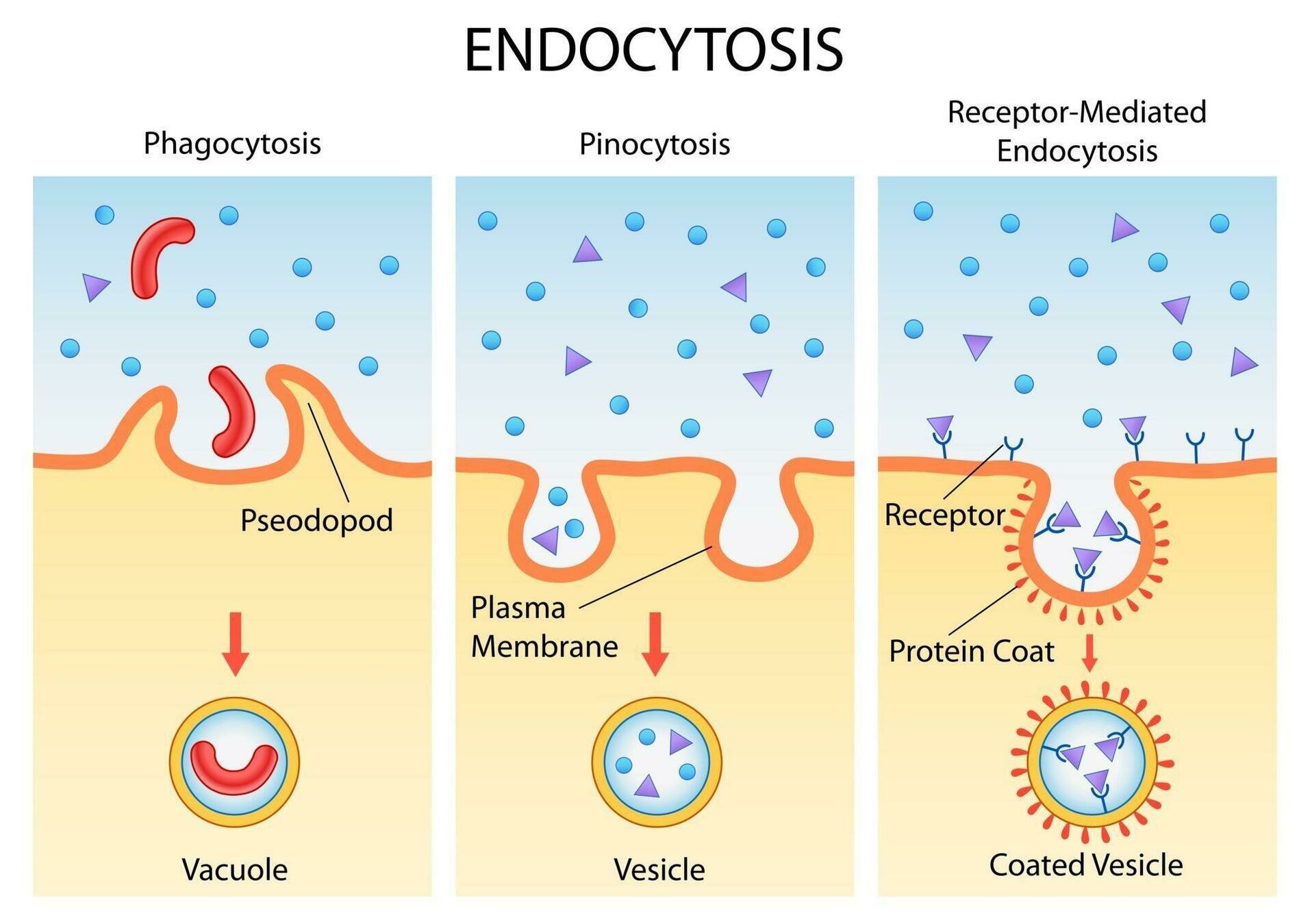
Phagocytosis:
- Largest vesicles/vacuoles
- entire cells engulfed
- used by WBC to defend against invading foreign cells.
- Pinocytosis:
- uptake of extracellular fluids and dissolved solutes into a vesicle
- Receptor-Mediated Endocytosis:
- Interactions between cell surface proteins (receptors) and secreted proteins (ligands) that can trigger the formation of membrane coated pits.
Endocytosis
Signal Transduction
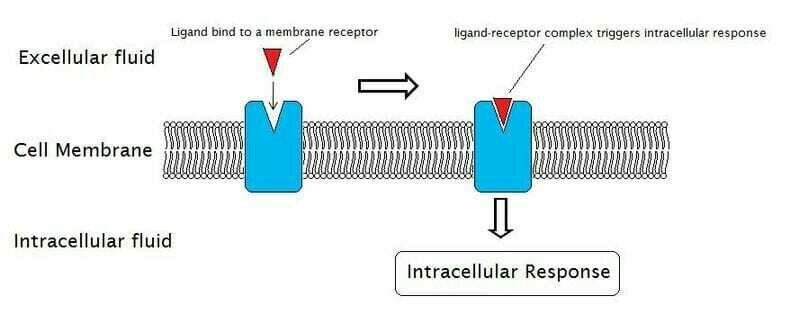
- a specific signaling molecule that interacts with a receptor to trigger a cellular response
Ligand
- a protein that receives a signal and initiates a cellular response
Receptor
- Lipid soluble molecules (Steroids) diffuse across membrane with no help
- Bind to receptors in the cytosol
Hydrophobic (Nonpolar) Signaling
- Cannot pass through the (hydrophobic) lipid bilayer
- Bind to transmembrane proteins located on plasma membrane surface.
Hydrophilic (Polar) Signaling
Text
Hydrophilic (Polar) Signaling
Ligand binding induces a catalytic and/or conformational change in the receptor to initiate signaling.
Physical Interaction
Molecular activity can be altered by the absence or presence of noncovalent binding partners
Chemical Modification
Molecular activity can be altered by adding or removing covalent functional groups.
Amplification
Signals are amplified within a cell, triggering powerful responses from cells.
Molecular on/off switches and signal amplification
Molecular Switches & Amplification
G proteins are inactivated by GTPases
G proteins are inactive when bound to GDP
Trimeric G Protein
3 protein complex attached to the membrane through a lipid anchor. Binds Guanine nucleotides.
G proteins are activated by exchange of GDP for GTP
G proteins are active when bound to GTP
G Protein Linked Receptor
- Integral transmembrane protein passes through membrane 7 times.
- aka serpentine receptor
G Proteins
Amplification
a single signal molecule can stimulate production of many second messengers, amplifying original signal.
Second Messengers
small diffusible molecules that transduce signals indirectly.
- NO catalytic activity
- they are not targeted (move freely via diffusion)
- NOT restricted to a single role or cell type
Activated
Enzymes catalyze production of second messengers
Active G proteins trigger membrane-bound enzymatic effector molecules
Active G Proteins
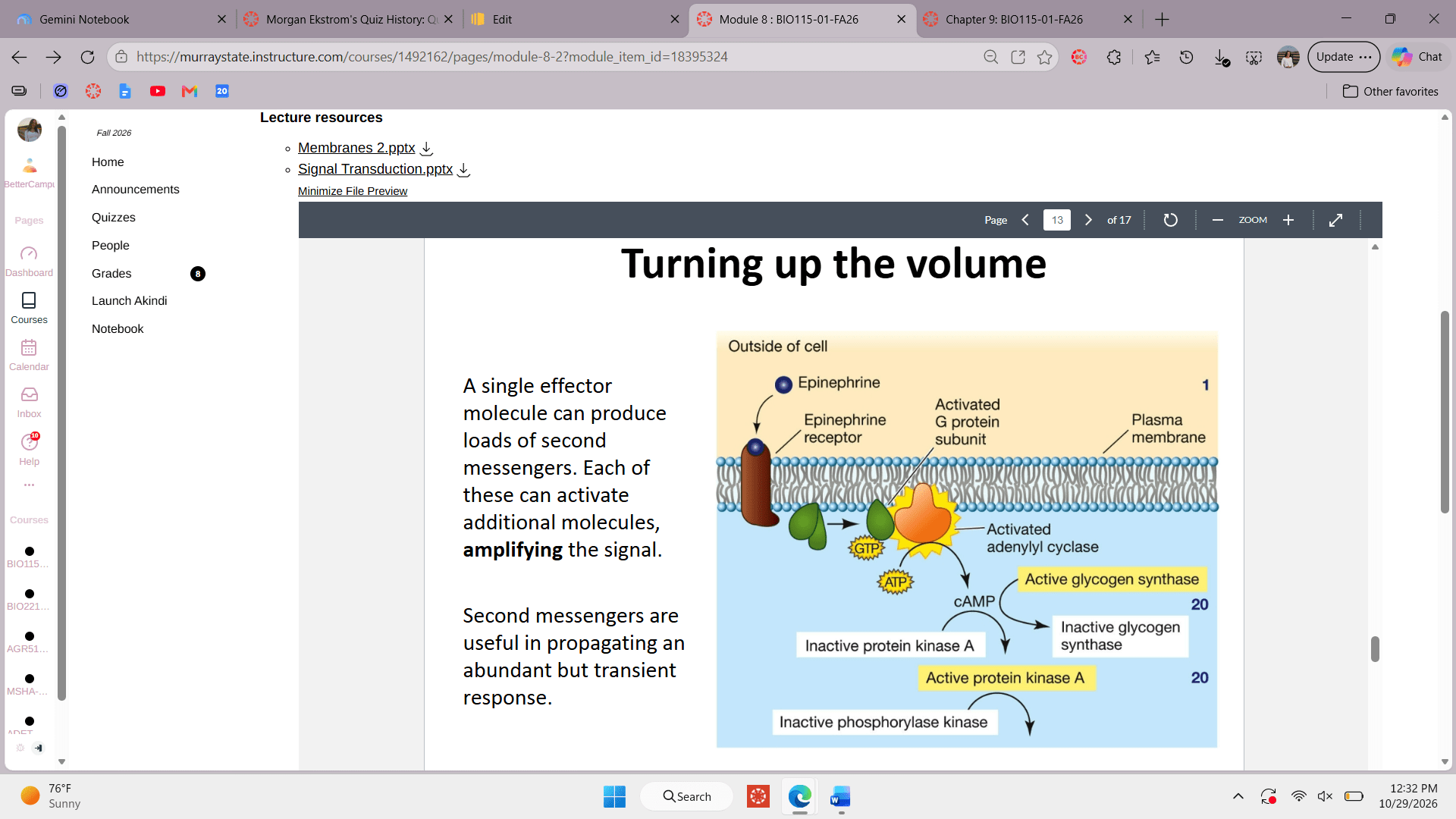
Amplification
Ligand Interaction
receptors become catalytically active. Many are Kinases, and transfer phosphates from ATP to substrates (other proteins)
Enzyme-linked receptors
transduce signals by catalyzing a reaction inside the cell.
via enzyme-linked receptors
Signal Transduction
External Cell & Responses
transmembrane receptors, G proteins, and amplification curate responses to the cell.
Inside the Cell
Passive diffusion, protein pumps, and membrane fluidity curate internal cell contents
Membranes
active processing interfaces, not just barriers
Summary
Biological Membranes Moduel 7
By morg ekstrom