













































Santiago Casas
Cosmologist, Physicist, Data Scientist.
Santiago Casas, Dr. rer. nat.
RedH0T Project - IDL WPs
Interview
santiagocasas www.santicasas.xyz B.Sc. Physics
Universidad de Costa Rica
M.Sc. Physics
University of Heidelberg
PhD Physics, University of Heidelberg, Institute of Theoretical Physics
Postdoctoral Researcher,
CosmoStat, CEA Paris-Saclay
Postdoctoral Researcher,
Institute of Cosmology and Gravitation, U. Portsmouth
3 Months Internship
Laboratorio Nacional de Luz Sincrotron,
Campinas, Brazil
Tonale Winter School of Cosmology Organizer 2016-2021
Postdoctoral Researcher, Theoretische Teilchenphysik und Kosmologie,
RWTH Aachen U.
RWTH Aachen,
University of Heidelberg
Ontologist
German Aerospace Center (DLR), Scientific Information
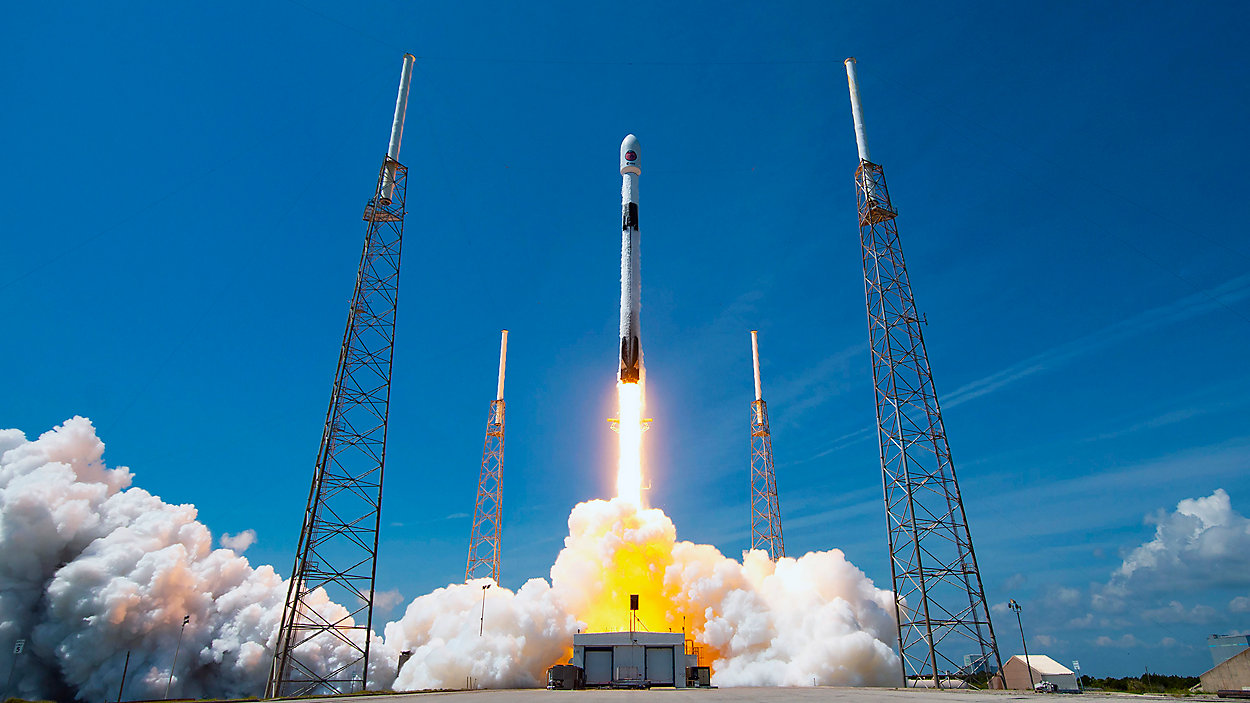
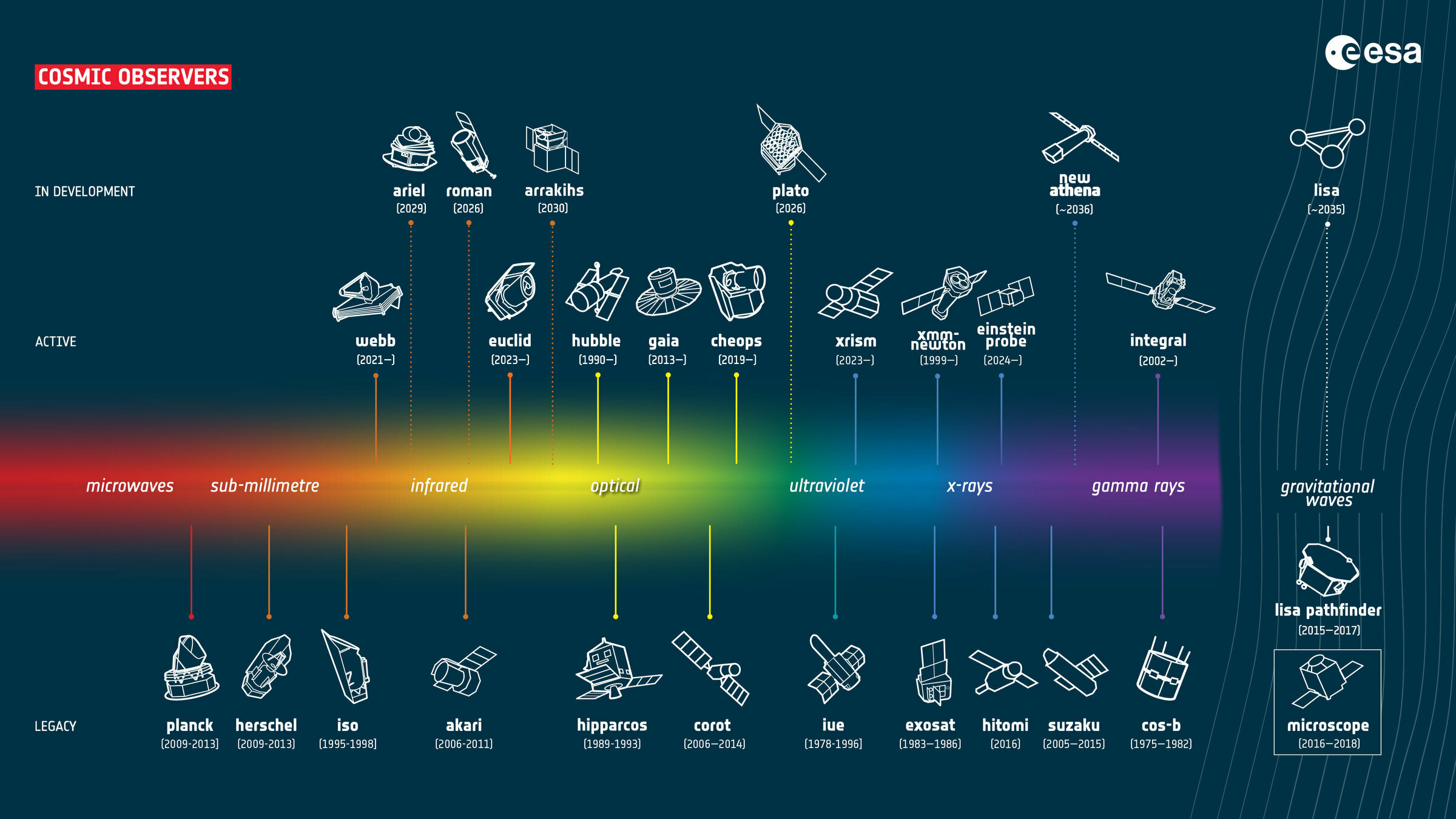
Credits: www.esa.int/Science_Exploration/Space_Science/Euclid, www.euclid-ec.org, ESA/NASA/SpaceX, Euclid Consortium, ThalesAlenia Space
EC scientist visits Cannes
EC Internal Communication Management
EC Copenhagen 2023: Builder Status
EC Rome: Plenary Speaker
2 STAR Prizes
Theory-Likelihood package co-lead
2025
CLOE-org Official Maintainer
Broad expertise in all pillars
I have expertise on all the different scales!
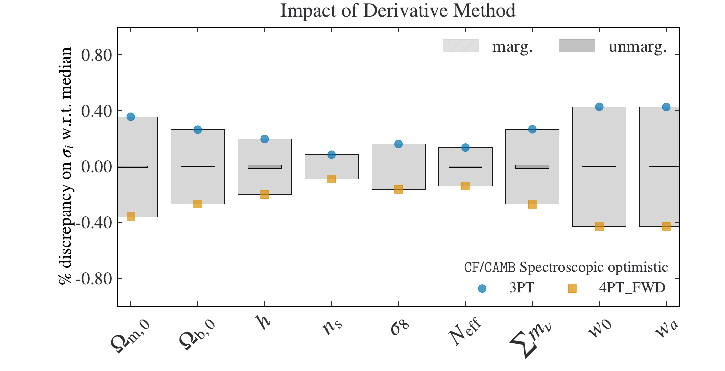
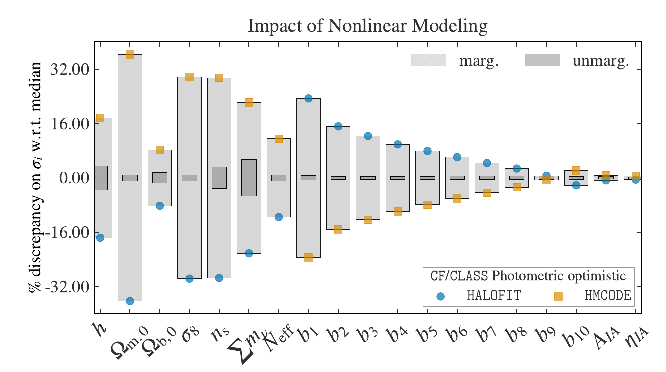
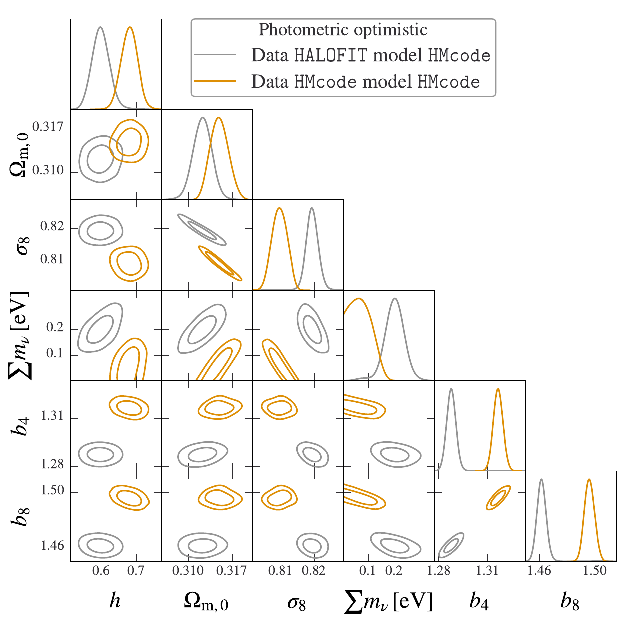
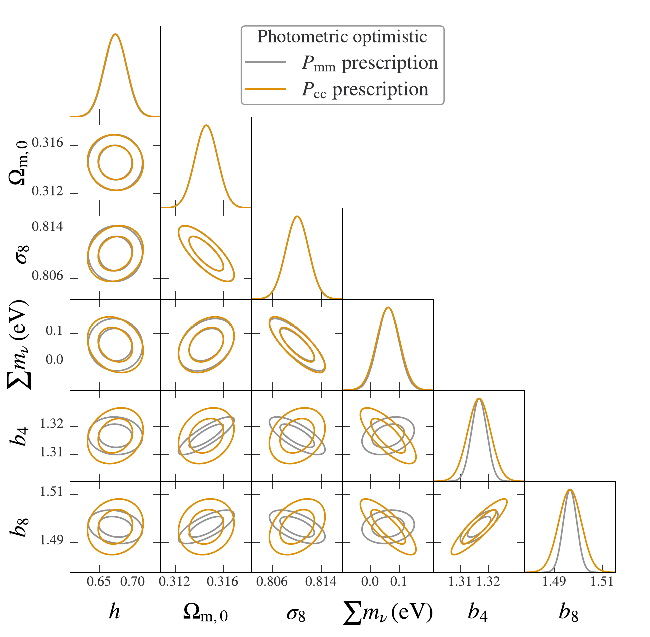
Euclid: lnterscience Taskforce on Non-linearities, Key Paper, Carrilho, Casas, in prep.
simulation
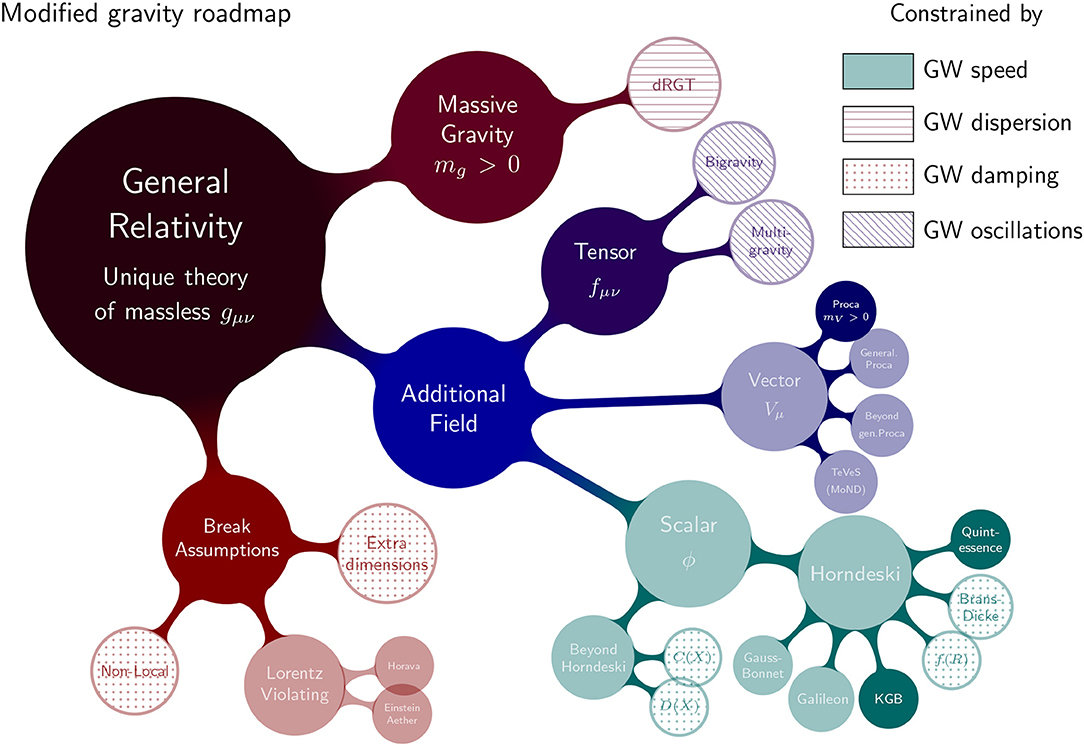
wrong theory
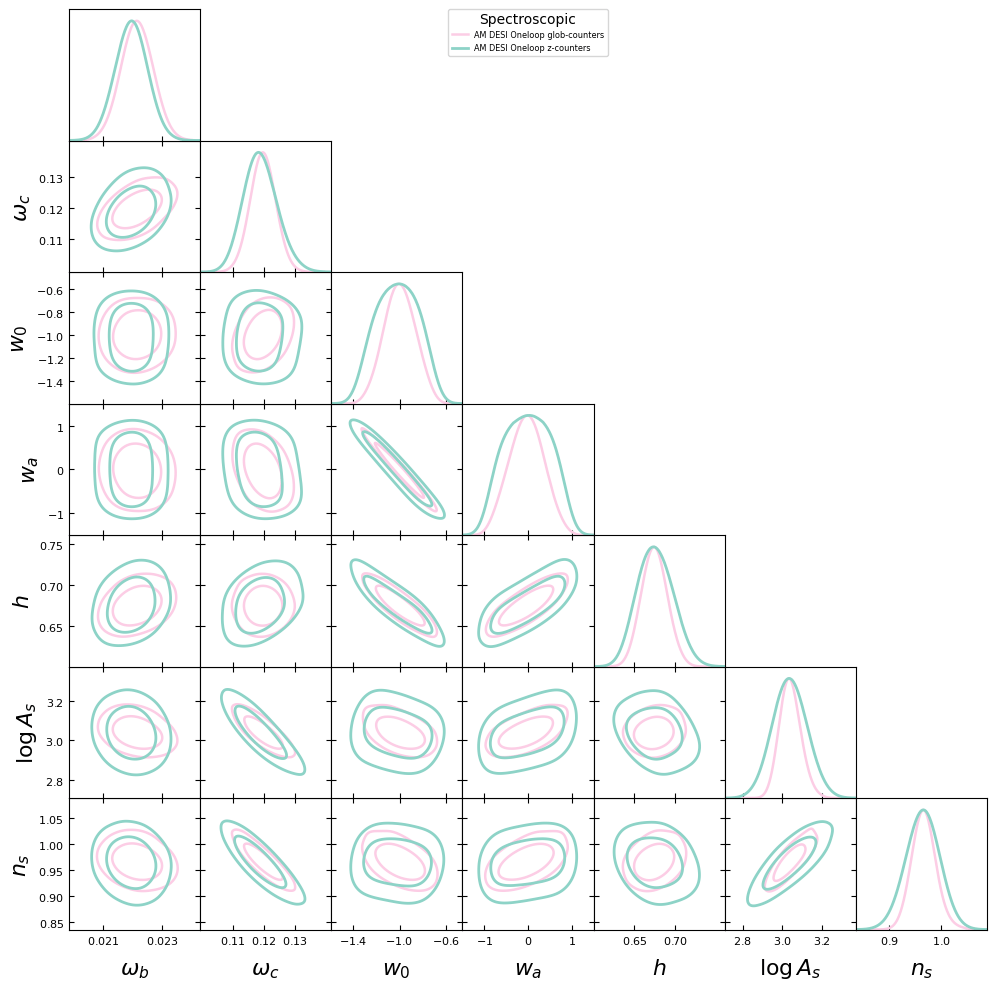
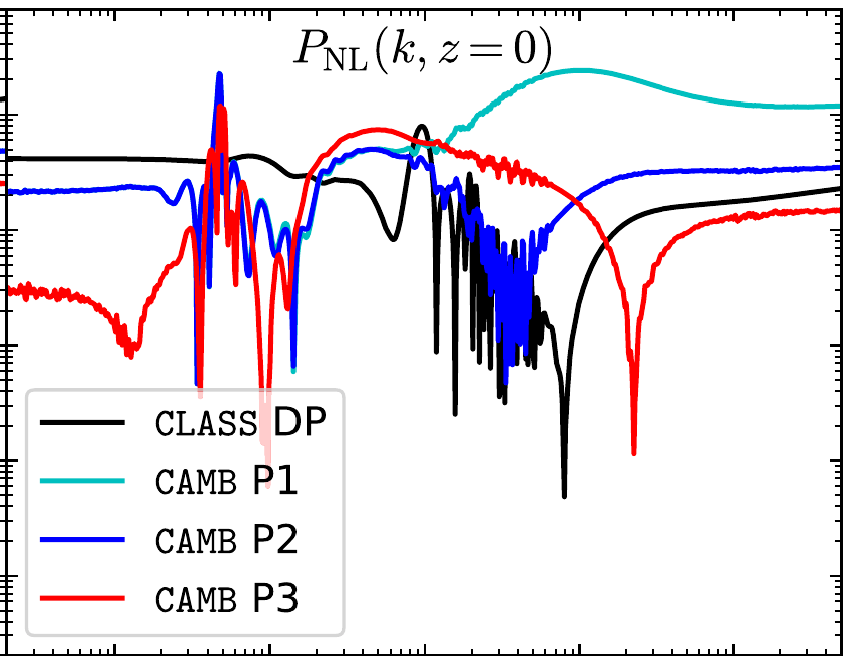
CLASS-Oneloop+Montepython
Test of prior-dependence through Analytical Marginalization - DESI settings
I am an expert in Fisher Matrices and Bayesian parameter estimation
As the go-to person for Fisher matrices: They are nothing else than error propagation!!
Still important to test assumptions, systematics (nuisance) and pipeline robustness!
My pipeline: CosmicJellyFish
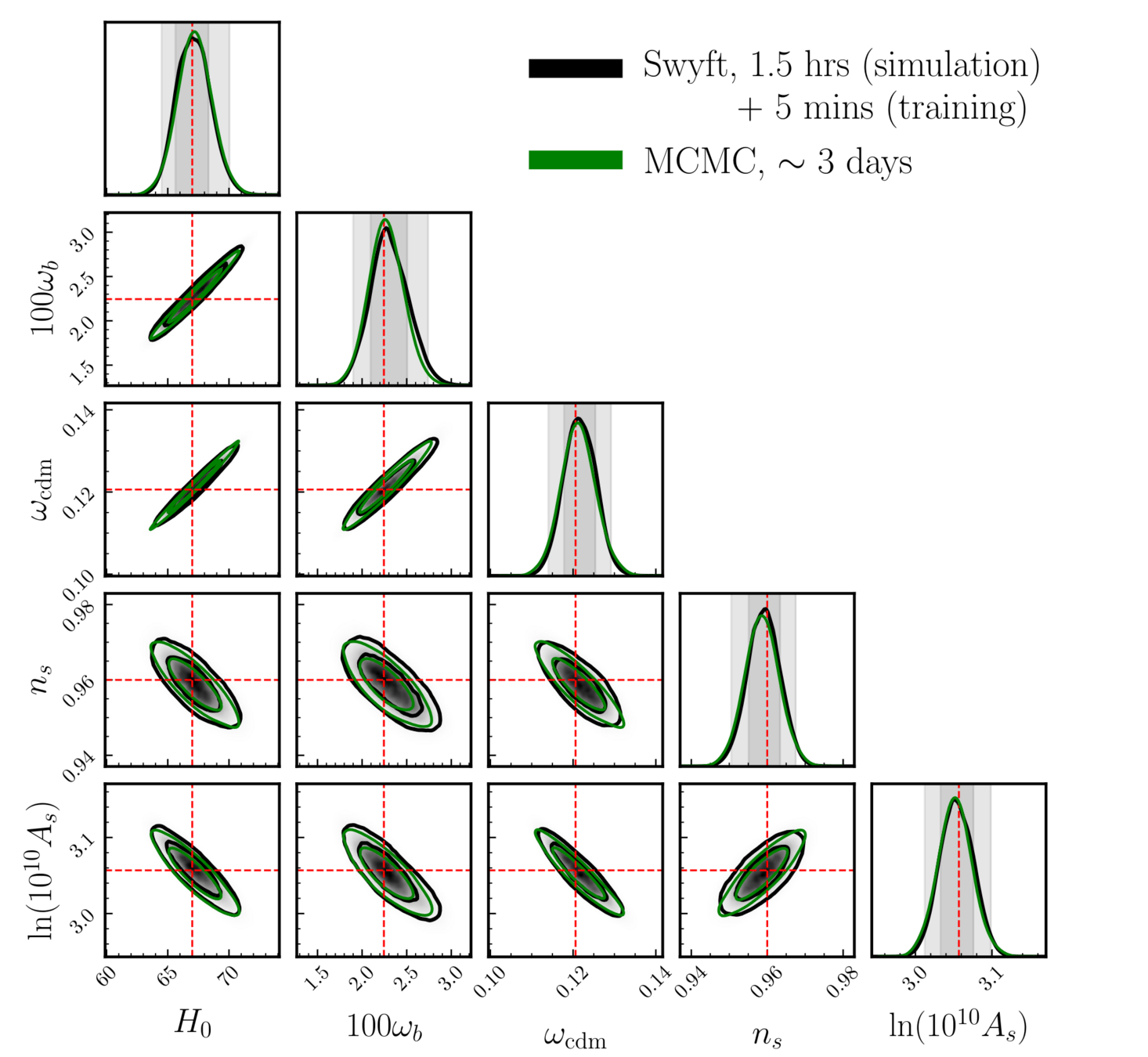
Using symbolic-regression emulators + Nautilus IS+NN. Achieve results in ~O(3hr) vs. days
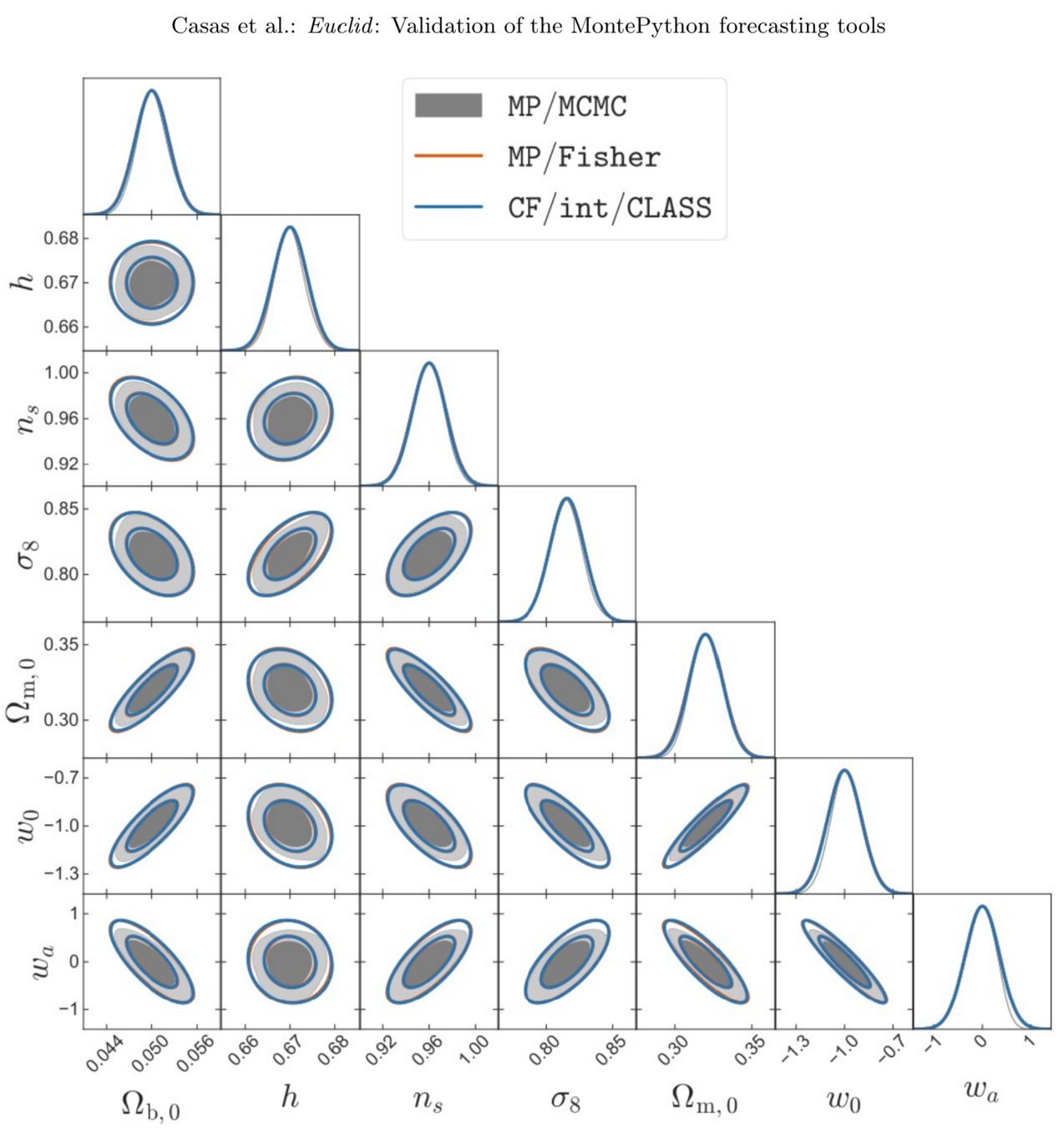
Euclid: Validation of the MontePython forecasting tools, Casas, Lesgourgues, Schöneberg, et al.; 2303.09451
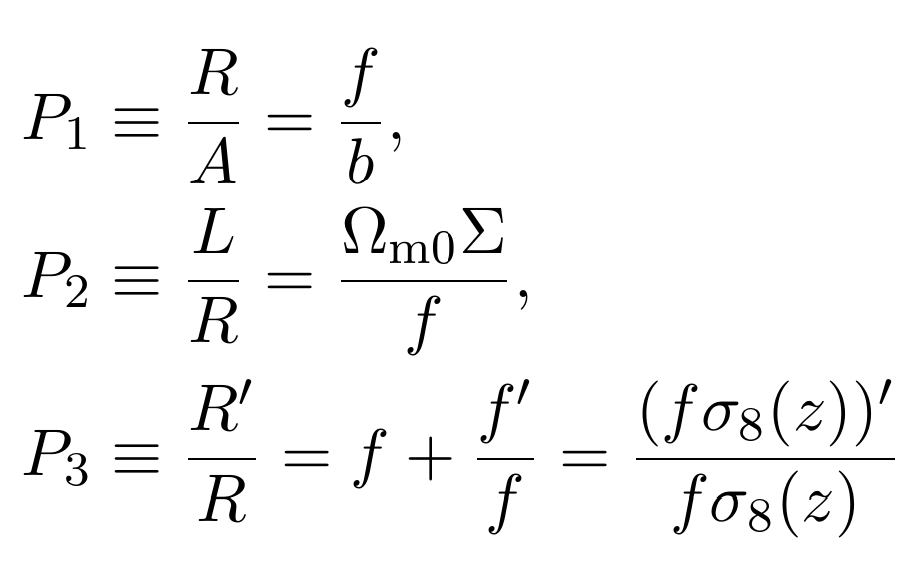
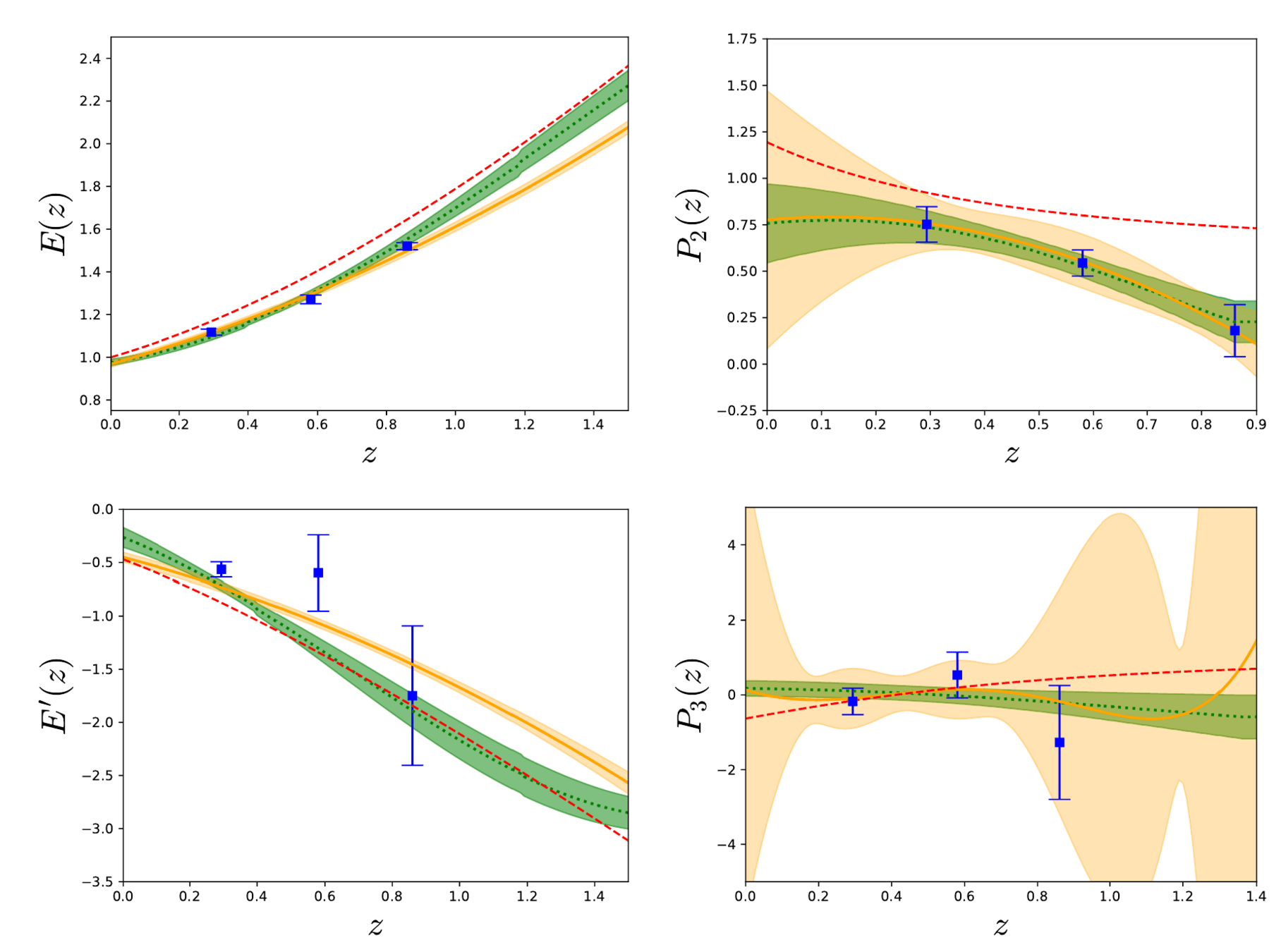
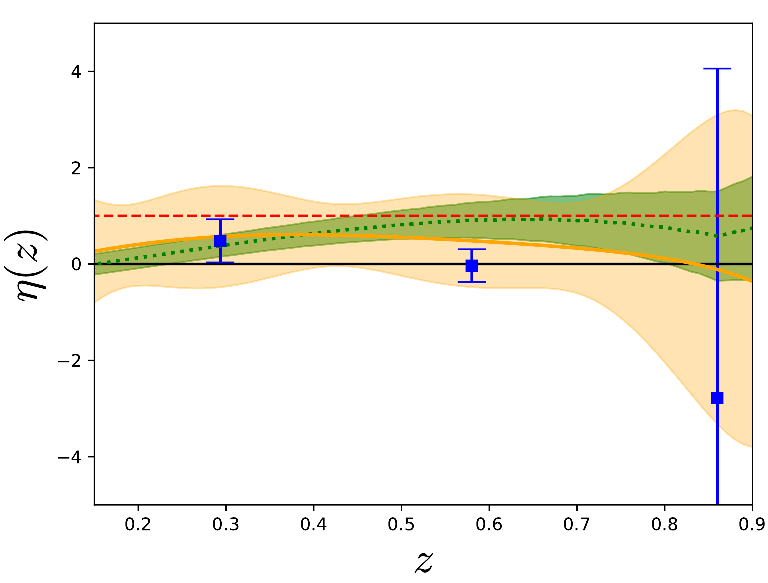
Model-independent determination of gravitational anisotropic stress using: BAO+Cosmic Chronometers+RSD and Lensing and Gaussian Processes
Pinho, Casas, Amendola; Model-independent reconstruction of the linear anisotropic stress, ηarXiv:1805.00027
Amendola, Bettoni, Pinho, Casas; Model-independent measures of gravity at large scales, ηarXiv:1902.06978
Sakr, Zheng, Casas; Model-independent forecasts for the cosmological anisotropic stress from a combination of Euclid and DESI like surveys: DOI: 10.1093/mnras/staf1111
Model-independent variables, free of assumptions about initial conditions, DM properties:
further reduce dependence on shape of primordial power spectrum:
github.com/santiagocasas/topo-cobaya
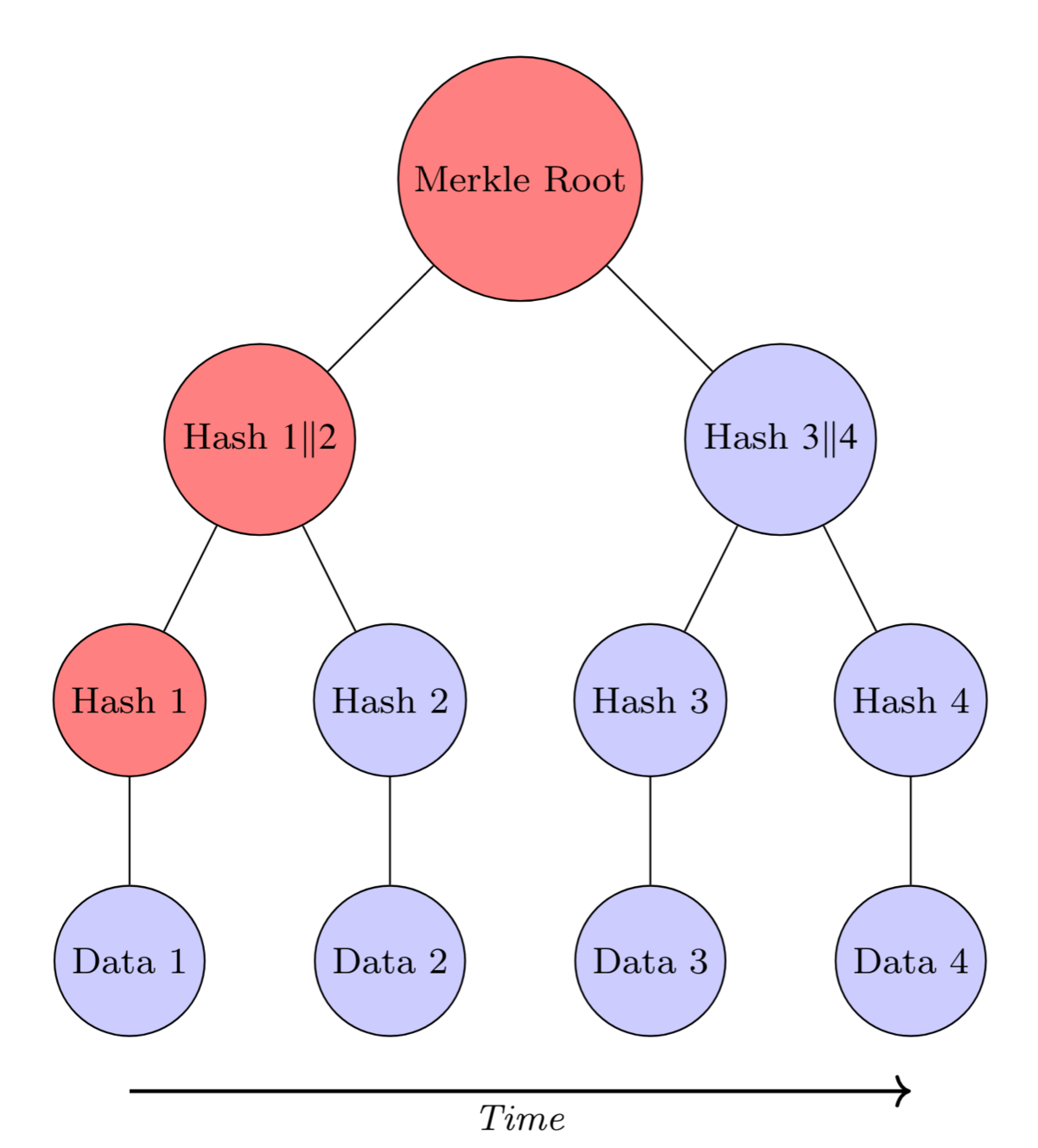
Casas, Fidler; Time Ordered Provable Outputs arXiv:2411.00072
Reproducible research!
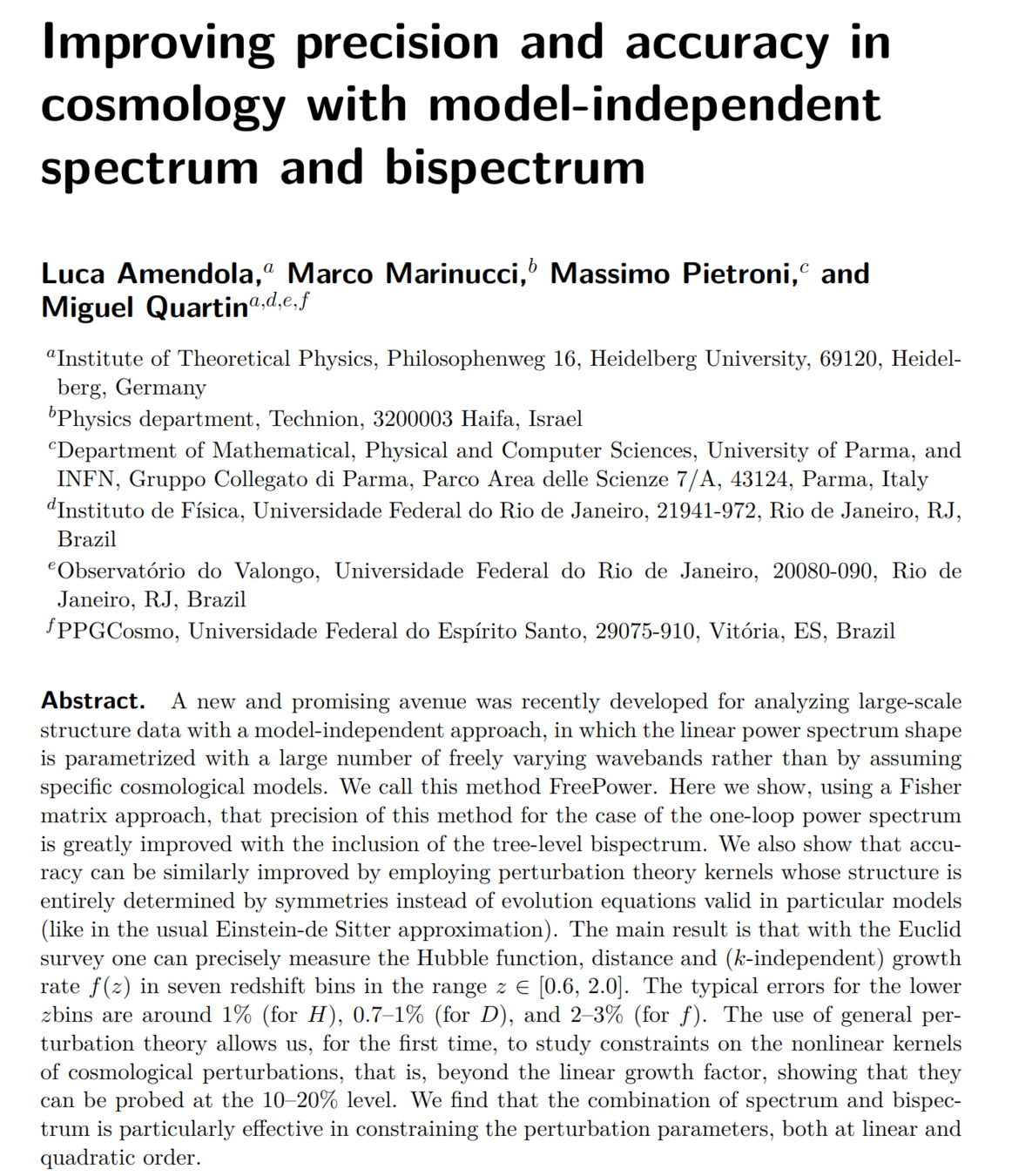
WP3: Sound Horizon angular and comoving scales from galaxy redshift surveys
WP4: Broadband, additional compressed information from LSS surveys
WP5: Full-modeling of LSS statistics
Inverse Distance Ladder
Inverse Distance Ladder
WP3: Sound Horizon angular and comoving scales from galaxy redshift surveys
WP4: Broadband, additional compressed information from LSS surveys
WP5: Full-modeling of LSS statistics
gain statistical constraining power
activate more model assumptions
increased epistemic risks
systematics could dominate error budget
more nuisance parameters
WP3: Sound Horizon angular and comoving scales from galaxy redshift surveys
WP4: Broadband, additional compressed information from LSS surveys
WP5: Full-modeling of LSS statistics
Ensuring firm footing on assumptions, error propagation, and robustness before increasing model/method complexity
Inverse Distance Ladder
WP3: Sound Horizon angular and comoving scales from galaxy redshift surveys
Main previous experience: Co-leading the full-shape vs. model-independent (BAO+RSD -> projection) approaches of the GCsp probe in the Euclid IST:Forecasting, understanding of h-units
Euclid preparation: VII. Forecast validation for Euclid cosmological probes, Blanchard et al. arXiv:1910.09273
Inverse Distance Ladder
Main previous experience: Model-independent constraints, Linear-point observable, Euclid GC Working Group, Theory extensions of CLOE
WP4: Broadband, additional compressed information from LSS surveys
Sakr, Zheng, Casas; Model-independent forecasts for the cosmological anisotropic stress from a combination of Euclid and DESI like surveys: DOI: 10.1093/mnras/staf1111
Inverse Distance Ladder
Euclid: CLOE paper 5: Extensions beyond the standard modelling of theoretical probes and systematic effects; Goh, (incl. Casas), et al.; 2510.09147
Main previous experience: Working on EFTofLSS, TRG, Class-Oneloop, PBJ, IST:Nonlinear, several cosmological inference pipelines, DESI, Euclid forecasts for GCsp, jax-cosmo
WP5: Full-modeling of LSS statistics
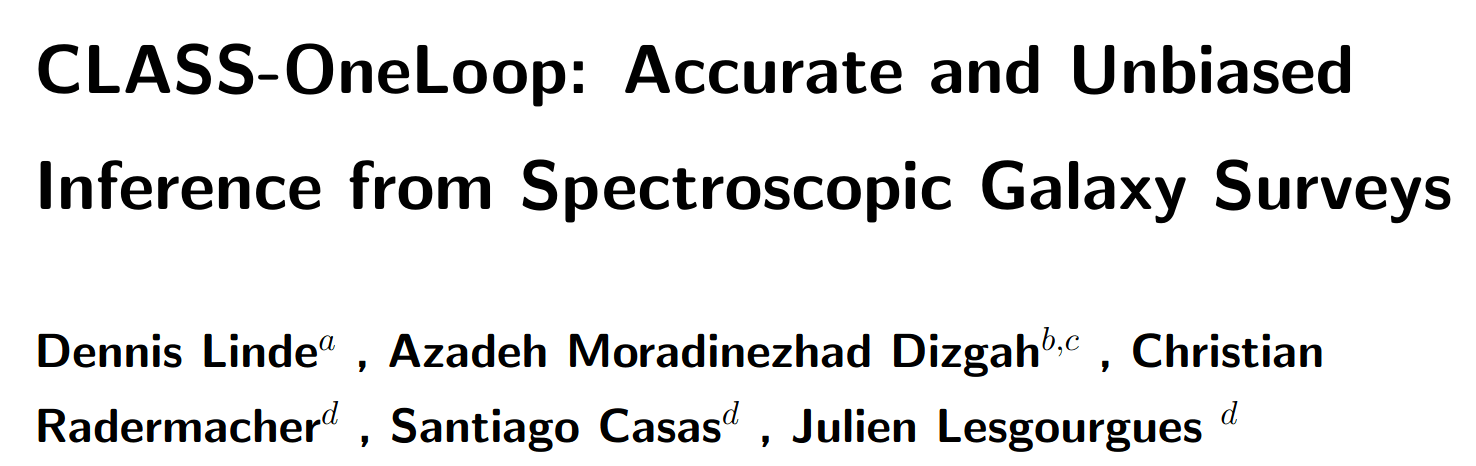
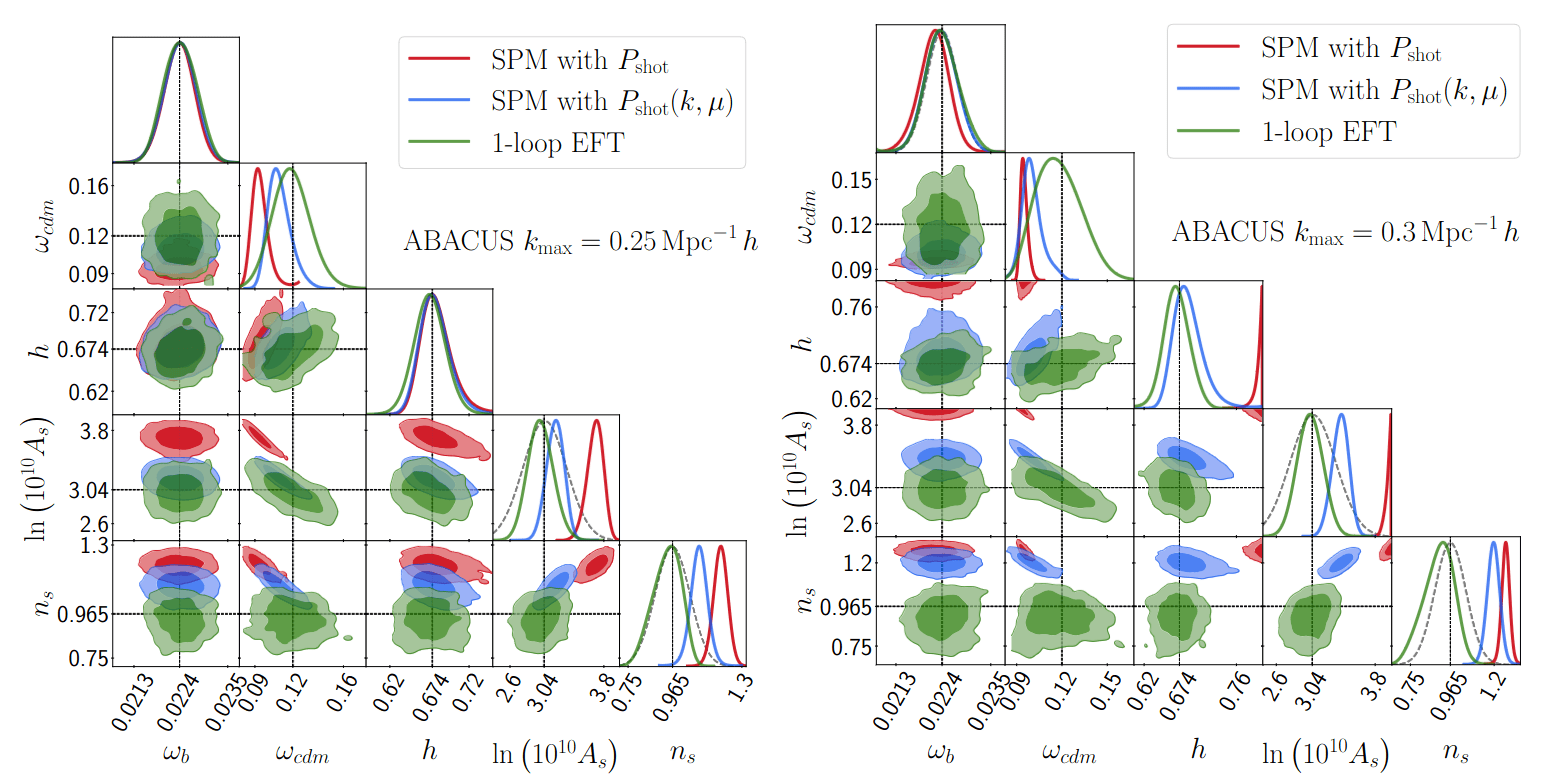
CLASS-OneLoop: accurate and unbiased inference from spectroscopic galaxy surveys; Linde, Moradinezhad, Rademacher, Casas, Lesgourgues; arXiv:2402.09778
JAX-COSMO: An End-to-End Differentiable and GPU Accelerated Cosmology Library, Campagne, Lanusse (incl Casas) et al., arXiv:2302.05163
Inverse Distance Ladder
for RedH0T project
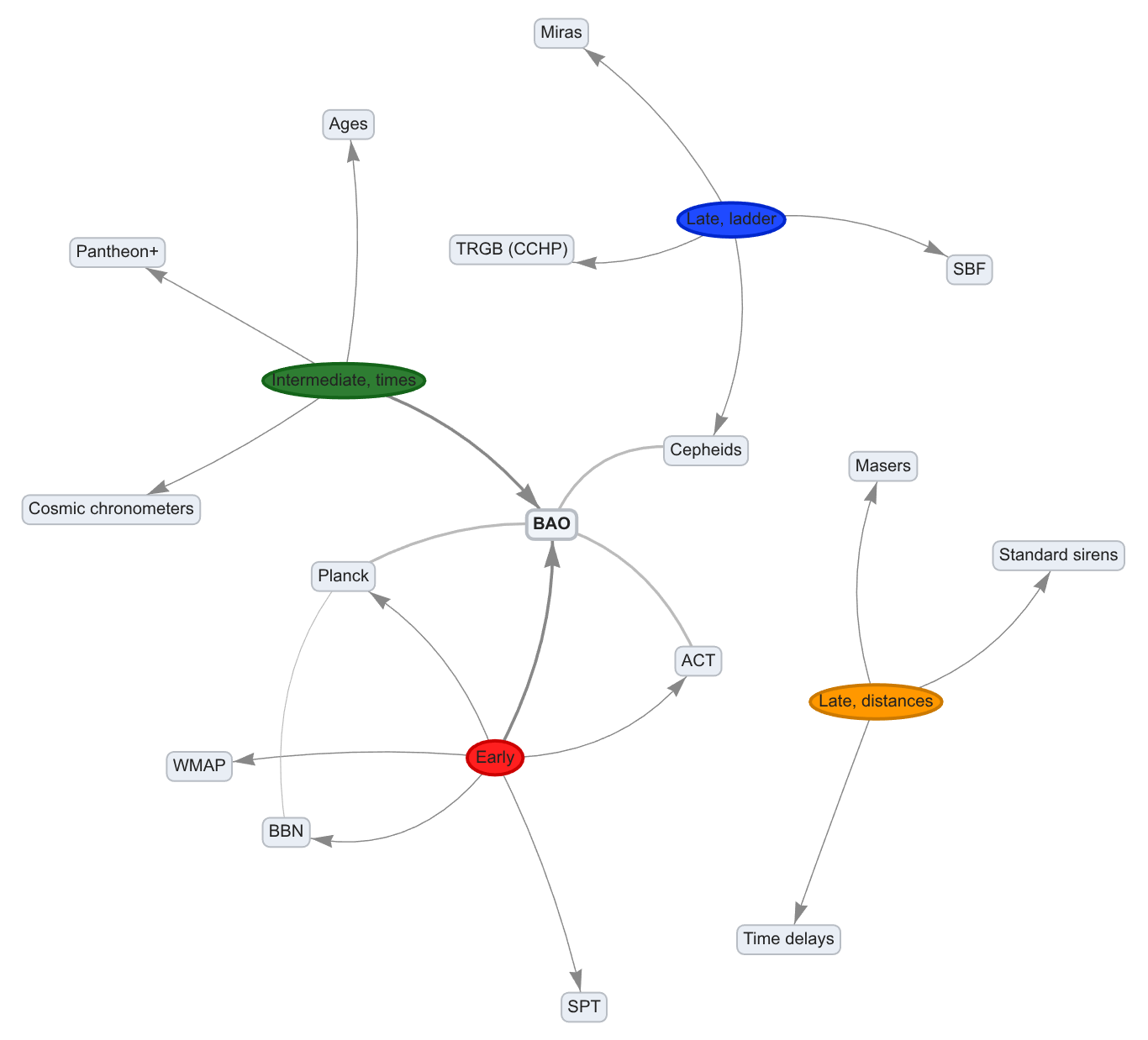
based on: A tale of many H0; Verde et al.; arXiv:2311.13305v1
idea for a linked database>
Profile
Senior cosmologist with a strong background in large-scale structure inference and theory. Strong experience in large-collaboration work and leadership roles.
Expertise spanning all scales of LSS modeling - from BAO to Full-Shape
Focus on robustness, speed, error propagation, and model dependence in Bayesian cosmological inference
Contribution to RedH0T (IDL WP3–WP5)
Holistic view of H0 inference across LSS observables
Ability to interface between theory, data analysis, and numerical pipelines (community)
Primary role: testing assumptions, understanding sensitivity to modeling choices, and quantifying robustness - based on pipeline experience
Contributing to consistency and interoperability of IDL deliverables
Experience mentoring junior researchers within collaborative projects (3 Bachelors, 6 Master and 1 PhD between RWTH, Saclay, and Heidelberg) -> Synergy team
https://www.skao.int/
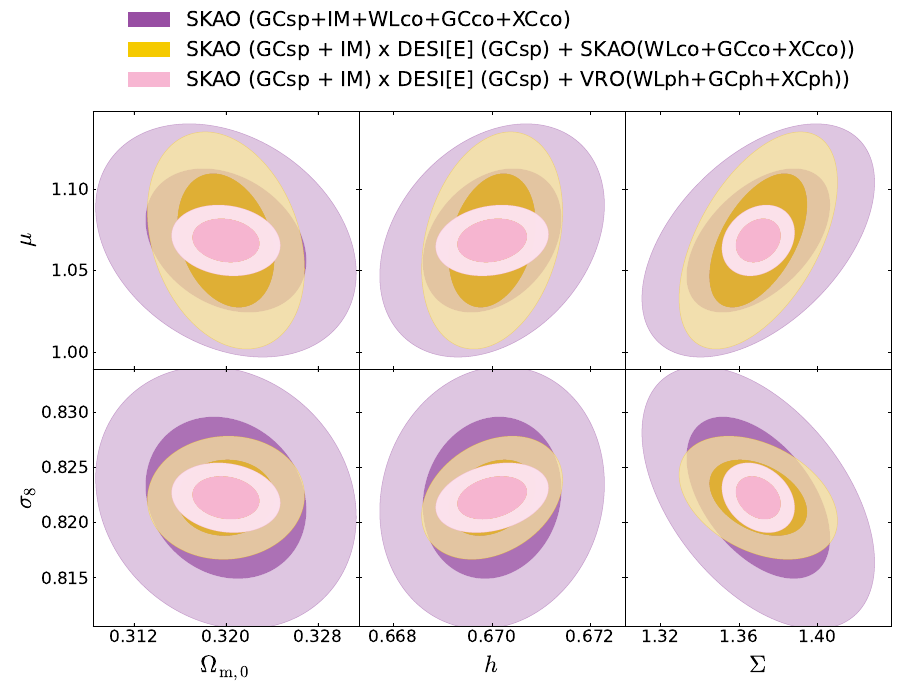
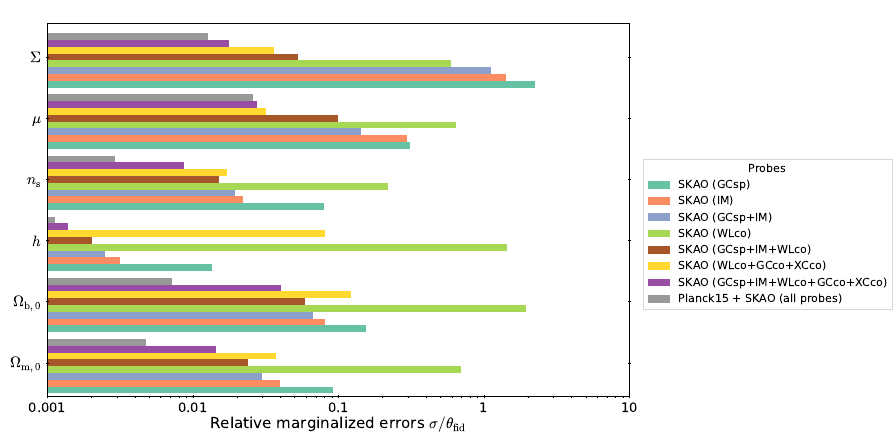
First forecast for MG using Radio x Optical: Constraining gravity with synergies between radio and optical cosmological surveys, Casas et al (2022), Phys.Dark.Univ. 2210.05705
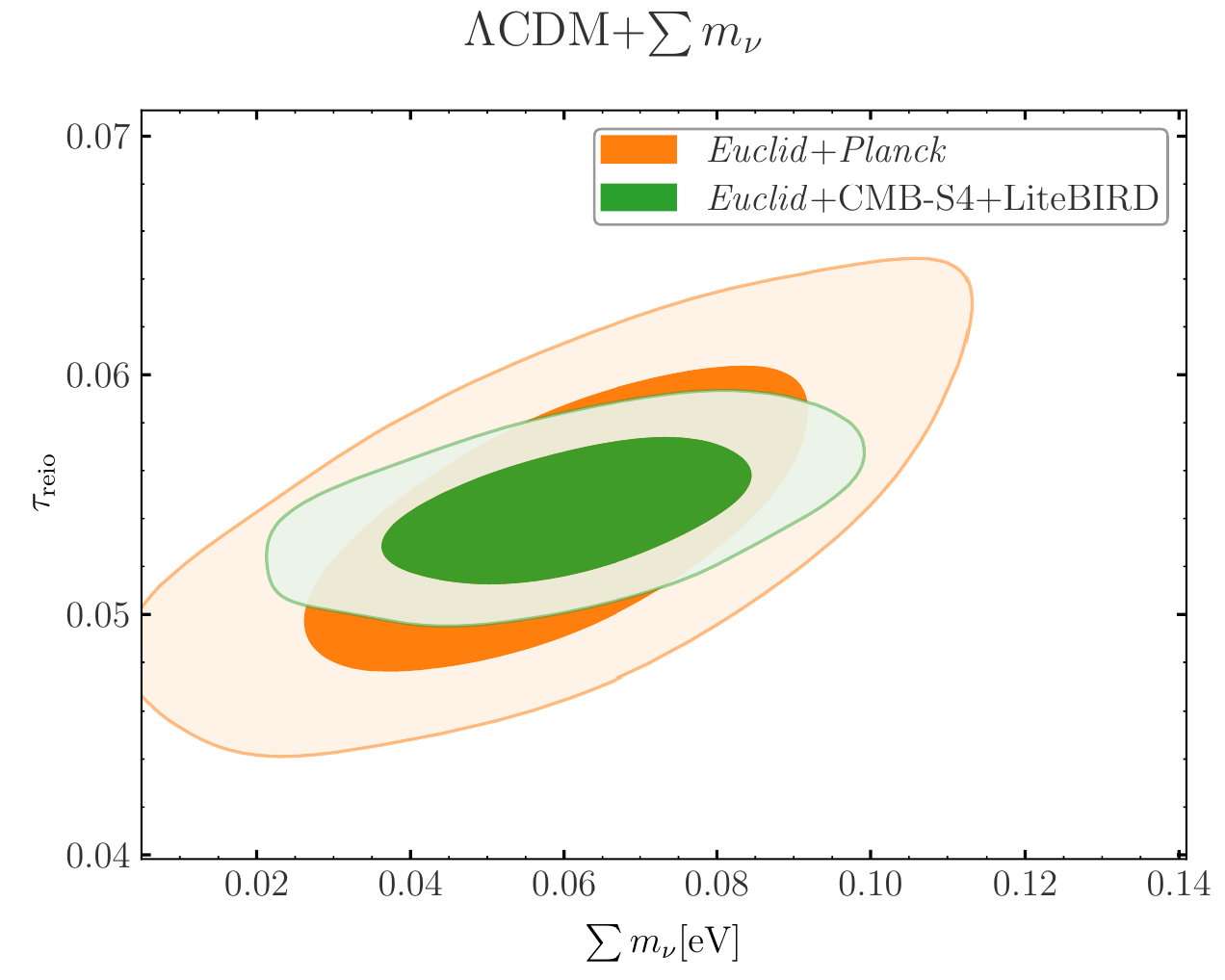
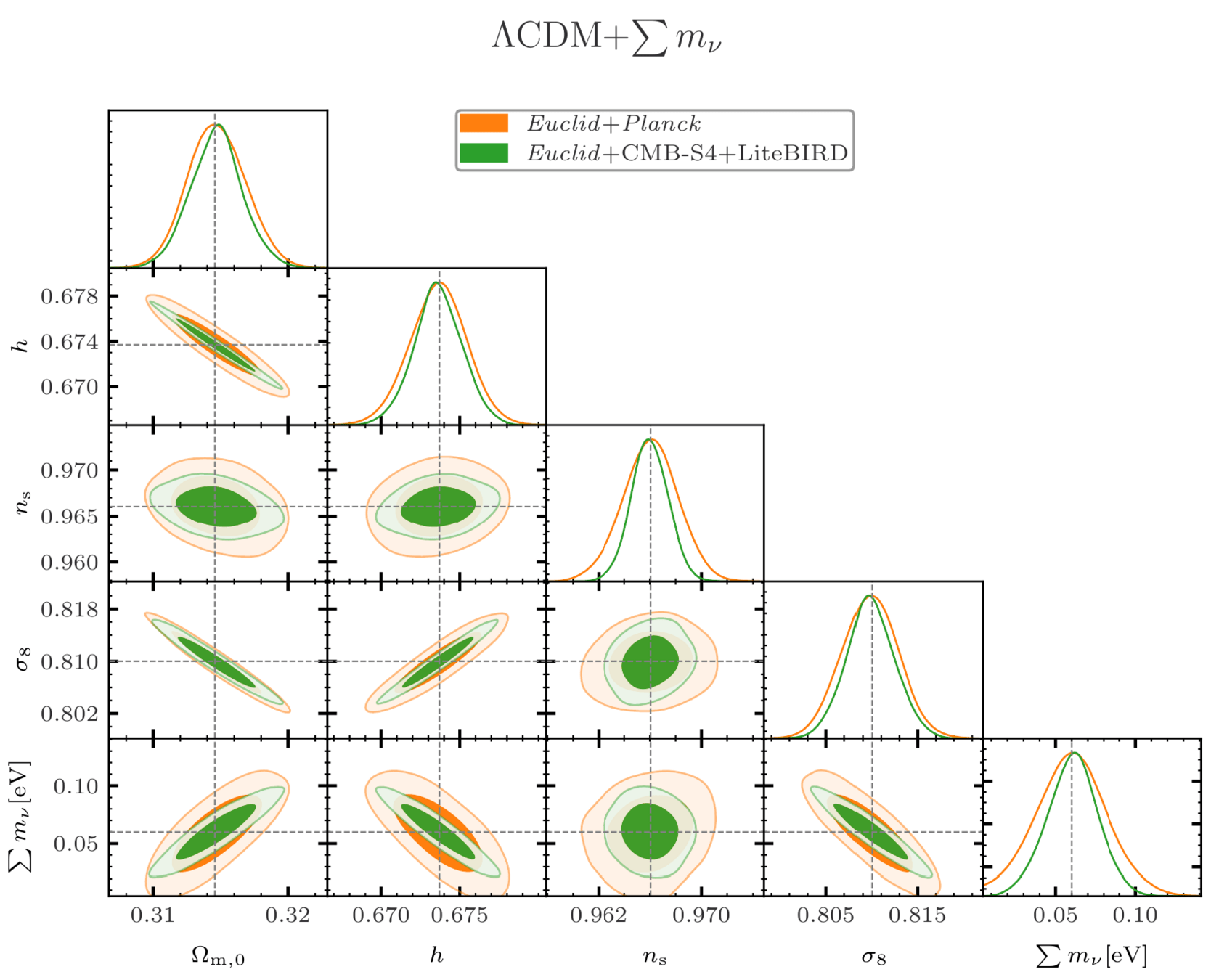
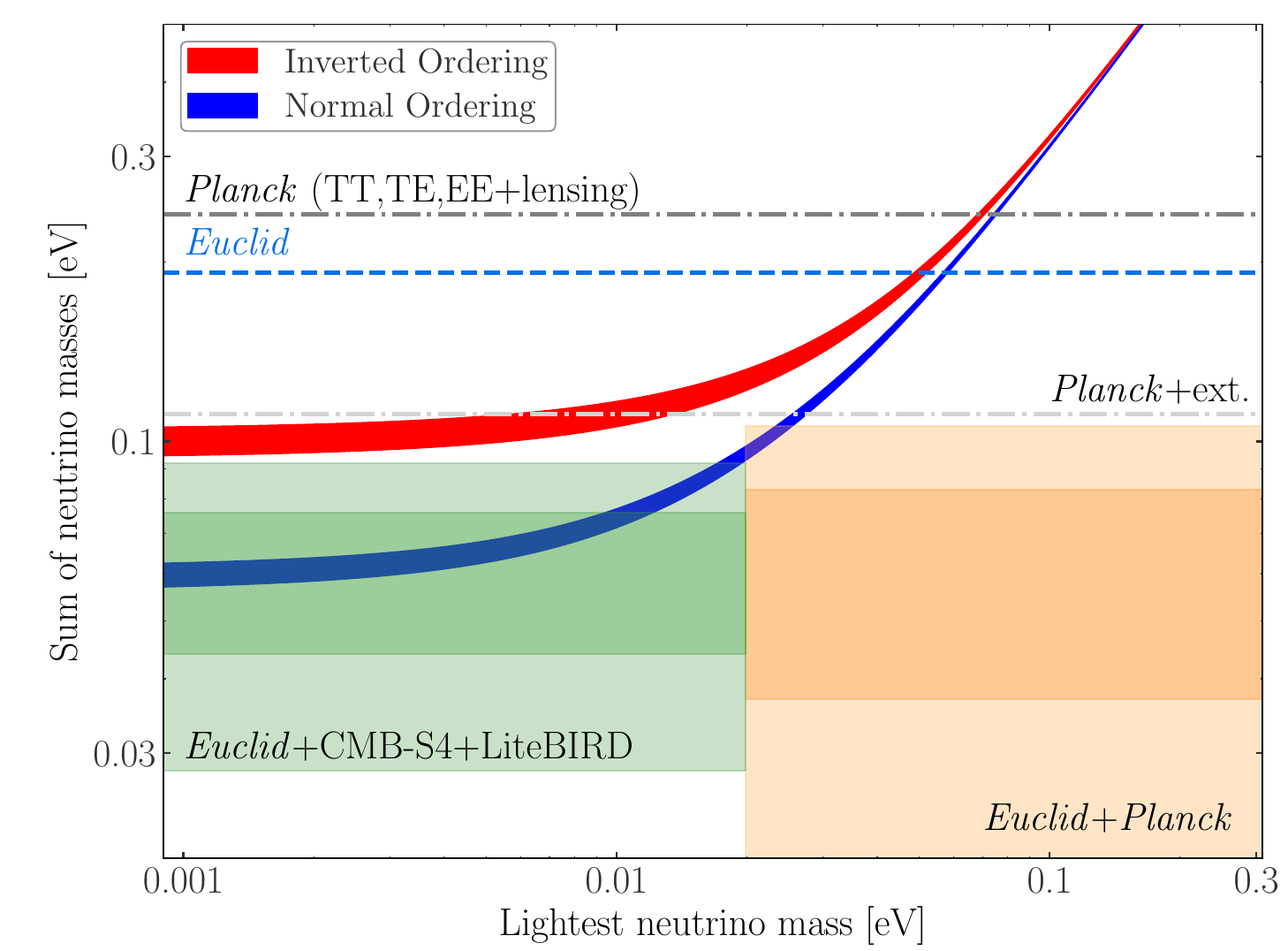
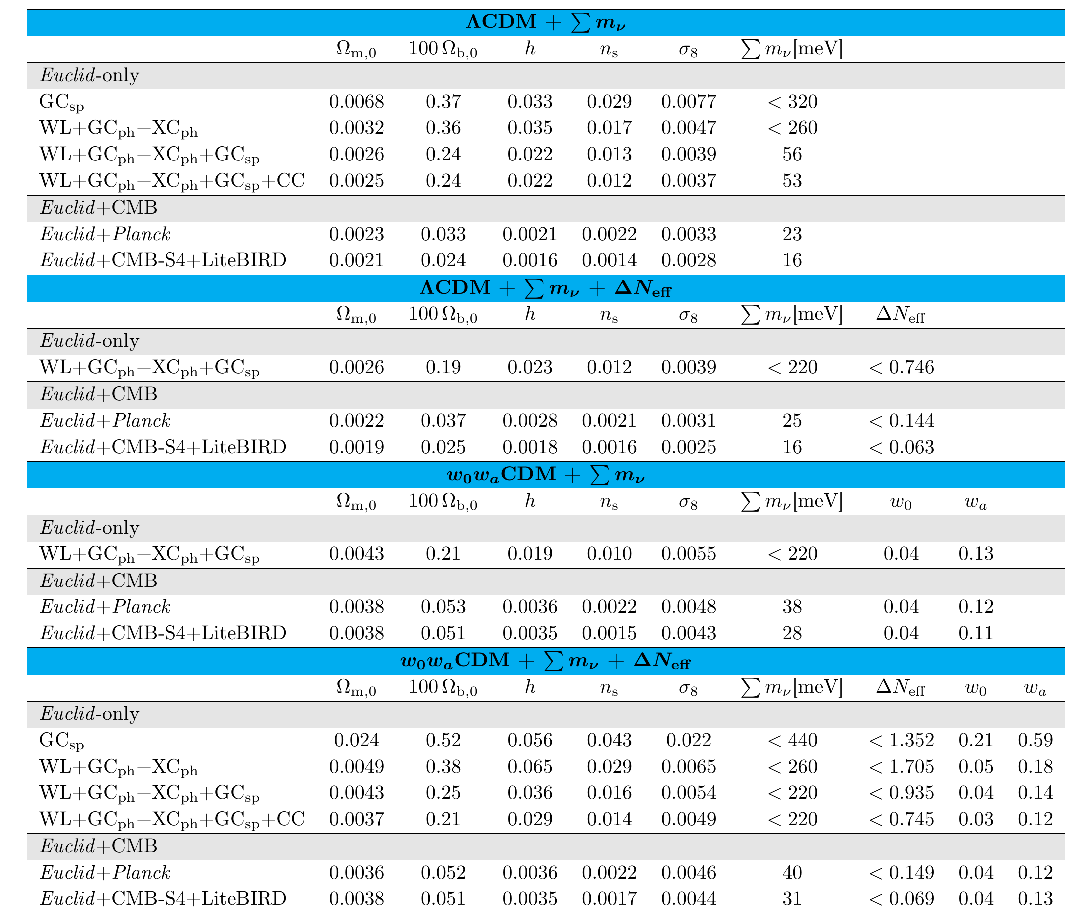
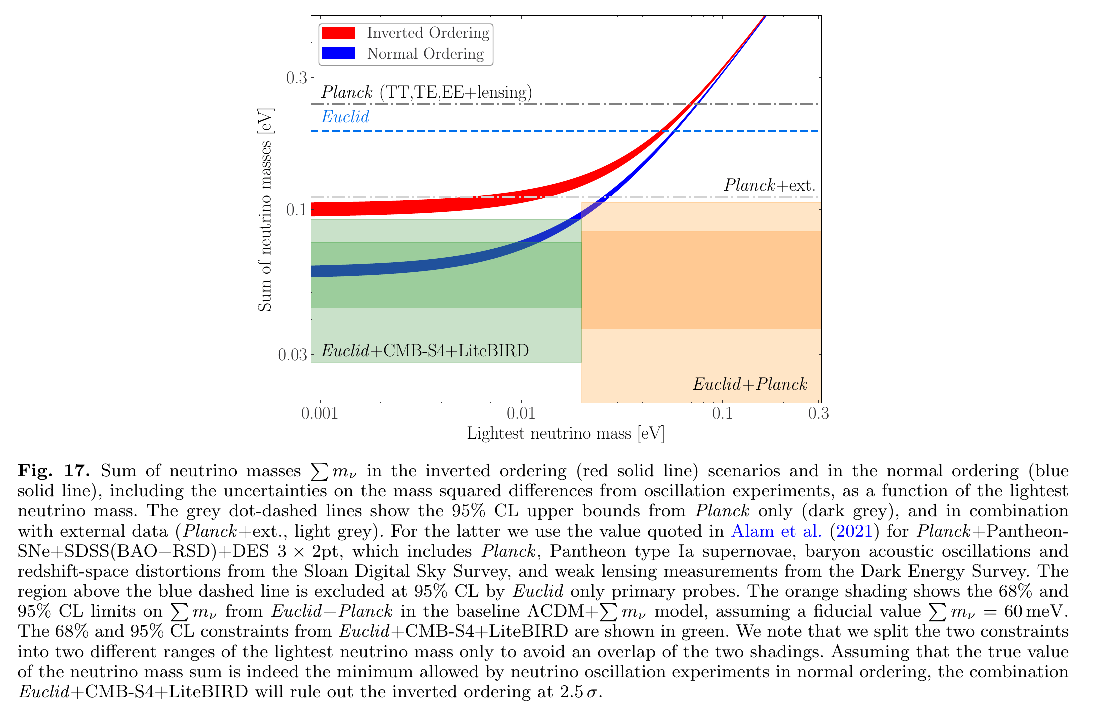
The power of combining Euclid + CMB-S4: Euclid preparation. Sensitivity to Neutrino parameters. Archidiacono, Lesgourgues, Casas, Pamuk, et al (2024) 2405.06047
Students moved on to excellent PhDs
Project led by K.Koyama, me and my student Sefa Pamuk
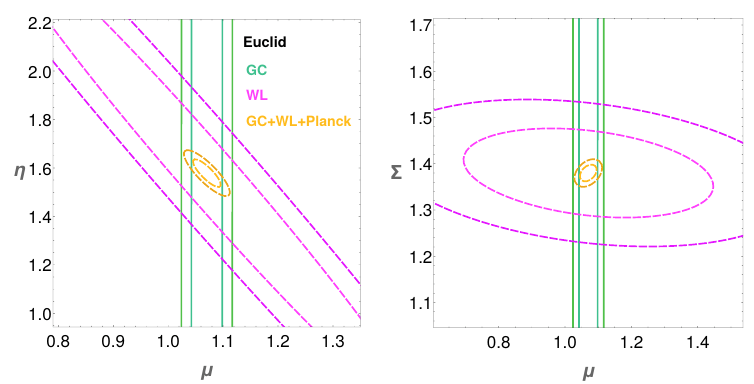
We can describe general modifications of gravity (of the metric) at the linear perturbation level with 2 functions of scale (\(k\)) and time (\(a\))
Euclid primary observables
Casas, Kunz, Martinelli, Pettorino (2017); Phys.Dark Univ. 18 1703.01271
Updated forecasts for SKAO, LSST(Rubin), DESI :
Casas, Carucci, Pettorino, Camera, Martinelli (2023); Phys. Dark Univ., 2210.05705;
Lensing and Clustering
very complimentary probes
Archidiacono, Lesgourgues, Casas et al., Euclid preparation - LIV. Sensitivity to neutrino parameters, 2405.06047
Weak Lensing, 6years Euclid data,
IST:F validated MontePython likelihoods: github.com/Sefa76/photometric_fofR/
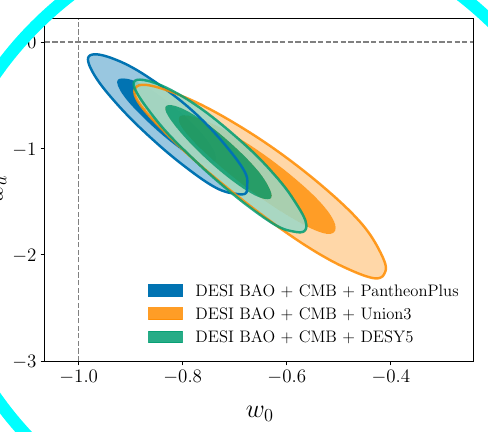
DESI cosmological results (2024, 2025) -> Not a cosmological constant?
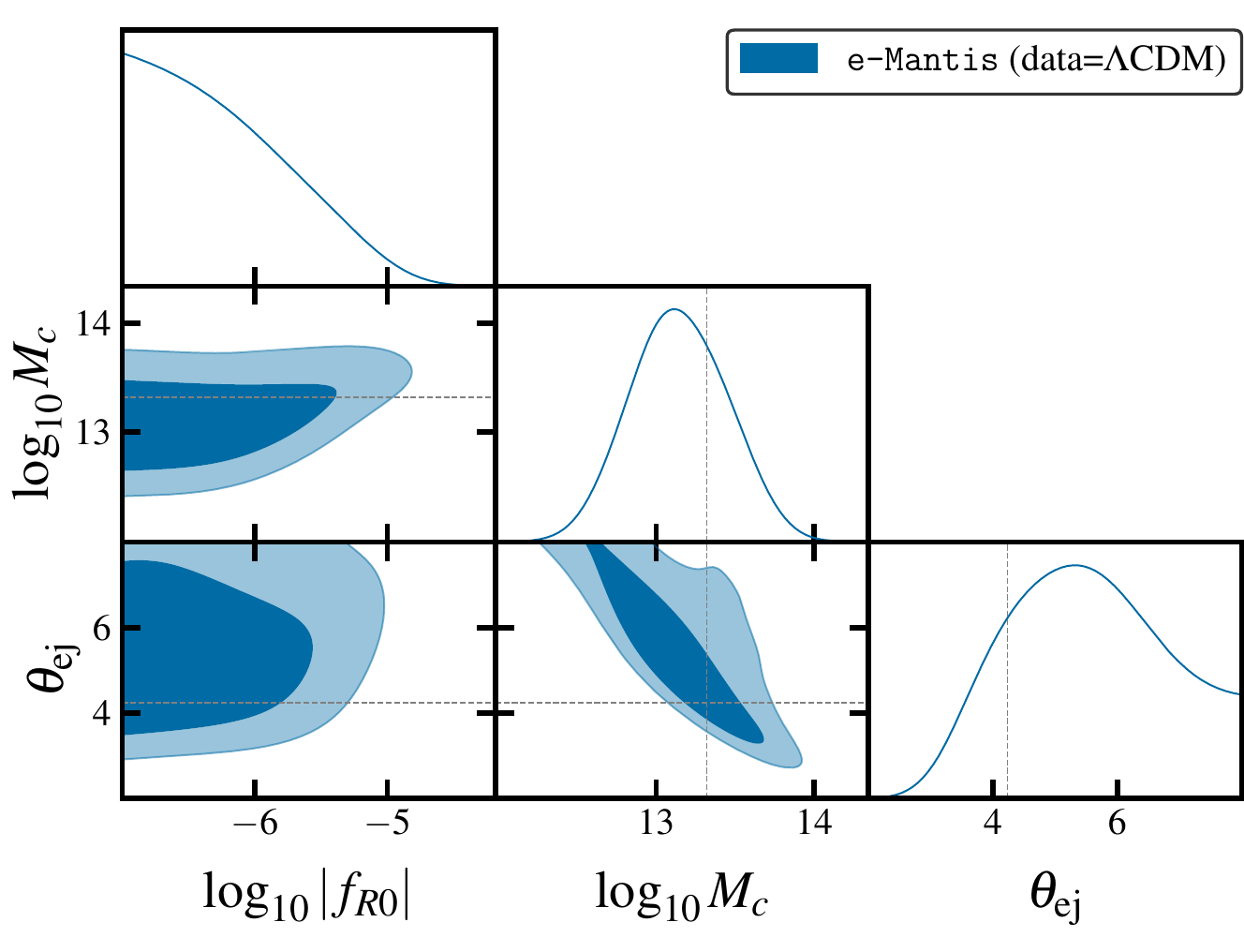
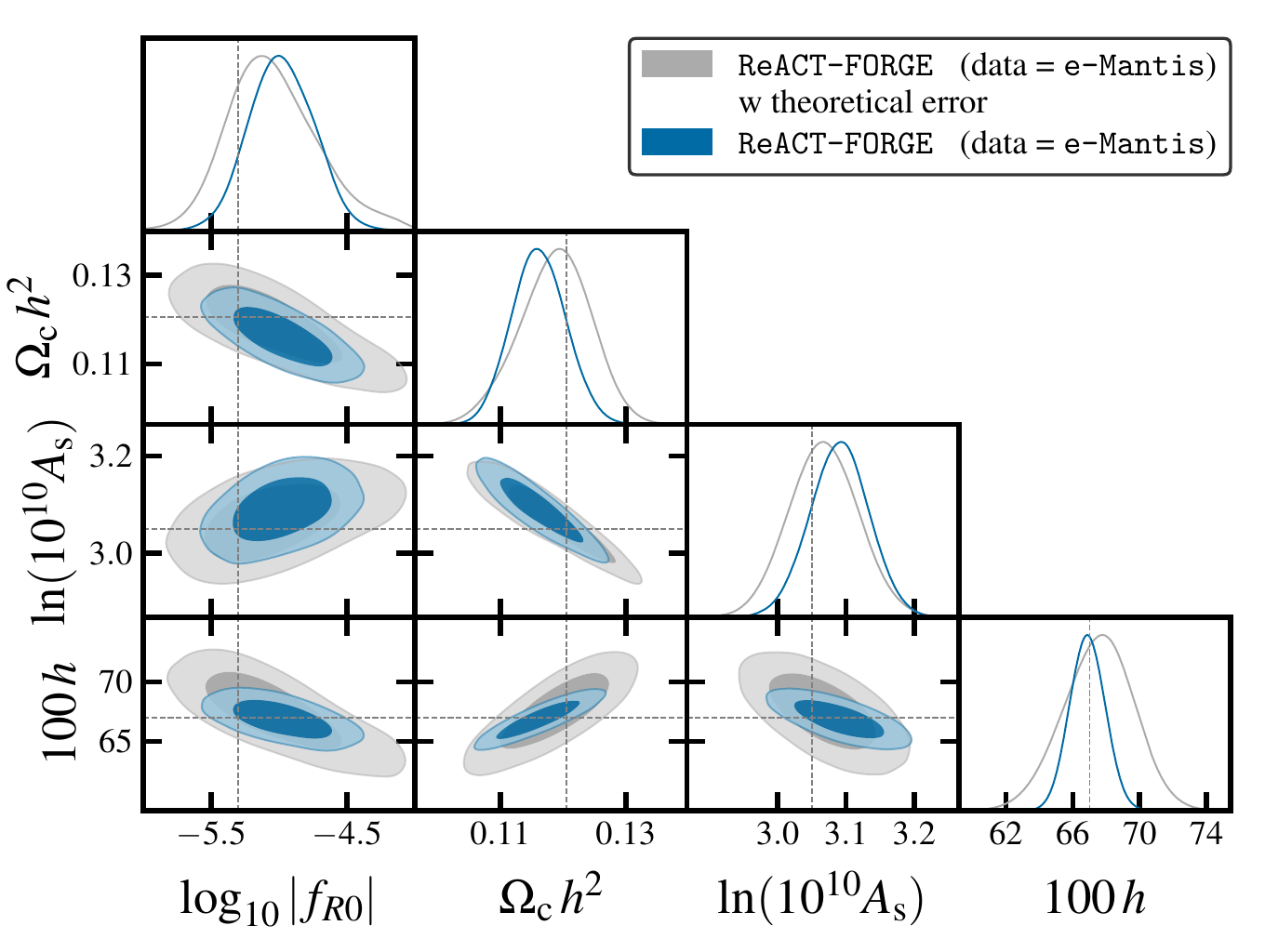
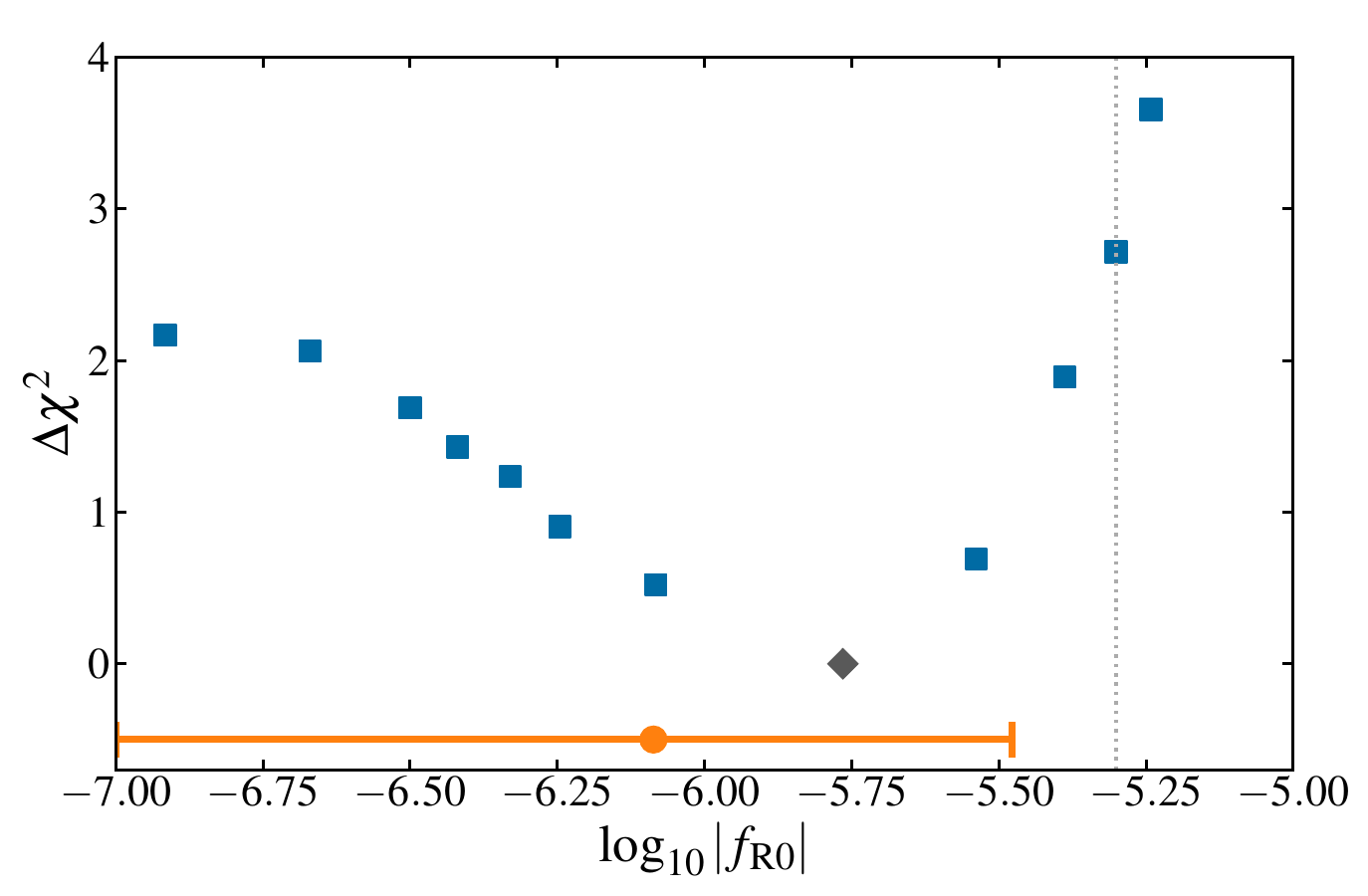
Casas et al., Euclid: Constraints on f(R) cosmologies from the spectroscopic and photometric primary probes, 2306.11053
Archidiacono, Lesgourgues, Casas et al., Euclid preparation - LIV. Sensitivity to neutrino parameters, 2405.06047
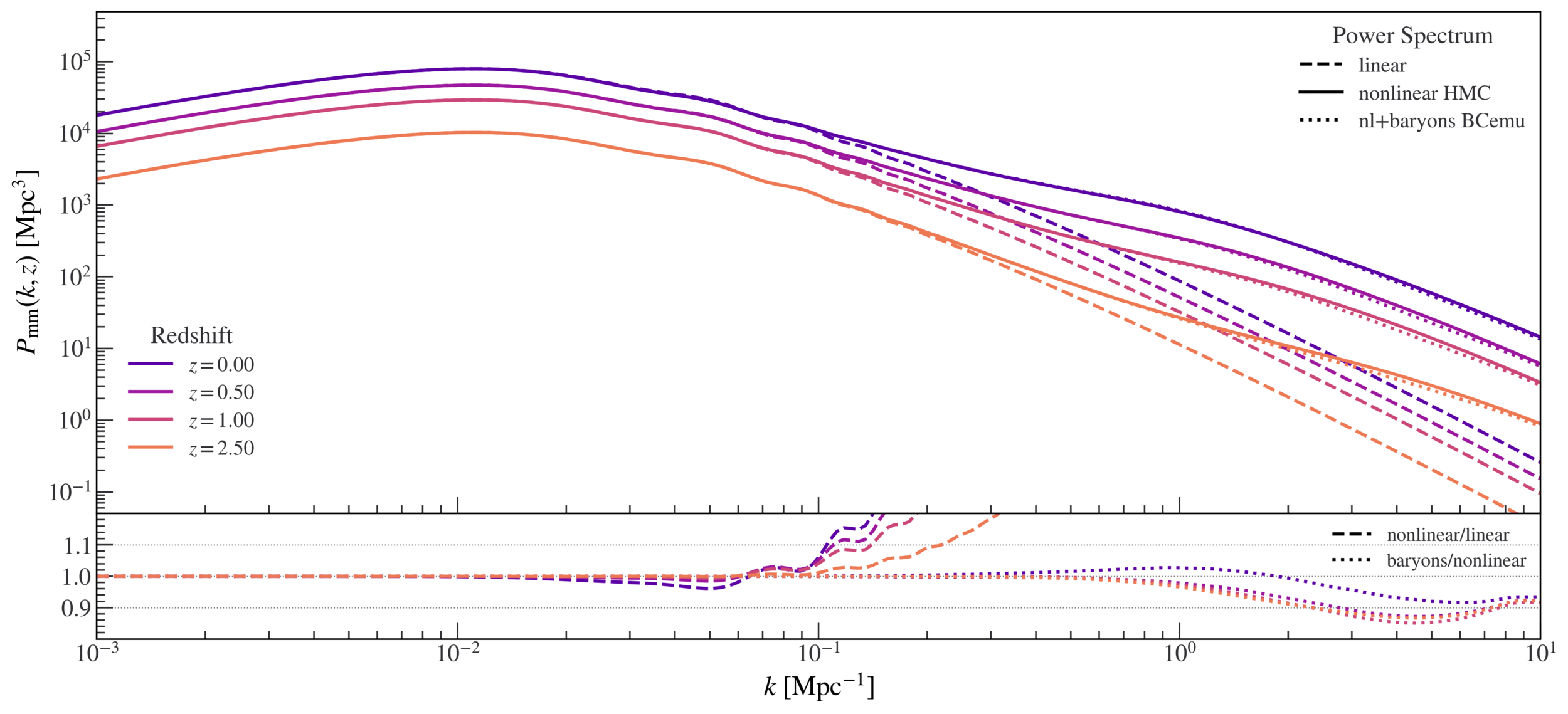
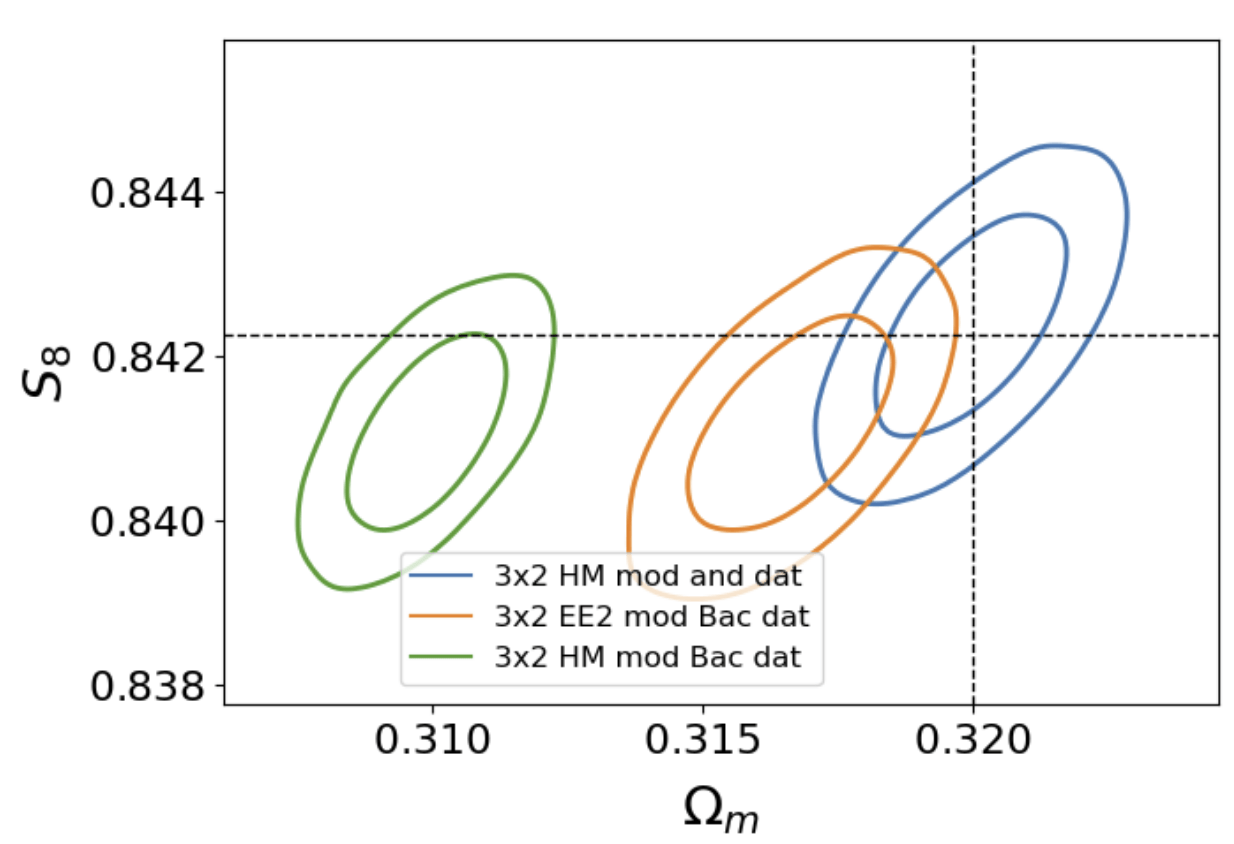
Weak Lensing, optimistic, with BCEmu as baryonic-feedback model
We included theoretical errors (Audren+2012) to mitigate biases
Reproducible research!
Code: CosmicFishPie
S. Casas, M. Martinelli and M. Raveri
S. Pamuk, Sabarish V.M. and friends
github.com/santiagocasas/cosmicfishpie
New pythonic version: I have been main developer on forecasts for:
SKAO (21cm IM), DESI (GCsp), Vera Rubin LSST (3x2photo), Euclid (GCsp+3x2photo), CMB (TT+TE+EE)
Fisher matrix for the photometric 3x2pt observable in angular space
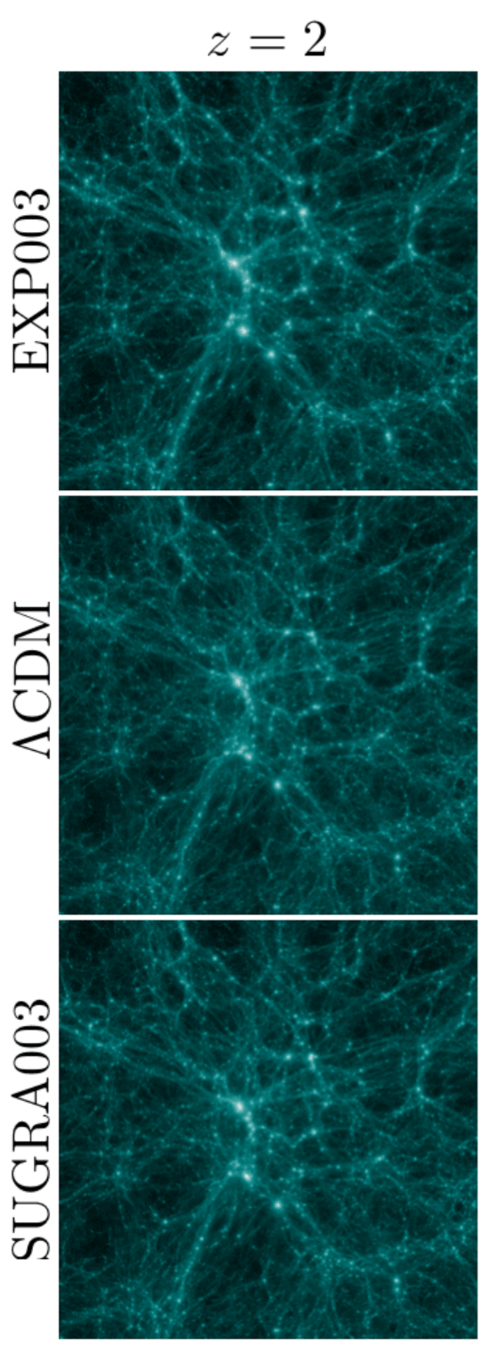
Credit: CoDECS simulations
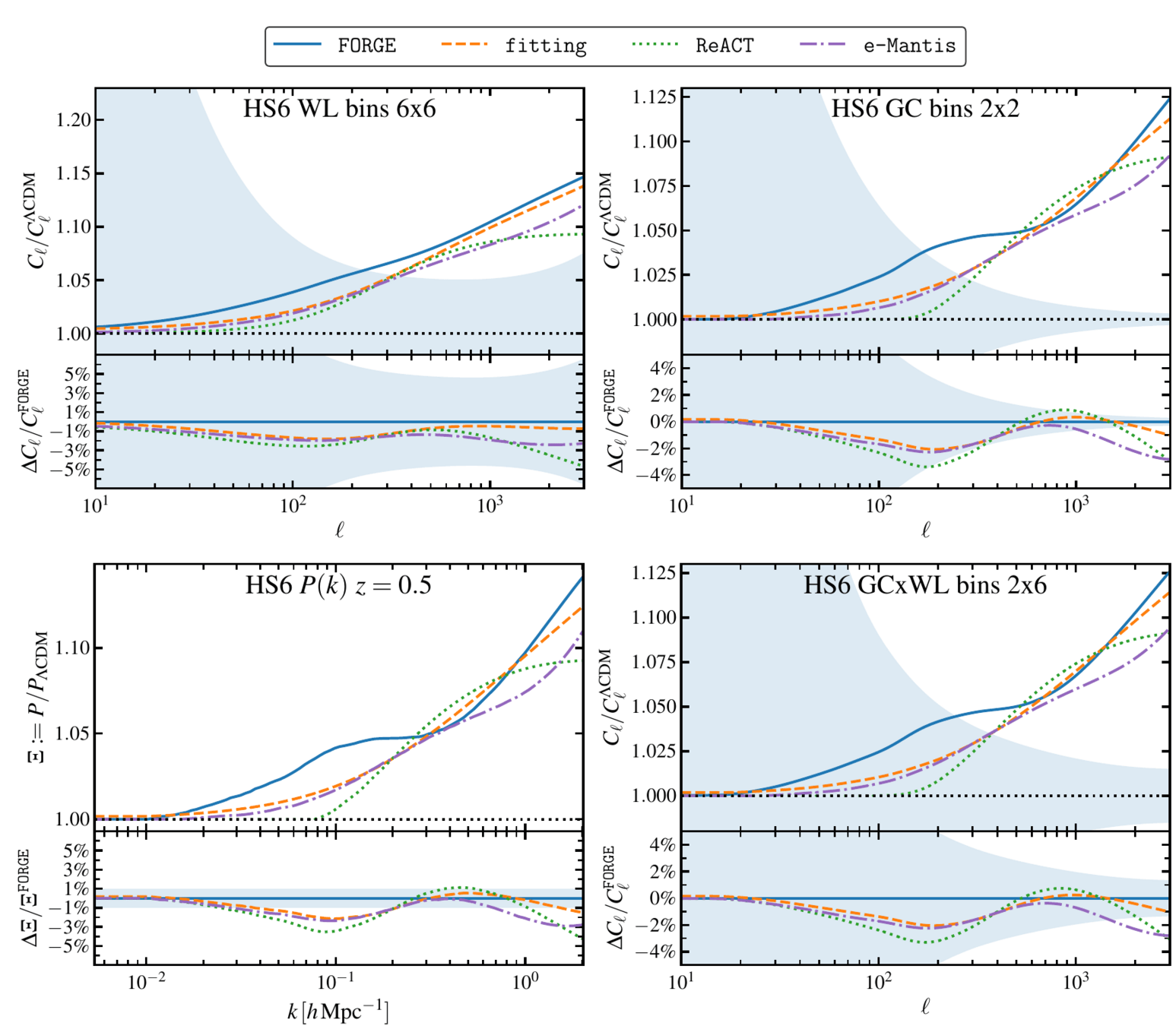
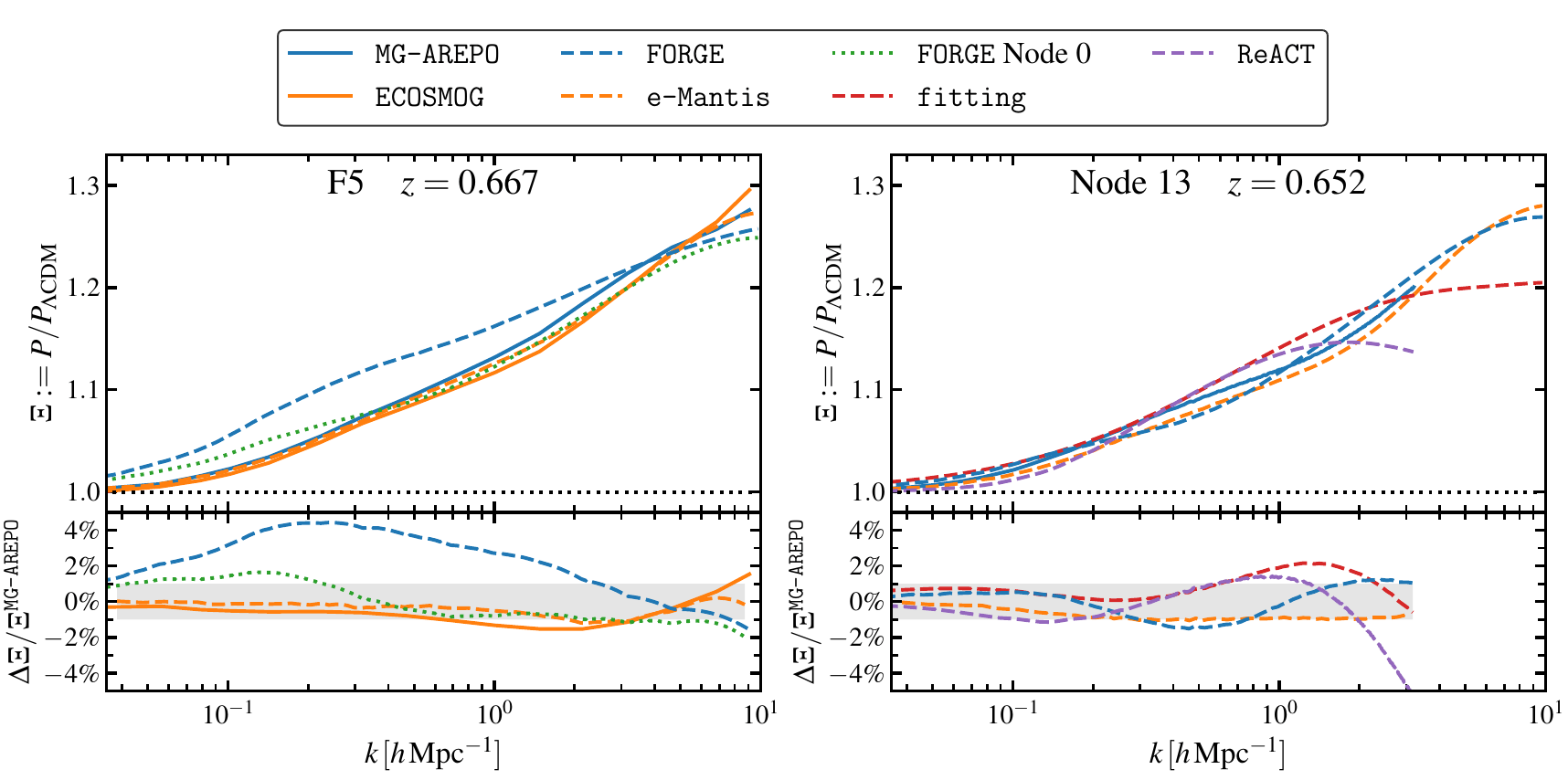
Simulations of MG are
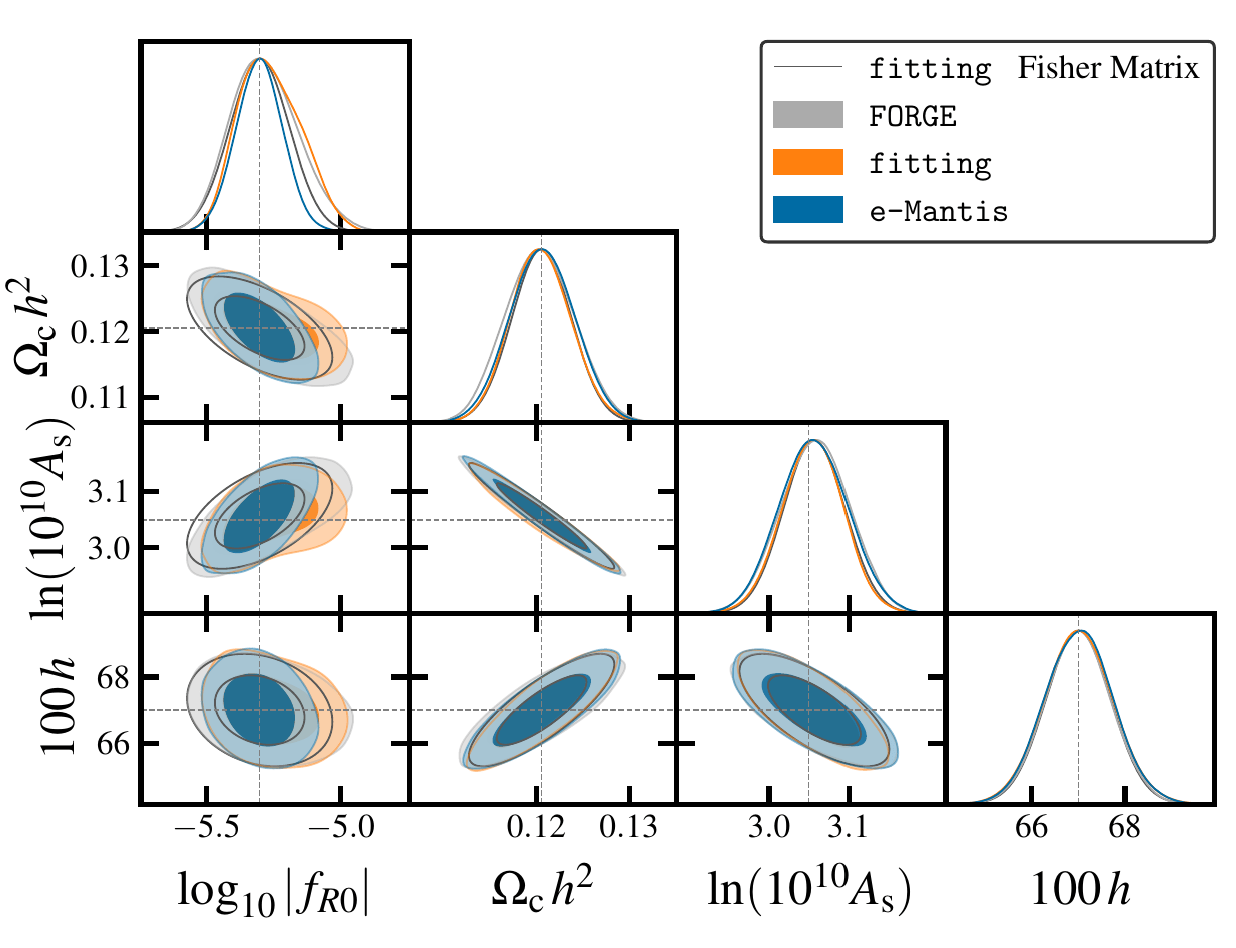
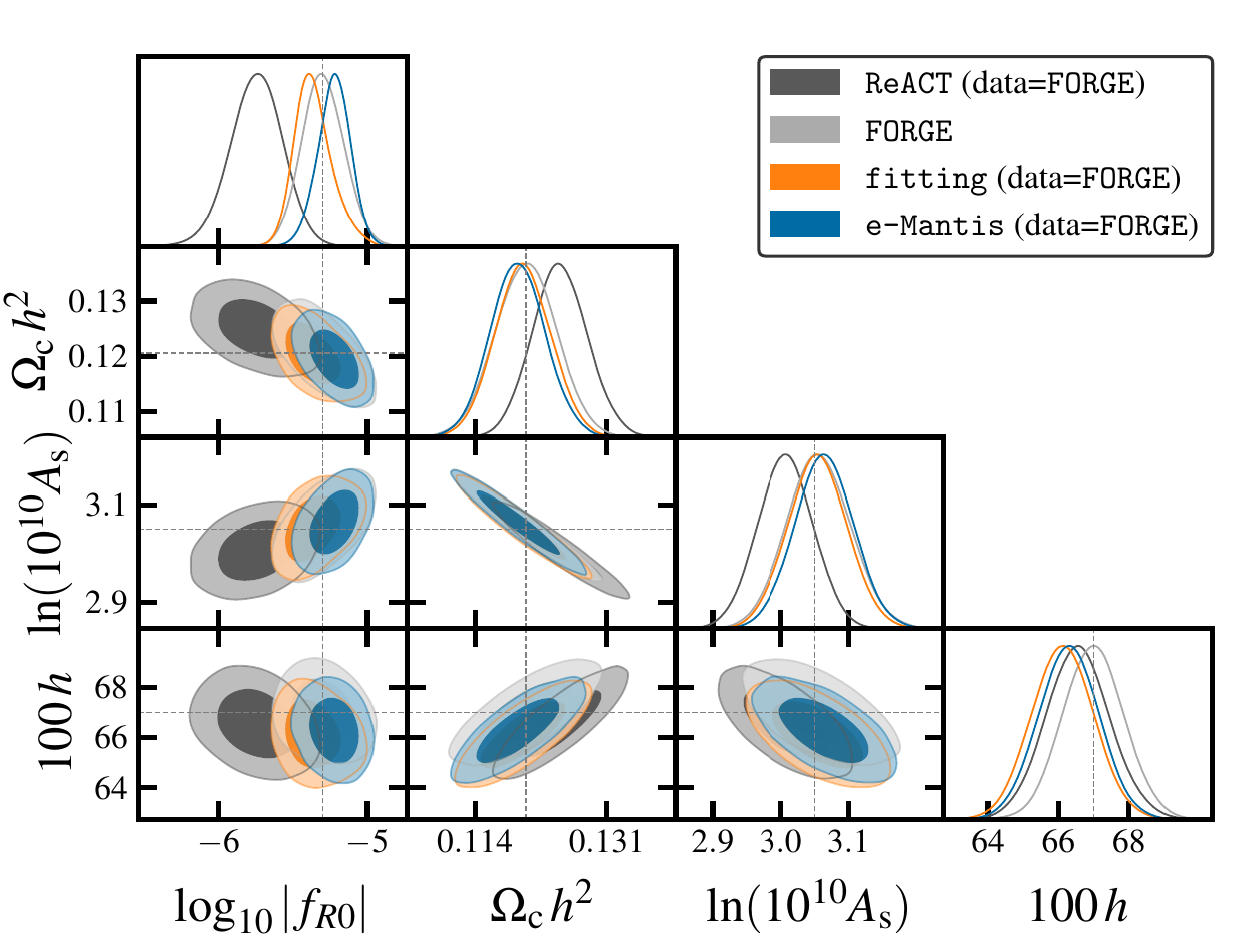
expensive, need for fitting functions or Emulators.
Baldi (2011);
Casas+(2015) 1508.07208; Winther, Casas+ (2019)1903.08798
Credits: Yun Ling
CONCEPT forecasts,
Ling, Casas, Dakin, in prep.
Are neutrino suppressions degenerate with MG enhancements?
Peel+(2018)
What about baryons??
Euclid standard project: f(R)+Mnu
Casas, Parimbelli in prep.
Is the fifth force screened at Halo, Clusters and galaxy level?
Different types of screening:
Chameleon, Damour-Polyakov, K-mouflage, Vainshtein
Review: Testing Screened Modified Gravity; Brax, Casas, Desmond, Elder (2021), 2201.10817.
Can we compute very nonlinear dynamics that backreacts into the Friedmann equation?
Growing Neutrino Quintessence,
Casas, Pettorino, Wetterich (2016), Phys. Rev. D 1608.02358
Induces changes in the gravitational potentials -> fifth force
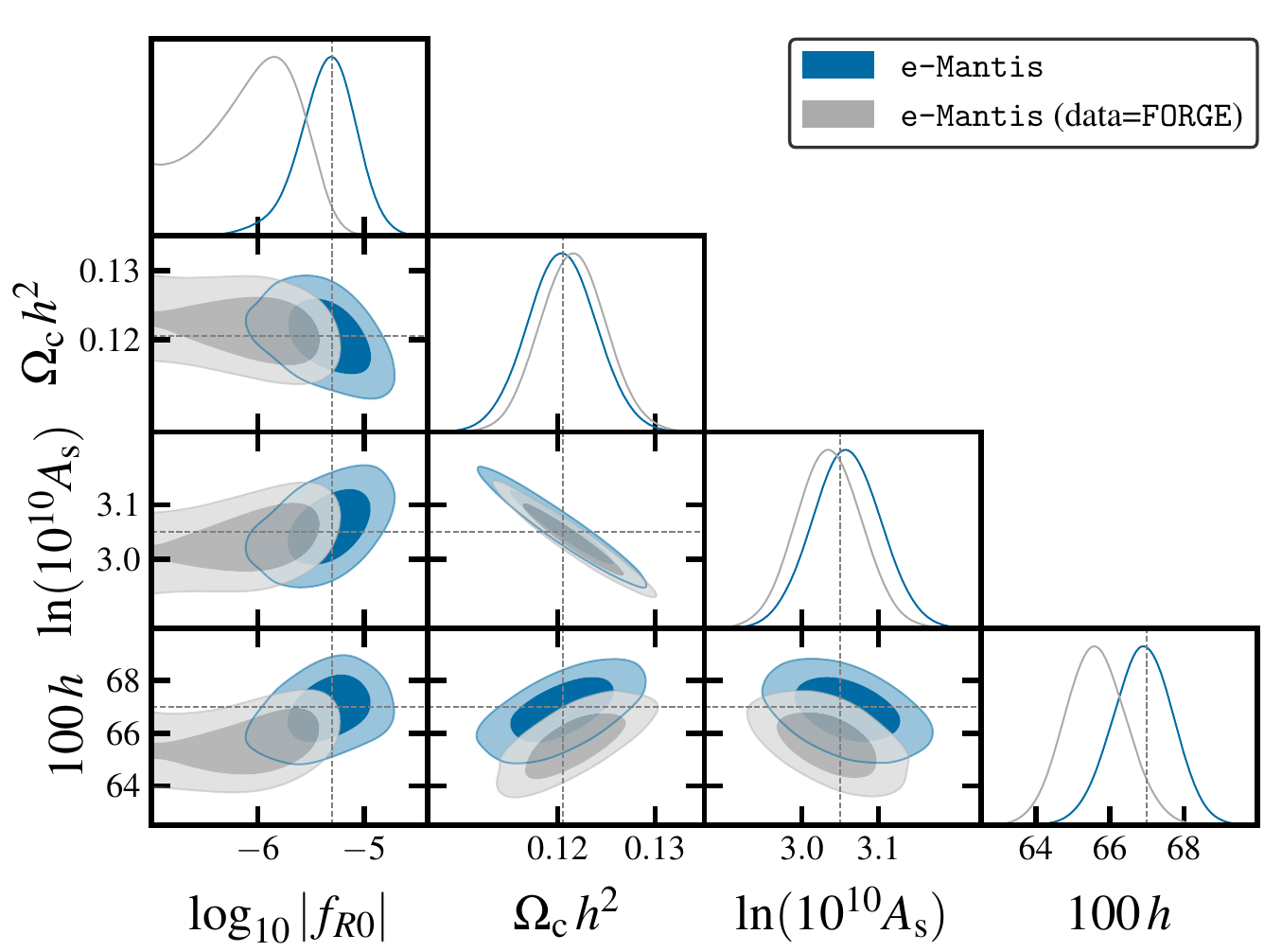
Casas et al., Euclid: Constraints on f(R) cosmologies from the spectroscopic and photometric primary probes, 2306.11053
"Fifth-force" scale for cosmological densities
\(f_{R0}=(5.0^{+ 0.58}_{-0.52} \times 10^{-6})\)
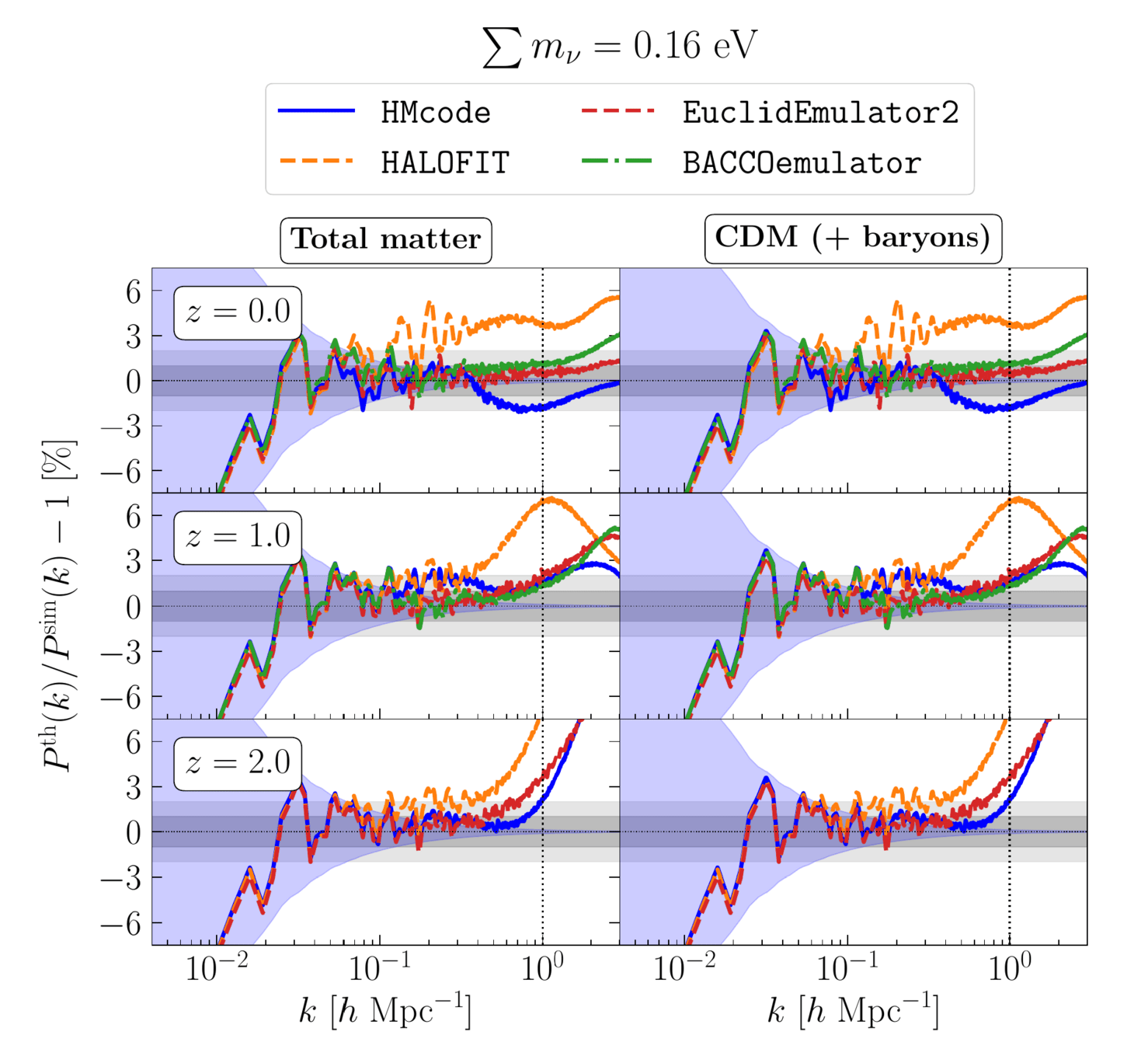
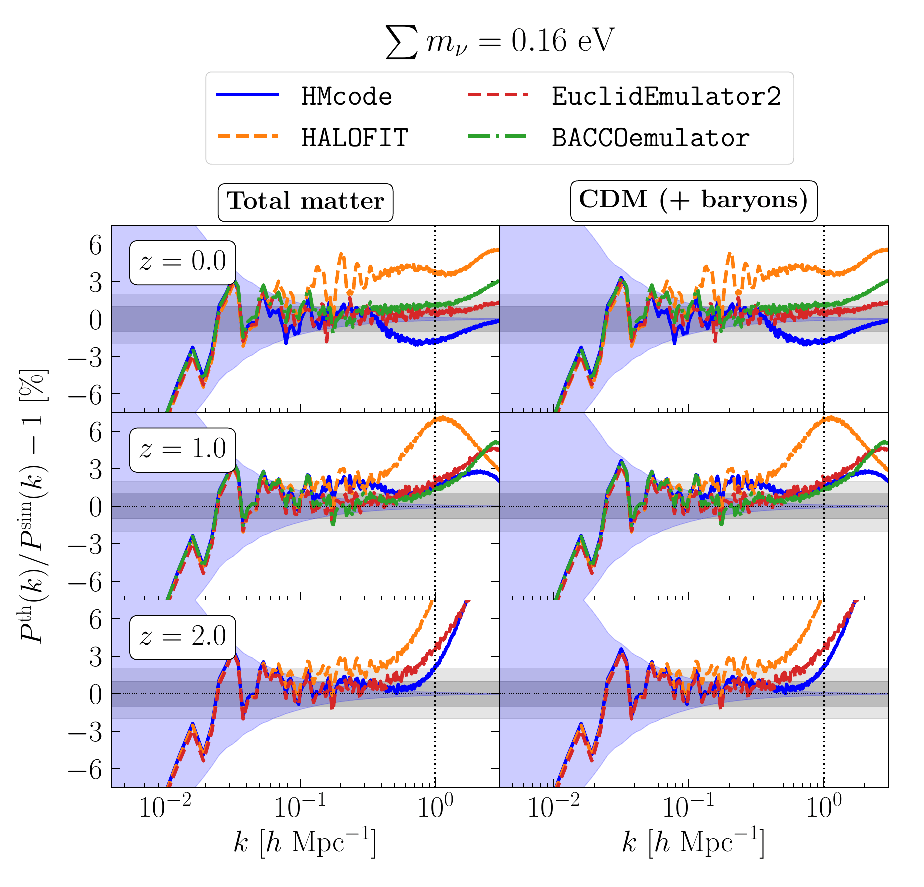
Emulator differences sometimes larger than Euclid error bars
f(R) Hu-Sawicki model
Koyama, Pamuk, Casas et al., Euclid preparation. Simulations and nonlinearities beyond ΛΛCDM. 4. Constraints on f(R)f(R) models from the photometric primary probes, 2409.03524
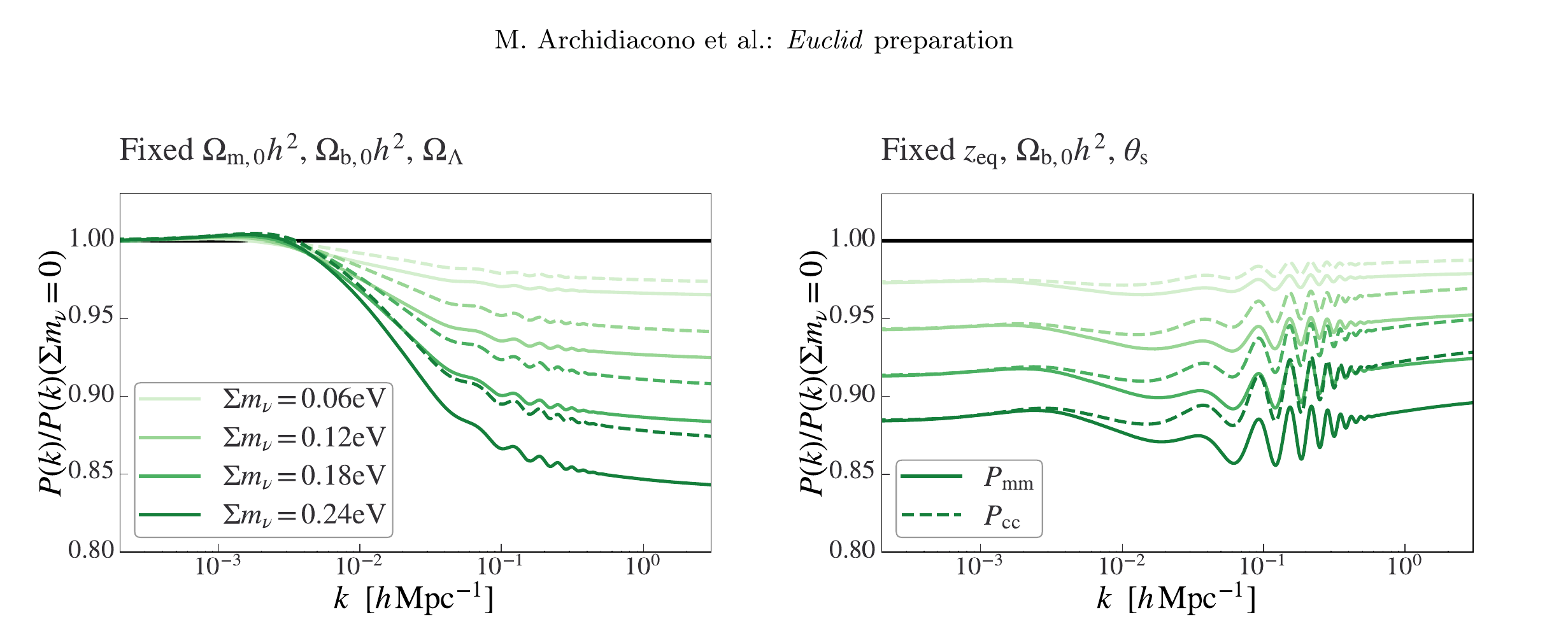
Archidiacono, Lesgourgues, Casas et al., Euclid preparation - LIV. Sensitivity to neutrino parameters, 2405.06047
Effect of neutrino mass on matter clustering
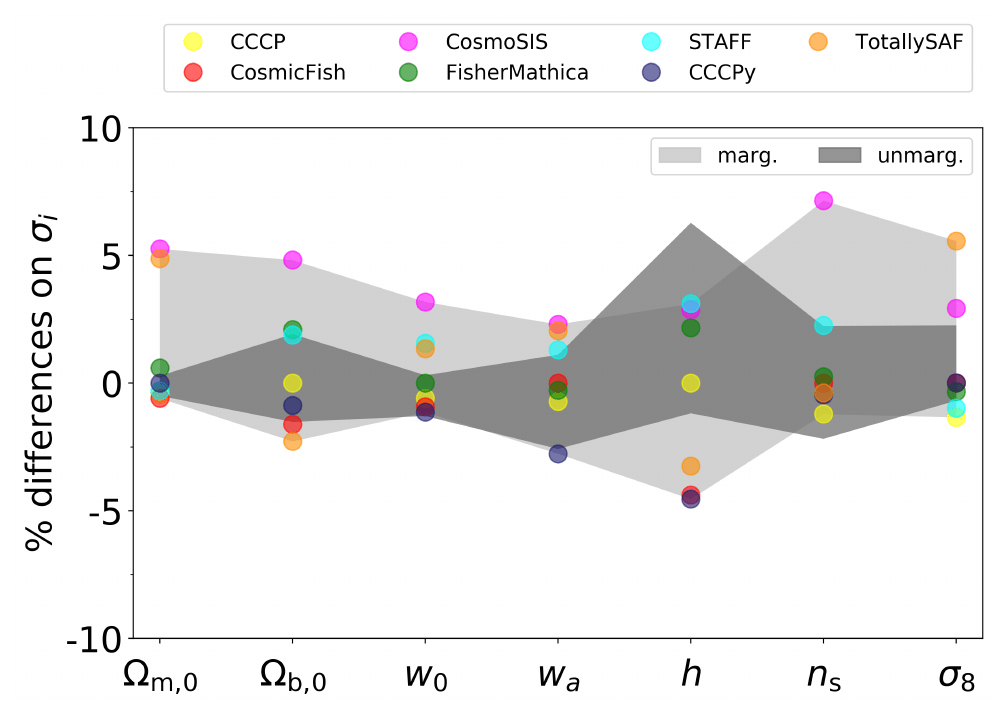
Recipe, comparison and final Fisher matrices.
One of the few validated Galaxy Clustering + Weak Lensing codes
My main contributions:
Euclid preparation: VII. Forecast validation for Euclid cosmological probes, Blanchard et al. arXiv:1910.09273
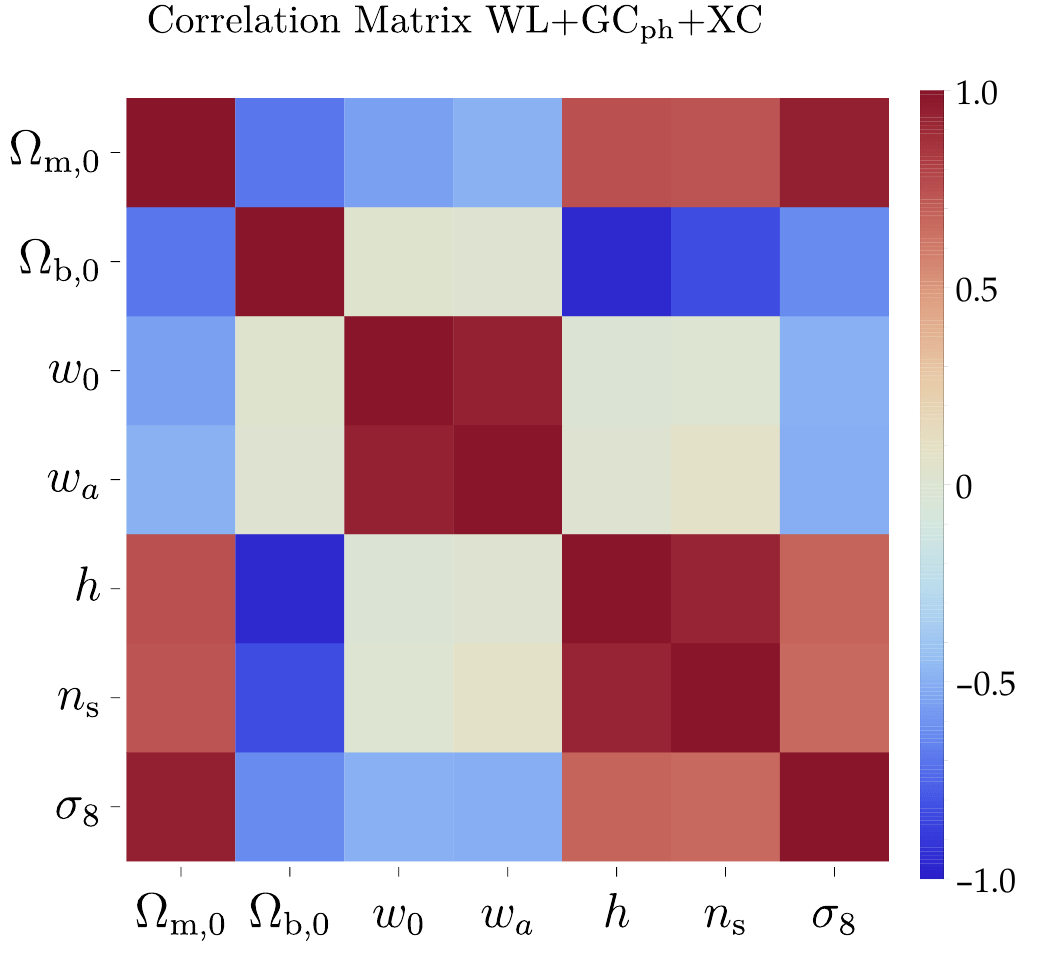
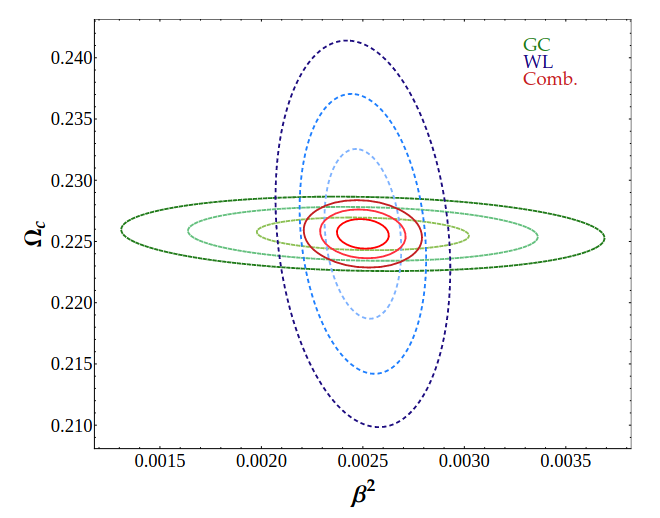
Figure of Correlation (FoC), based on:
Casas et al, (2017) Phys. Dark Univ. 1703.01271
Maintainer of public repository.
Plotting scripts for all the figures.
submission to the arXiv
Reproducible research!
First forecast for MG using Radio x Optical: Constraining gravity with synergies between radio and optical cosmological surveys, Casas et al (2022), Phys.Dark.Univ. 2210.05705
\(P^{\rm IM}(z,k) = \bar{T}_{IM}(z)^2 \rm{AP}(z) K_{\rm rsd}^2(z, \mu; b_{\rm HI}) \)
\(FoG(z,k,\mu_\theta) \\ \times P_{\delta\delta,dw}(z,k) \)
\( K_{\rm rsd}(z, \mu; b_{\rm HI}) = [b_{\rm HI}(z)^2+f(z)\mu^2] \)
\( b_{\rm HI}(z) = 0.3(1+z) + 0.6 \)
\( \bar{T}_{\mathrm{IM}}(z)= 189h \frac{(1+z)^2 H_0}{H(z)}\Omega_{HI}(z) \,\,{\rm mK} \)
\(\Omega_{HI} = 4(1+z)^{0.6} \times 10^{-4} \)
Carucci et al (2020) 2006.05996
Jolicoeur et al (2020) 2009.06197
\(P^{{\rm IM} \times \rm{g}}(z,k) = \bar{T}_{\rm IM}(z) {\rm AP} (z) r_{\rm IM,opt} K_{\rm rsd}(z, \mu; b_{\rm HI}) \)
\( \times K_{\rm rsd}(z, \mu; b_{\rm g}) FoG(z,k,\mu_\theta) P_{\delta\delta,dw}(z,k) \)
\( \times \exp[-\frac{1}{2} k^2 \mu^2 (\sigma_{\rm IM}(z)^2+\sigma_{\rm sp}(z)^2)] \)
SC, Carucci, Pettorino et al (2022) 2210.05705
Brightness temperature of 21cm emission line
Fraction of neutral hydrogen in the Universe
Casas, Rubio, Pauly et al., 1712.04956
Higgs-Dilaton inflation: early-late Universe connection
Constraints on Hu-Sawicki \( f(R)\)
Casas, Amendola, Baldi, Pettorino et al., 1508.07208
Coupled Quintessence: DM-DE
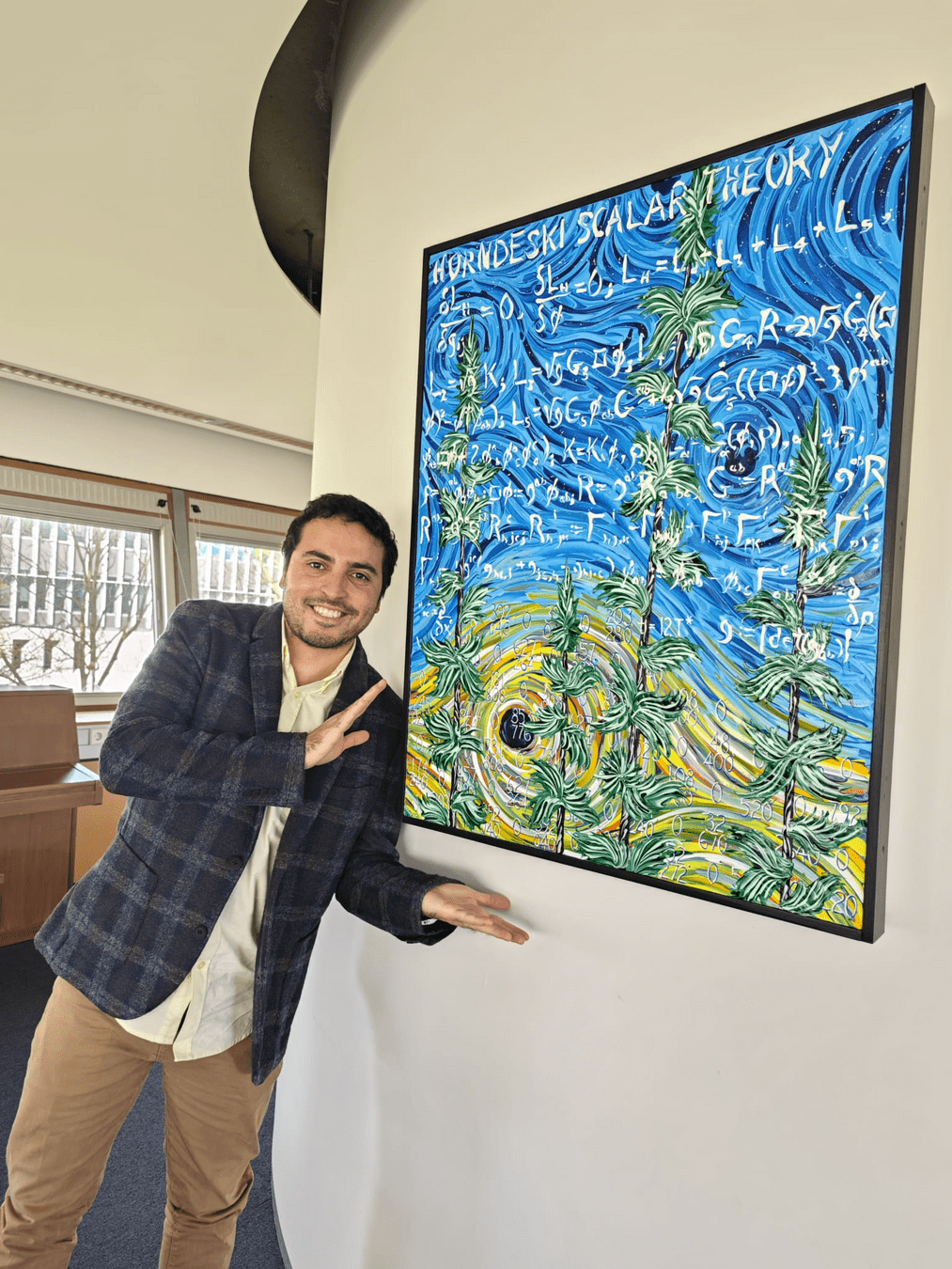
Surviving Horndeski EFT
Frusciante, Peirone, Casas, Lima, 1810.10521
Modified Gravity with SKA 21cm-IM
Casas, Cardone, Sapone, et al., 2306.11053
Casas, Carucci, Pettorino et al 2210.05705
Atayde, Frusciante, Bose, Casas, Li, 2404.11471
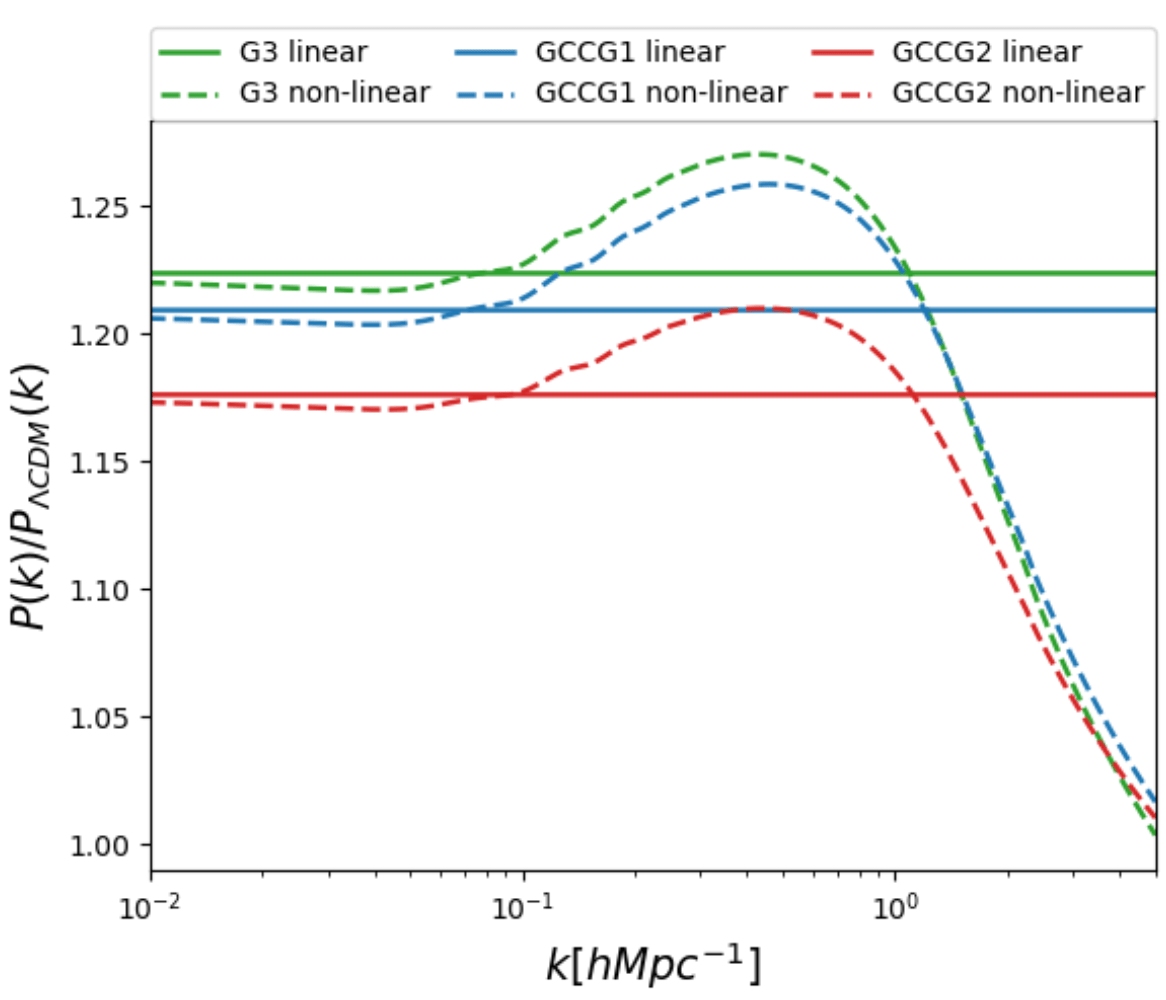
Forecasts for generalized Cubic Galileons
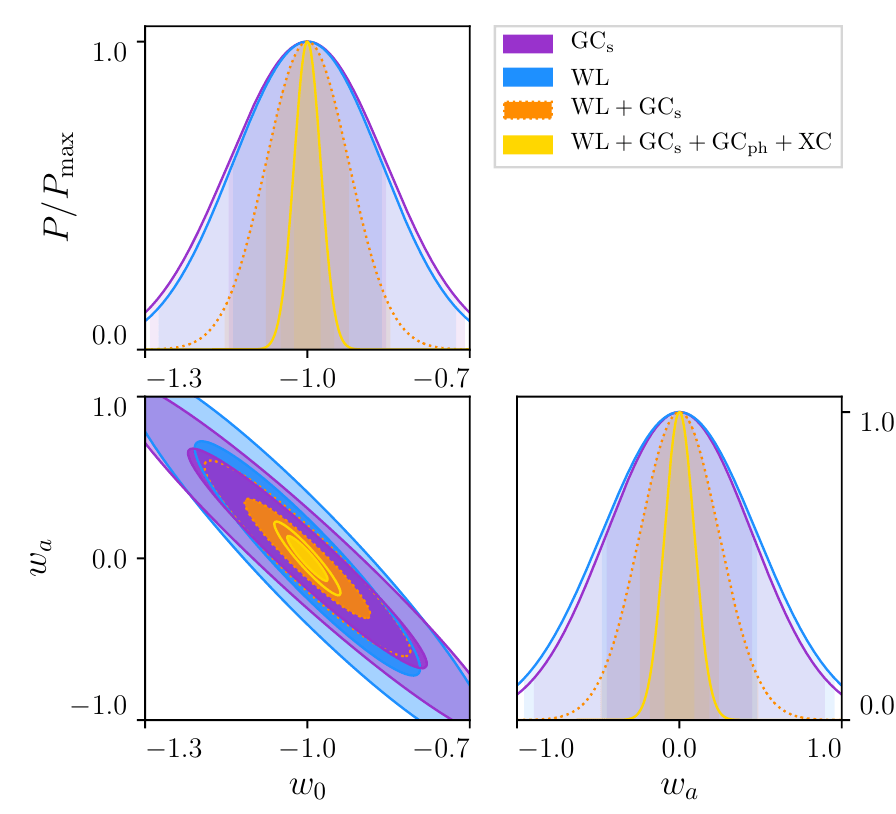
Are Fishers a good approximation to the posterior?
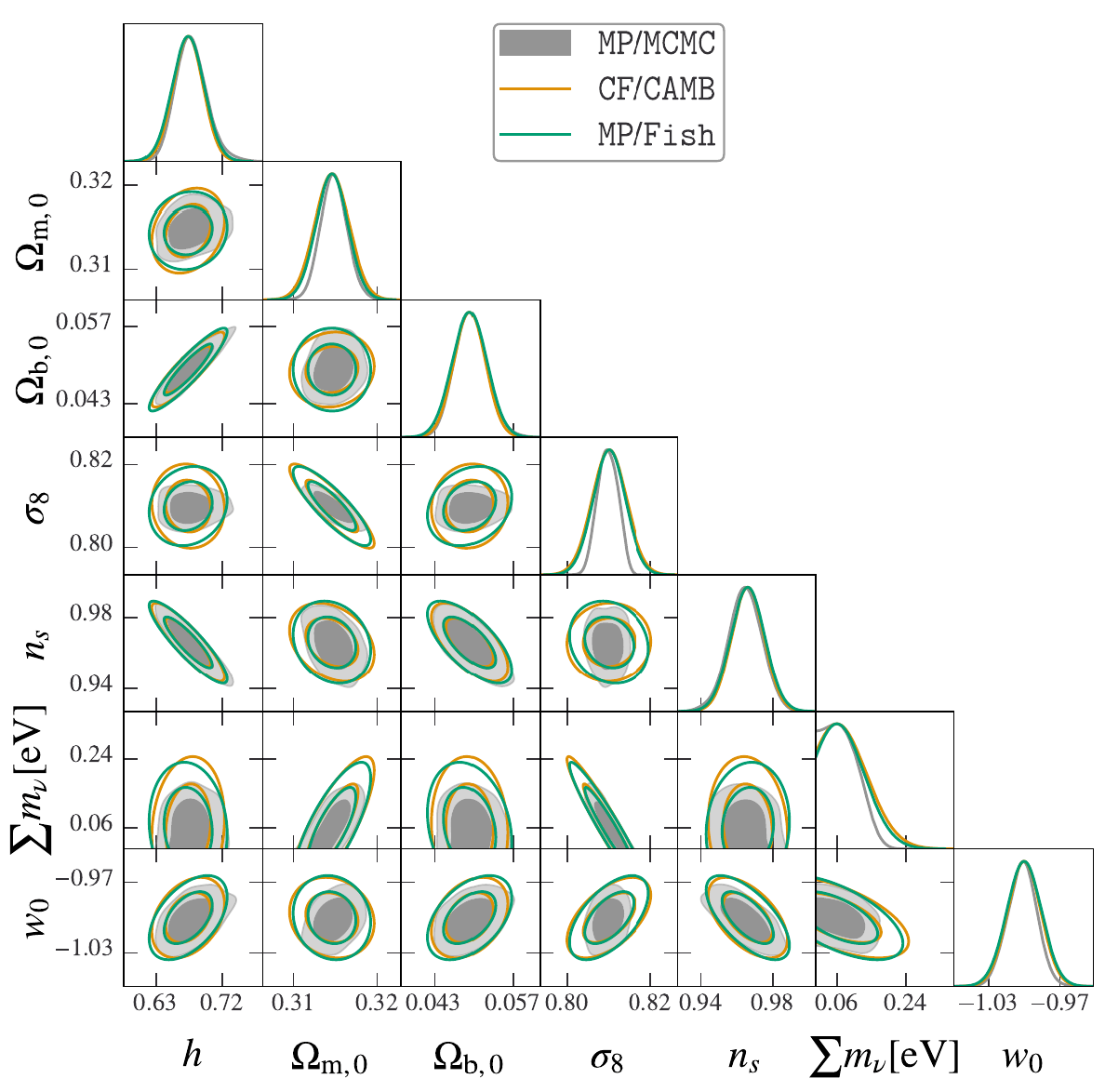
in presence of neutrinos
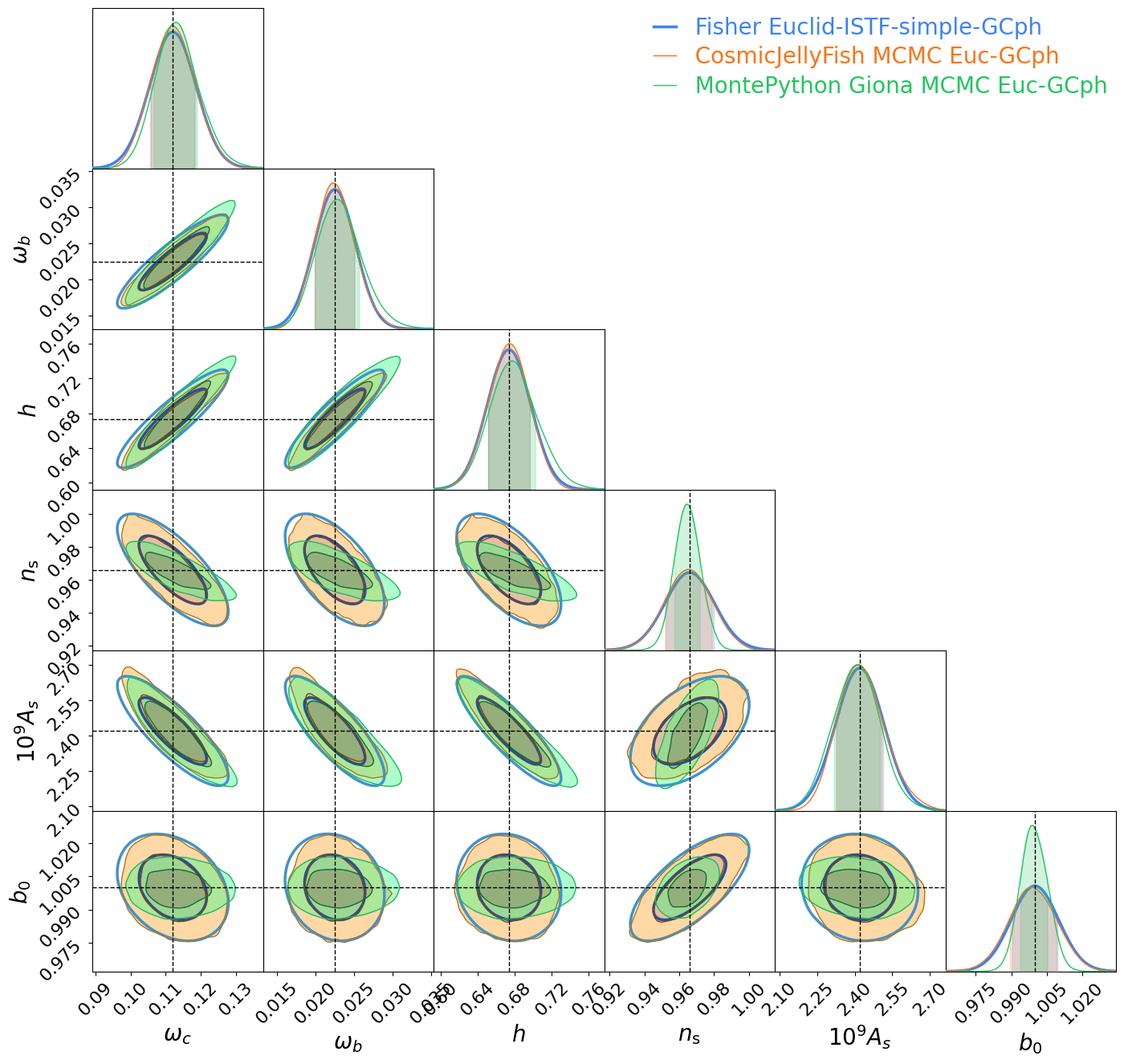
Euclid: Validation of the MontePython forecasting tools, Casas, Lesgourgues, Schöneberg, et al.; 2303.09451
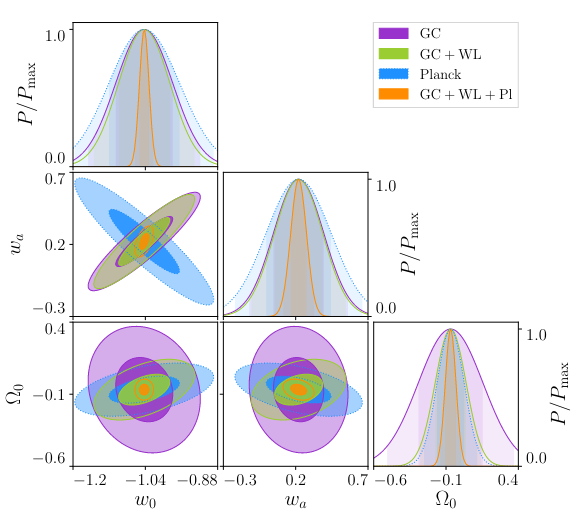
Euclid: Sensitivity to neutrino parameters , Archidiacono, Lesgourgues, Casas, et al.; 2405.06047
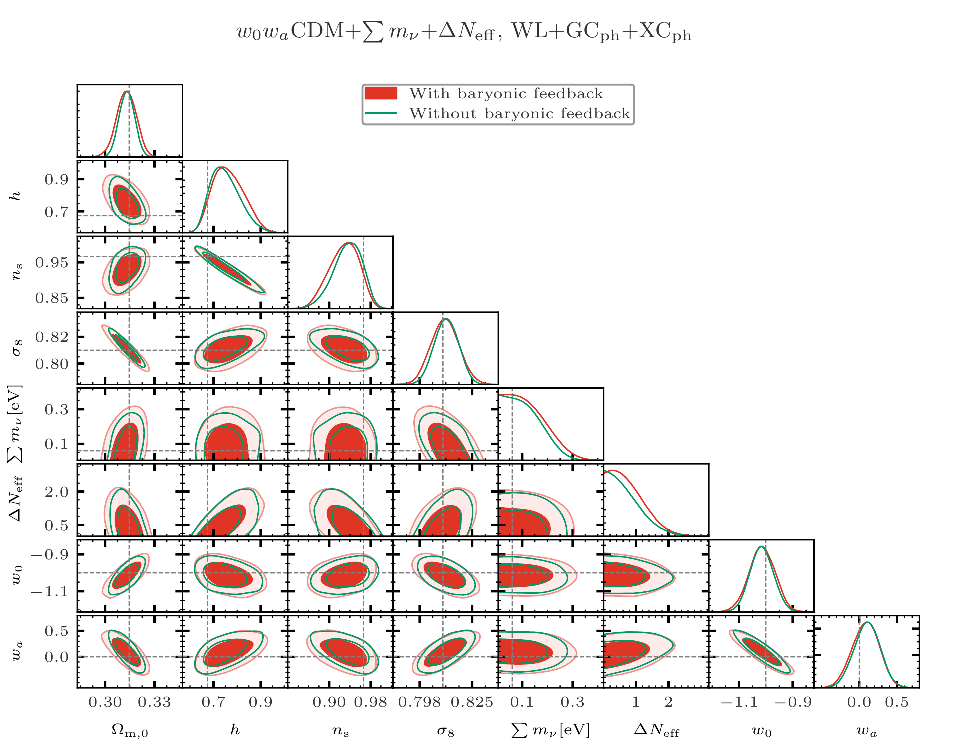
w0waCDM
First up-to-date MCMC forecasts for Euclid+external probes in presence of neutrinos
Euclid: Validation of the MontePython forecasting tools, Casas, Lesgourgues, Schöneberg, et al.; 2303.09451
Euclid: Sensitivity to neutrino parameters , Archidiacono, Lesgourgues, Casas, et al.; 2405.06047
SC, Carucci, Pettorino et al (2022) 2210.05705
Joined Interscience Taskforce on Forecasting
2015
STAR prize co-winner, plenary talk
2019
2019
2019
Core member, developer and reviewer of Interscience Taskforce on Nonlinearities and Likelihood
2019
Coordinator of pre-launch Key-Project on beyond standard models
2021
2 Key-papers co-lead
2022
Become Euclid Consortium (EC) member, Theory Science Working Group
2014
Joined EC Internal Communication Management
2023
EC Copenhagen: Achieved Builder Status
2023
EC Rome: Plenary Speaker
STAR prize for EC-Communication
2024
Theory-Likelihood package co-lead
2024
Theory Work Package Forecasting co-lead
nomination STAR prize PhD
2018
EC
social media manager
2025
CLOE-org Maintainer
Express the excess probabilty of finding another galaxy as a function of scale
Euclid: Fast two-point correlation function covariance through linear construction, Keihänen et al. (2022)
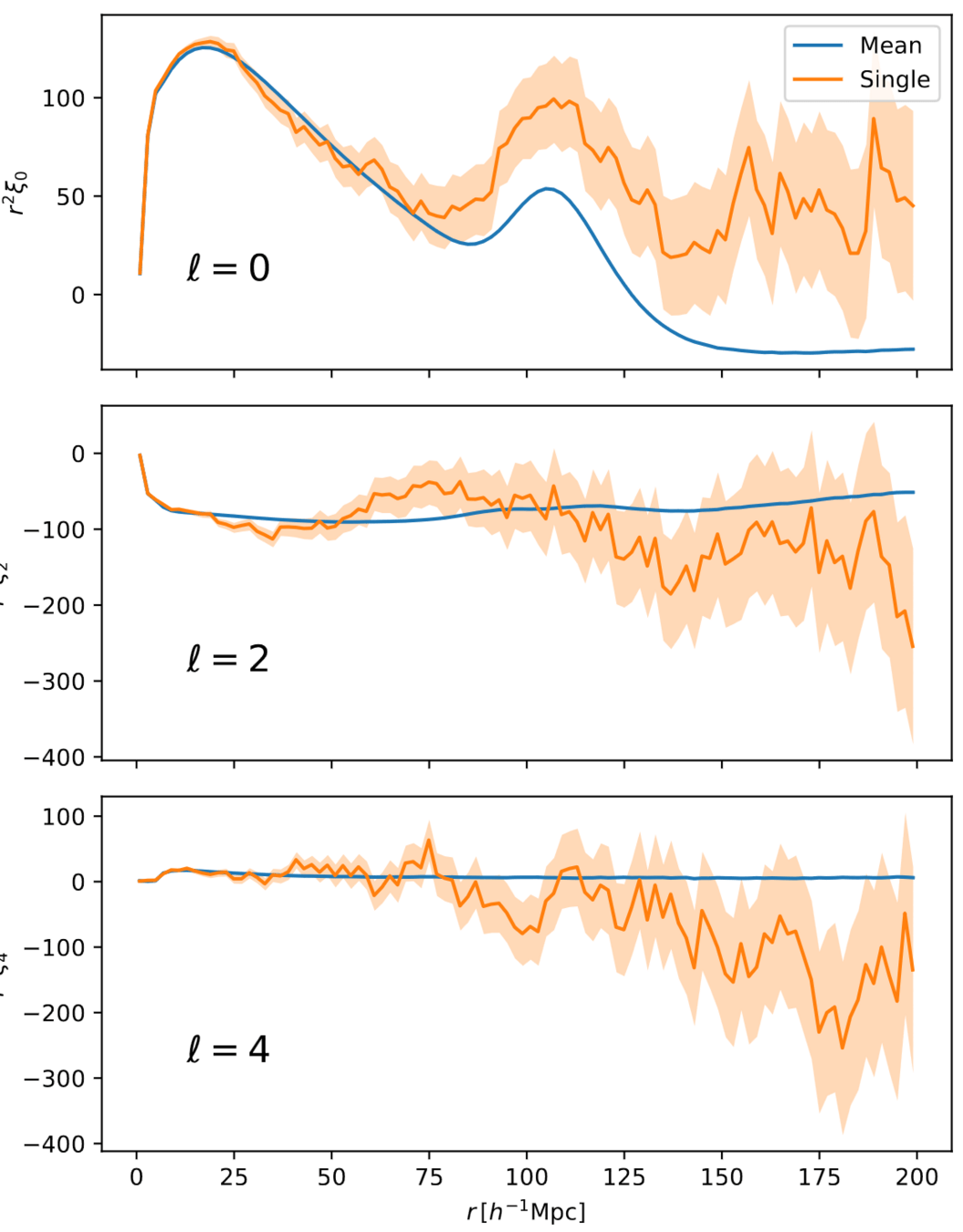
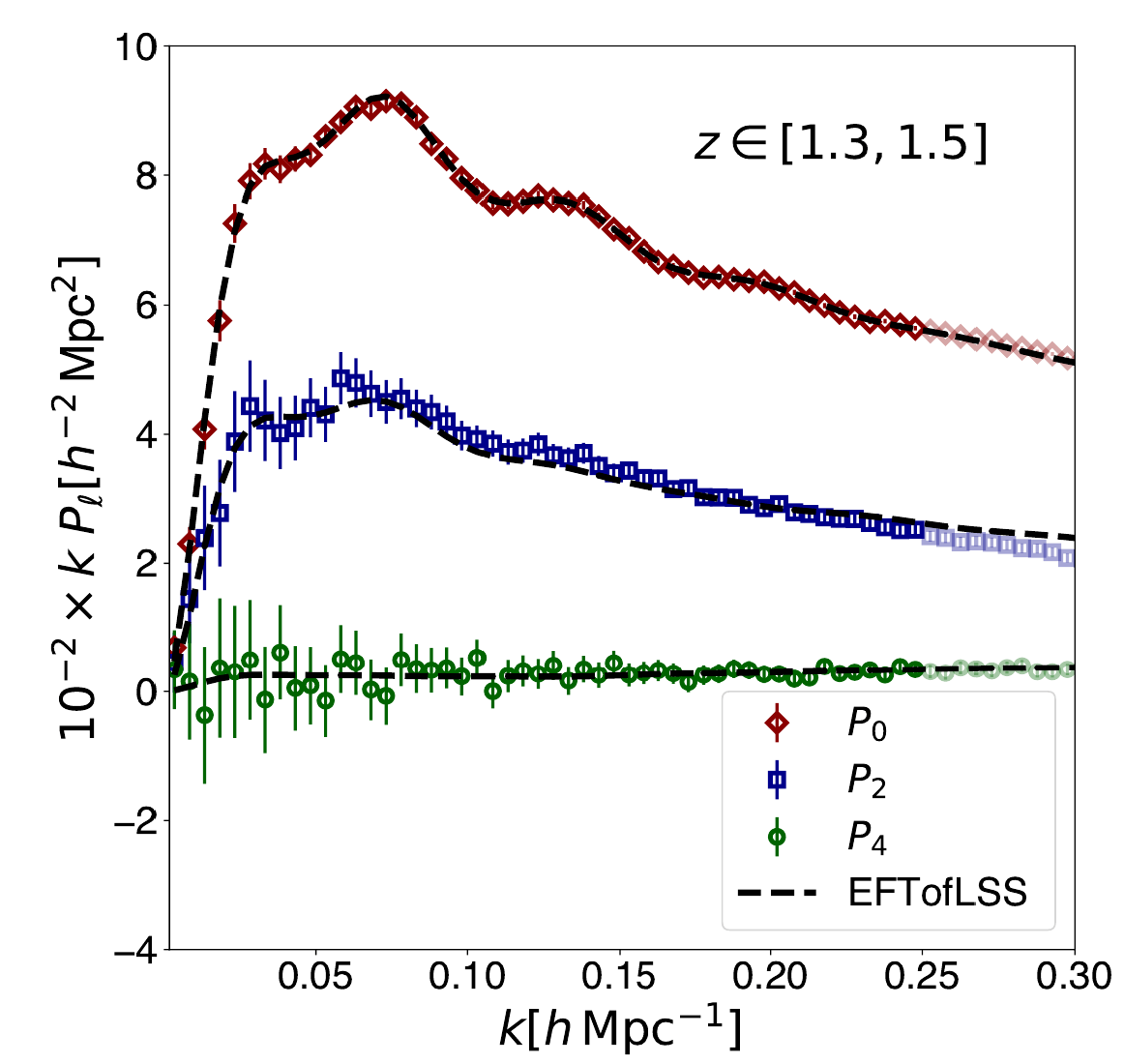
Measured galaxy power spectrum multipoles from mocks. Pezzotta et al. 2024. Compared to a EFToLSS model.
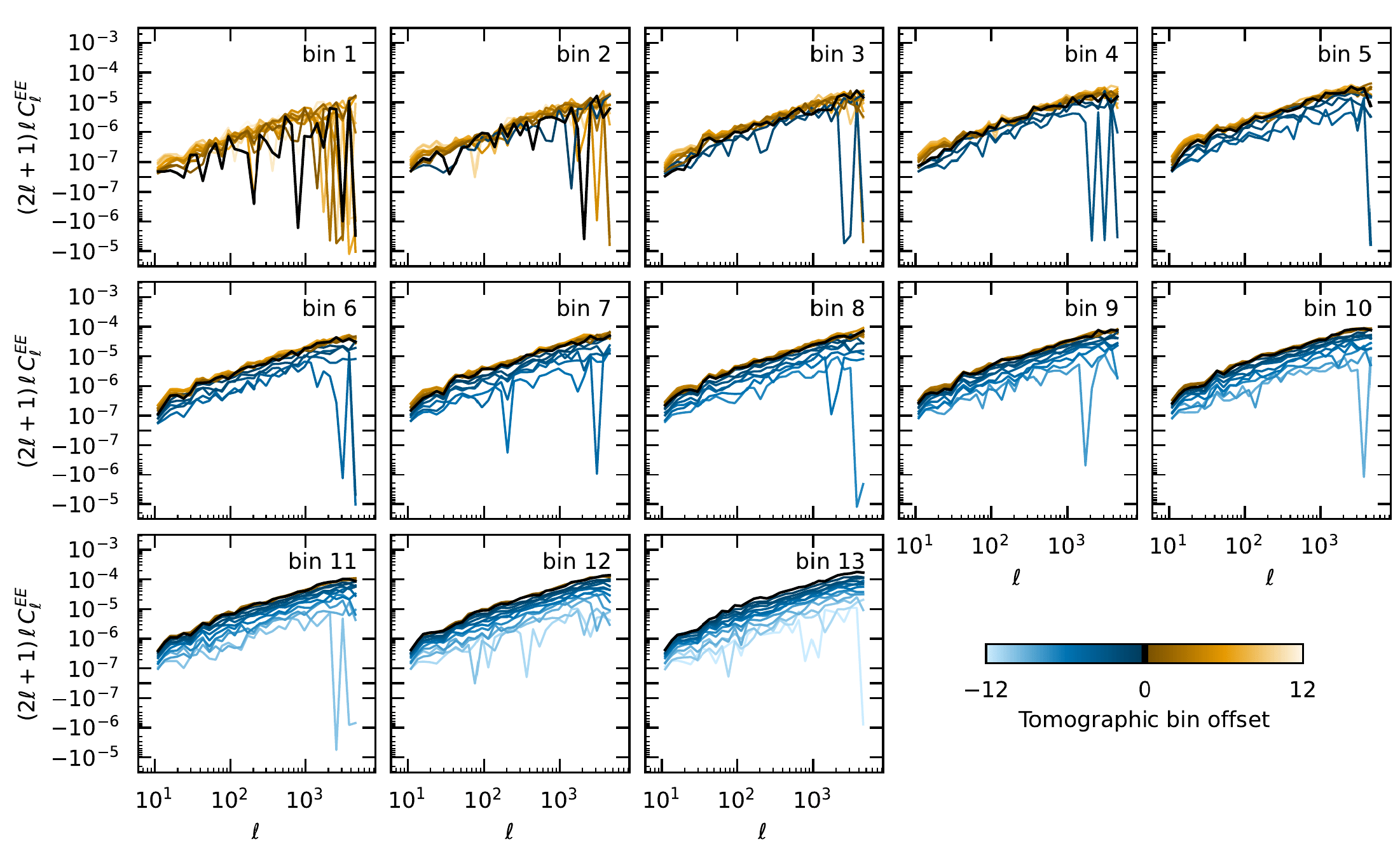
tomography: multiple redshift bins and their cross-correlations
\(z\)
Euclid. I. Overview of the Euclid mission, Euclid collaboration, Mellier et al., 2405.13491
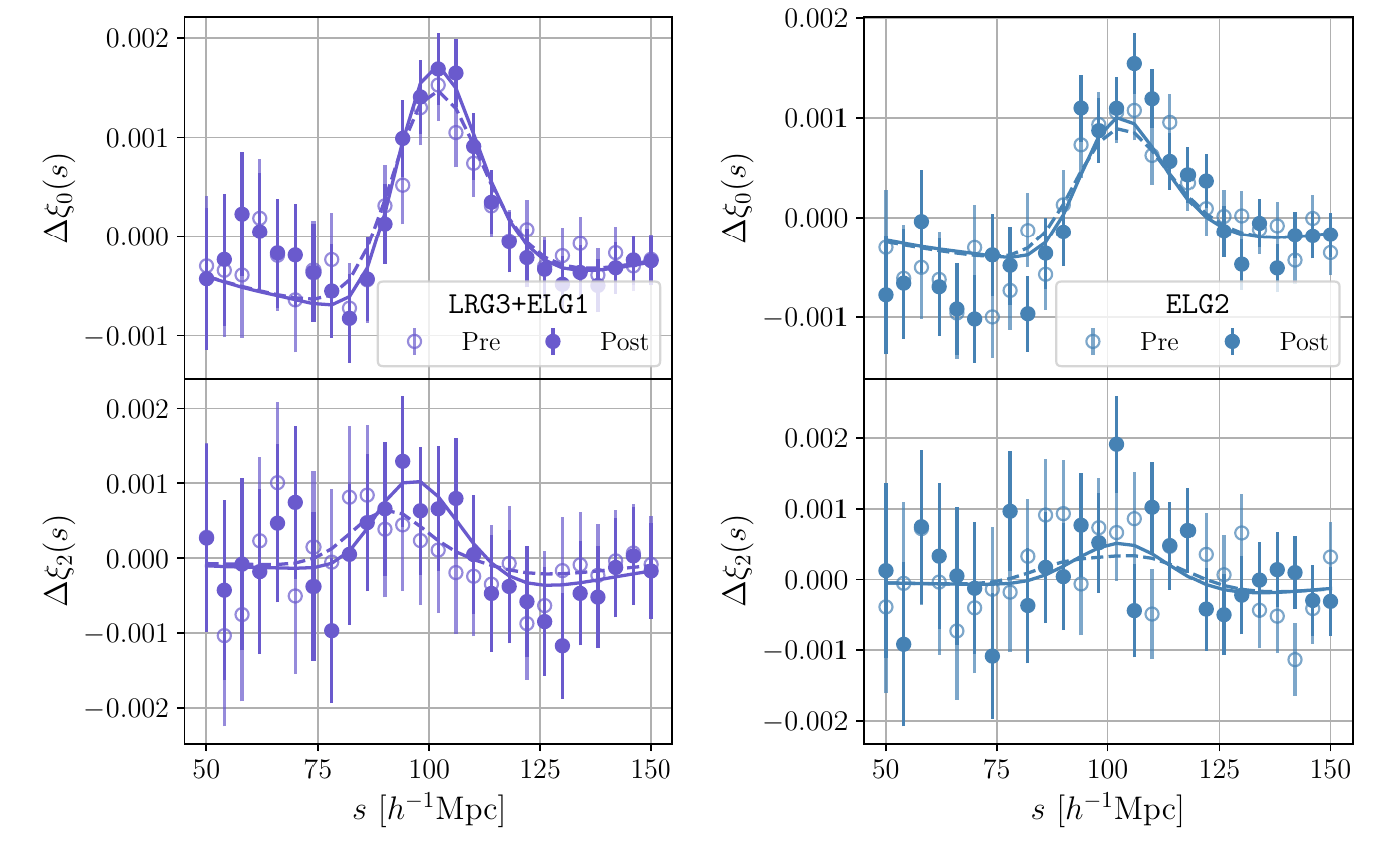
DESI
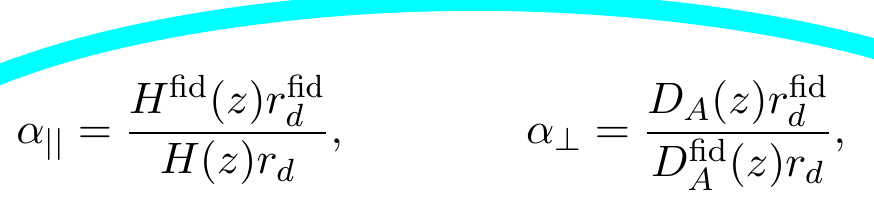
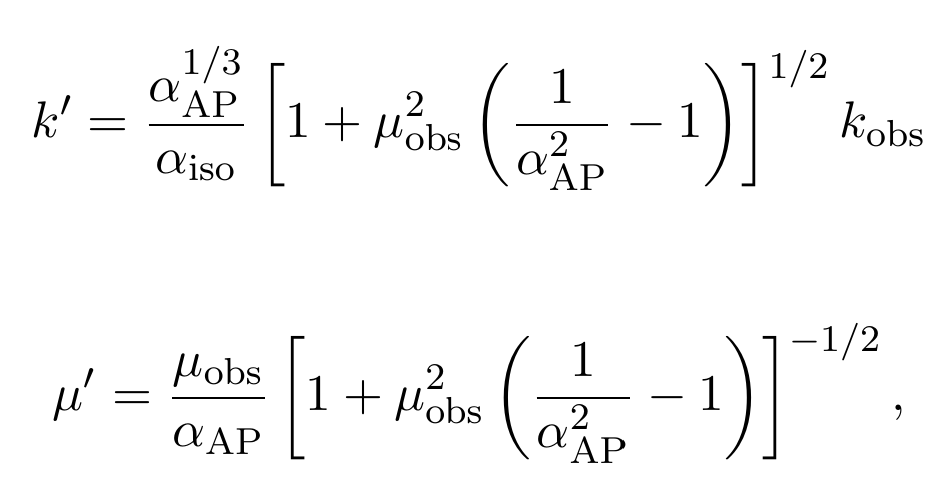
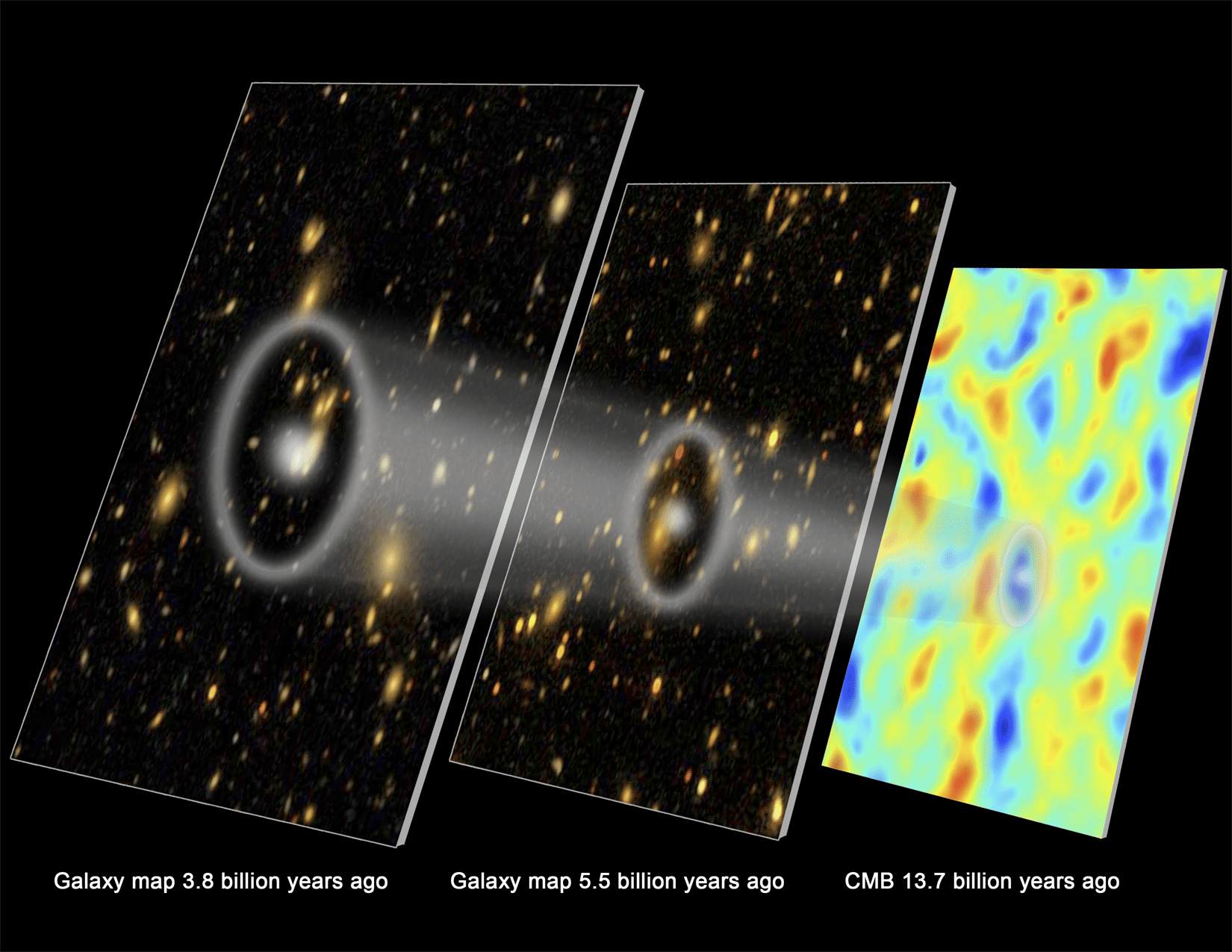
In a nutshell: Measure a geometric scale that was imprinted on LSS at recombination
https://data.desi.lbl.gov/doc/papers/
Another tension we need to explain?
Linde, Moradinezhad, Rademacher, SC, Lesgourgues (2402.09778)
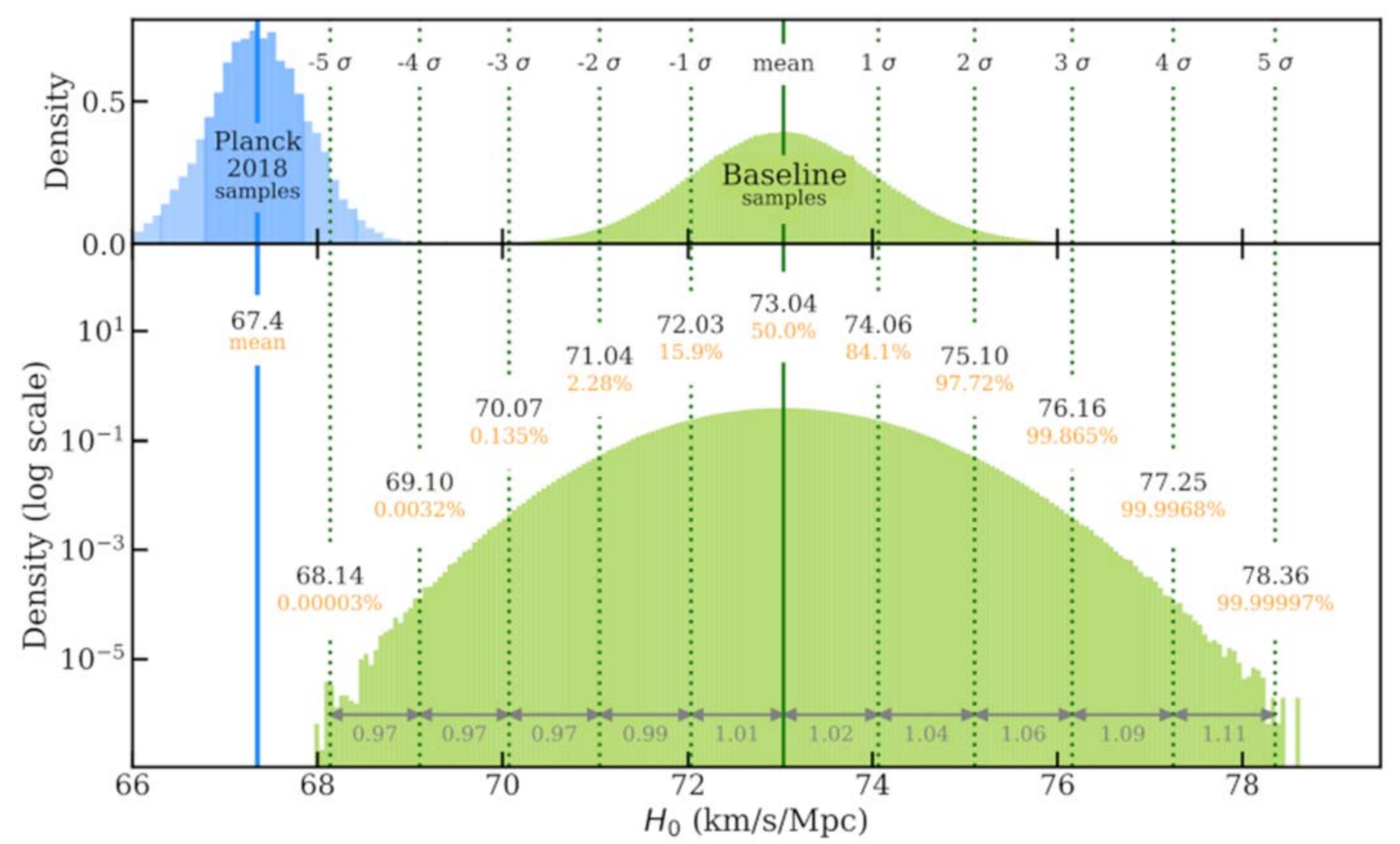
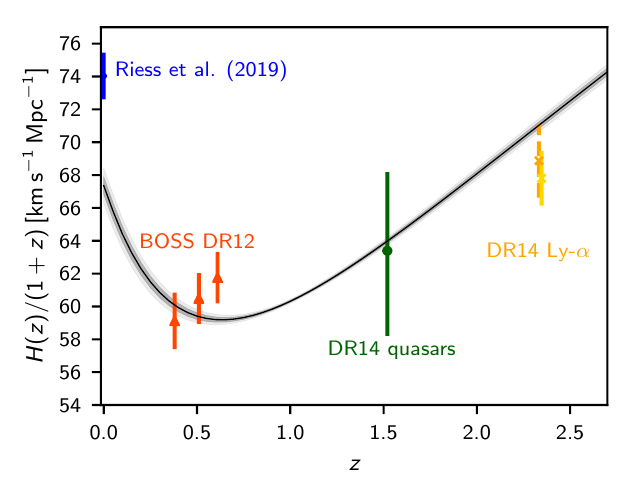
Tensions
\(H_0\) tension at 5\(\sigma\)
Freedman et al
SH0ES, Riess et al
Planck 2018, VI
Credits: Yun Ling
CONCEPT N-body simulation, in red Dark Matter, in green-blue neutrinos. Ling, Casas, Dakin, in prep.
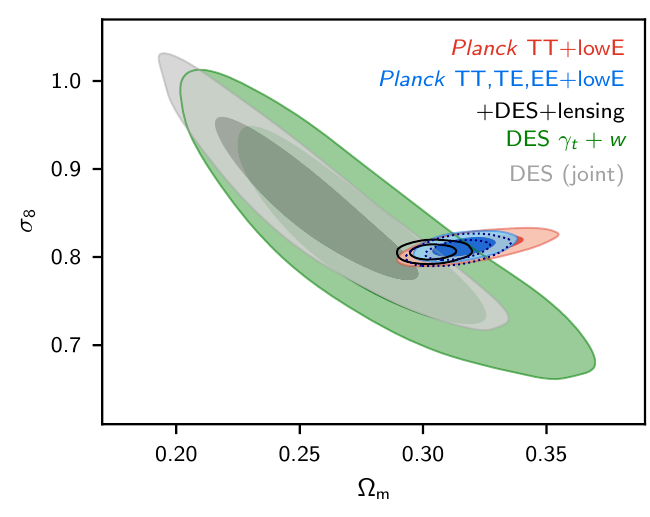
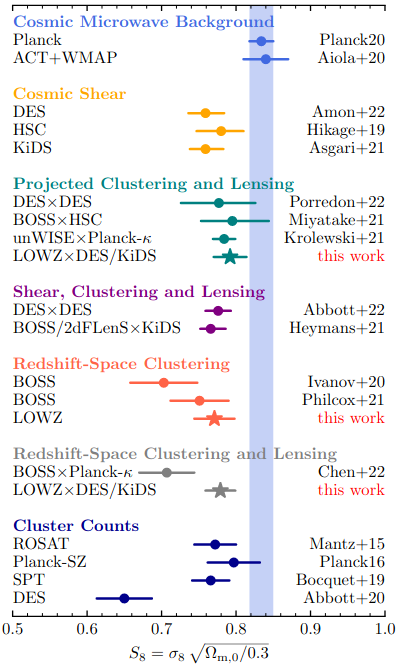
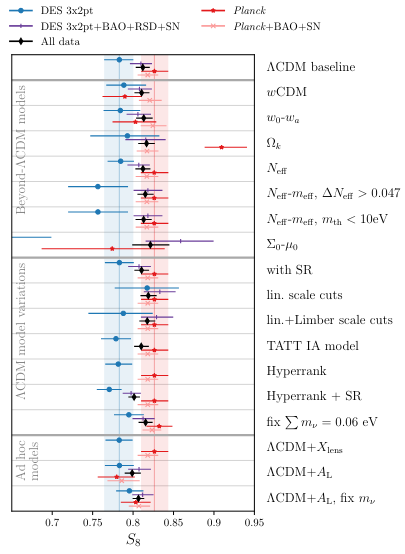
Tension with Planck in the
\(\sigma8\) - \(\Omega_m\) plane
Lange et al. arXiv: 2301.08692
Planck 2018, VI
DES DRY3 arxiv:2207.05766
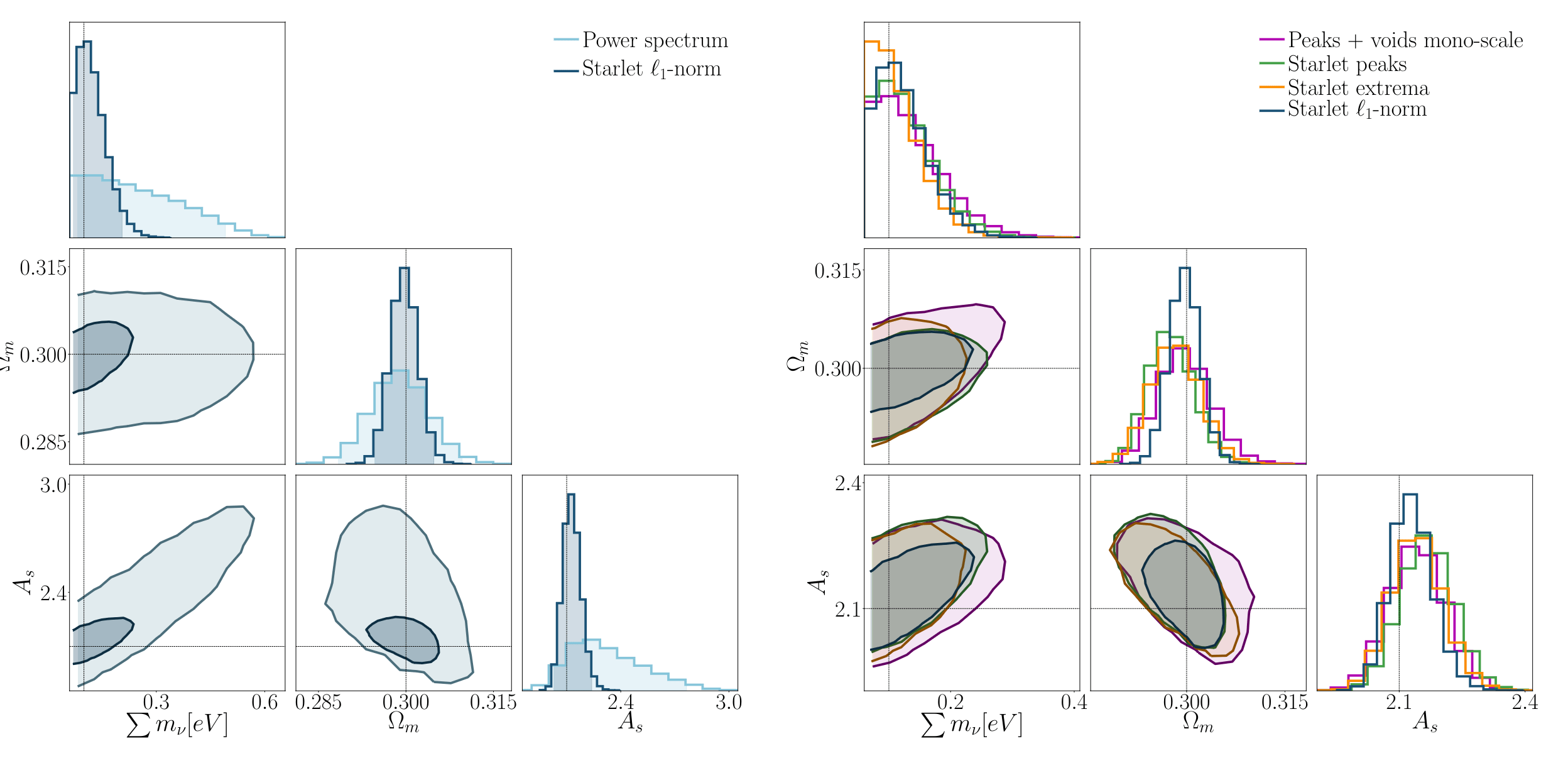
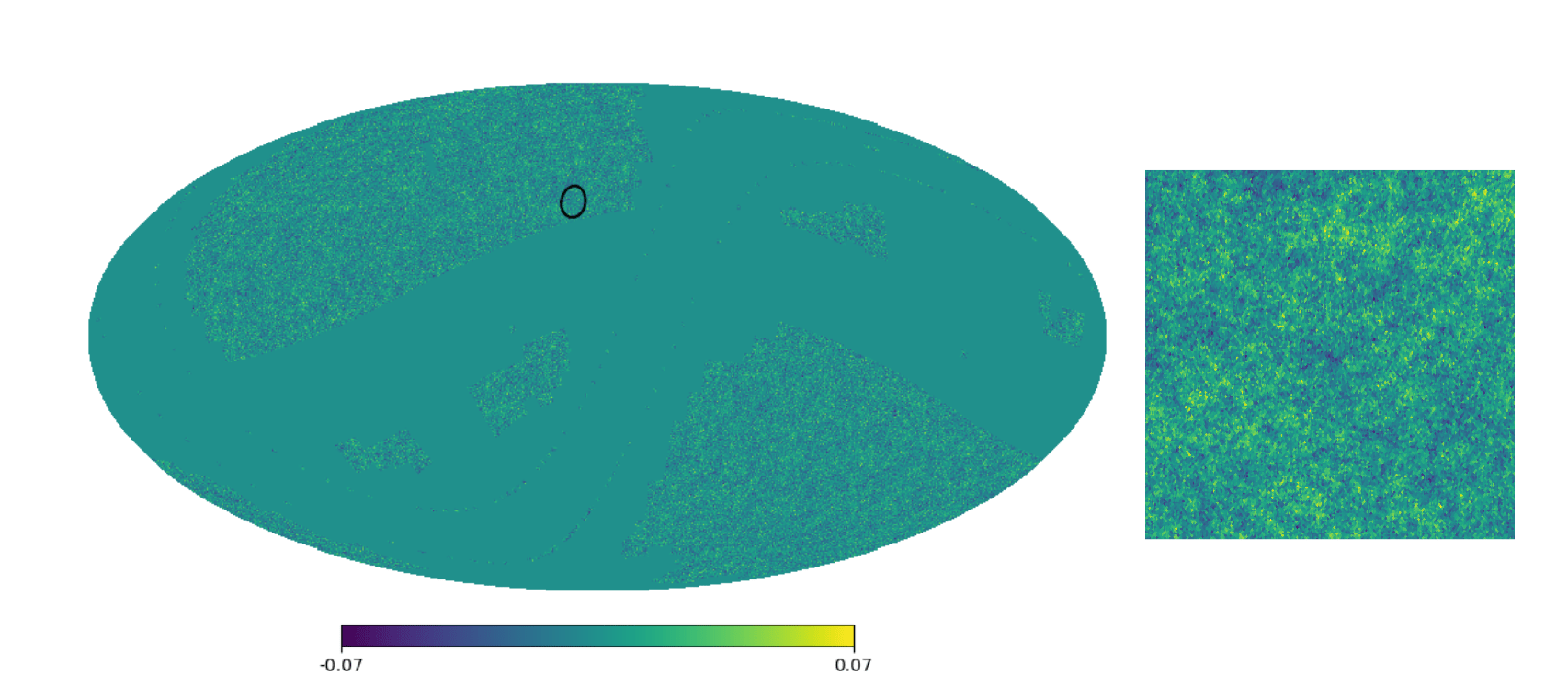
Beyond Gaussian, non-Gaussianities
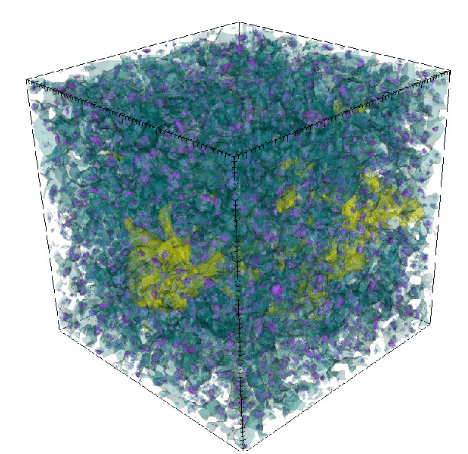
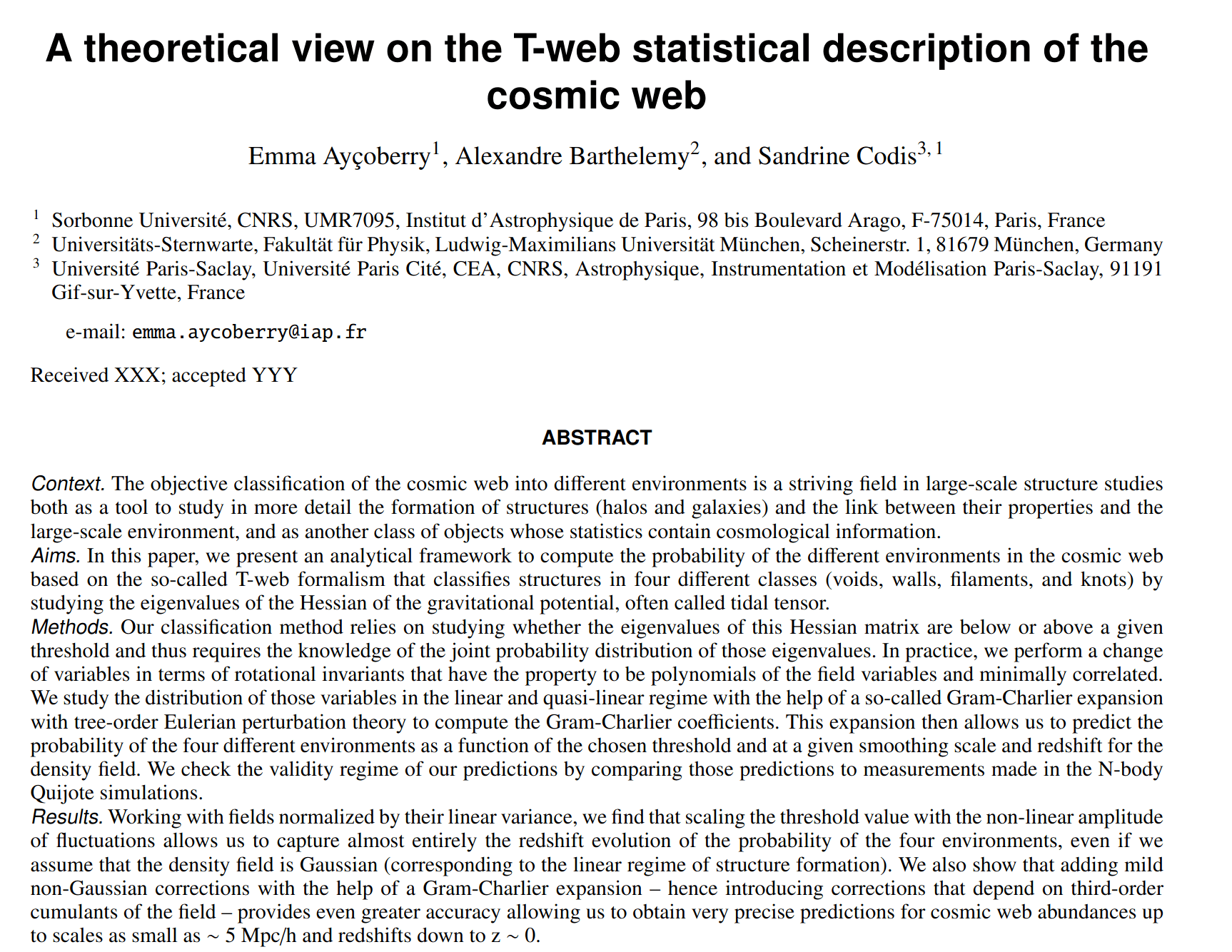
voids, filaments, walls, knots
Minkowski functionals
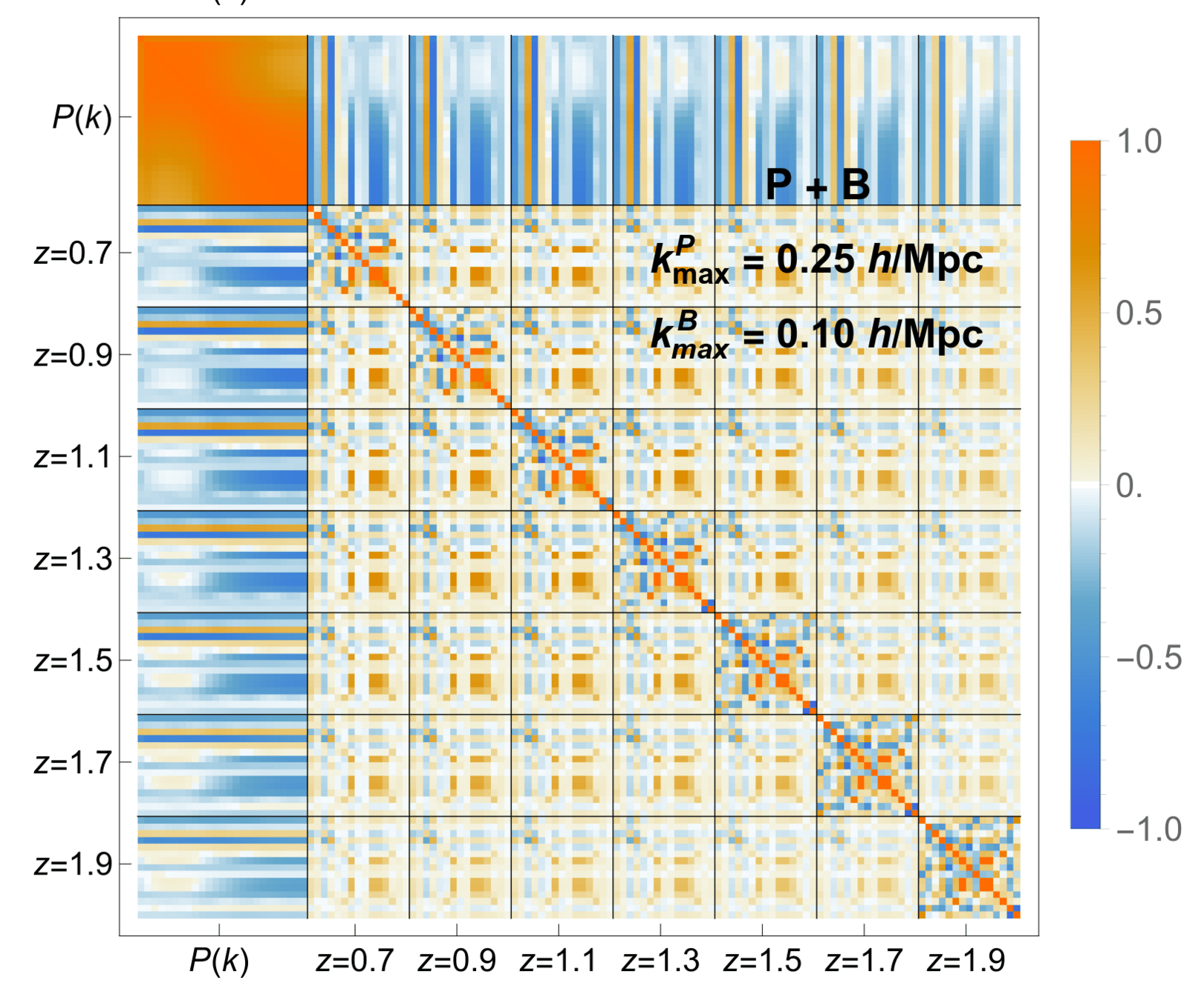
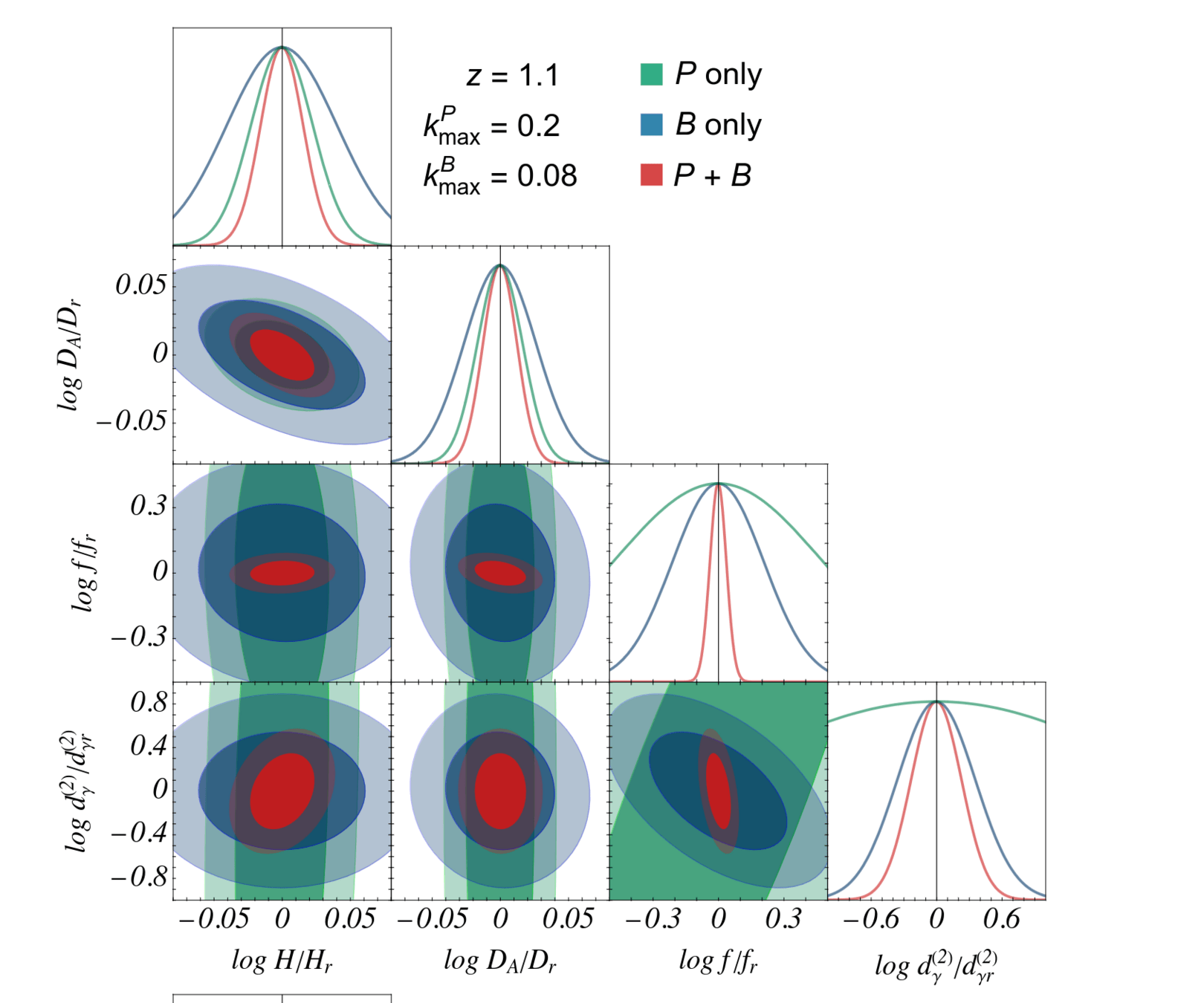
Bispectrum
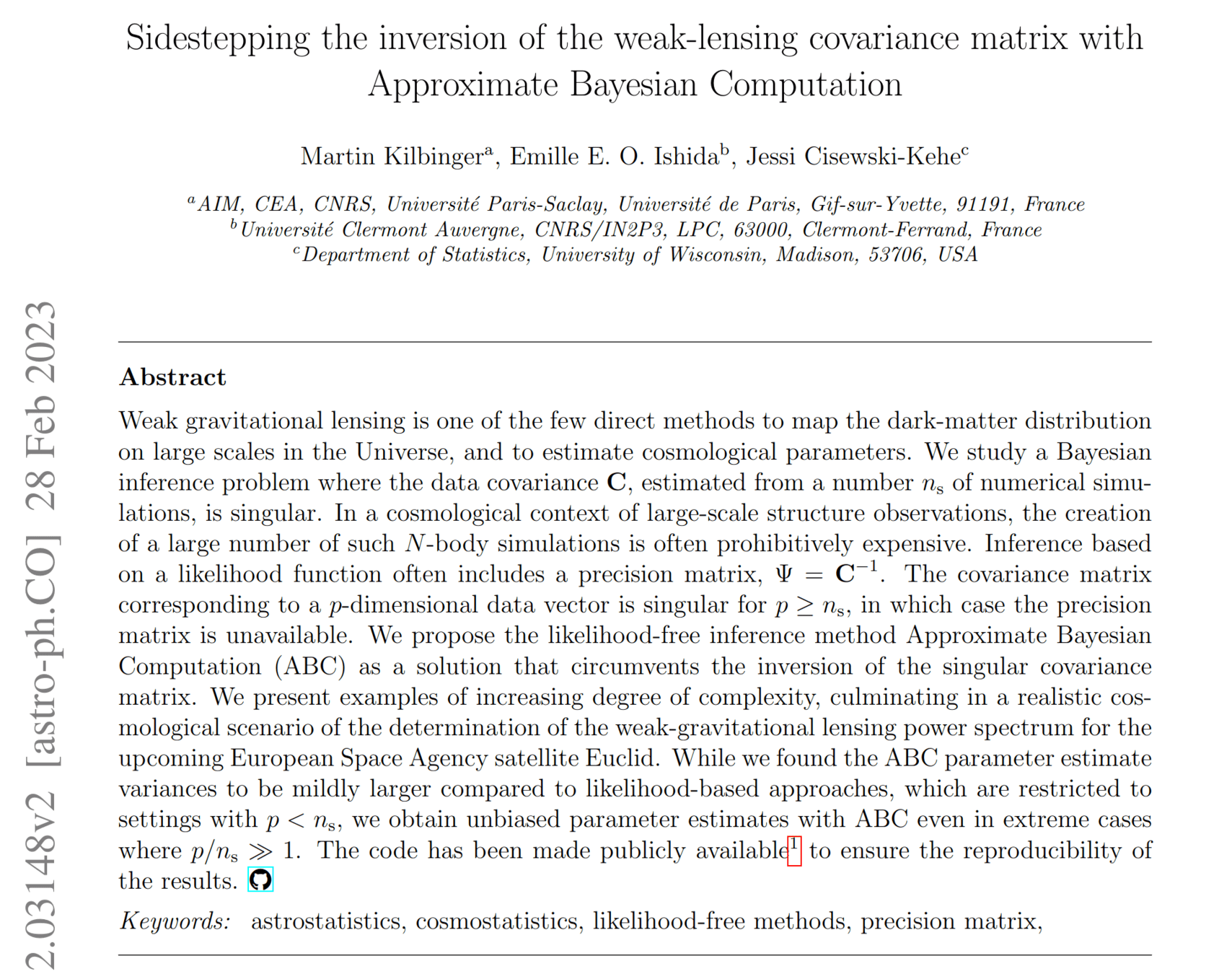
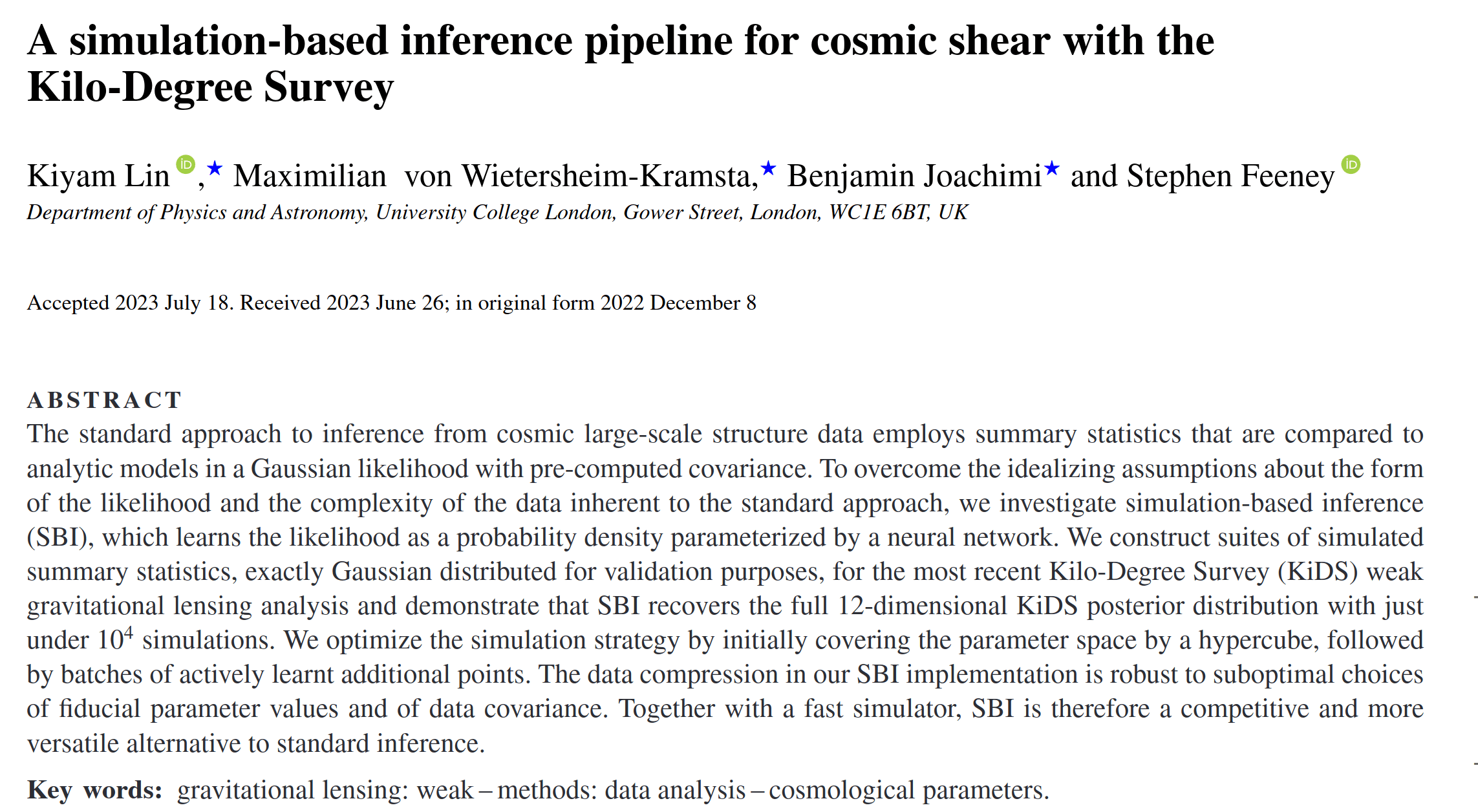
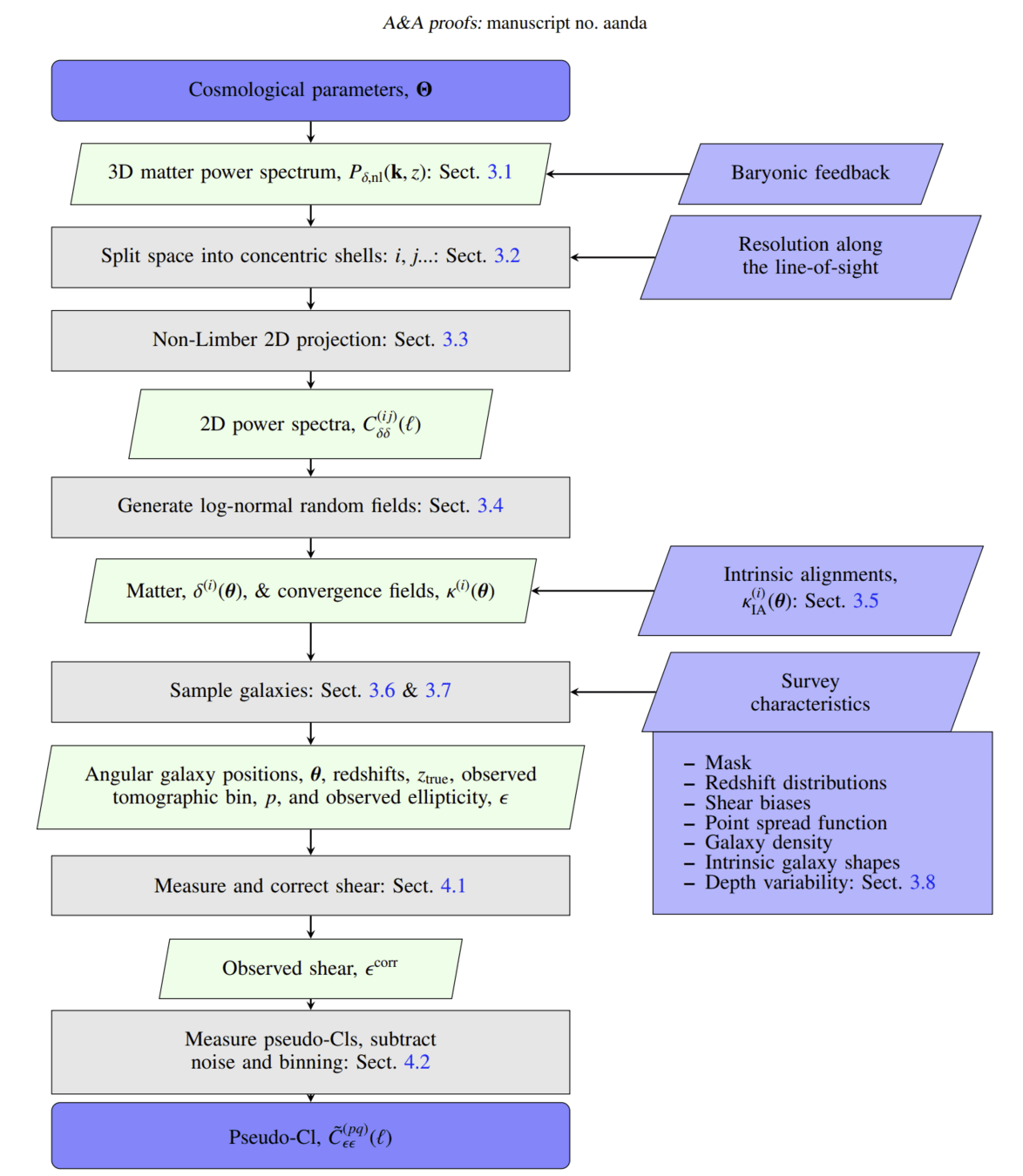
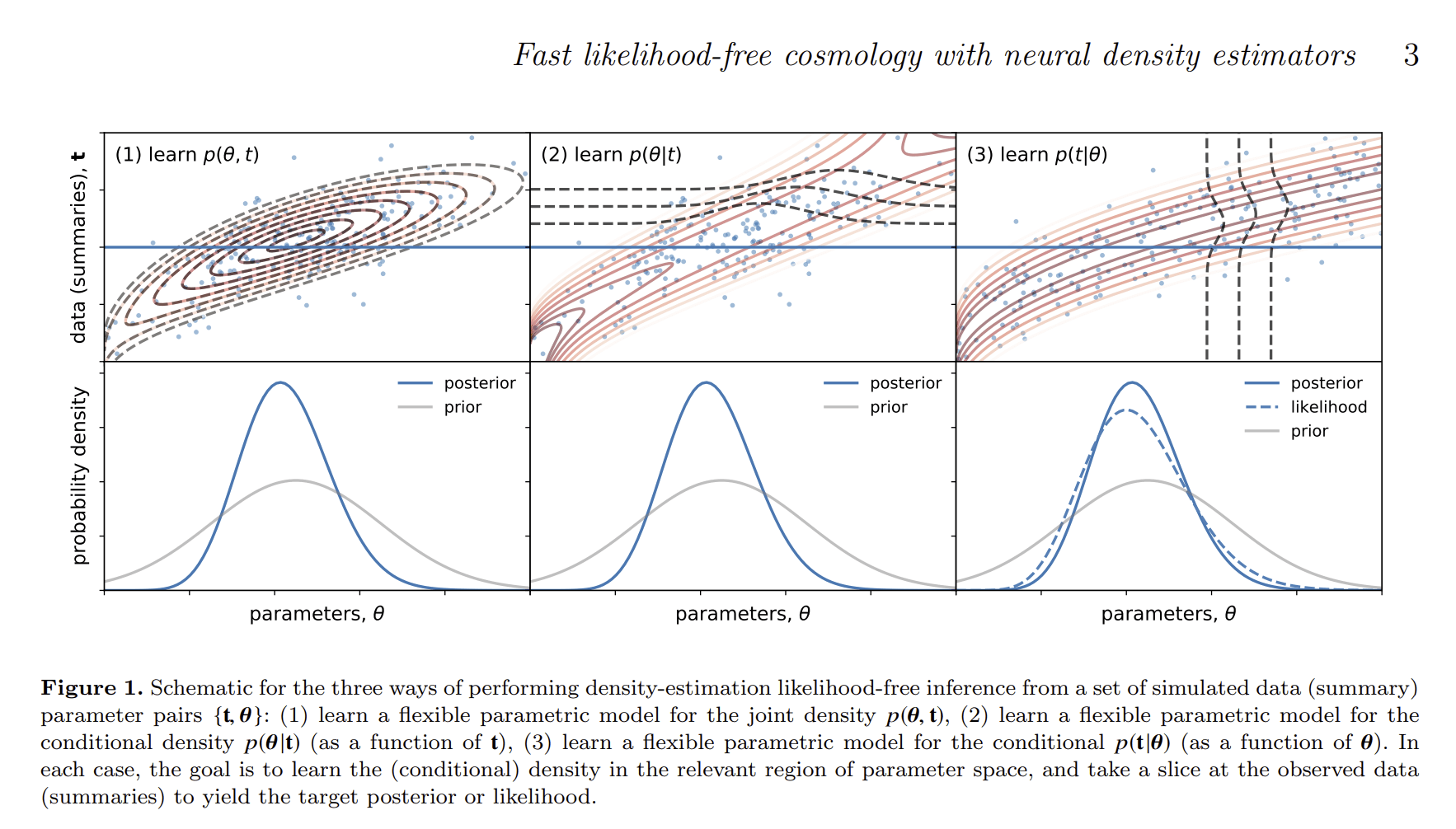
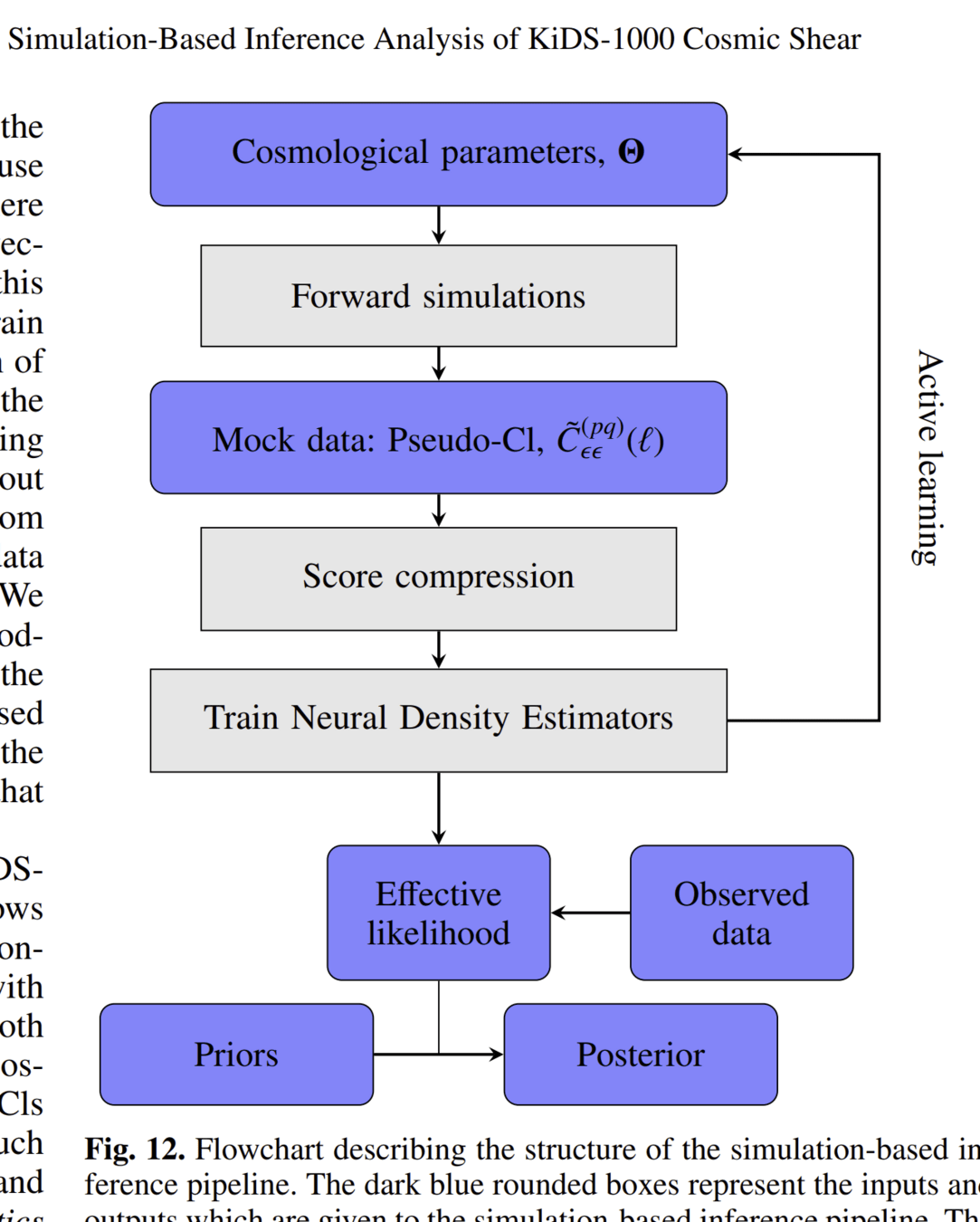
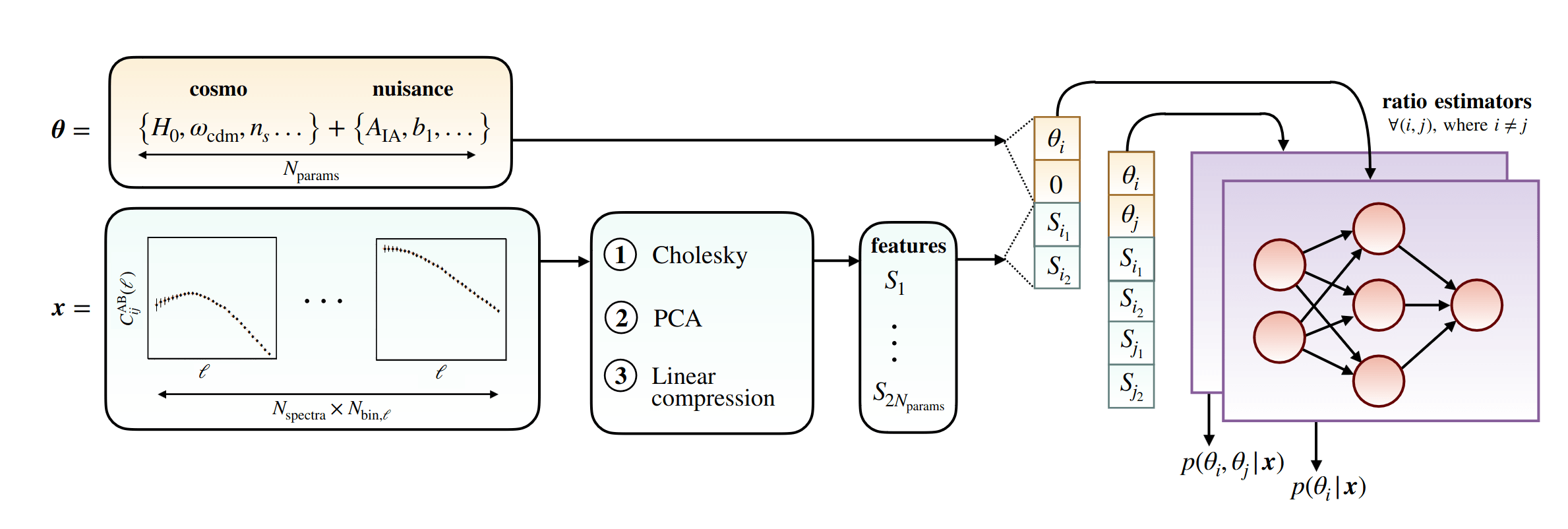
Approximate Bayesian Compuation
Euclid's 3x2pt data vector:
~12200 entries long
30 ell-bins
13 n_z bins
GG, GL, LL
DELFI: Denisty estimation likelihood-free inference
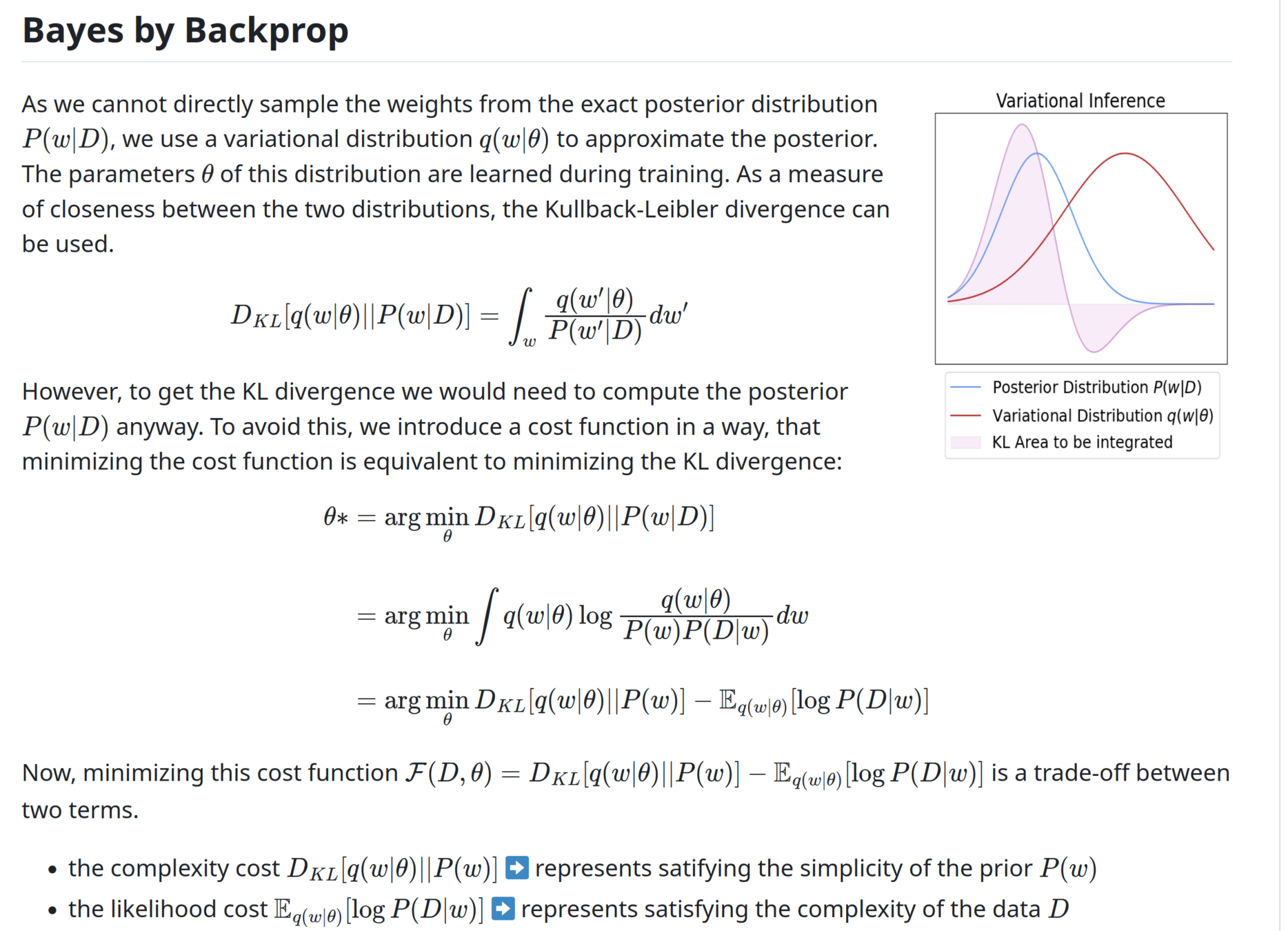
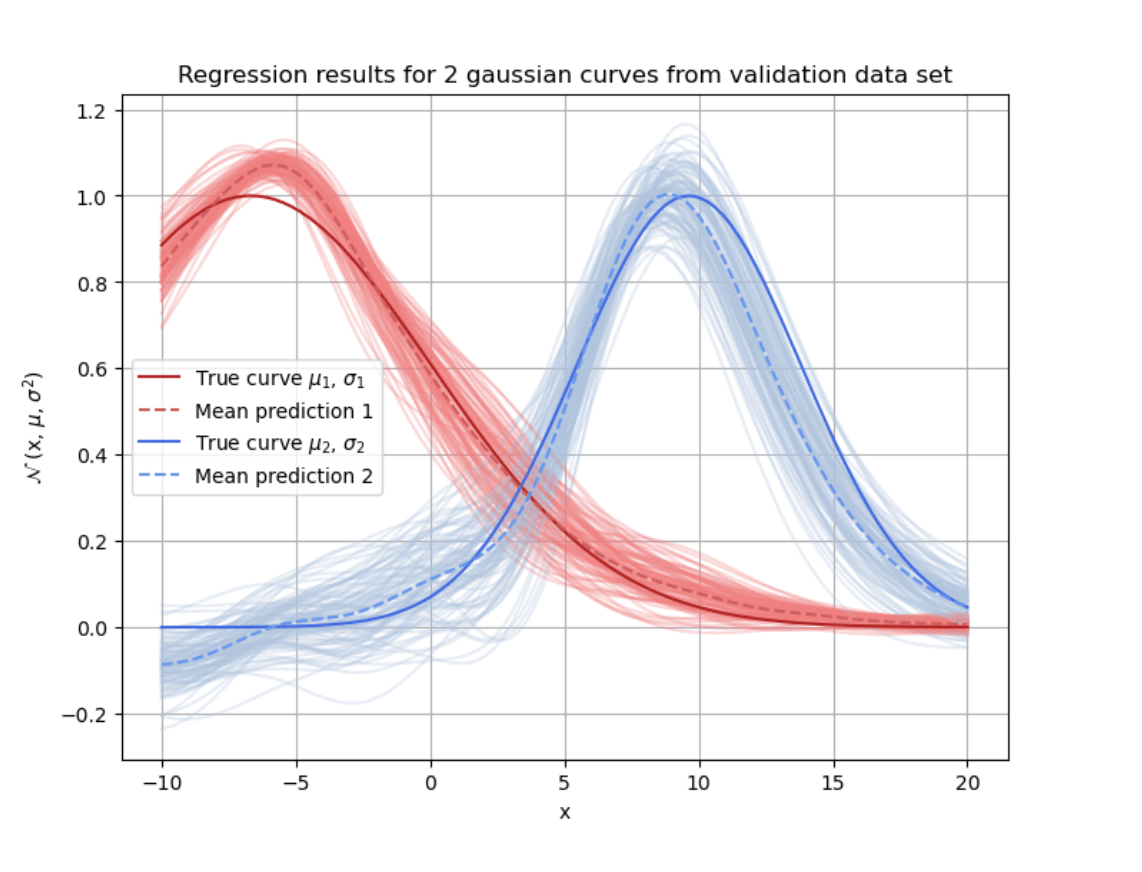
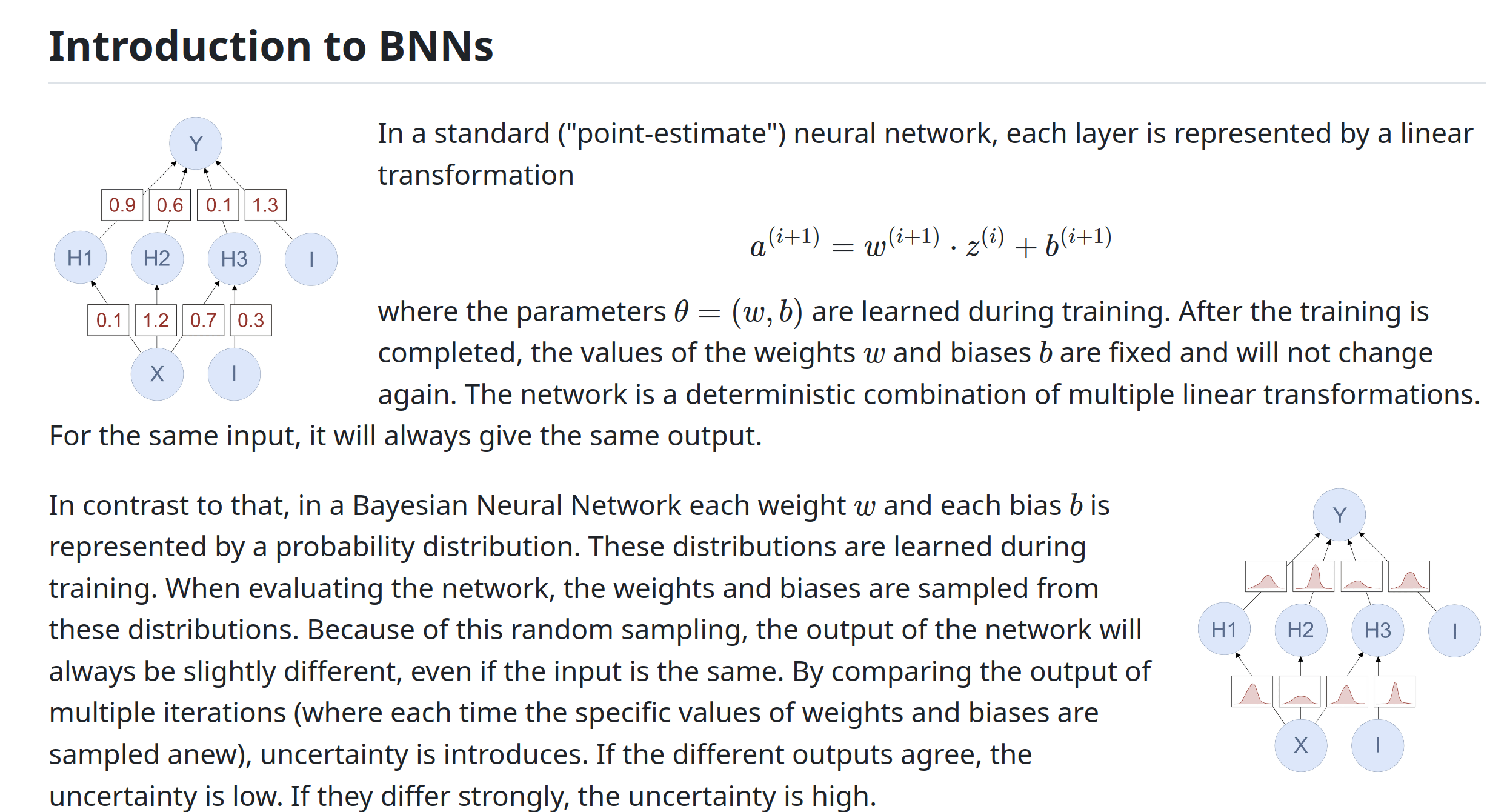
Bayesian NN with Schafmeister
https://github.com/schafmeister/bayesian_nn
Stage V:
Backup slides
By Santiago Casas
Santiago Casas, Cosmologist