
Andreas Park PRO
Professor of Finance at UofT
PART 1 OF 4
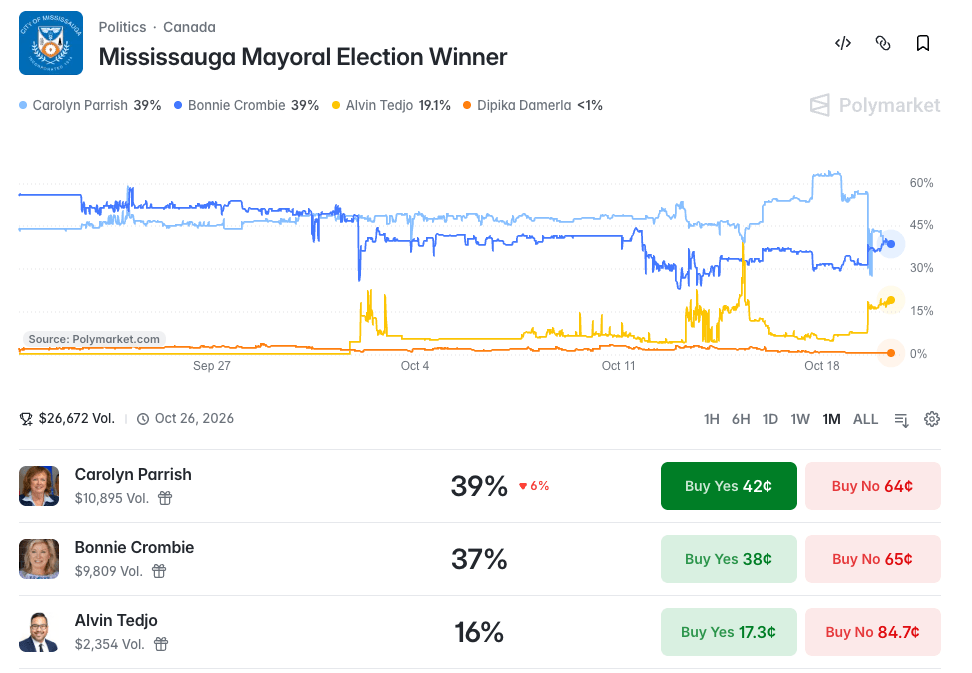
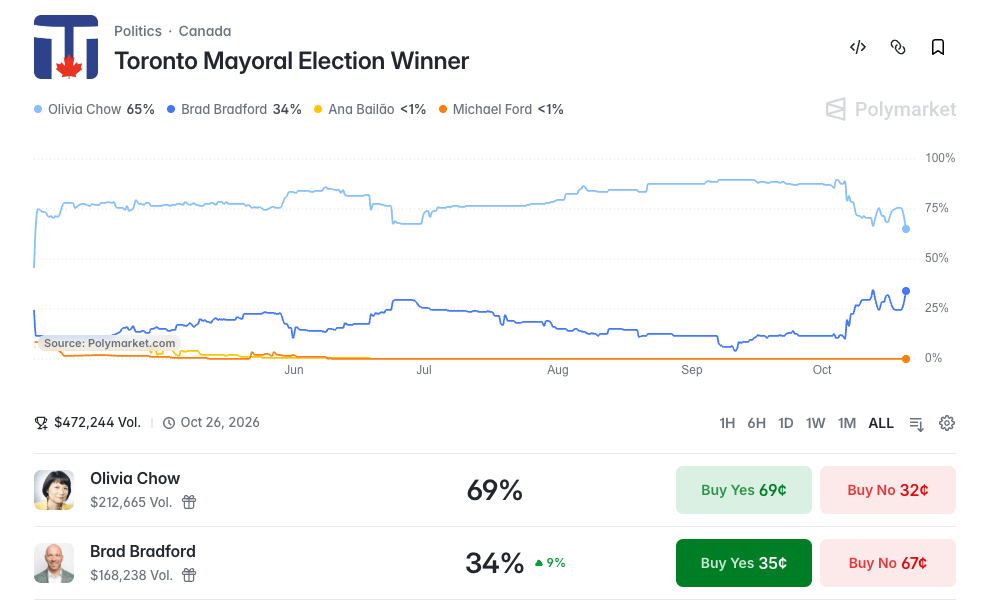
Live embed from embed.polymarket.com, "Mississauga Mayoral Election Winner". Needs an internet connection when presenting; the next slide is the static fallback.
Rhode and Strumpf, "Historical Presidential Betting Markets", JEP 18(2), 2004 (1868 to 1940, 1916, and the decline: polls, crackdowns, pari-mutuel racing legal in New York from 1939). British betting shops legal from 1961; US Wire Act, 1961. Forsythe, Nelson, Neumann and Wright (1992) on the IEM. Intrade: CFTC complaint 26 November 2012, trading suspended 10 March 2013. CFTC order against Polymarket, January 2022. BNN Bloomberg, 12 September 2024 (Kalshi). Wealthsimple newsroom, 18 June 2026. Nevada licensed bookmaking in 1949; the federal Professional and Amateur Sports Protection Act, 1992; Murphy v. NCAA, 14 May 2018; Bill C-218, in force 27 August 2021; AGCO and iGaming Ontario, 4 April 2022.
Pays $1 or $0
YES pays $1 if it happens
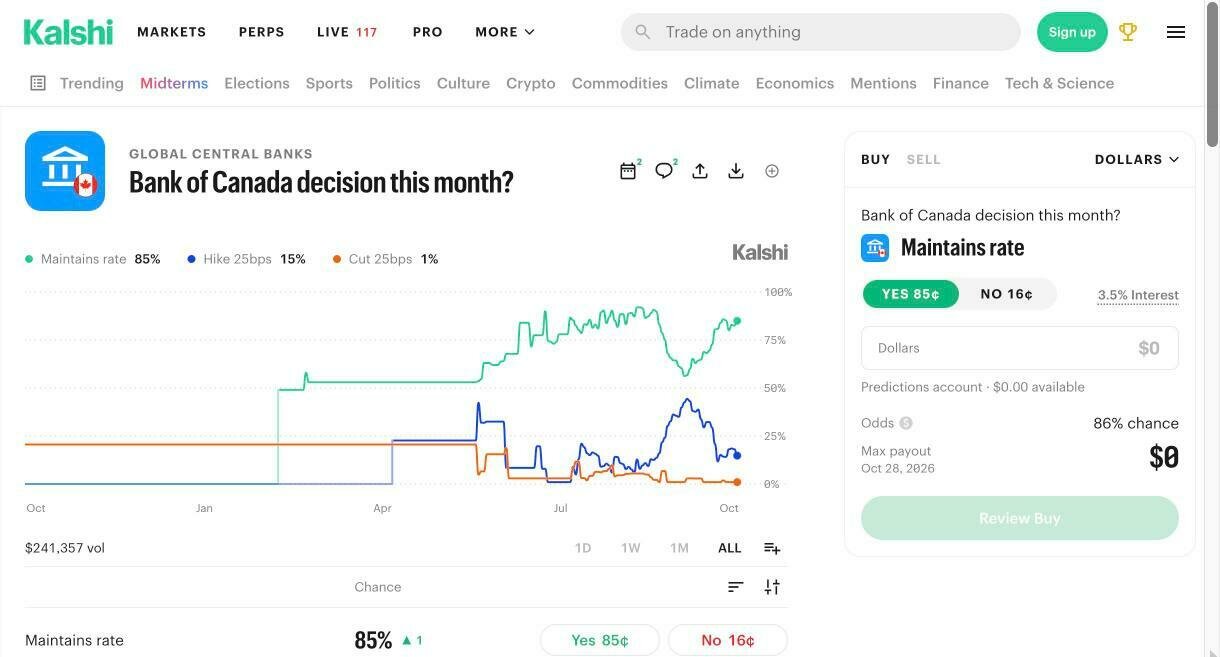
85¢ = 85%
The price interpreted as market view of the probability of event happening
A fee per trade
The exchange takes a cut
A prediction market allows people to trade bets on outcomes of questions.
Kalshi, "Bank of Canada decision this month?", as viewed 19 October 2026, 1:05 a.m. ET: maintains rate 85%, hike 15%, cut under 1%. 28 October 2026 is the Bank of Canada's next scheduled announcement (Bank of Canada, 2026 schedule).
What's the organizational difference between Kalshi & Polymarket
Where do markets/questions come from?
Can Canadians use these?
1 · CONTRACT CREATION
2 · SELL THE OTHER SIDE
3 · SETTLEMENT
The $1 goes to the winning side
The losing side is worth nothing
YES + NO = $1, always. Buying NO is the same as selling YES.
Every YES in the market has a NO behind it, and a dollar at the exchange behind both.
Polymarket splits a deposited dollar into one YES and one NO token and merges them back on demand; Kalshi creates a contract when a YES order and a NO order match and holds the $1 until settlement. Illustrative prices, before fees.
Because there is always $1 for a contract to exist, settlement is guaranteed
PART 2 OF 4
https://www.poliwave.com/ca/tor/polls
SO AREN'T THEY VIRTUALLY TIED?
GAP: 3.2
GAP: 35
THE QUESTION THE MARKET ANSWERS
Will the lead still be above zero on 26 October?
today: +3.2
Chow ahead: 70%
Bradford ahead: 30%
−10
0
+10
+20
Chow's lead on election day, in points
RULE OF THUMB
Polls fromhttps://www.poliwave.com/ca/tor/pollsö Chance of winning = Φ(lead ÷ typical miss). Sampling error alone: the margin of error on the lead is 2 × 1.8 = 3.6 points, a standard deviation of 3.6 ÷ 1.96 = 1.84, so Φ(3.2 ÷ 1.84) ≈ 96%. Polymarket, [date and time]: Chow 70%. For a lead of 3.2 points, a 70% chance implies a typical miss of 3.2 ÷ 0.52 ≈ 6 points, three times the sampling error. In US elections, final polls miss by about twice their stated margin of error (Shirani-Mehr, Rothschild, Goel and Gelman, Journal of the American Statistical Association, 2018).
Long shots: Bürgi, Deng and Whelan (2026), "Makers and Takers", CEPR DP 20631; Akey et al. (2026), Table 5. Optimism: Bartlett and O'Hara (2026), "Adverse Selection in Prediction Markets: Evidence from Kalshi", 41.6 million trades; 67.5% of single-name volume settles NO. Zelensky market: Decrypt, 9 July 2025; settled by the UMA oracle after a disputed first ruling. Netflix market, 20 January 2026: Bartlett and O'Hara (2026); makers lost $75,754.
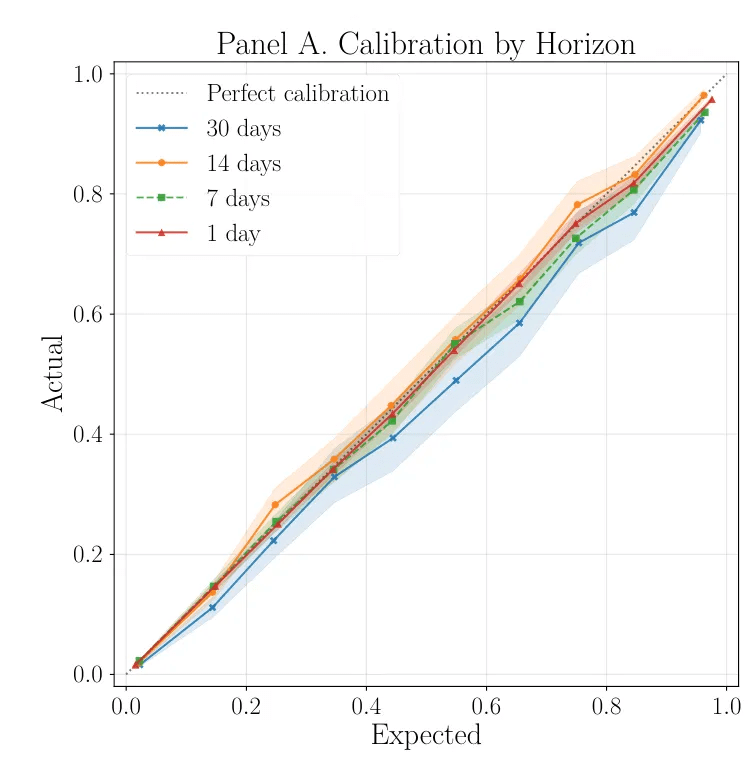
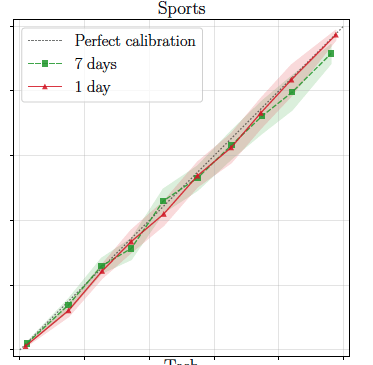
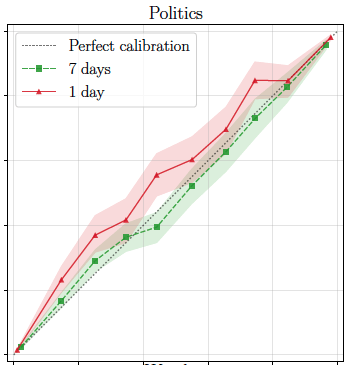
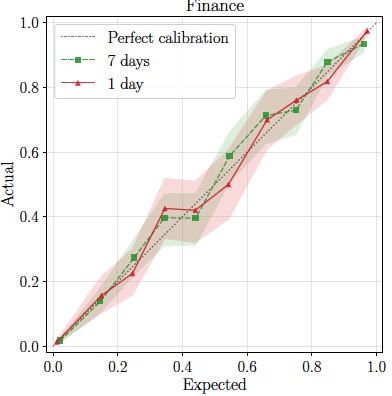
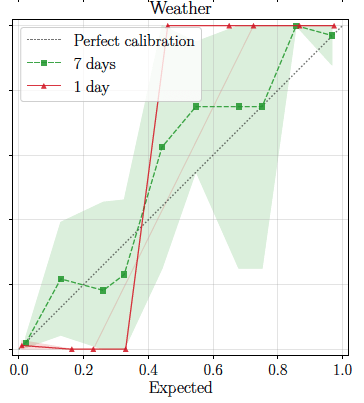
market-implied probability of an event was 65%
how often did it happen?
\(\approx\) \(65\%\) of the time
market-implied probability of an event was 65%
PART 3 OF 4
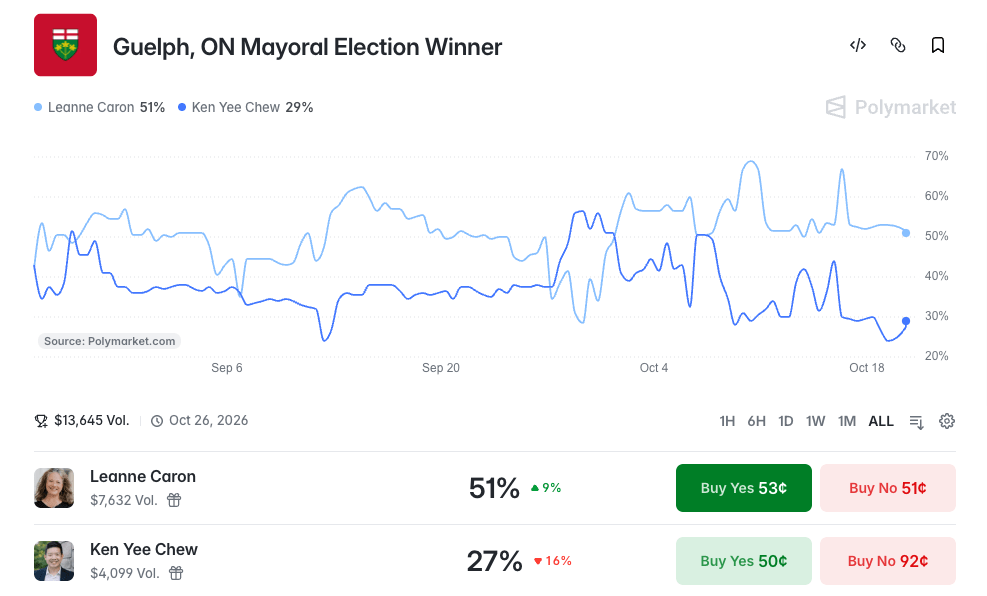
Leanne Caron: 51%
bid 47¢, ask 55¢
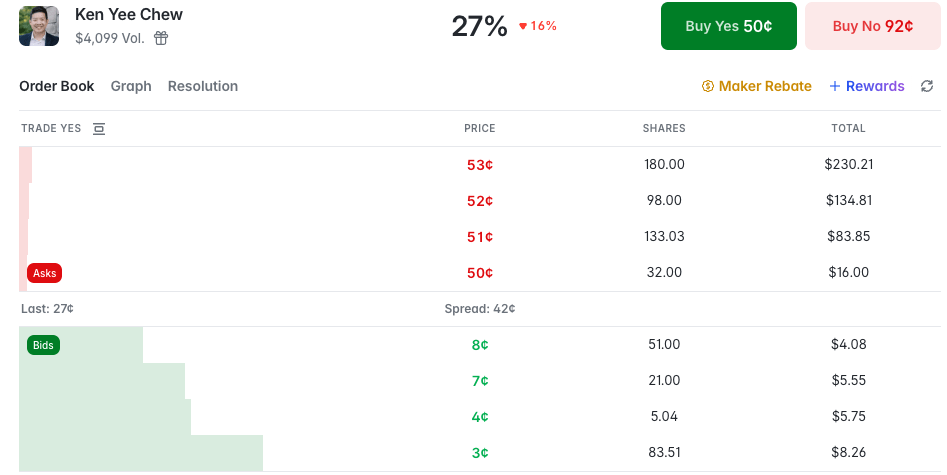
Ken Yee Chew: 27%
bid 8¢, ask 50¢. any trade could move the price by a mile
$13,645 traded in total. $21 in the last day.
Example first seen in talk by Professor Charles Martineau.
Polymarket, "Guelph, ON Mayoral Election Winner", API as viewed 19 October 2026, 9 p.m. ET: last trades Caron 48¢, Chew 27¢; 24-hour volume $21. Mississauga and Toronto quotes: Polymarket, 14 and 19 October 2026. Bellwether (Hall and Paschal, Stanford): fewer than 1% of listed markets carry meaningful prices.
The honest account is that less than 1% of economics & politics markets actually have enough info to be reliable \(\to\) this is all work in progress. (https://bellwethermetrics.com/research.html)
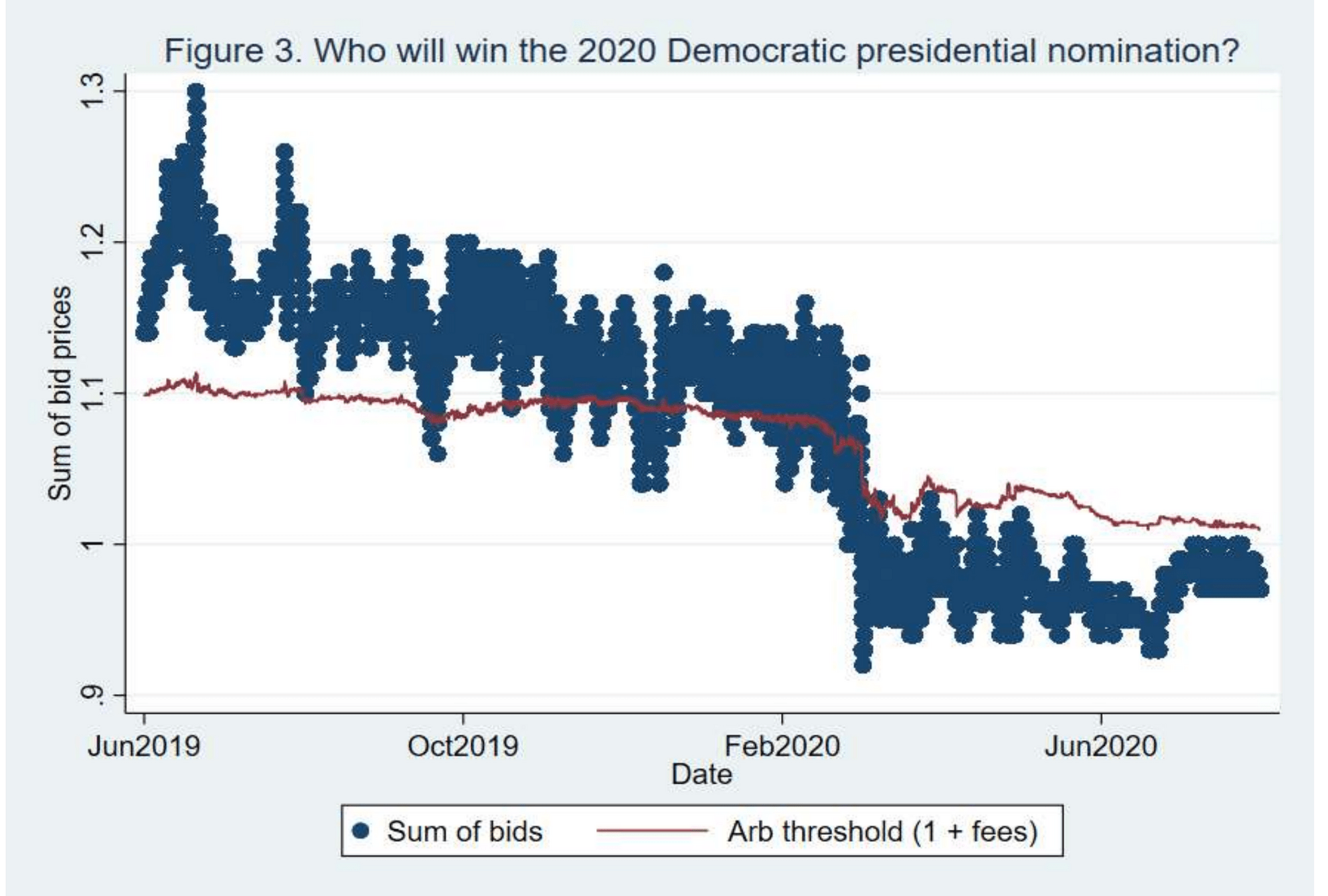
PredictIt, "Who will win the 2020 Democratic nomination?": bids summed to 110 to 125¢ for a year. Zitzewitz (2026), Figure 3.
PredictIt capped every position at $850, so nobody could eat the free lunch.
Cap raised to $3,500 in 2025: arbitrage opportunities fell from 1.9% to 0.1% of market-hours, and the long-shot bias disappeared.
Eric Zitzewitz, "Limits to Arbitrage and Prediction Market Efficiency: the Case of PredictIt", September 2026 (SSRN 7505978): Figure 3; Table 3 (No-buying arbitrage in 1.9% of market-hours 2019 to 2022, 0.1% in 2025 to 2026); Table 11 (long-shot slope 1.49 before, 0.79 after). Mississauga prices: Polymarket, 14 October 2026.
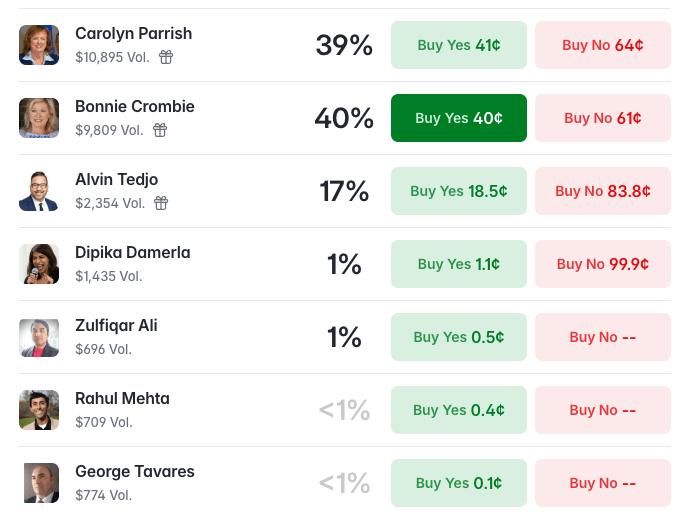
\(\sum=\) 101.5
\(\sum=\) 308.5
=105
=101
=102.3
=101
LESSON
Well-intended market interventions may prevent the market from functioning
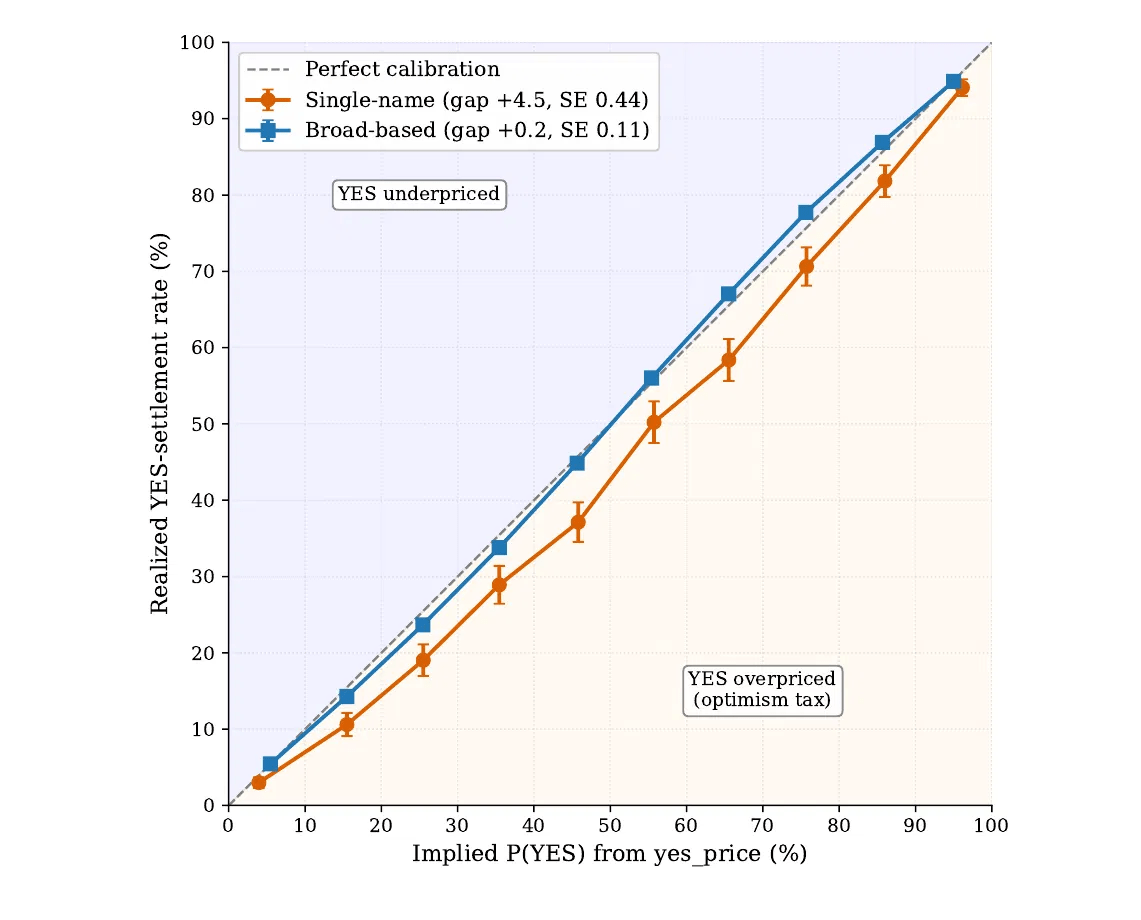
Kalshi: YES on a person or a company settles YES 4.5 points less often than its price says. Bartlett and O'Hara (2026), Figure 6.
Long shots
People overpay for long shots: YES at 5¢ happens less than 5% of the time. Under 10¢, buyers lose 60%+
Optimism
People prefer buying yes and overpay for yes
The spread
Quotes at 69¢ and 71¢: a buyer pays 71¢ for a 70% chance \(\to\) people lose on average
Long shots: Bürgi, Deng and Whelan (2026), "Makers and Takers", CEPR DP 20631; Akey et al. (2026), Table 5. Optimism: Bartlett and O'Hara (2026), "Adverse Selection in Prediction Markets: Evidence from Kalshi", 41.6 million trades; 67.5% of single-name volume settles NO. Zelensky market: Decrypt, 9 July 2025; settled by the UMA oracle after a disputed first ruling. Netflix market, 20 January 2026: Bartlett and O'Hara (2026); makers lost $75,754.
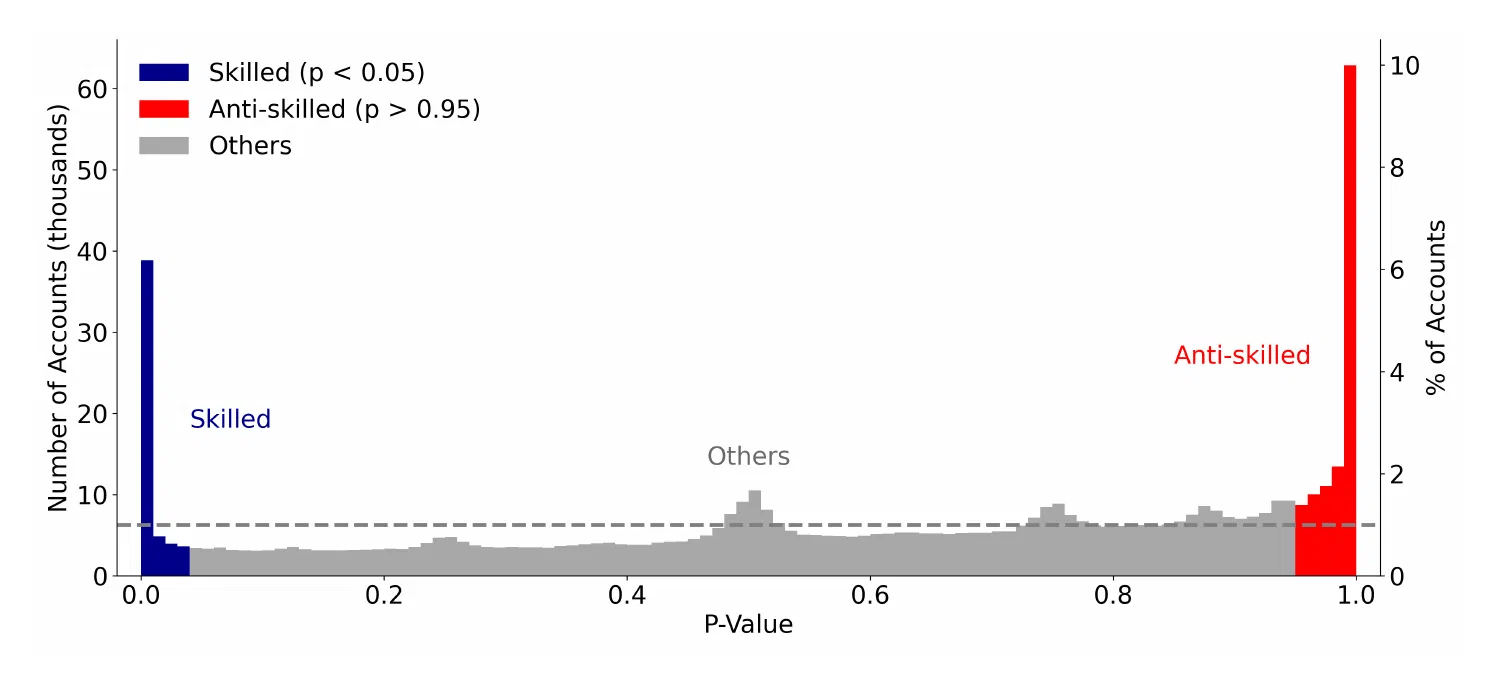
A skill test on 1.7 million Polymarket accounts: a spike of skilled accounts on the left, a spike of reliably wrong ones on the right, and a flat middle that trades at random. Gómez-Cram, Guo, Jensen and Kung (2026), Figure 2.
3% of accounts show skill
70% of the volume comes from the 97% who show none
46% of the skilled are still skilled next period. Fund managers: 10%
The winners post limit orders. The top 0.1% supply 47% of their volume as makers; the bottom 95% supply 17%. (Akey, Grégoire, Harvie and Martineau); a small minority makes the price right, and the crowd pays for it.
Gómez-Cram, Guo, Jensen and Kung (2026), "Prediction Market Accuracy: Crowd Wisdom or Informed Minority?", SSRN 6617059: skilled 3.2% of accounts; the crowd is 97% of accounts and about 70% of volume; 46% of the skilled stay skilled out of sample against 10% for mutual-fund managers; insider-like accounts are under 1% of volume. Akey, Grégoire, Harvie and Martineau (2026), SSRN 6443103: maker shares by PnL group; the most profitable users' contracts resolve 20 points better than their prices, the worst 5% of losers' 13 to 18 points worse.
69%
of users lose money
The typical user loses about $2
Half
of all gains go to the top 0.1%
The top 1% take 77%
68%
of all losses fall on the top 1% of losers
Big losers, not many losers
But should we care? Prediction Markets are Person to person, no bookie .... zero-sum before fees.
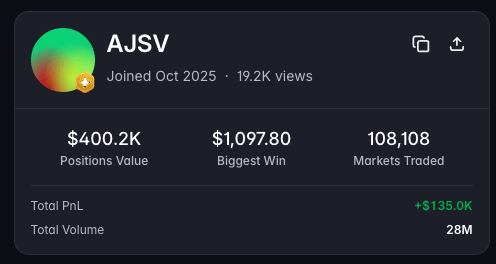
In practice the money flows to "professionals" like bots: $28 million traded, $135,000 profit. Half a cent per dollar \(\to\) profits derived from scale
Akey, Grégoire, Harvie and Martineau (2026), "Who Wins and Who Loses in Prediction Markets? Evidence from Polymarket", SSRN 6443103, version 18 October 2026: 2.4 million users, $67 billion, November 2022 to March 2026; median loss about $2; top 0.1% of winners take 51% of gains, top 1% 77%; top 1% of losers bear 68% of losses. The largest single accounts (a gain over $22 million, a loss over $10 million) likely hold the other leg elsewhere; the paper does not see off-platform trades. Account profile: polymarket.com, as viewed 19 October 2026.
A well-known insight from gambling (Jonathan Cohen, Losing Big: America's Reckless Bet on Sports Gambling): 60% of people contribute less than 1% of profits to gambling platforms, 3% contribute over 80%.
PART 4 OF 4
HAYEK (1945)
Knowledge is decentralized. Prices centralize this info.
IOWA ELECTRONIC MARKETS, 1988 TO 2004
74%
of the time the market was closer to the final vote than the polls
The only other way to get centralized knowledge is to run surveys or surveillance
Hayek, F. A. (1945), "The Use of Knowledge in Society", American Economic Review 35(4), 519 to 530. Berg, Nelson and Rietz (2008), "Prediction Market Accuracy in the Long Run", International Journal of Forecasting 24(2), 283 to 298: five US presidential elections, 964 national polls.
Weather
19.7 inches of snow in Central Park, February 2026. Utilities hedge heating days on CME; Kalshi lists city snow and temperature.
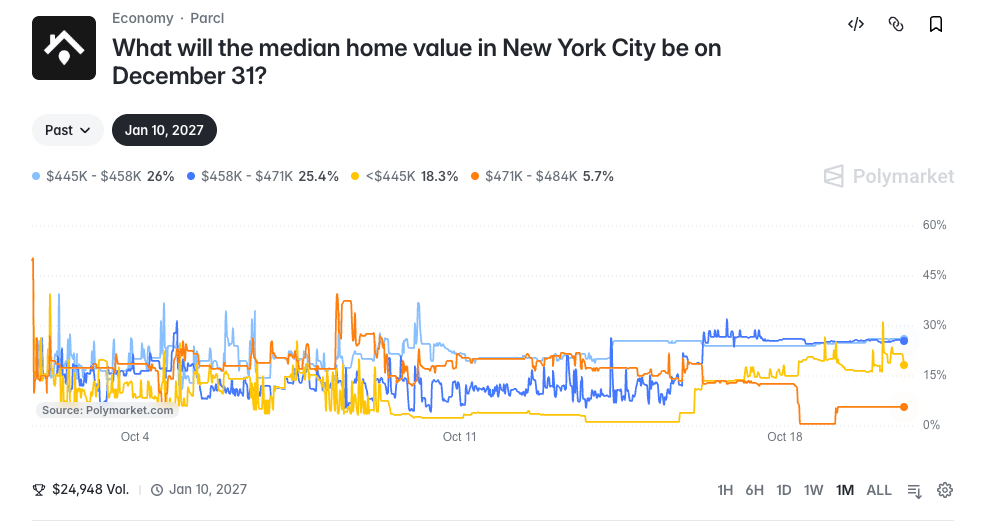
Housing
Thousands of realtors know where the market is heading; housing starts on the ground come faster than official data; allows families to plan
Interest rates
A floating-rate borrower buys "the Bank hikes". It pays when the mortgage bill rises.
Politics
Alberta separation, tariffs, a change of government: risks no insurer sells, now with a price.
Sports
A World Cup exit knocks the loser's stock market down the next day. Even a game is an economic event.
Most of the trading is speculation. The part that is real can still matter.
If you have a gigantic market and most is doodling, it can still provide real utility to 1%
Bot traders
AI as a forecaster
AGI & trading
Bots as traders: Gómez-Cram et al. (2026) on fast public-information traders; Bartlett and O'Hara (2026) on one-sided flow in thin single-name markets.
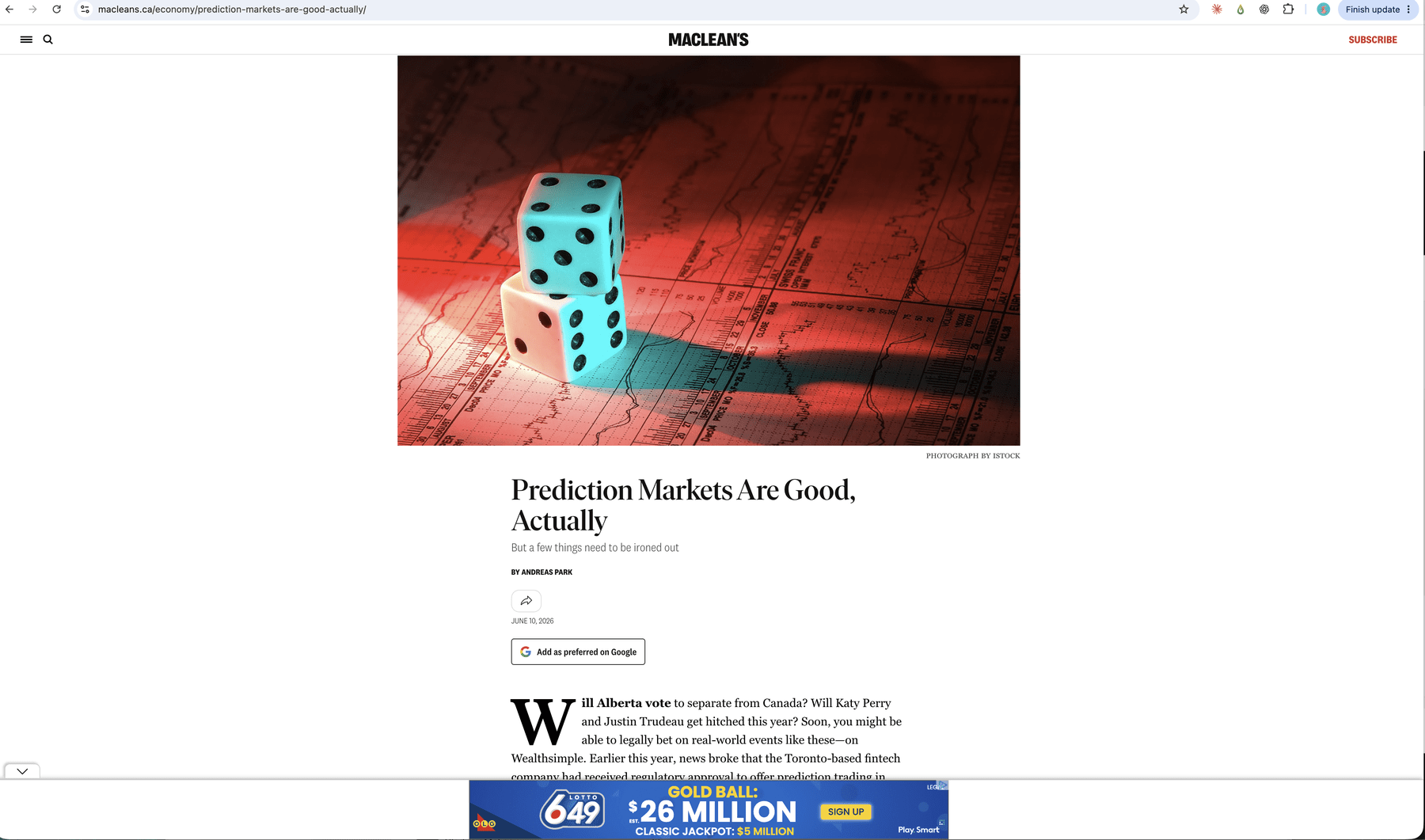
Andreas Park, "Prediction Markets Are Good, Actually", Maclean's, 10 June 2026, as opened on 18 October 2026. Banner at the bottom: OLG, Ontario's provincial lottery corporation, Lotto 6/49.
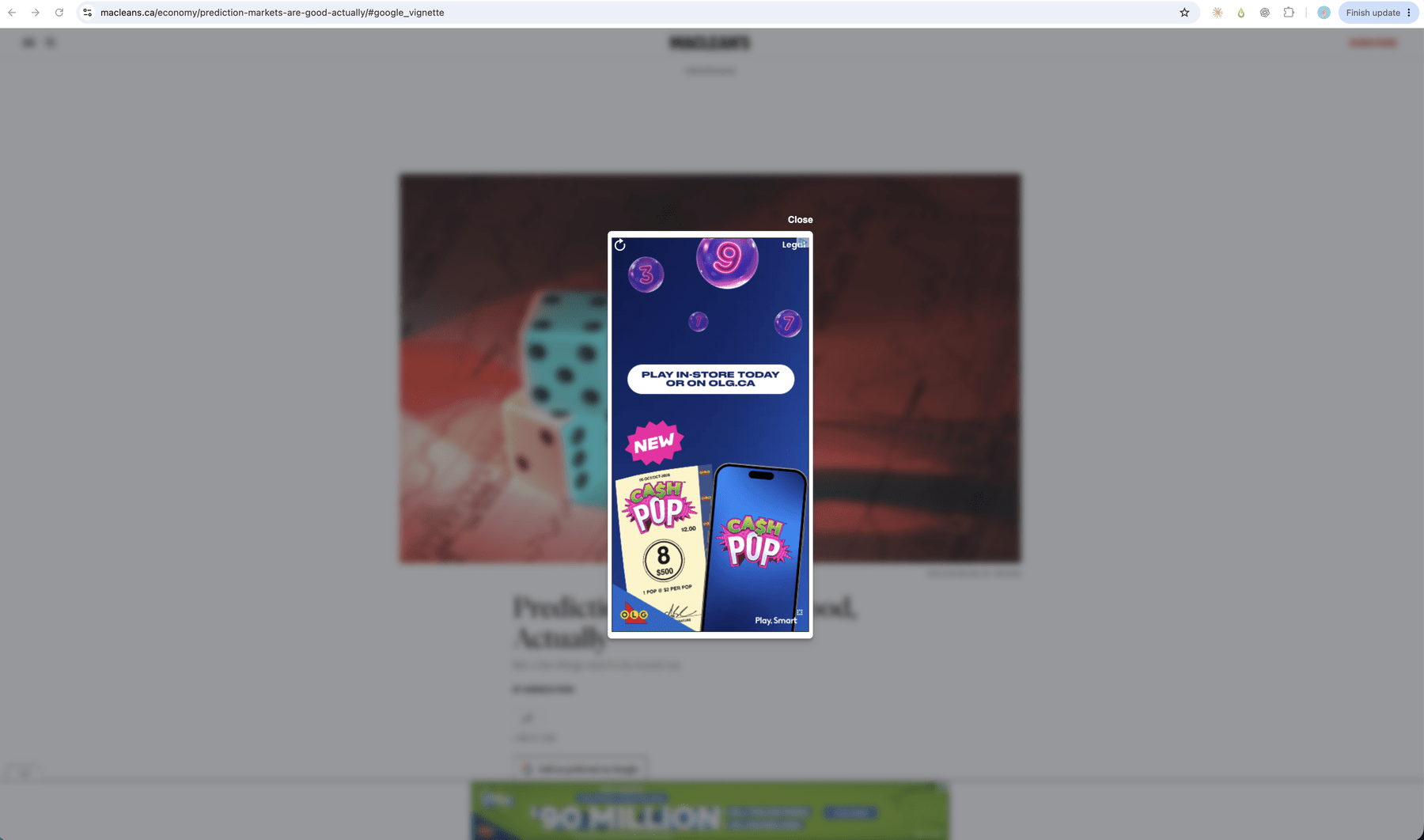
Same article, same evening: a full-screen OLG ad for Cash Pop, "Play in-store today or on OLG.ca". Provincial lottery corporations lobby for tighter limits on prediction markets (Globe and Mail, 2 September 2026).
Opinion pieces, a podcast and a book. Opened 18 October 2026.
By Andreas Park
This deck is for a presentation to UofT alumni, Oct 20, 2026