





federica bianco PRO
astro | data science | data for good
University of Delaware
Department of Physics and Astronomy
Biden School of Public Policy and Administration
Data Science Institute
Rubin Legacy Survey of Space and Time
LSST Survey Scientist
federica b. bianco
she/her
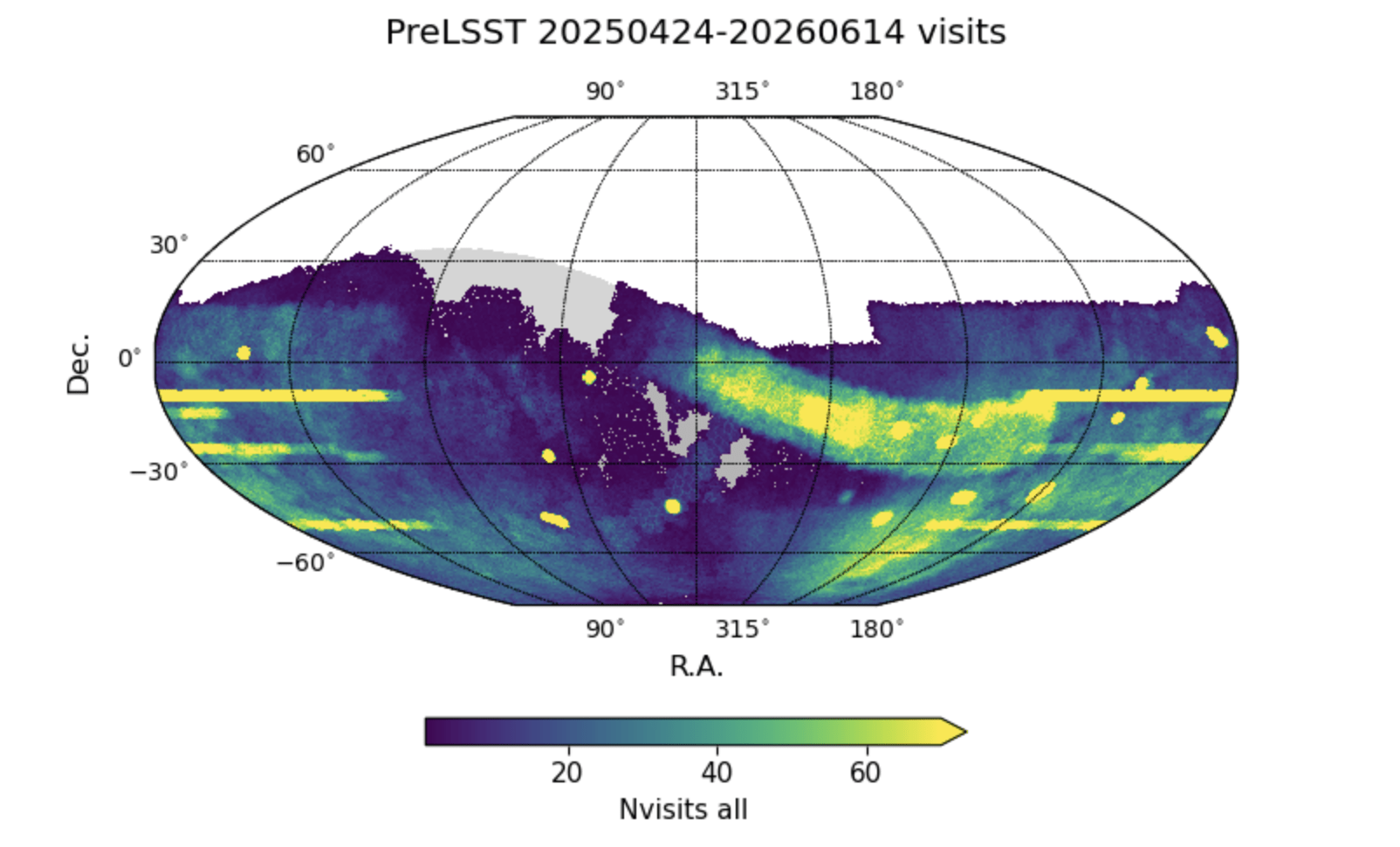
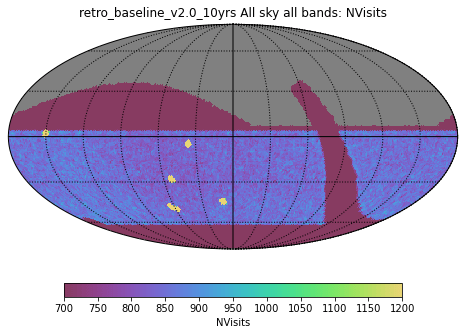
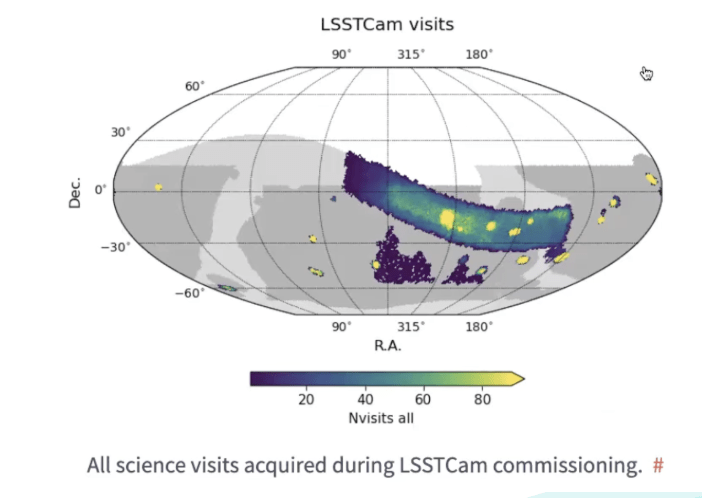
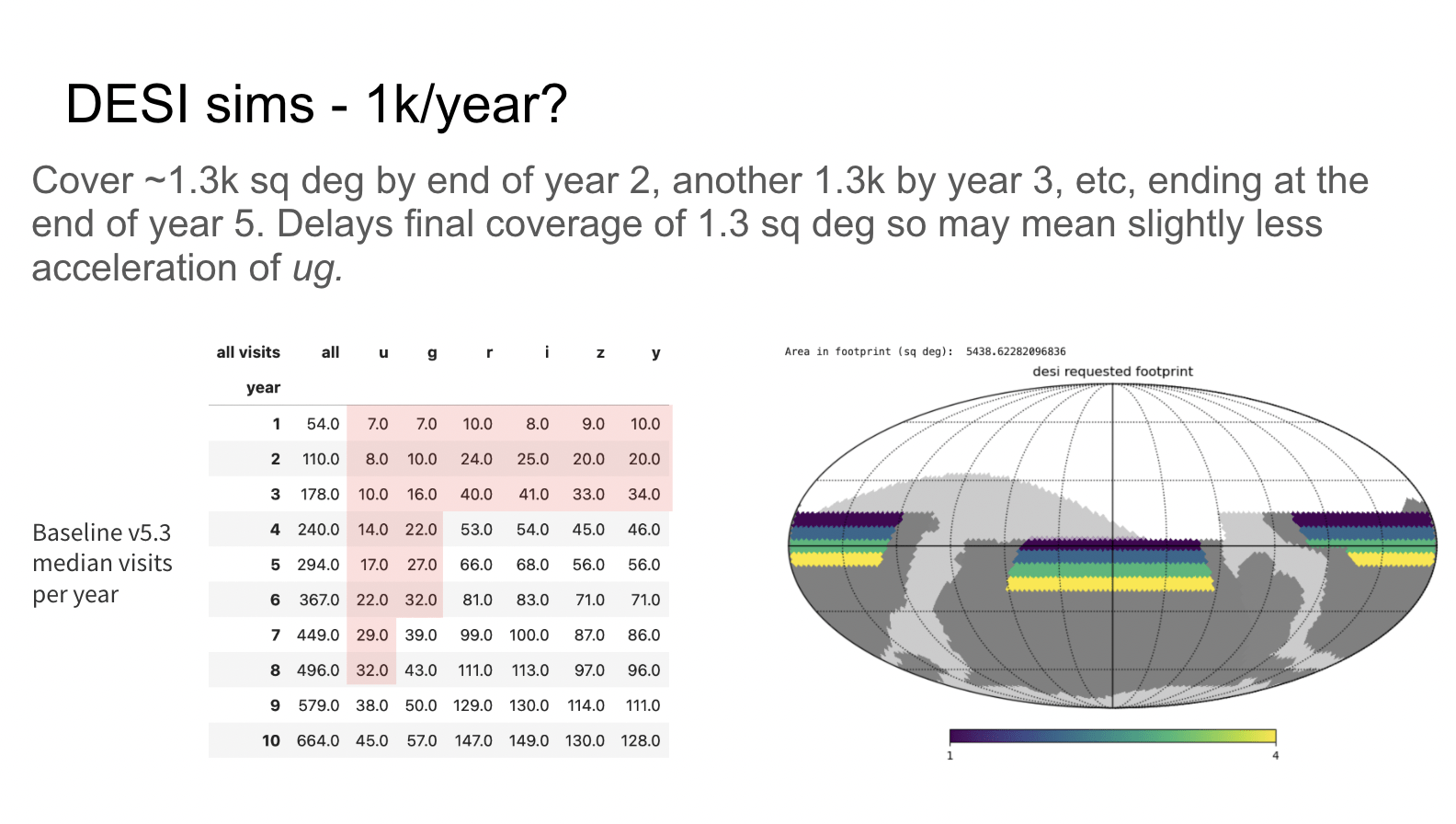
3,362.2 sq deg w > 1 visits
2,859.5 sq deg w > 2 visits
  814.1 sq deg w > 3 visits
  782.2 sq deg w > 4 visits
  105.8 sq deg w > 5 visits
survey optimization
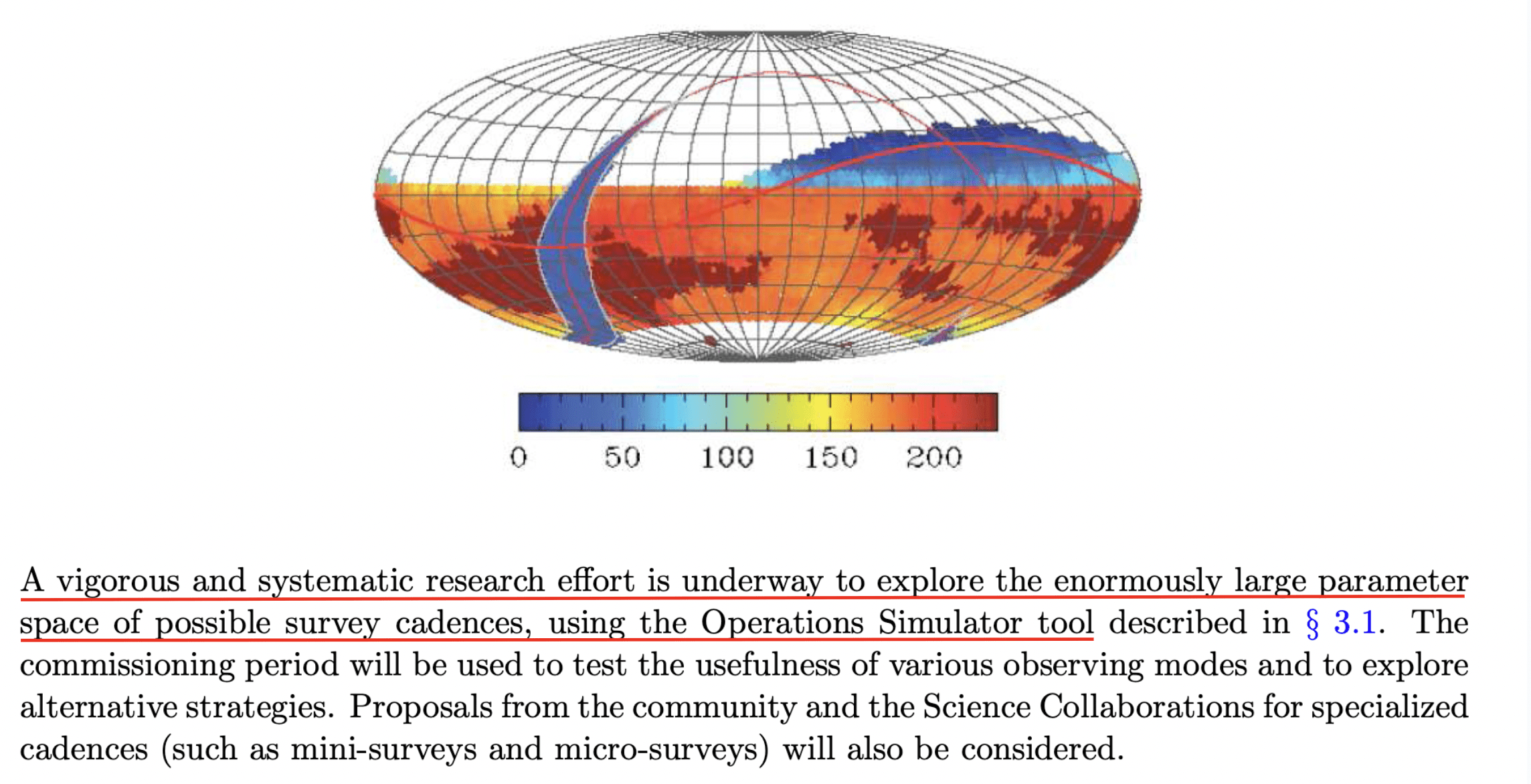
LSST Science Book (2009)
is a word I am borrowing from Margaret Atwood to describe the fact that the future is us.
However loathsome or loving we are, so will we be.
Whereas utopias are the stuff of dream dystopias are the stuff of nightmares, ustopias are what we create together when we are wide awake
US-TOPIA
LSST survey strategy optimization
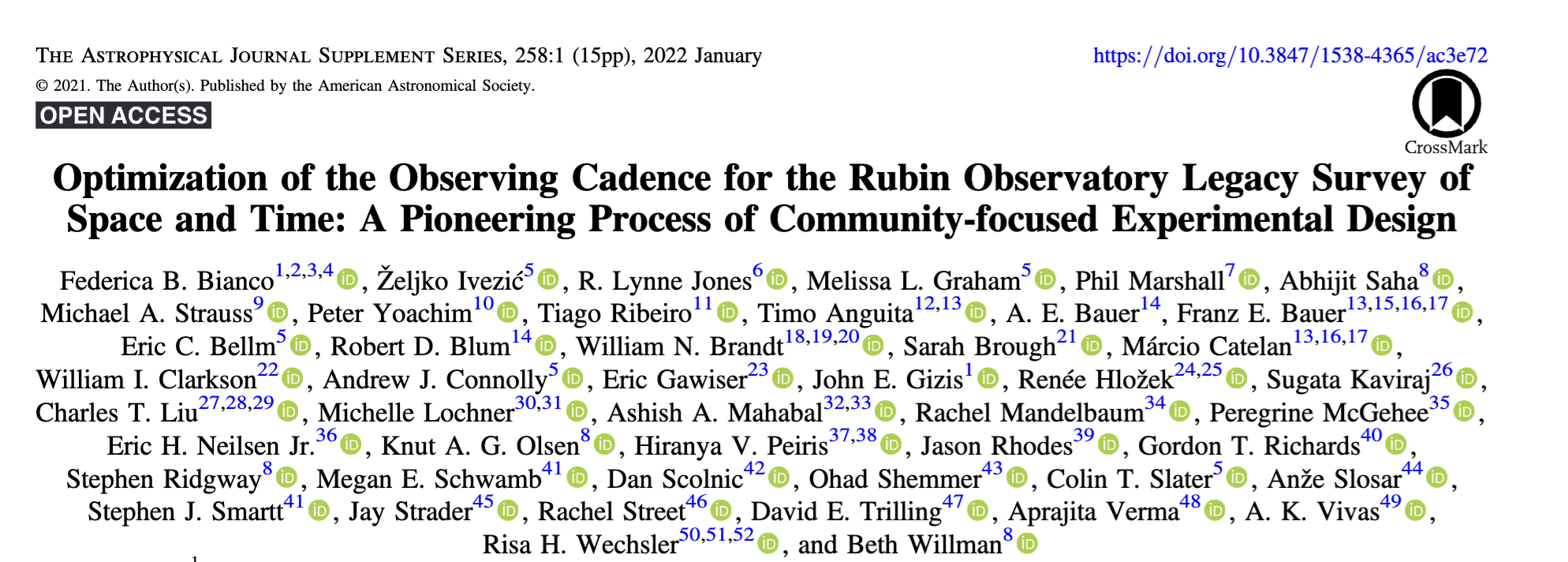
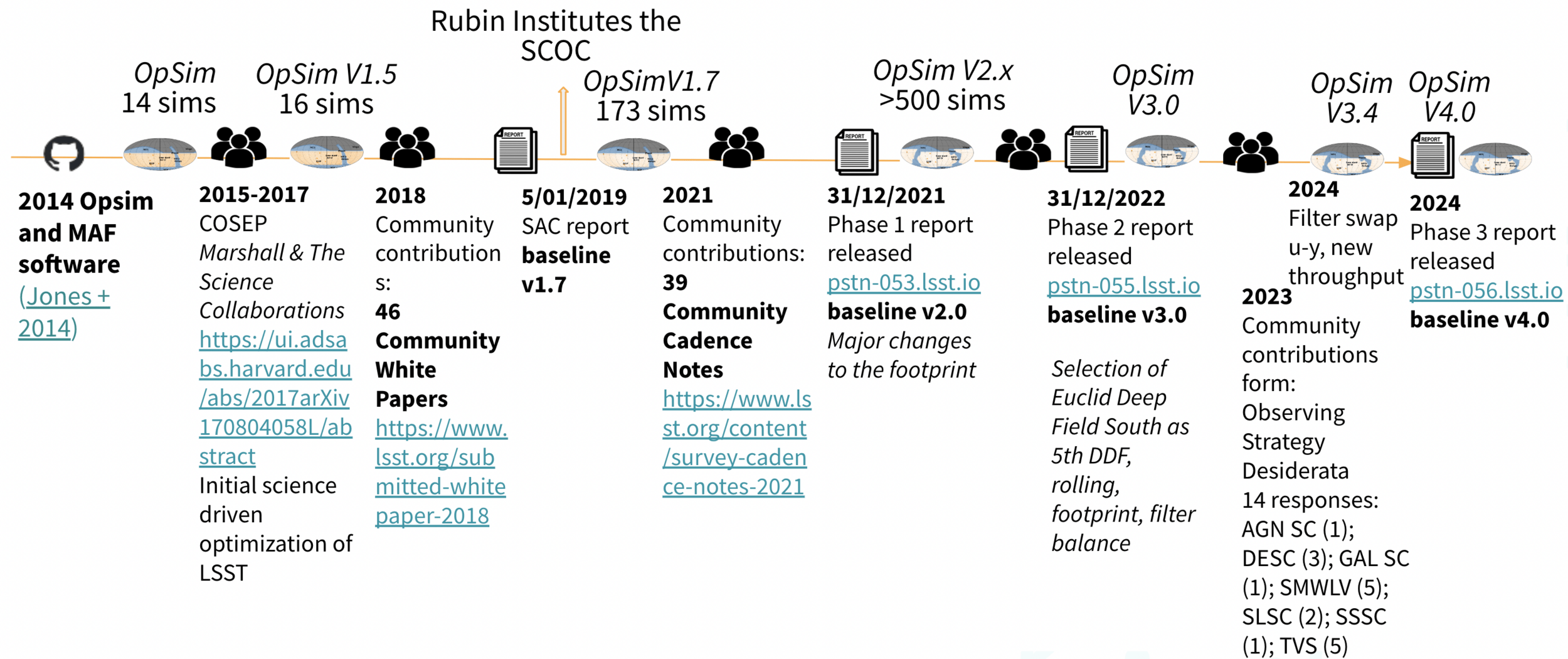
a pioneering process of community-centric design
Rubin has involved the community to an unprecedented level in survey design this is a uniquely "democratic" process!
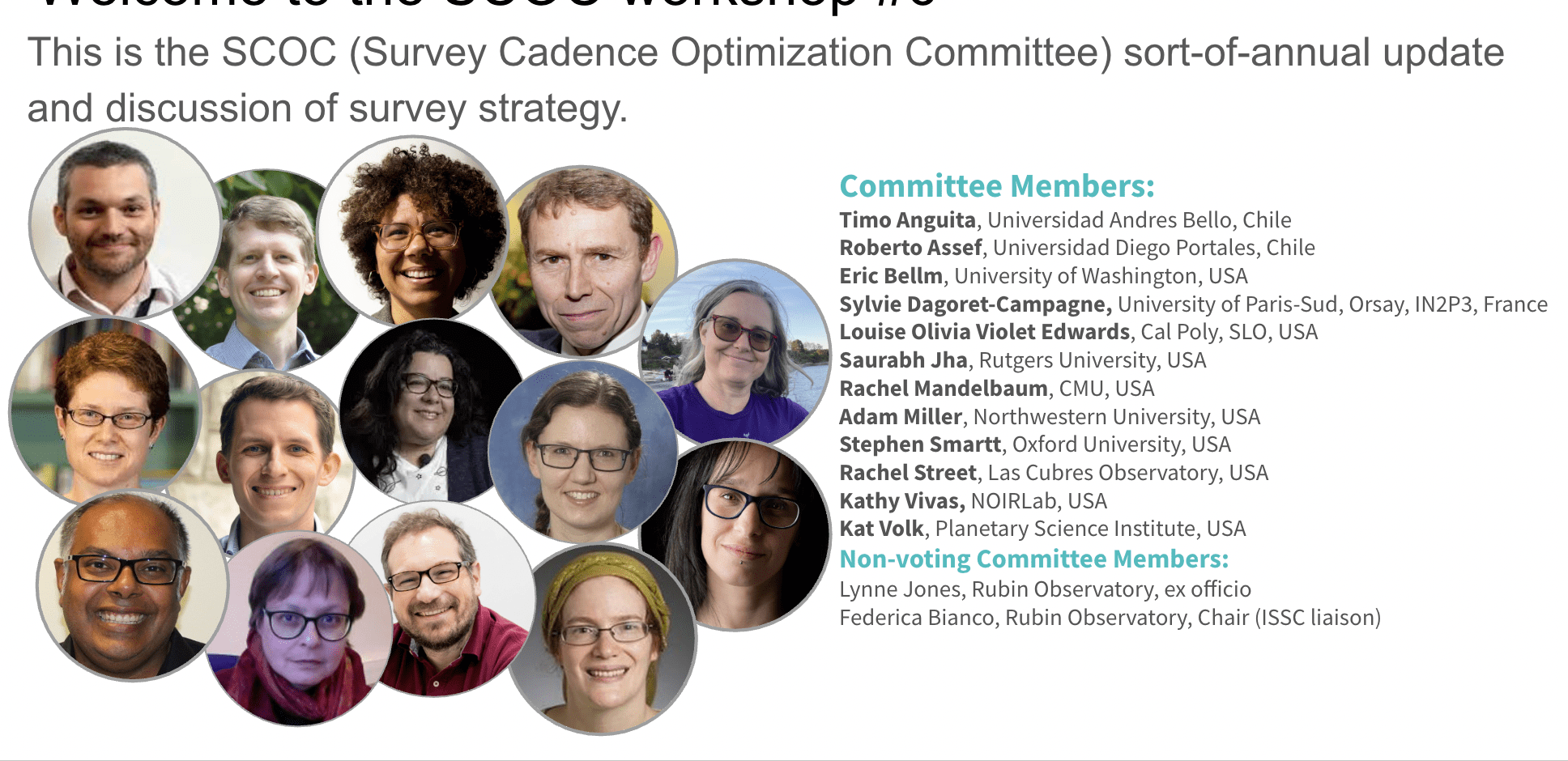
Survey Cadence Optimization Committee
IMPORTANT: This process will contine throughout LSST!
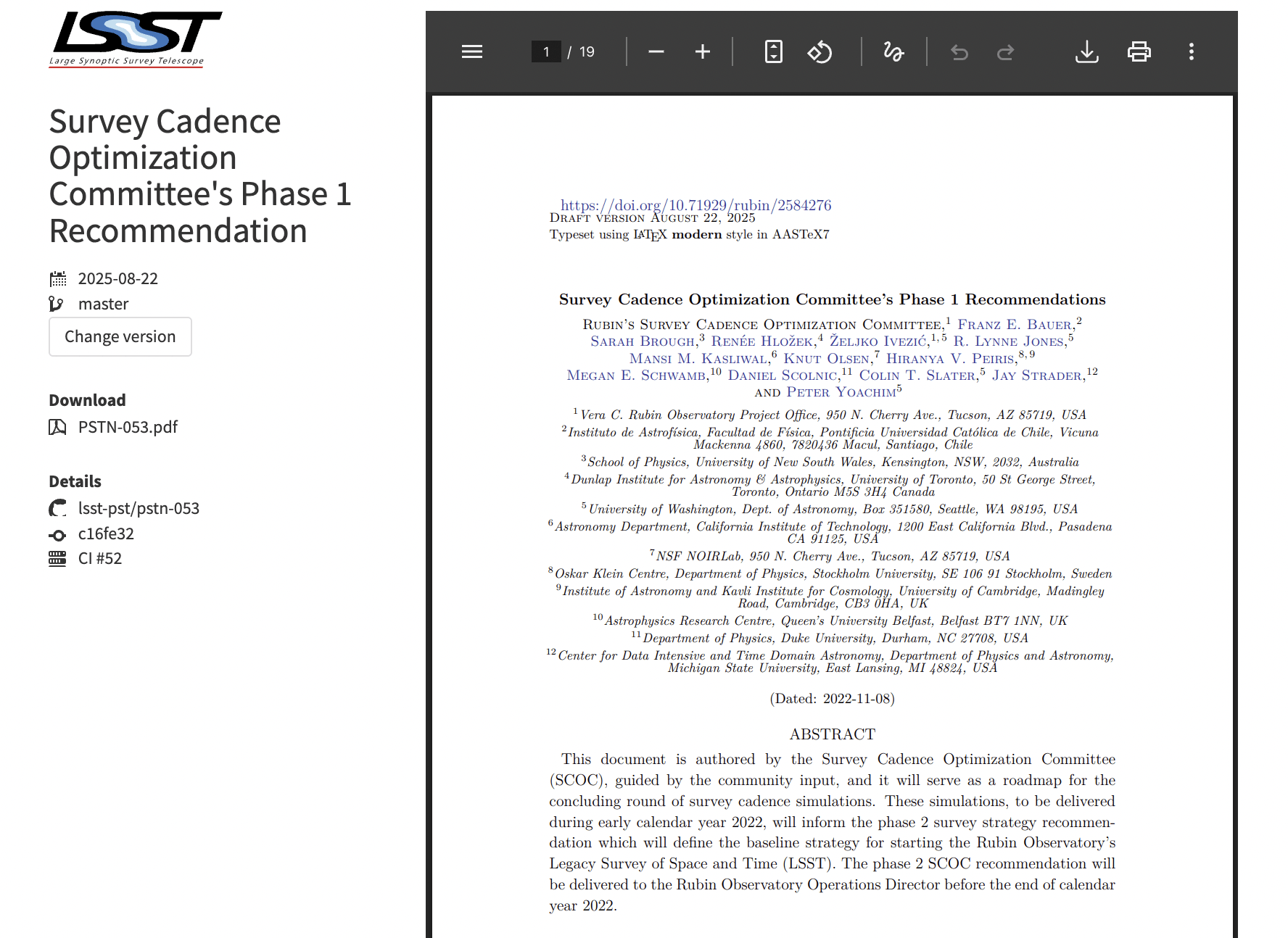
The SCOC is tasked to deliver an annual recommendation for adjustments to the survey during operations
while we have made a recommendation for how to start LSST, we intend to continue to renew recommendations as needed throughout the first year of LSST as we improve our understanding of the evolving system performance and how to adapt to it to preserve our scientific objectives.
As planned earlier, the SCOC is tasked to deliver an annual recommendation for adjustments to the survey, but in the early survey phases, we expect recommendations may happen much more rapidly.
We look forward to discuss our recommendation and the expectations for LSST at the Rubin Community Workshop 2026 on Tuesday July 2018.
To facilitate interactions, we have set up a Vevox (like Slido) where you can the SCOC questions ahead of the Rubin Community Workshop: https://vevox.app/#/m/430733856
2017
80,000
Rubin has involved the community to an unprecedented level in survey design this is a uniquely "democratic" process!
2019
80,000
Rubin has involved the community to an unprecedented level in survey design this is a uniquely "democratic" process!
2023
80,000
Rubin has involved the community to an unprecedented level in survey design this is a uniquely "democratic" process!
2024
80,000
Rubin has involved the community to an unprecedented level in survey design this is a uniquely "democratic" process!
2024
2026
80,000
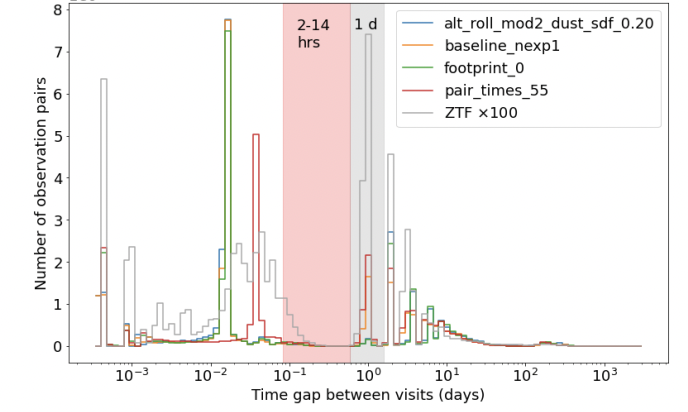
# pairs of observations (1e5)
time gaps (days)
Eric C. Bellm et al 2022 ApJS 258 13
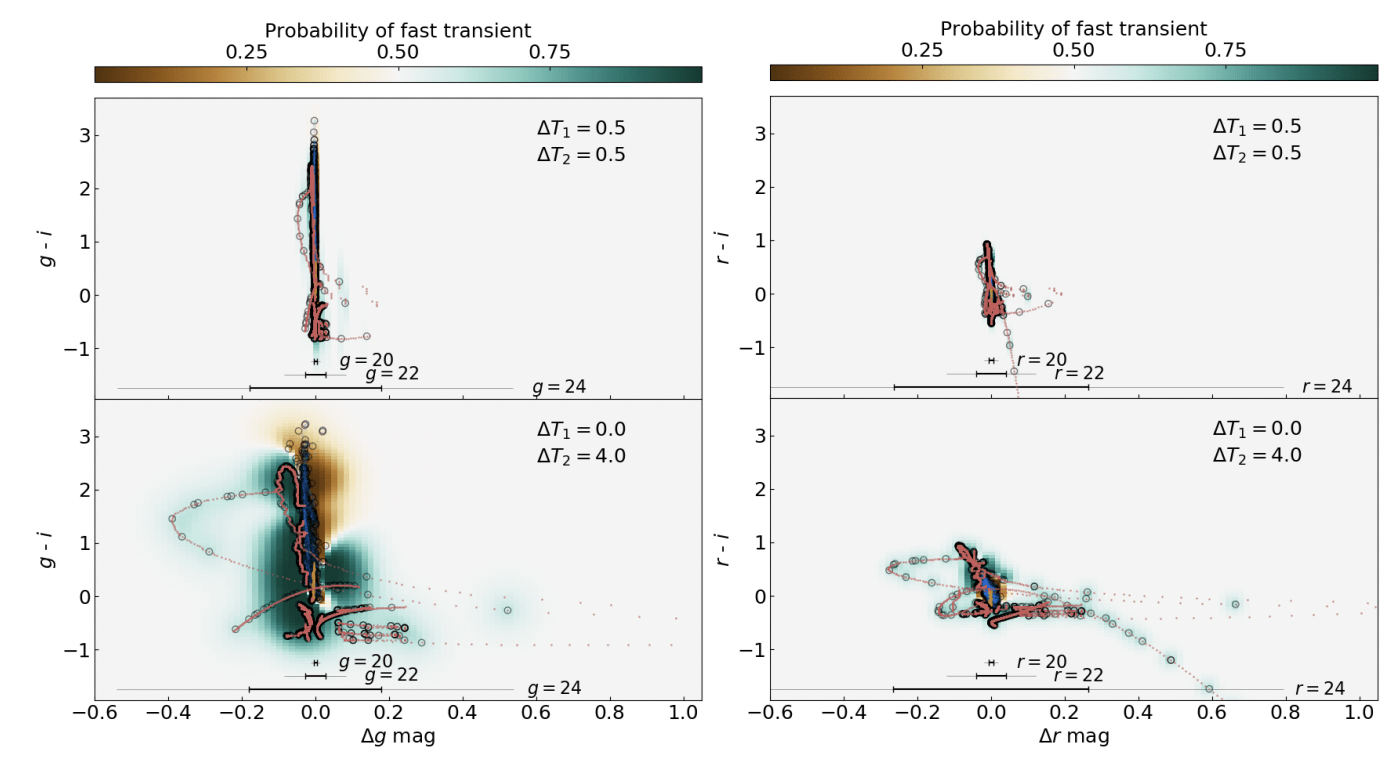
Presto-Color, Bianco+ 2019
Current plan: rolling 8 out of the 10 years
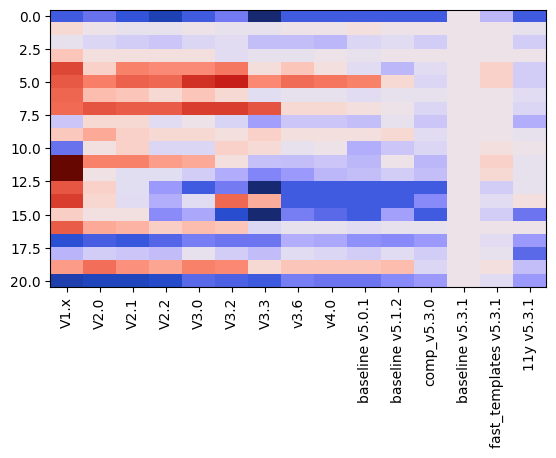
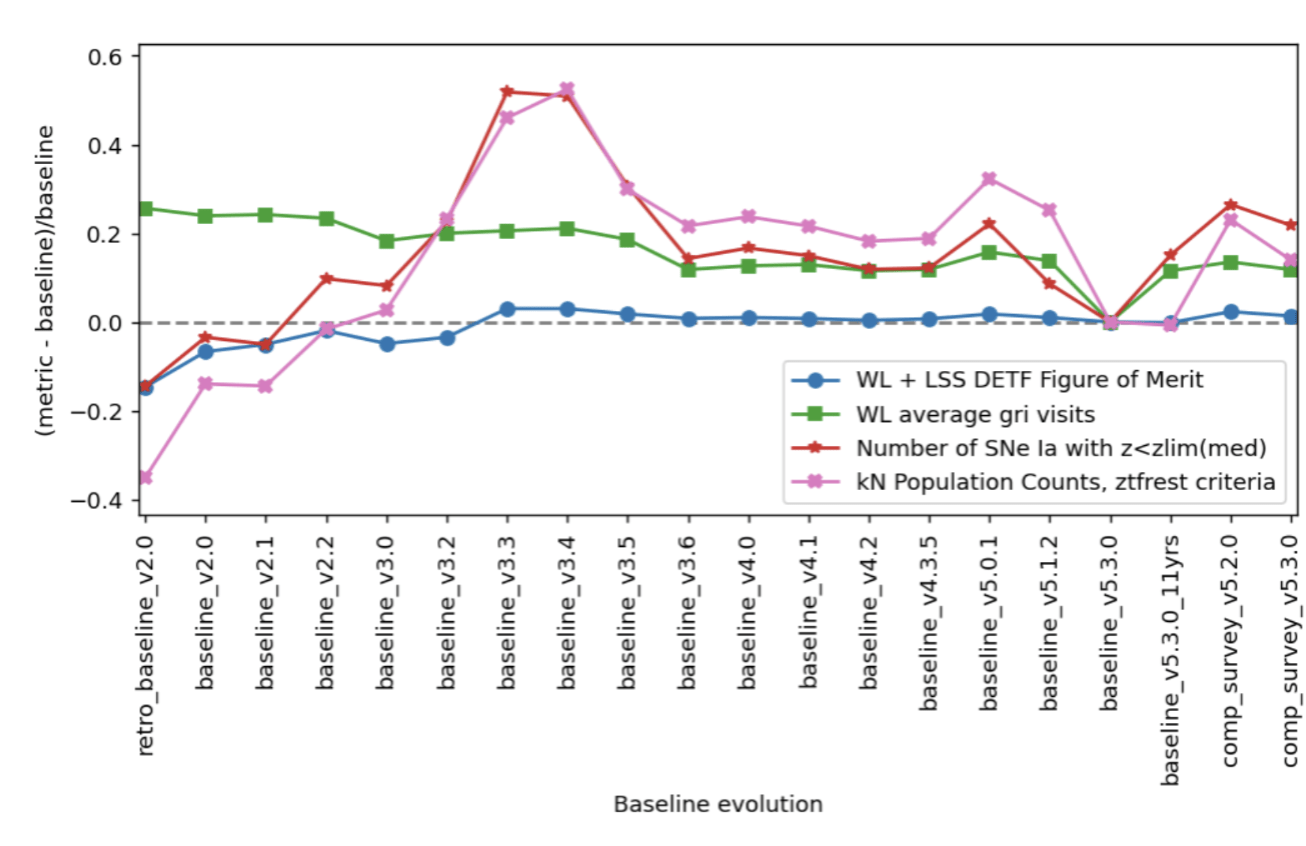
newer simulations ->
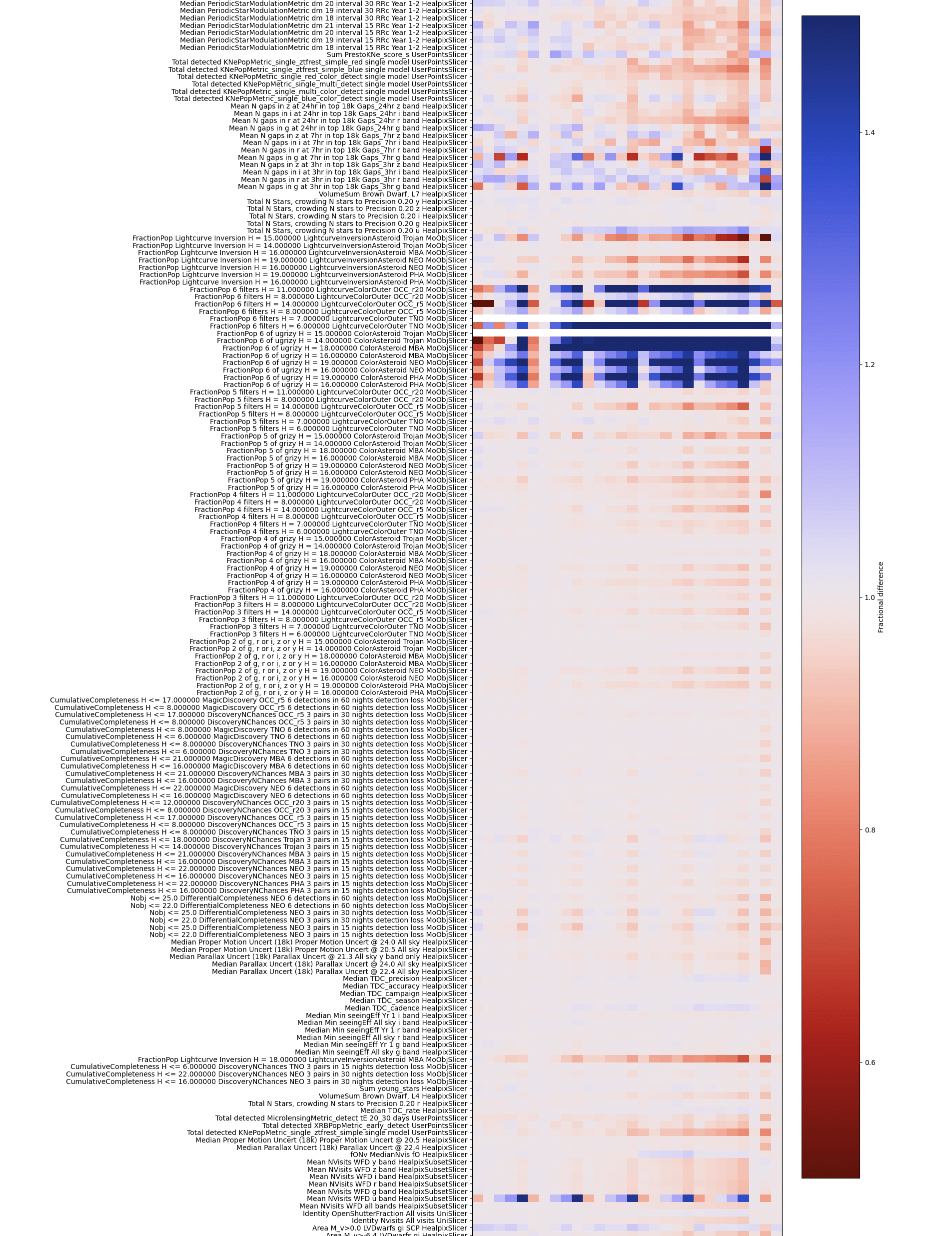
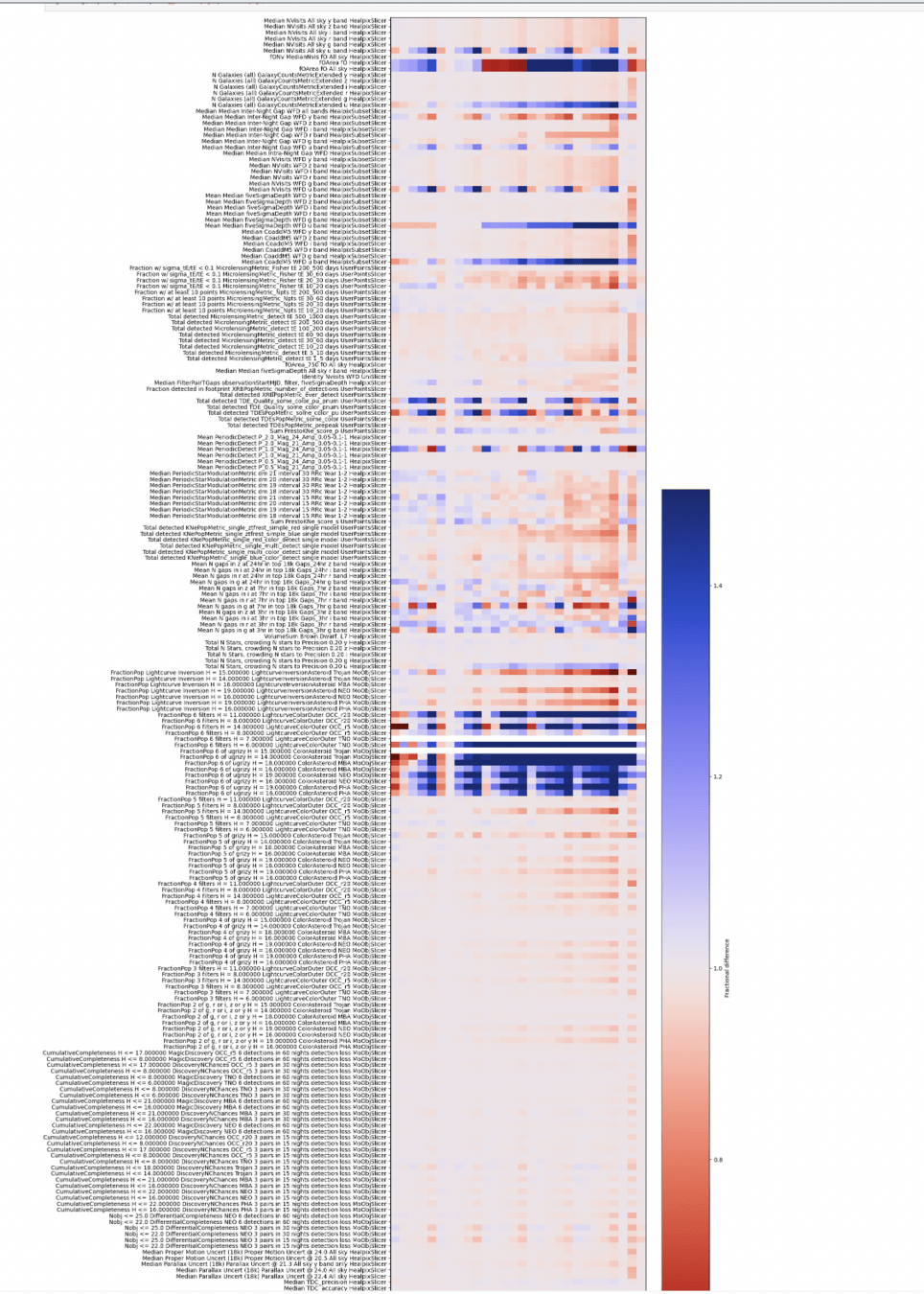
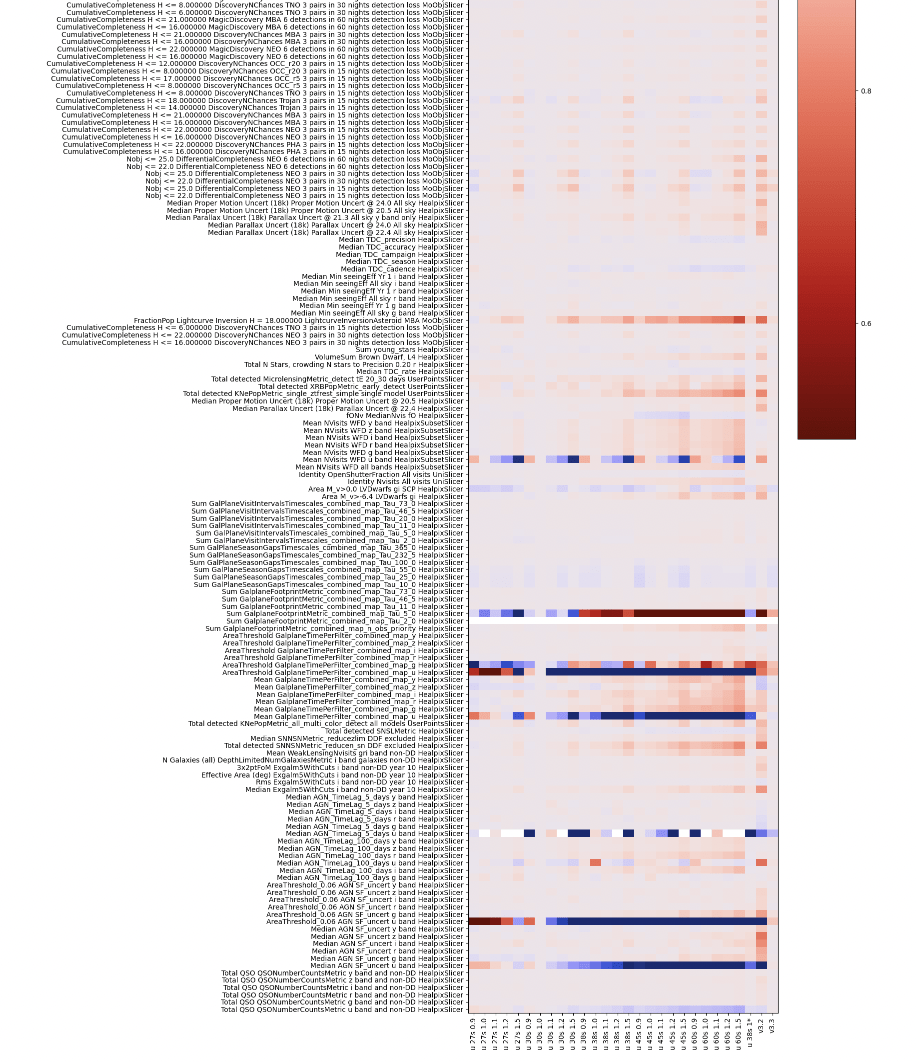
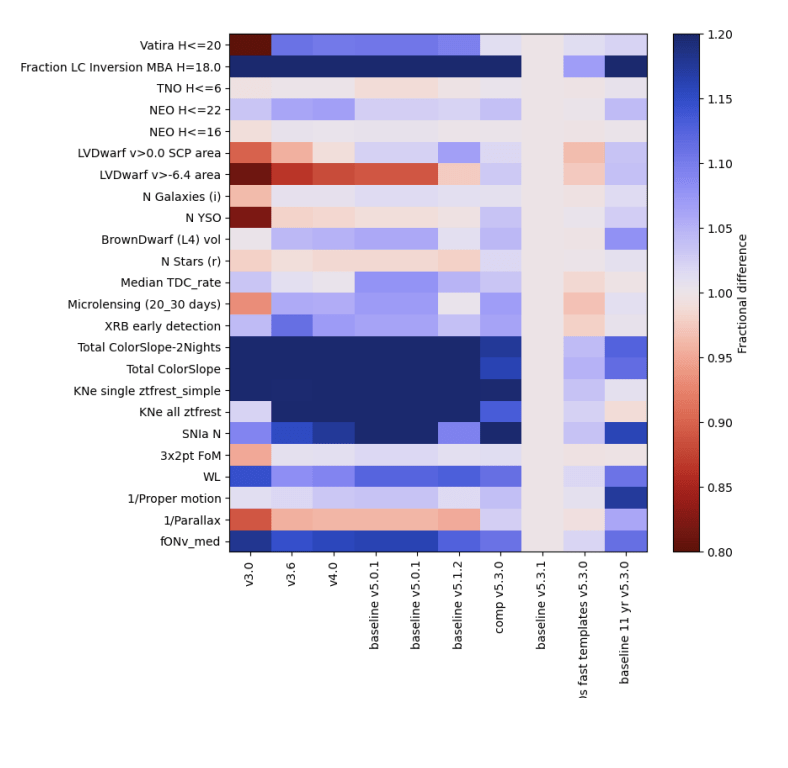
<-bad good ->
newer simulations ->
Andreoni+ 2022a
DESC
e.g. analysis of
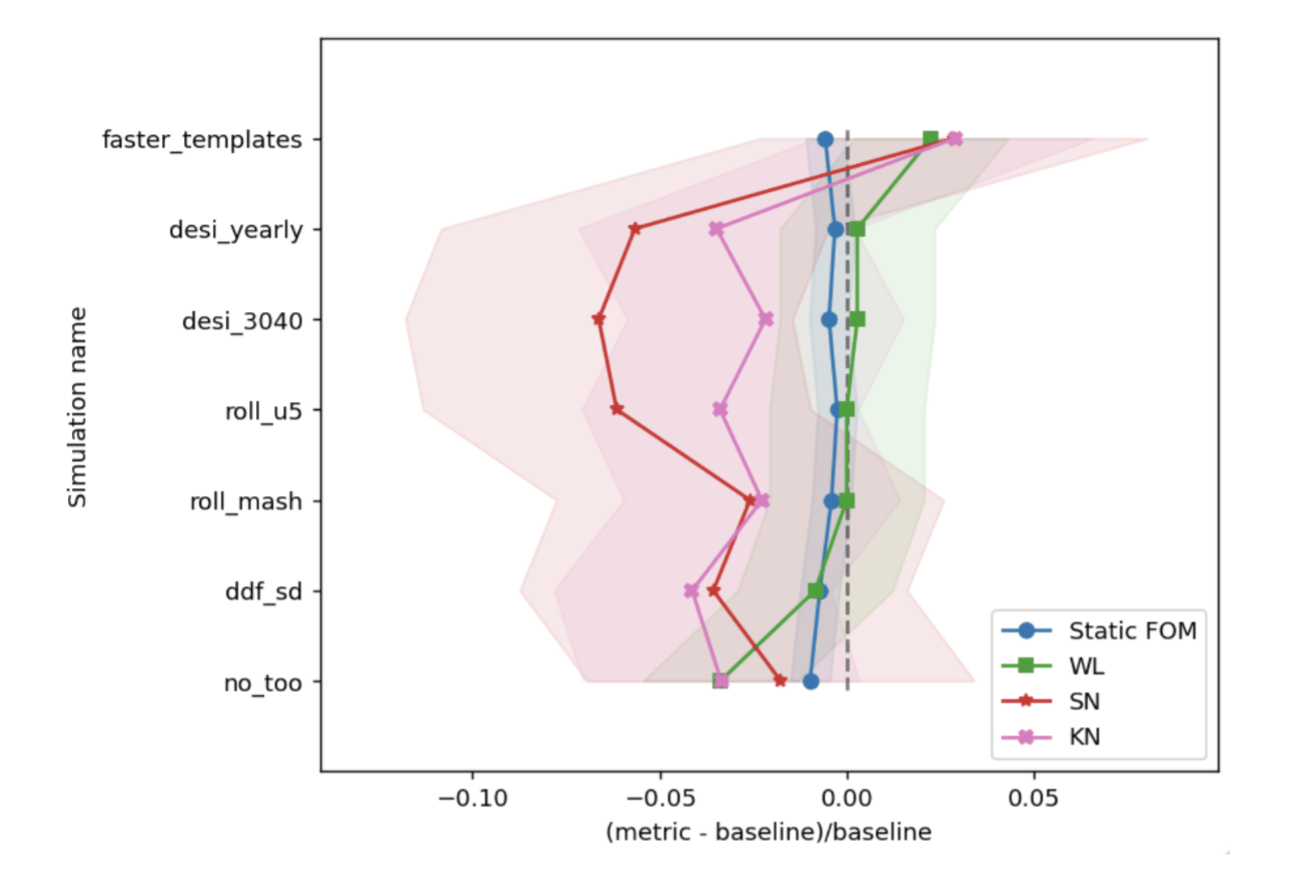
u band exposure time
and filter balance
e.g. analysis of
u band exposure time
and filter balance
e.g. analysis of
u band exposure time
and filter balance
<-bad good ->
Real Observatory Performance??
PSTN-056.lsst.io January 2025
2018
2023
DESC
Challenges
newer simulations ->
<-bad good ->
Real Observatory Performance??
TDA is most sensitive to efficiency and cannot recover by just adding survey time
PSTN-056.lsst.io January 2025
DESC
newer simulations ->
<-bad good ->
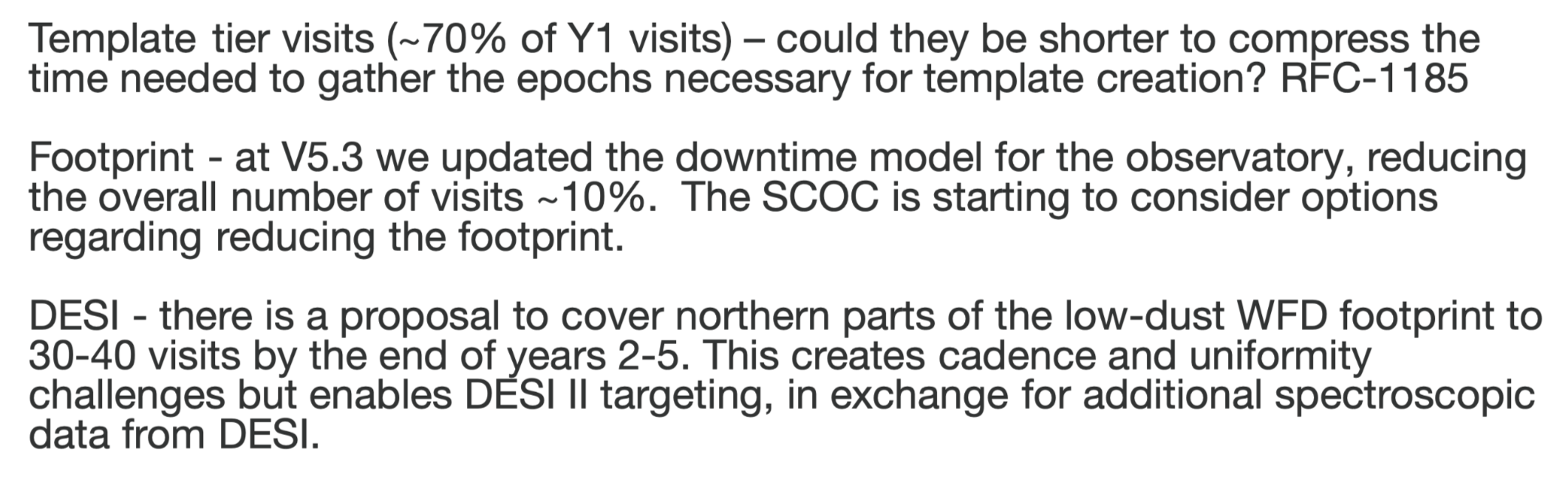
10% fewer visits
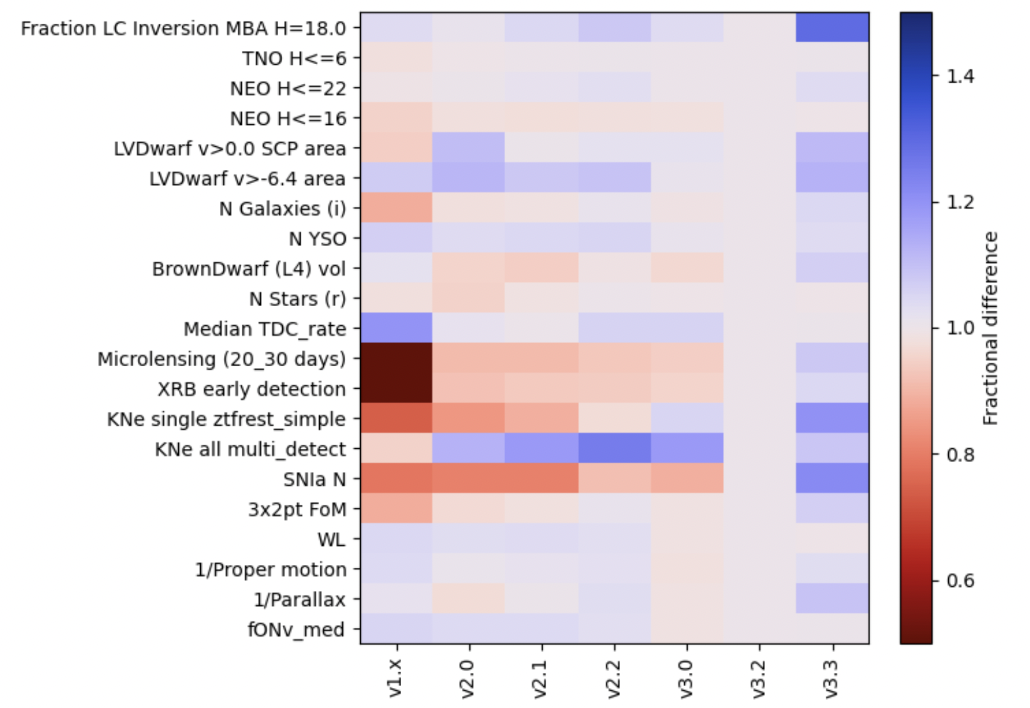
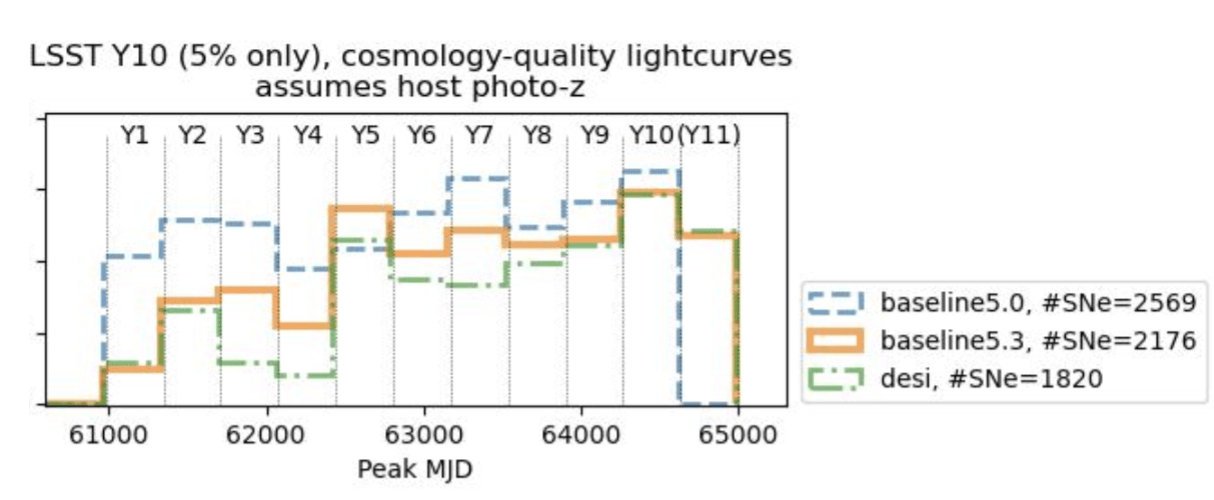
TDA and 3.2pf FoM most sensitive to efficiency
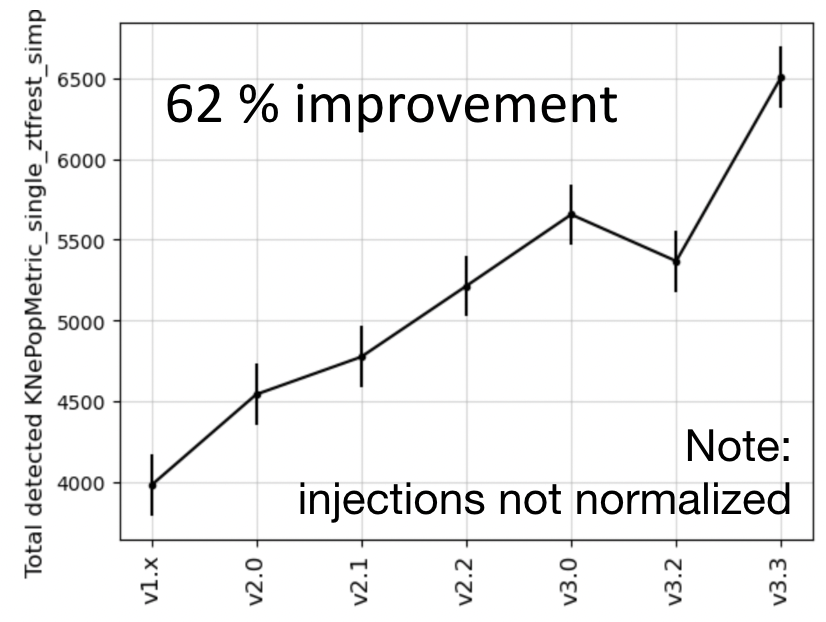
TDA cannot recover by just adding survey time
PSTN-056
PSTN-057
DESC
DESC
DESC REPORT 2026
What's in v5.3
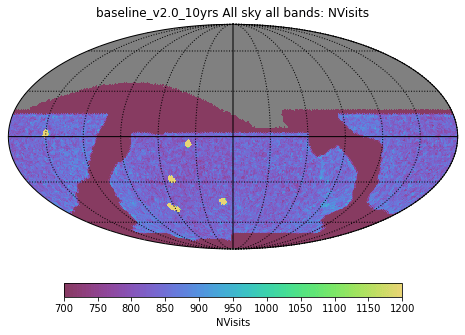
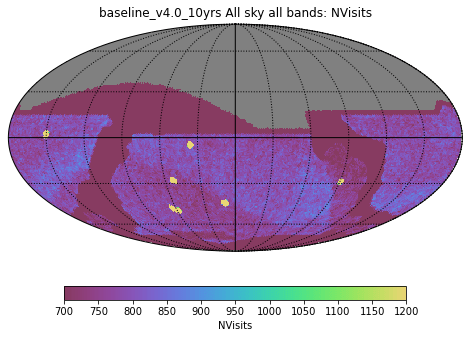
The SCOC had proposed the survey design for Y1 implemented in baseline_v4.0 and described in PSTN-056 (which itself builds on earlier SCOC recommendations Rubin’s Survey Cadence Optimization Committee et al. PSTN-053 and Rubin’s Survey Cadence Optimization Committee et al. PSTN-055) which includes the following survey strategy details:
We now recommend the following changes, which have been implemented in baseline_v5.3:
DESC REPORT 2026
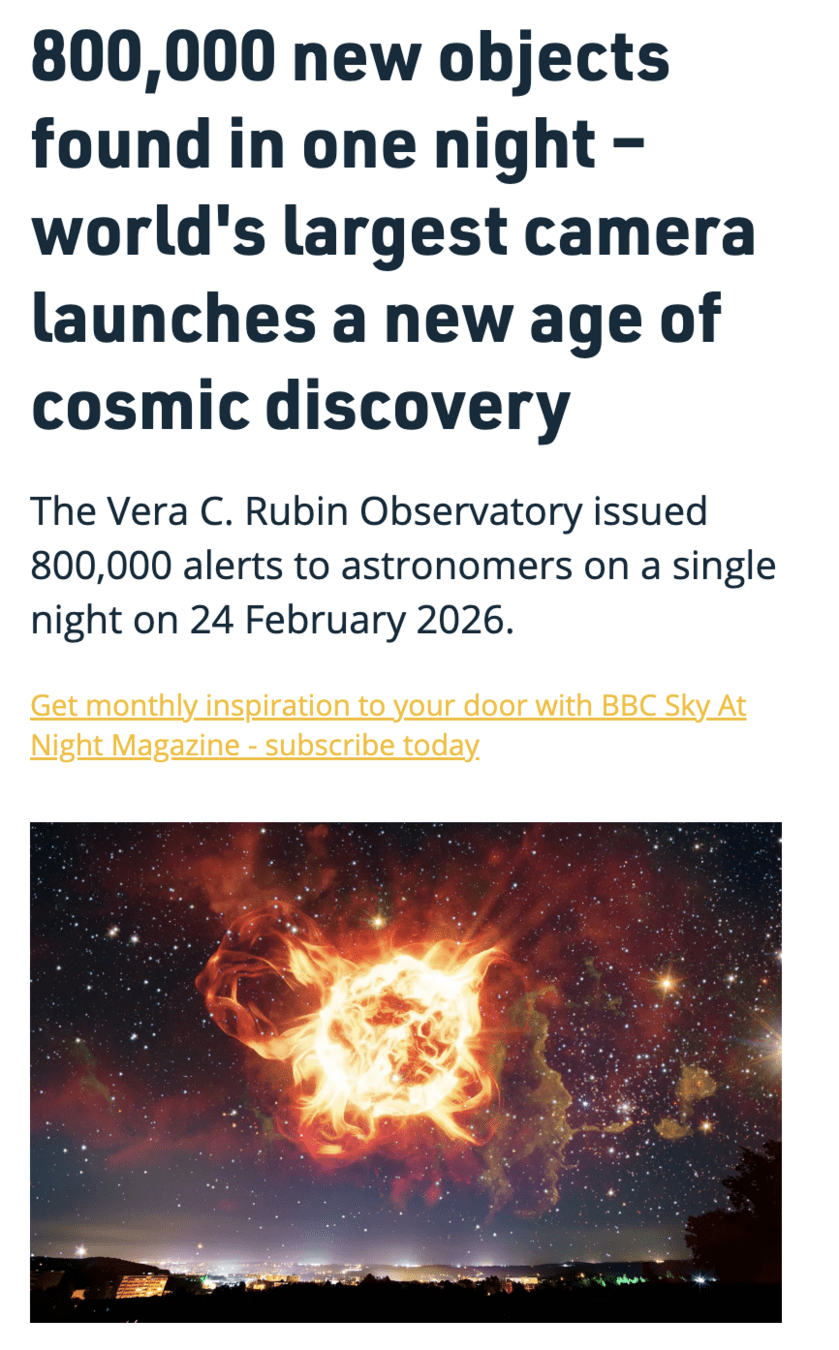
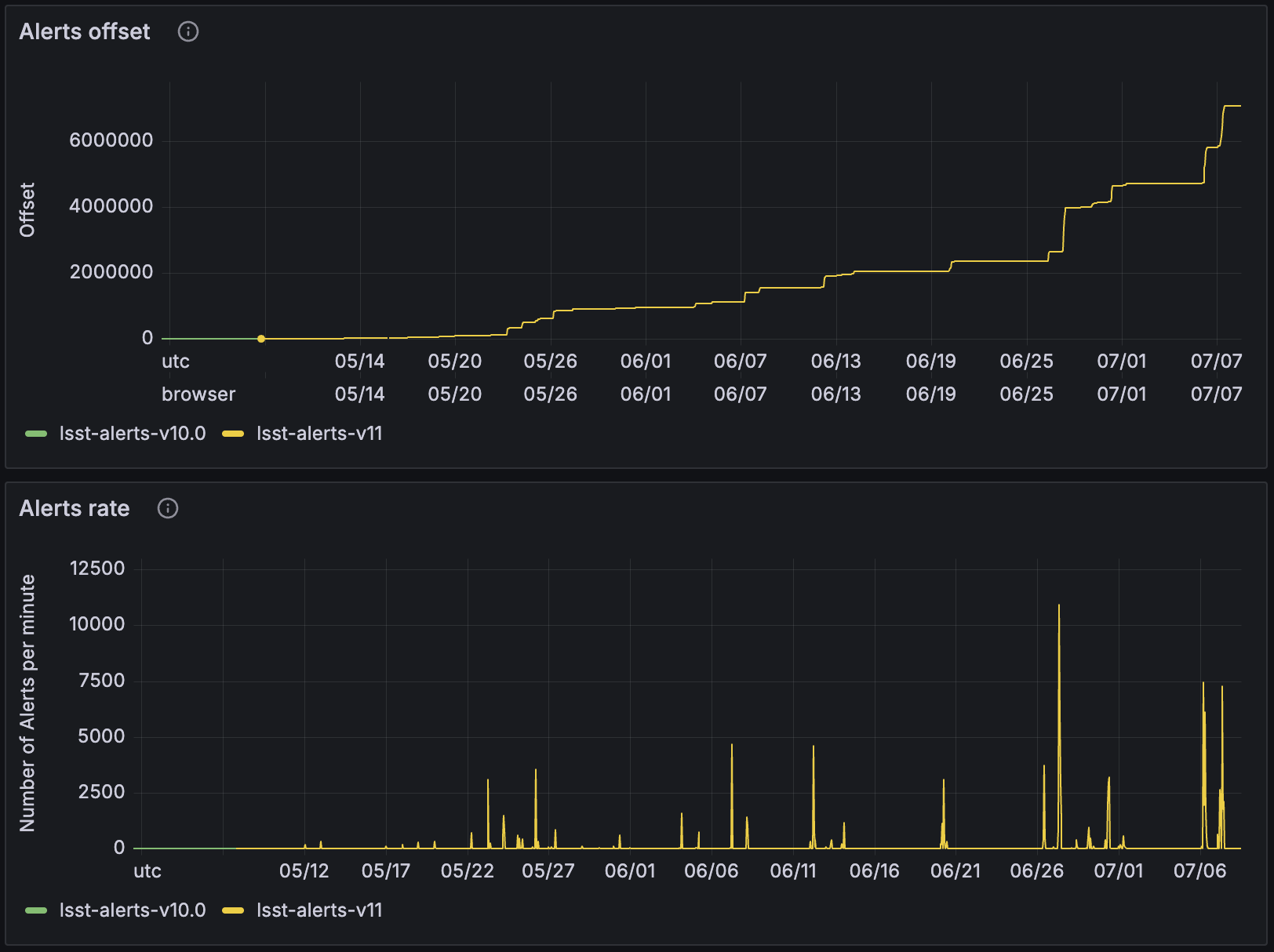
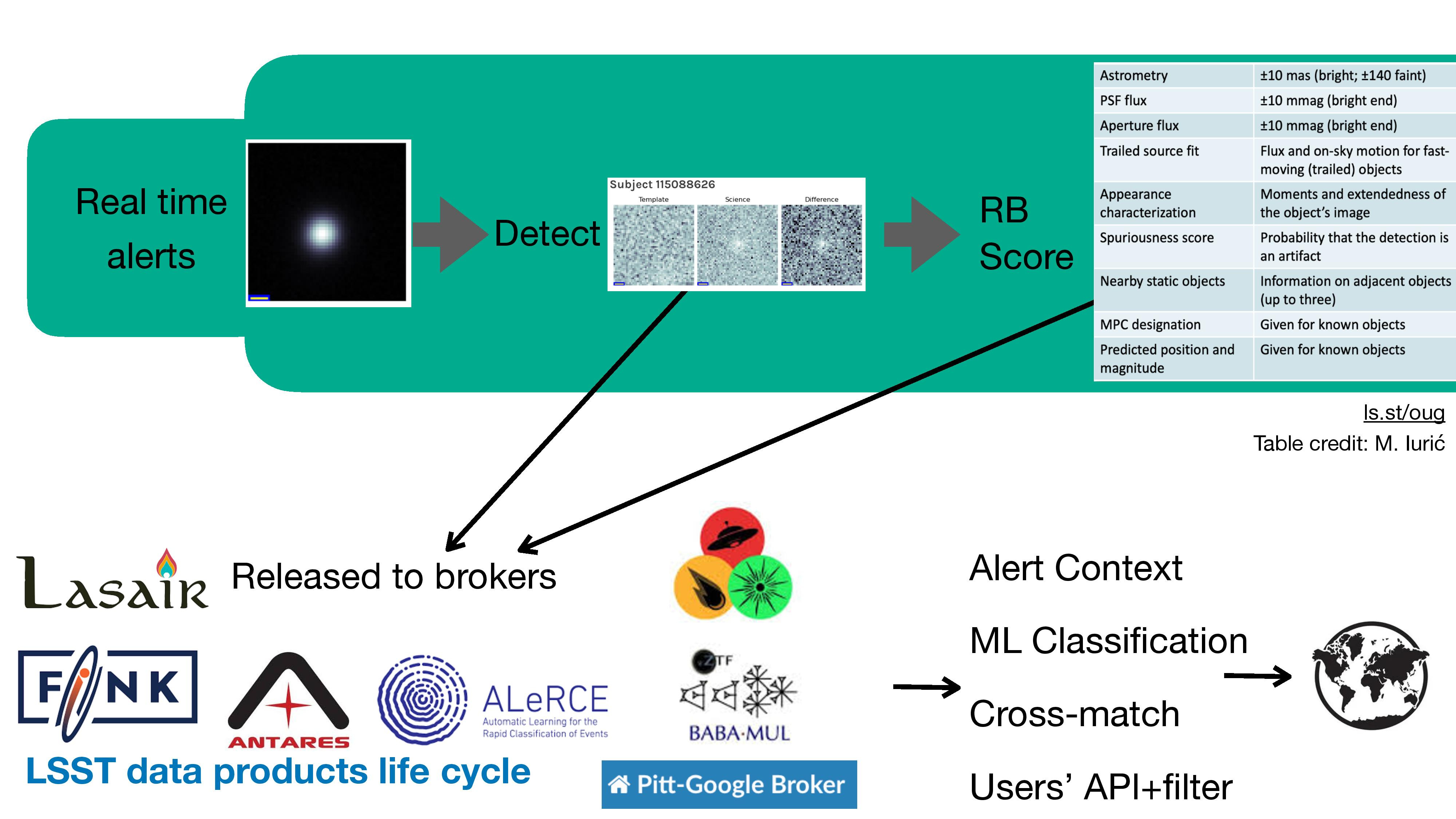
ALERTS HAVE STARTED!
Why not always? We deliver alerts on DDF+Virgo when we run the survey in survey mode (=not engineering tests)
Why not everywhere? Limited templates available - template foorprint increasing
~7M alerts per night
*Conservative ML-reliability scores for now because the infrastructure (Rubin and brokers) is still under development
classifications by ALeRce and Lasair
We now recommend the following changes, which have been implemented in baseline_v5.3 [cont'd]
NOTE: bug fixes after release of PSTN-057 after DESC report pointed out issues
DDFs: main drivers for observational strategy
Static Science (co-added): faint sources, photo-z calibration, etc.
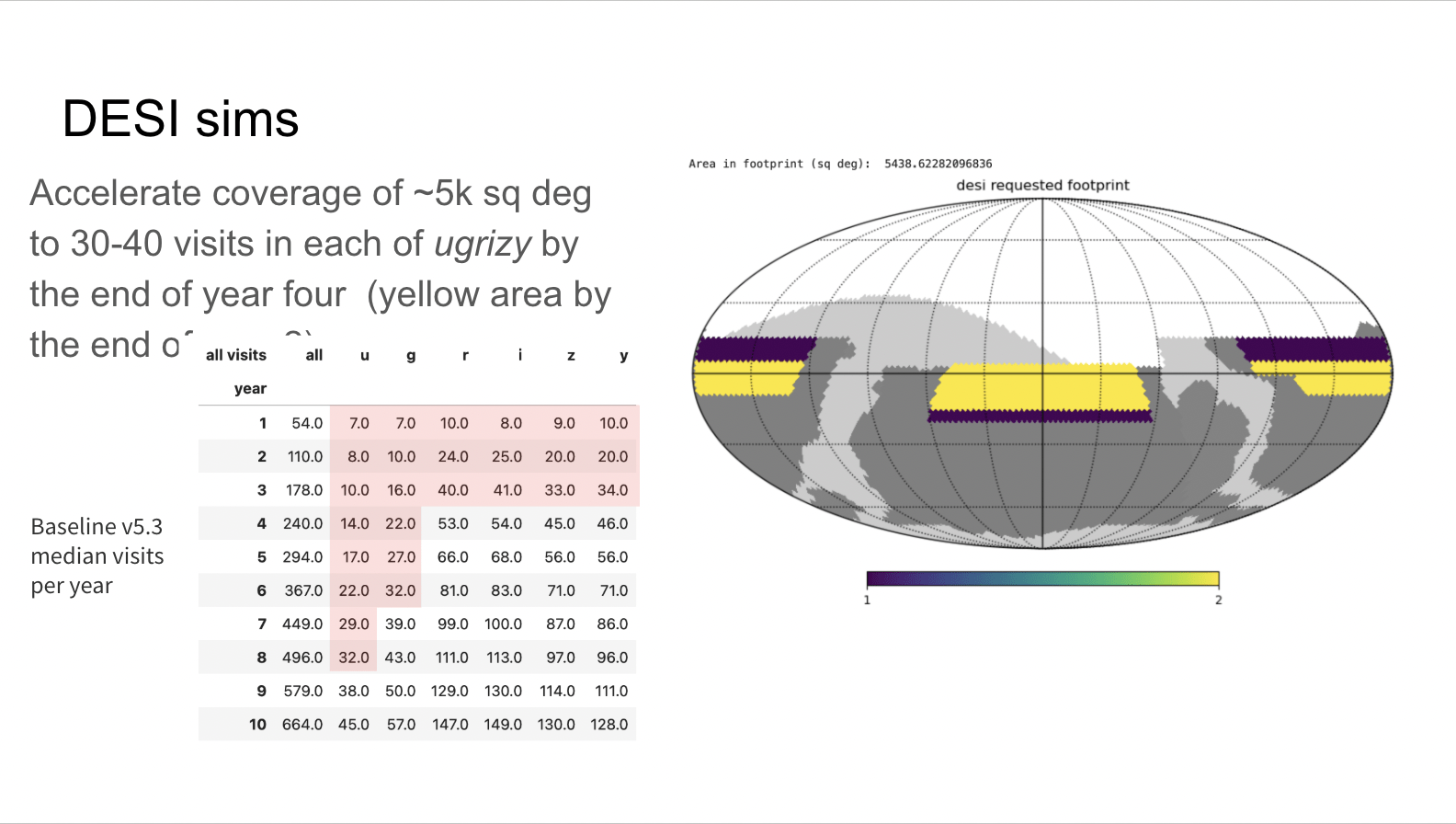
reach at least 10x WFD depth (= u:520, g:630, r:1670, i:1670, z:1500, y:1480 visits)
AGN, Galaxies, DESC desire extra u-band depth (e.g., z ~ 3 dropout galaxies)
AGN want to hit specific coadded depths: (u:28.3, gri:28.5, z:27.9, y:26.5 AB mag)
Time-Domain Science: SN Ia cosmo, AGN reverb/monitoring, extragalactic transients
AGN want every night or every-other-night sampling in griz (and u/y as possible)
DESC want high nightly depth (many visits) seasons for high-redshift SN Ia (z >~ 0.7)
7% DDF budget, “best of both worlds” solution: ocean
high-cadence shallow (2 visits) observations (all years) +
individual high-cadence deep seasons (1 per field; 3 for COSMOS)
1
In deep seasons:
On even days: g:2 i:2 On odd days: r:2 z:2 Every few days: u:3 y:2
These sequences “expire” so won’t build up over multiple days if visits are missed, but u/y occasionally double up.
For EDFS the sequences are the same, but the cadence is slower to accommodate the double pointing.
In ultradeep seasons:
On even days: g:2 i:2 On odd days: r:2 z:2 Every few days: u:3 y:2 +
additional sequences of u:8 g:4 r:18 i:55 z:52 y:20 every ~other/few days
The Ocean DDF Strategy (brain child of the DDF task force led by Saurabh Jha)
What is under immediate consideration?
We now recommend the following changes, which have been implemented in baseline_v5.3: [cont'd]
DESC REPORT 2026
DESC REPORT 2026
Footprint Task Force to be announced at RCW!
Includes from DESC Rachel Mandelbaum, Sylvie Dagoret-Campagne, Mariano Dominguez
also Rachel Street, Kathy Vivas and... a few more TBC
DESC REPORT 2026
Rubin Live-Status links for anyone (summit skycam too!)
ls.st/prenight what the lsst might look like tonight (24 hour ahead)
Rubin Schedule Viewer what the lsst might do next (currently only 24 hour ahead, but will hold more reliable nextVisit + next hour)
Nightly Digest what happened at the summit, including night report
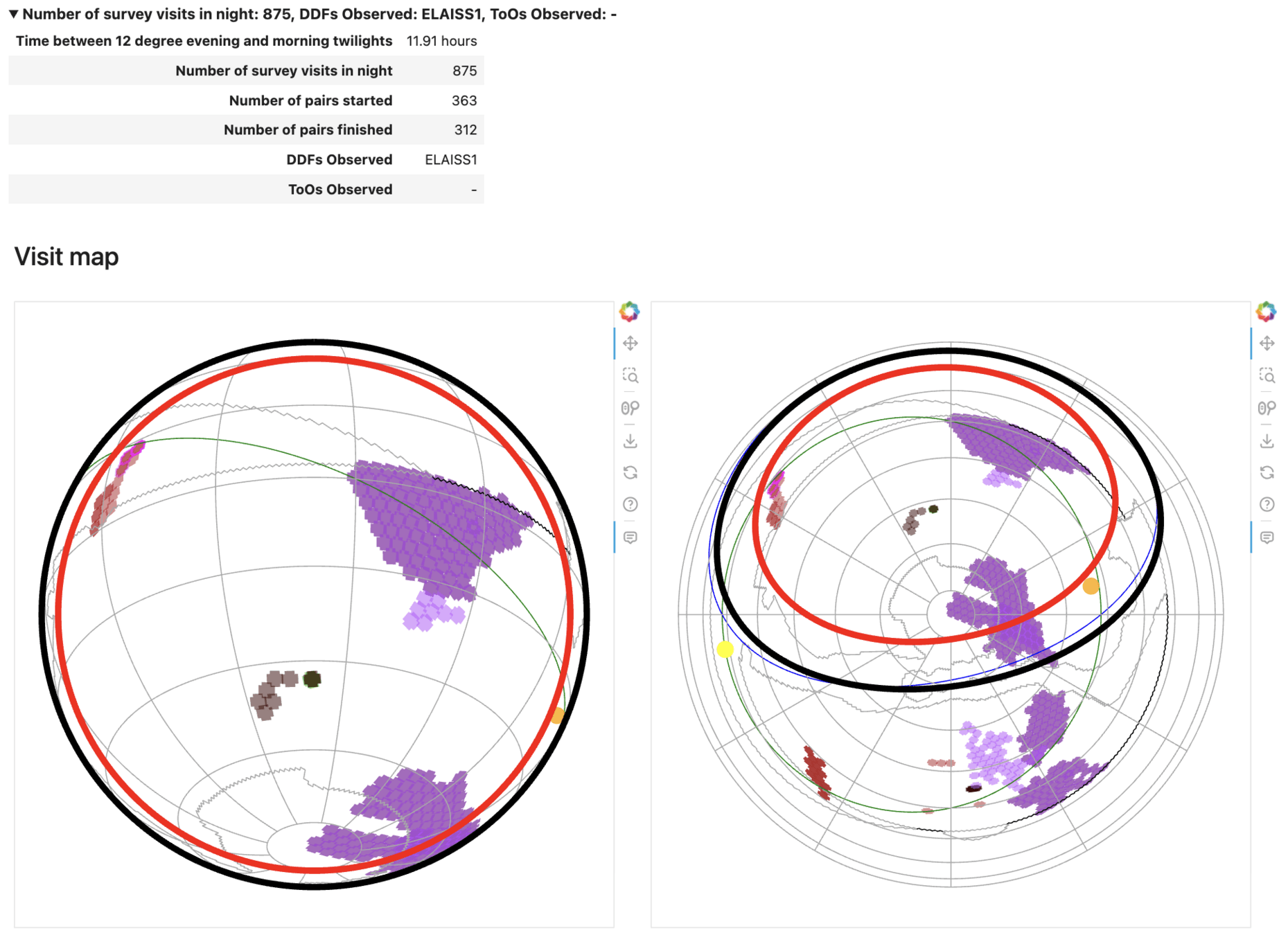
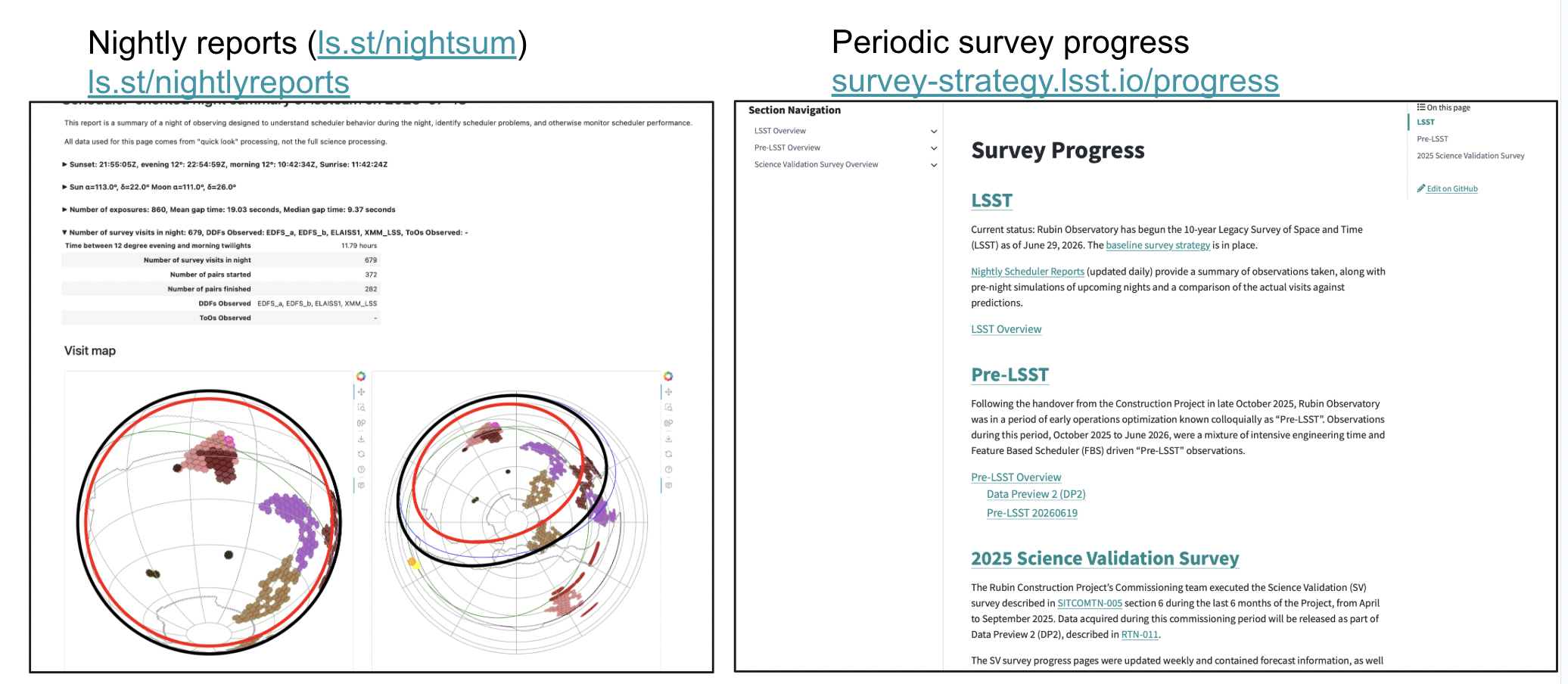
ls.st/nightsum what visits were acquired during the night, survey context
survey-strategy.lsst.io/progress periodic survey progress
Times Square - many notebooks
The LSST
Science Collaborations
A community of practice funded on principles of Equity, Inclusivity, Cooperation
thank you!
University of Delaware
Department of Physics and Astronomy
Biden School of Public Policy and Administration
Data Science Institute
federica bianco
fbianco@udel.edu
https://slides.com/federicabianco/desc-2026
credit: AMNH Dark Universe
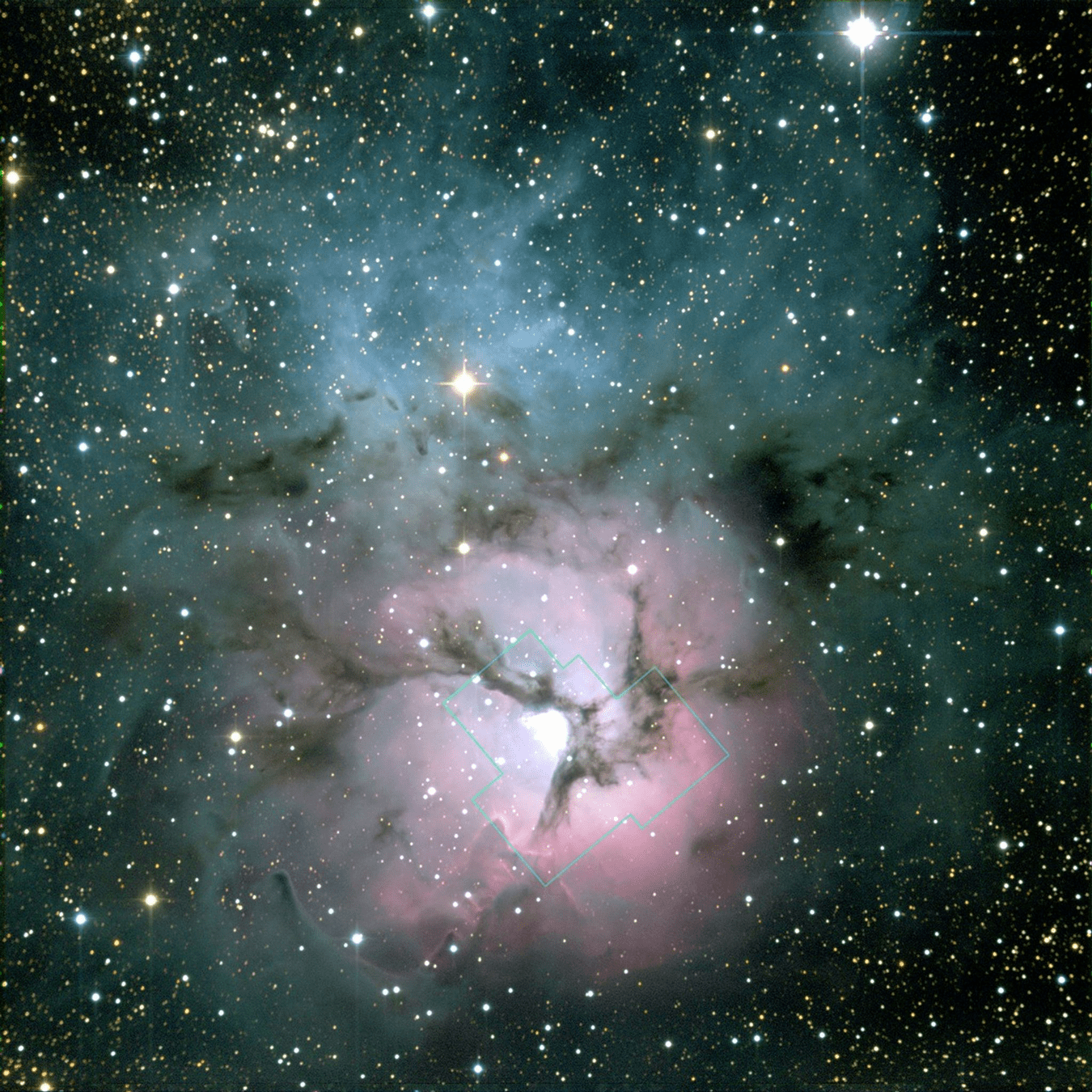
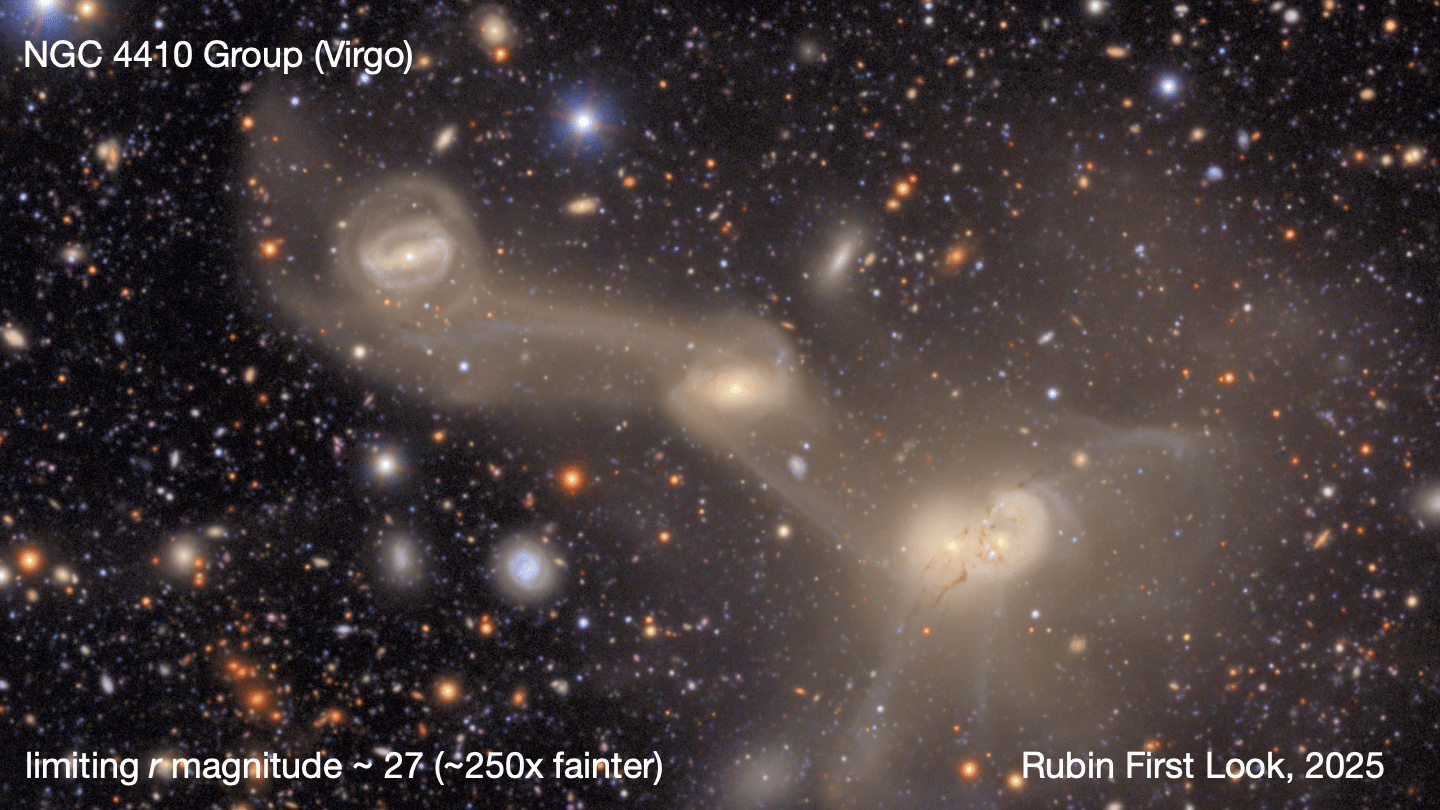
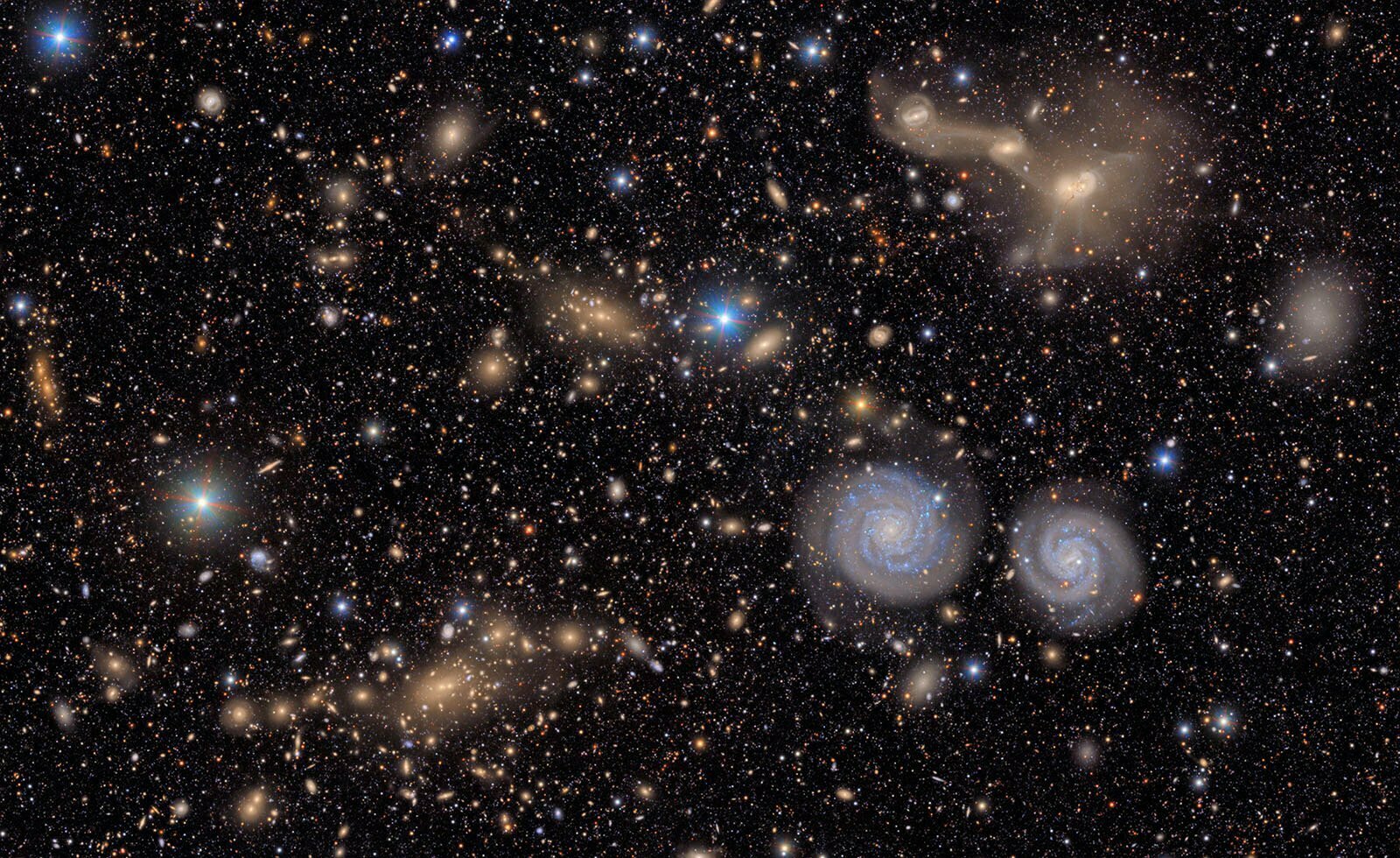
678 separate images taken in just over seven hours of observing time. Trifid nebula (top right) and the Lagoon nebula, which are several thousand light-years away from Earth. | NSF-DOE Vera C. Rubin Observatory
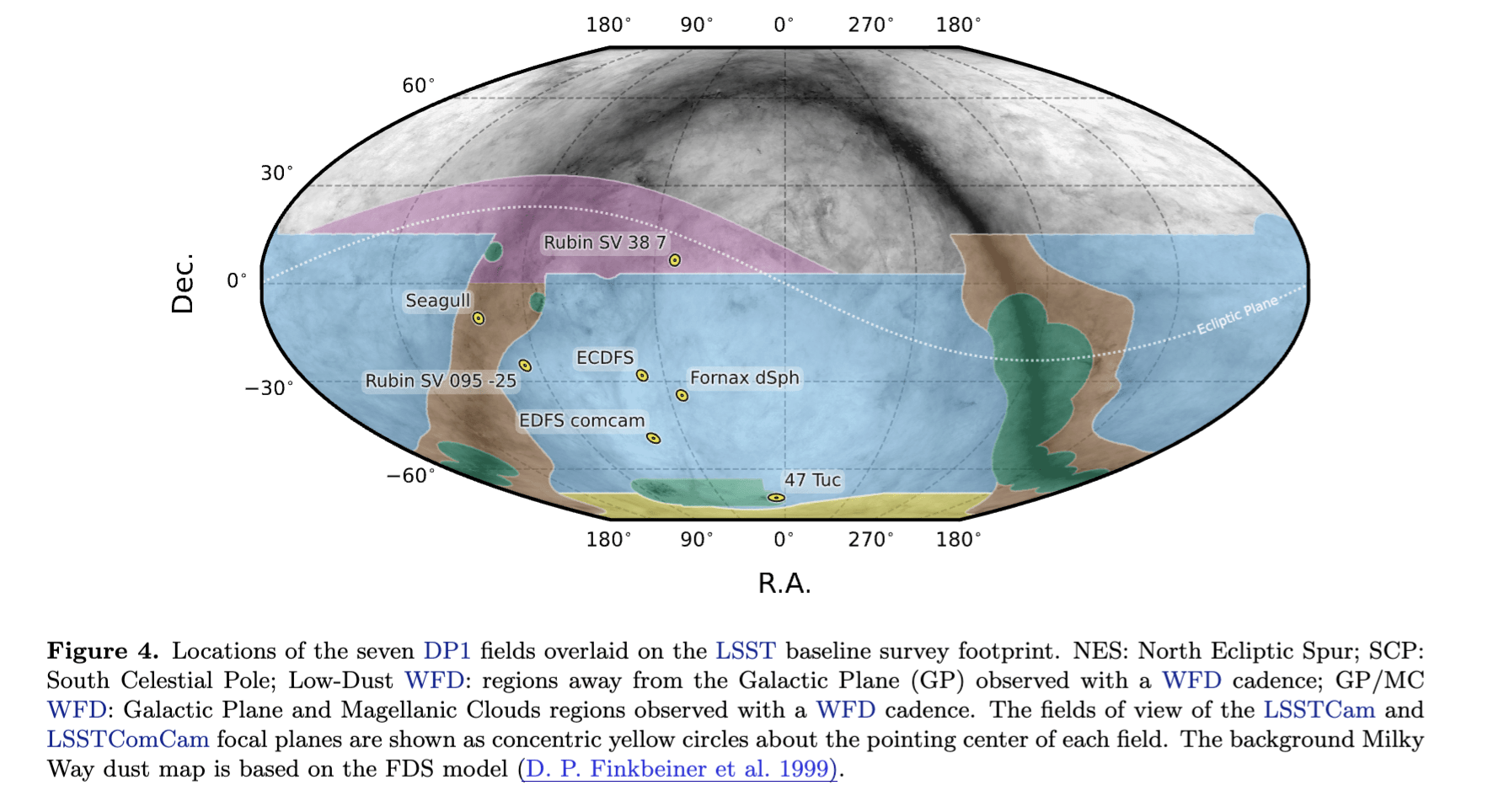
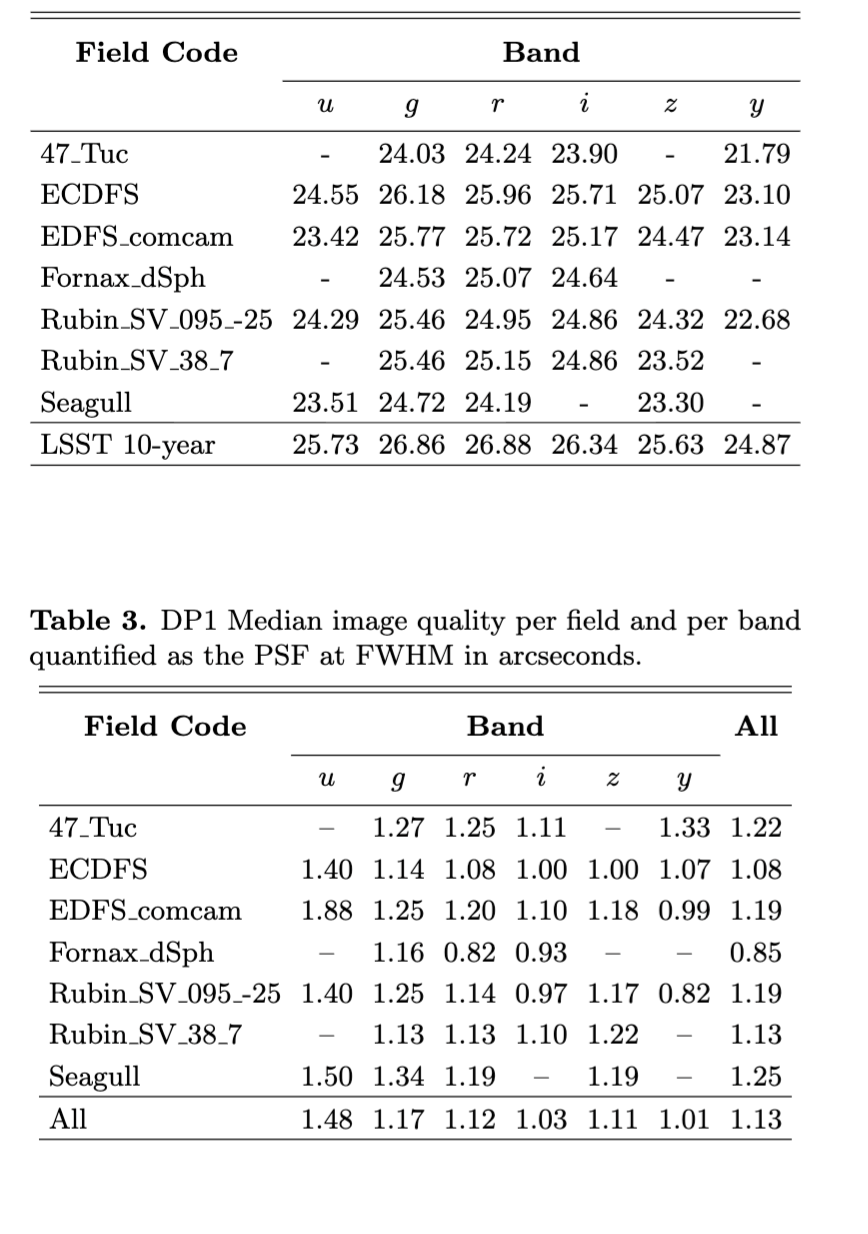
The Vera C. Rubin Observatory Data Preview 1
June 30, 2025
DP1 release!
The Vera C. Rubin Observatory Data Preview 1
June 30, 2025
DP1 release!
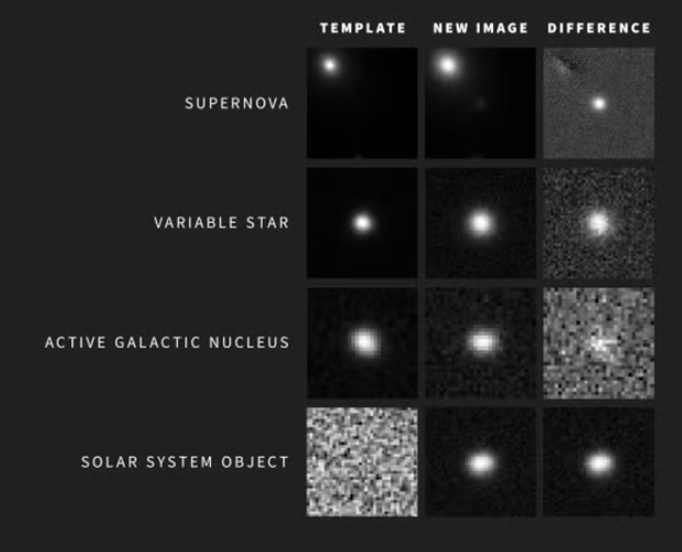
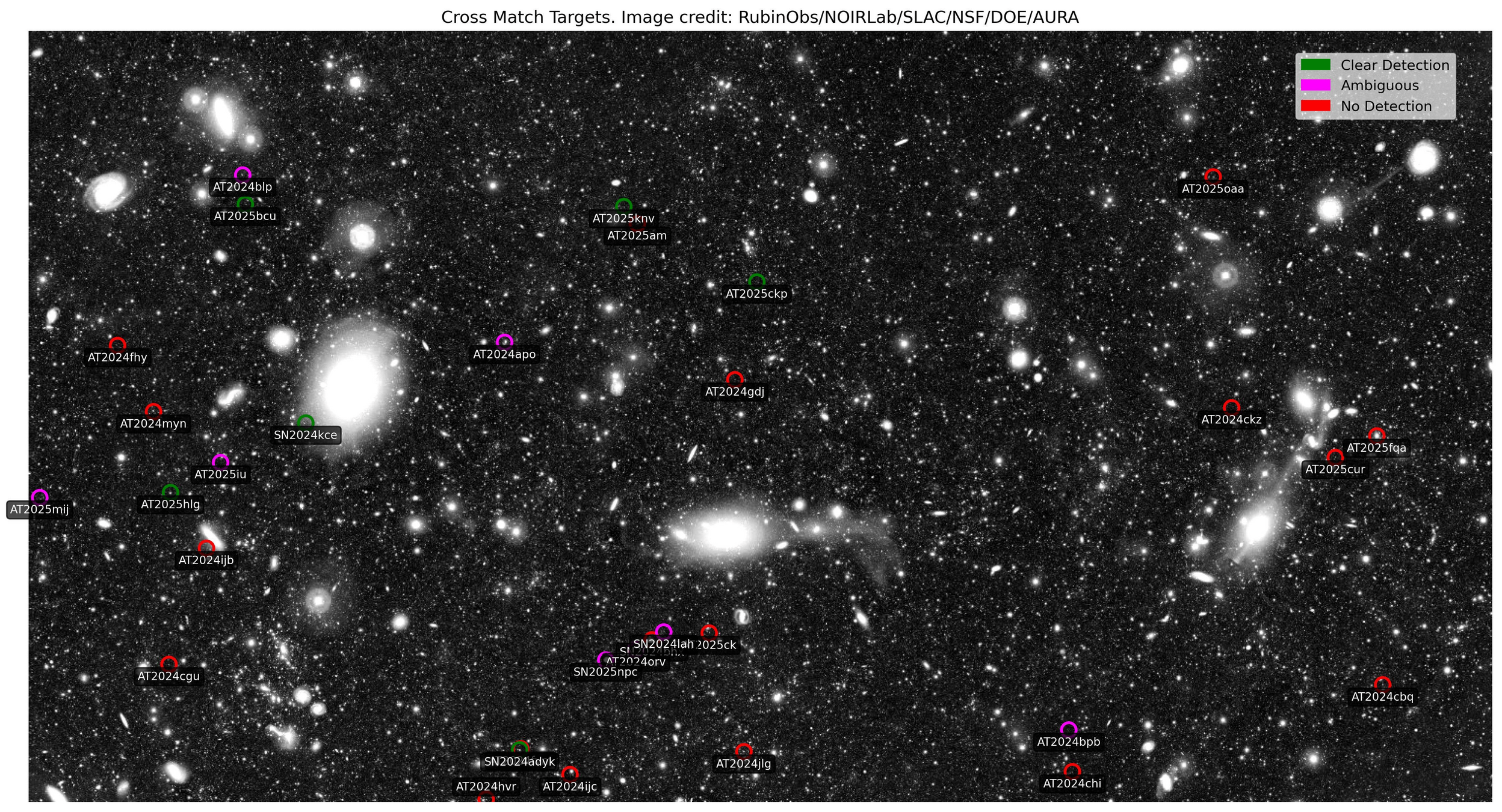
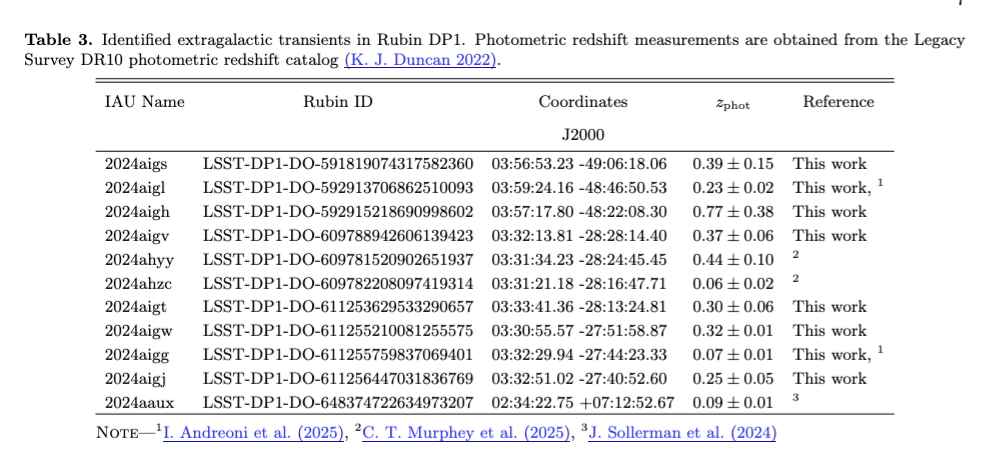
>25% DIA detections
>25% DIA detections
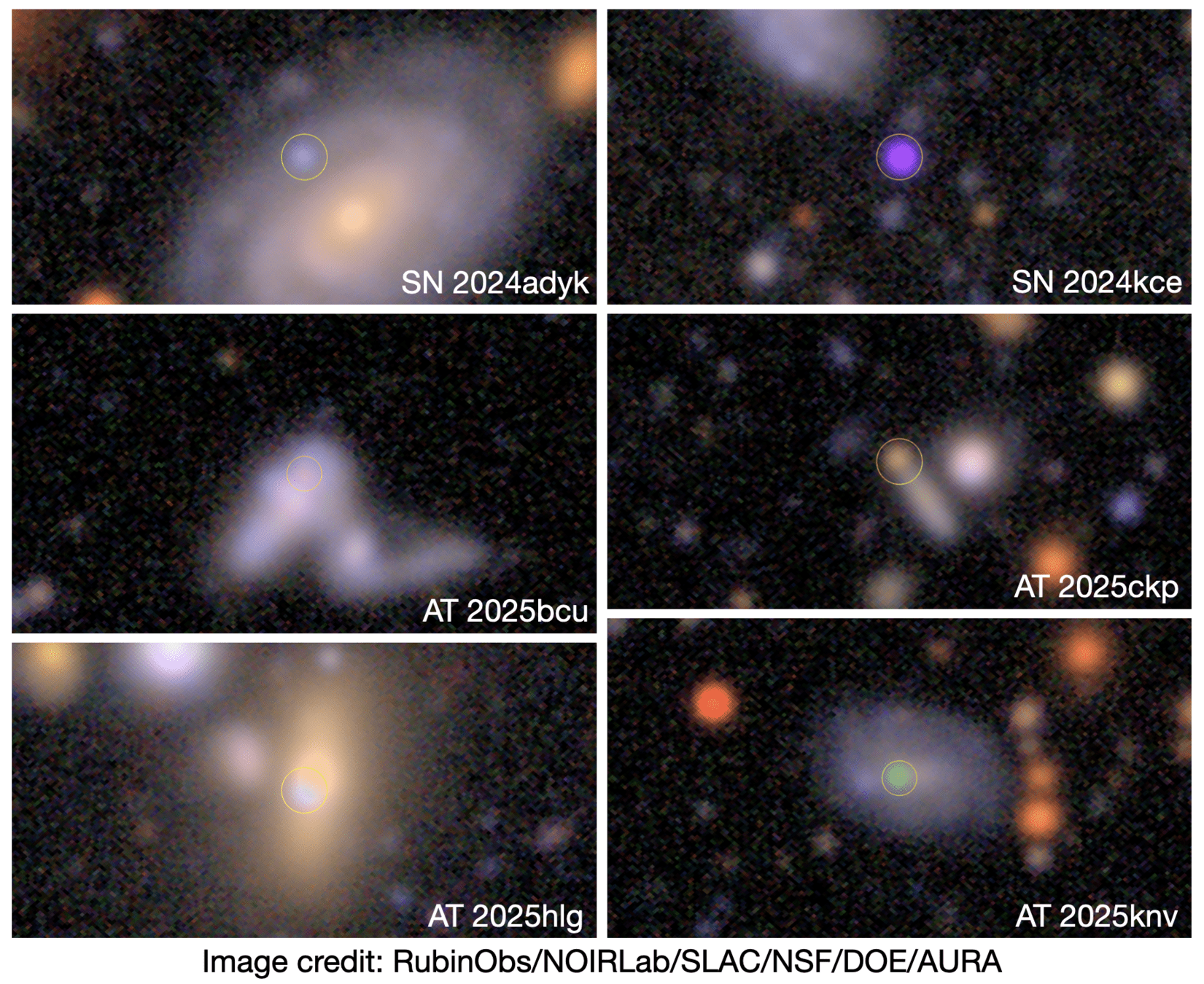
new AGNs/TDEs
1 AGN
Galactic variables
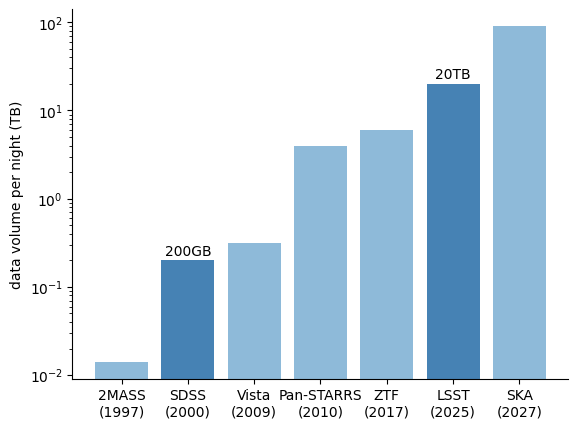
SKA
(2025)
17B stars (x10) Ivezic+19
~10 million QSO (x10) Mary Loli+21
~50k Tidal Disruption Events (from ~150) Brickman+ 2020
~10k SuperLuminous Supernovae (from ~200) Villar+ 2018
~400 strongly lensed SN Ia (from 10) Ardense+24
~50 kilonovae (from 2) Setzer+19, Andreoni+19 (+ ToO)
> 10 Interstellar Objects fom 2.... ?)
True Novelties!
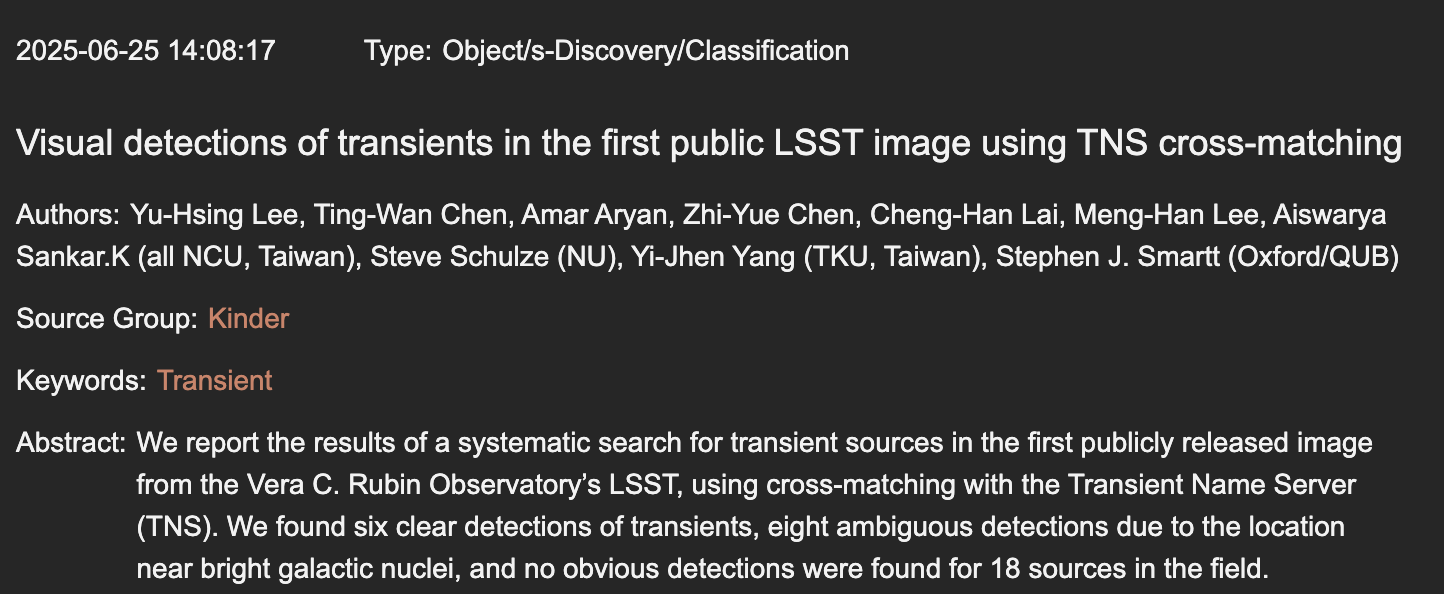
To date 1,299 transients reported to TNS
940 in the last month
Alerce
Ampel
By federica bianco
Opportunities and Challenges of Rubin LSST survey strategy