








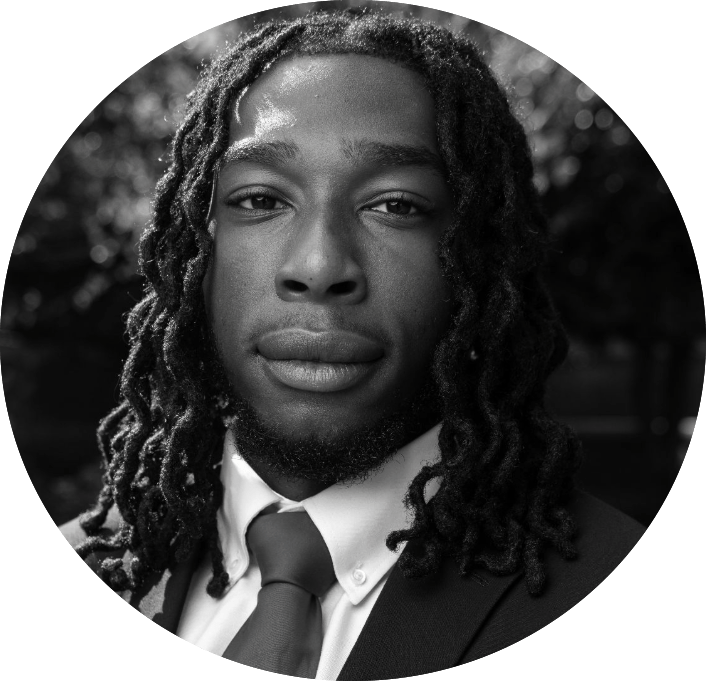

























federica bianco PRO
astro | data science | data for good
Associate Professsor
University of Delaware
Department of Physics and Astronomy
Biden School of Public Policy and Administration
Data Science Institute
LSST Survey Scientist
federica b. bianco
she/her
Grad student
Postdoc
UG student
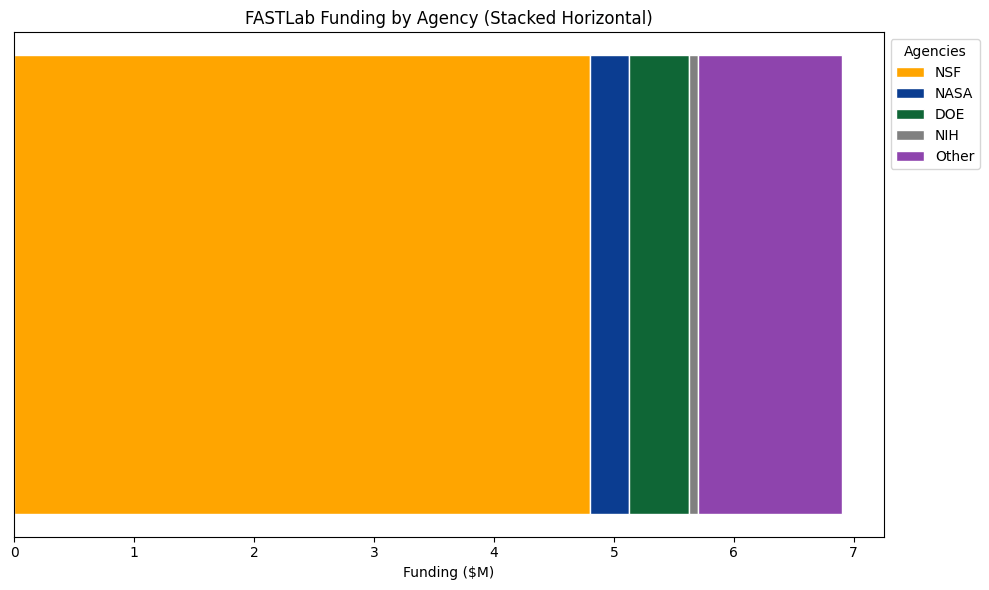
NSF
$4.8M
other
$1.2M
NASA
$400K
DOE
$500K
NIH
$80K
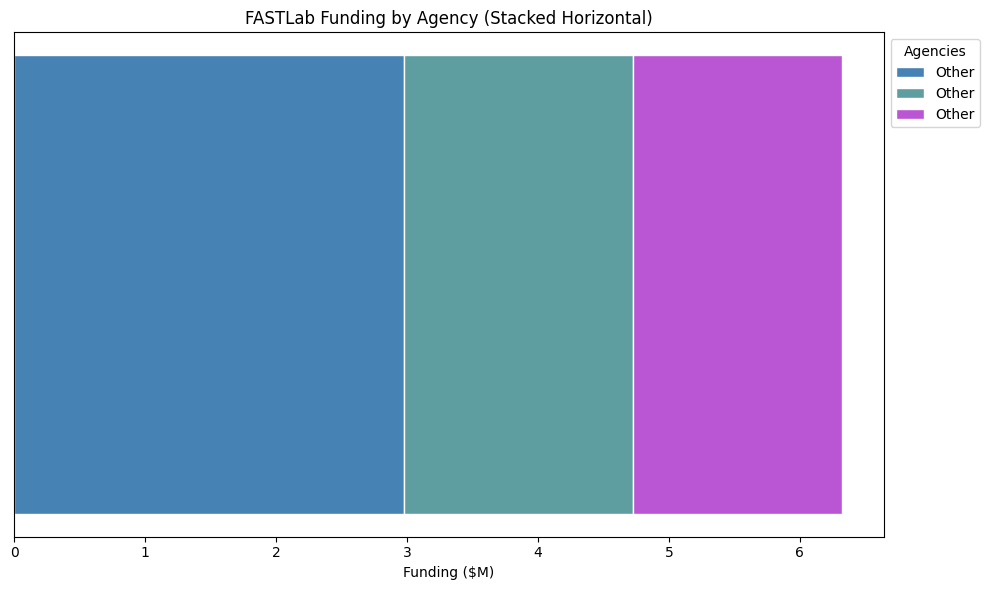
Astro
$3.4M
Data Science
$1.6M
Inter
disciplinary
$1.7M
experiment driven science -∞:1900
theory driven science 1900-1950
data driven science 1990-2010
the fourth paradigm - Jim Gray, 2009
computationally driven science 1950-1990
experiment driven science -∞:1900
theory driven science 1900-1950
data driven science 1990-2010
the fourth paradigm - Jim Gray, 2009
computationally driven science 1950-1990
AI driven science? 2010...
The embryo - the Weather Buerau's $2,000,000 "704" computer - learned to differentiate between left and right after 50 attempts in the Navy demonstration
July 8, 1958
1958
The embryo - the Weather Buerau's $2,000,000 "704" computer - learned to differentiate between left and right after 50 attempts in the Navy demonstration
The Navy revealed the embryo of an electronic computer today that it expects will be able to walk, talk, see, write, reproduce itself and be conscious of its existence.
July 8, 1958
1958
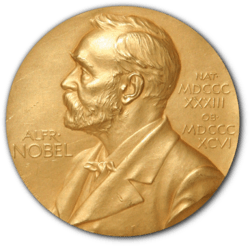
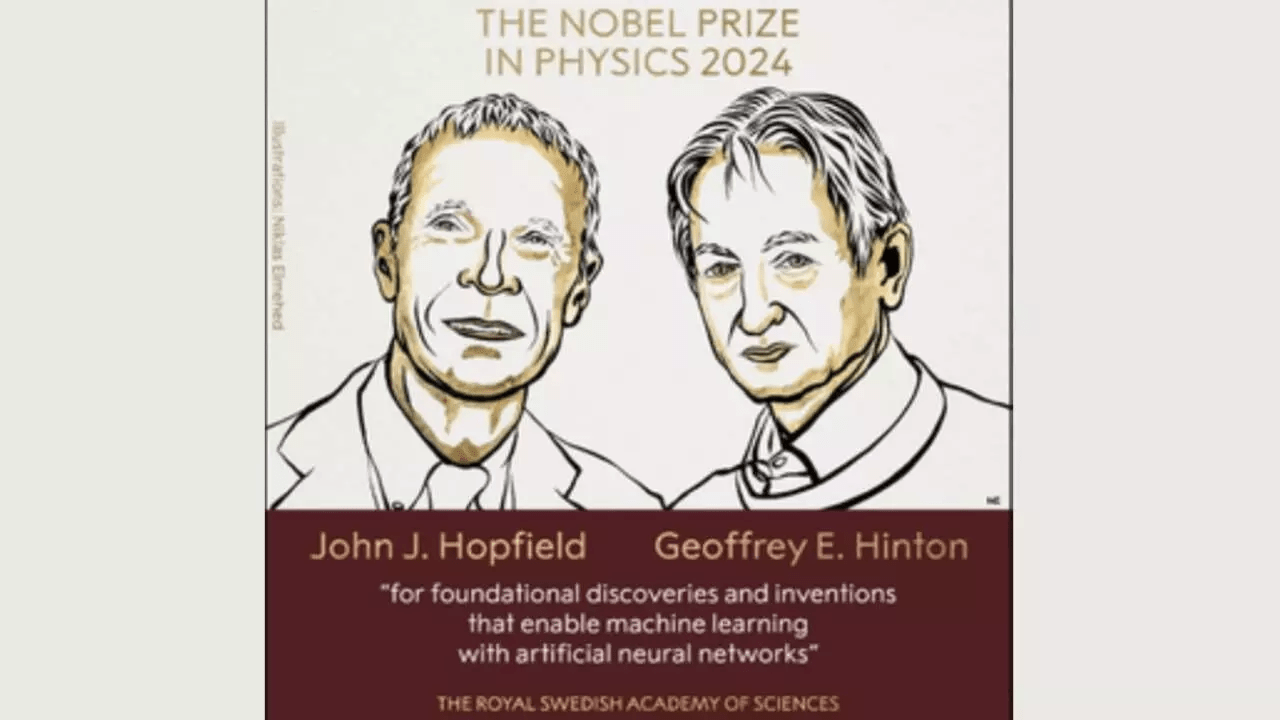
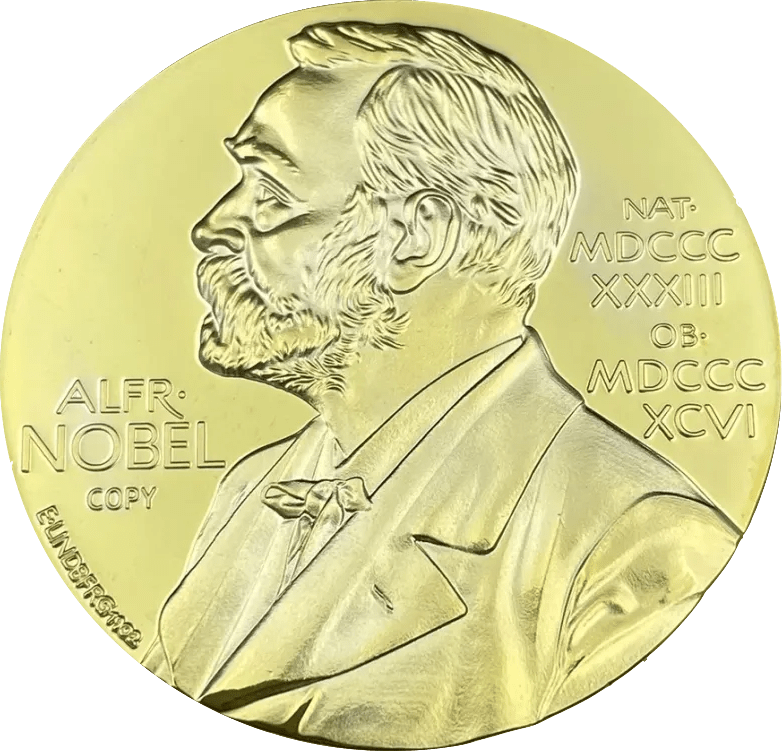
The Nobel Prize in Physics 2024 was awarded jointly to John J. Hopfield and Geoffrey Hinton "for foundational discoveries and inventions that enable machine learning with artificial neural networks"
The Nobel Prize in Physics 2024 was awarded jointly to John J. Hopfield and Geoffrey Hinton "for foundational discoveries and inventions that enable machine learning with artificial neural networks"
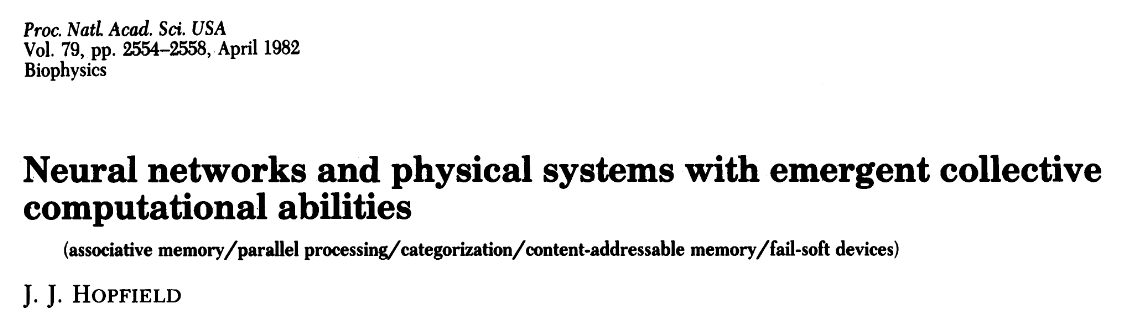
There are classes of physical systems whose spontaneous behavior can be used as a form of general (and error-correcting) content-addressable memory.
Consider the time evolution of a physical system that can be described by a set of general coordinates. A point in state space then represents the instantaneous condition of the system. This state space may be either continuous or discrete (as in the case of N Ising spins). The equations of motion of the system describe a flow in state space. ....
1980s...
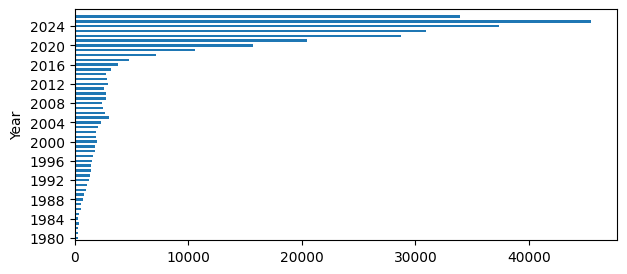
number of arXiv:astro-ph submissions with abstracts containing one or more of the strings: ‘machine learning’, ‘ML’, ‘artificial intelligence’, ‘AI’, ‘deep learning’ or ‘neural network’.
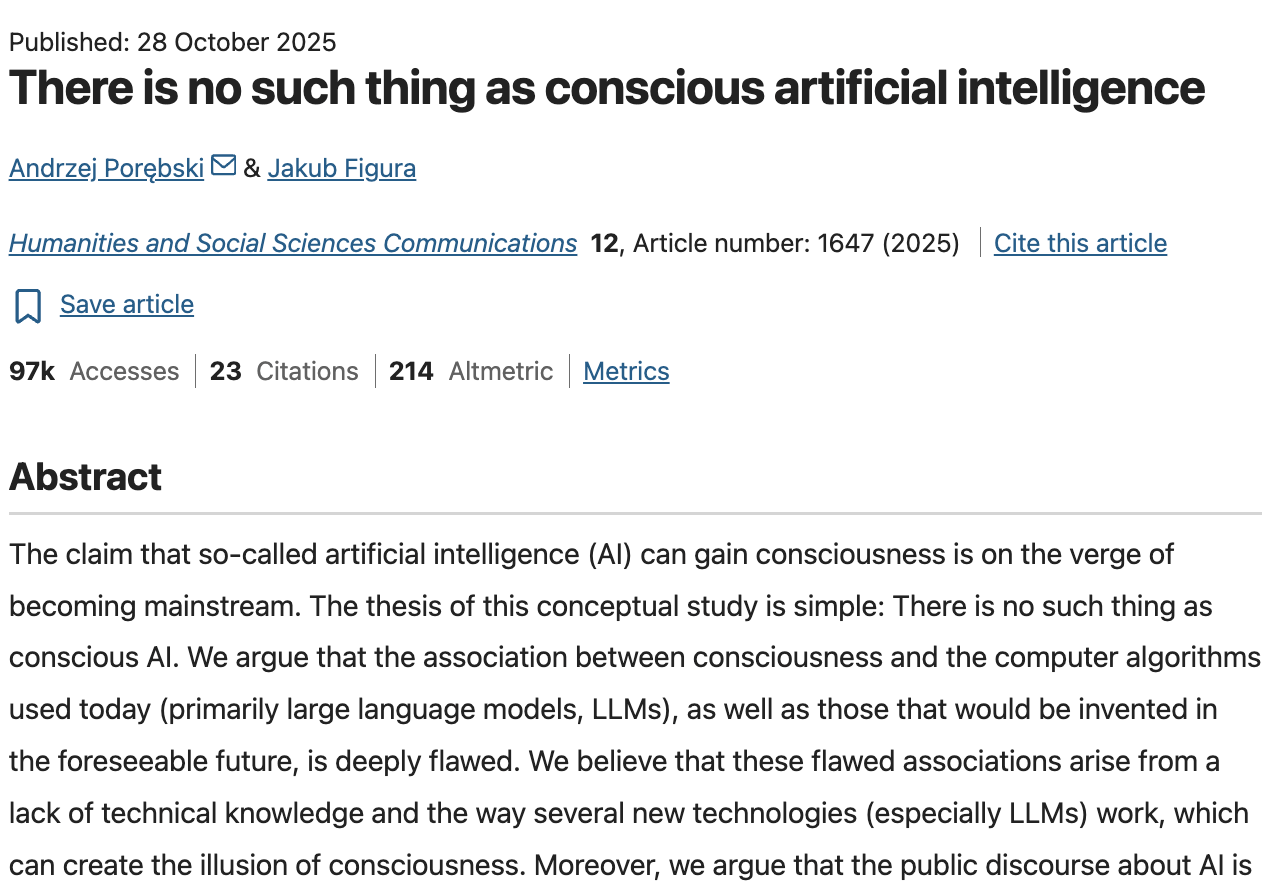
The claim that so-called artificial intelligence (AI) can gain consciousness is on the verge of becoming mainstream. [...]
We argue that the association between consciousness and the computer algorithms used today [...], is deeply flawed.
We believe that these flawed associations arise from a lack of technical knowledge and the way several new technologies (especially LLMs) work
July 8, 1958
2025
To advance Astrophysical Discoveries (with AI and new instrument systems)
To advance Astrophysical Discoveries (with AI and new instrument systems)
To Understand AI and complex systems
To advance Astrophysical Discoveries (with AI and new instrument systems)
To Understand AI and complex systems
To increase AI literacy (to save the world)
To advance Astrophysical Discoveries (with AI and new instrument systems)
To Understand AI and complex systems
To increase AI literacy (to save the world)
To use technical and collaboration skills for good
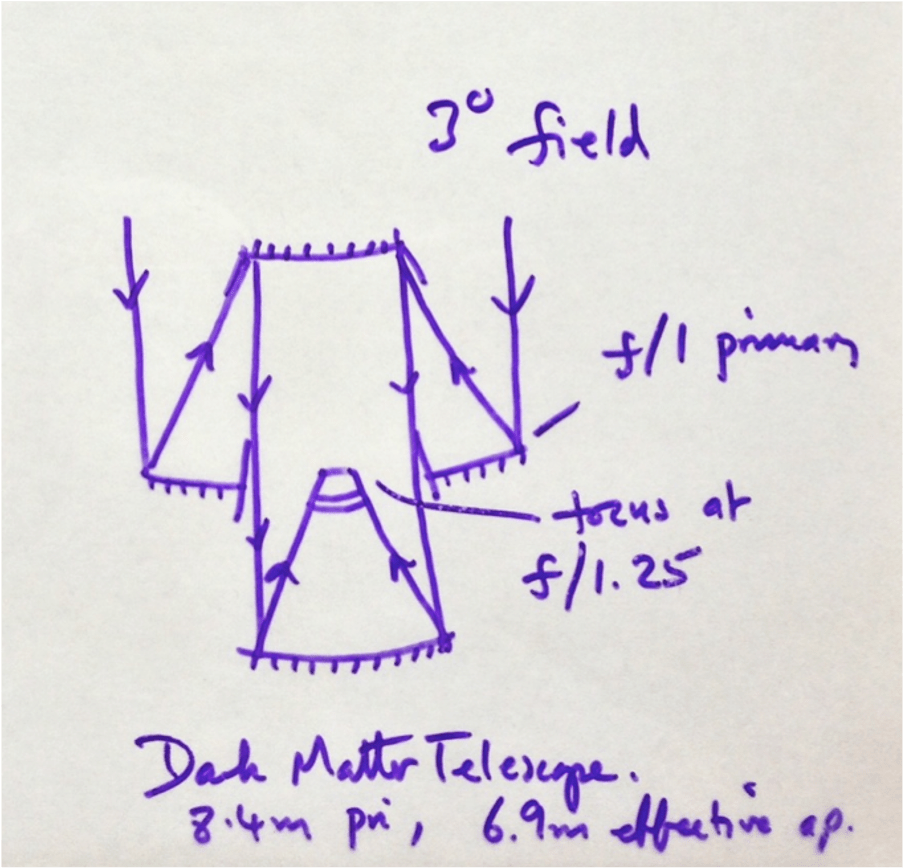
LSST:The Vera C. Rubin Observatory Legacy Survey of Space and Time
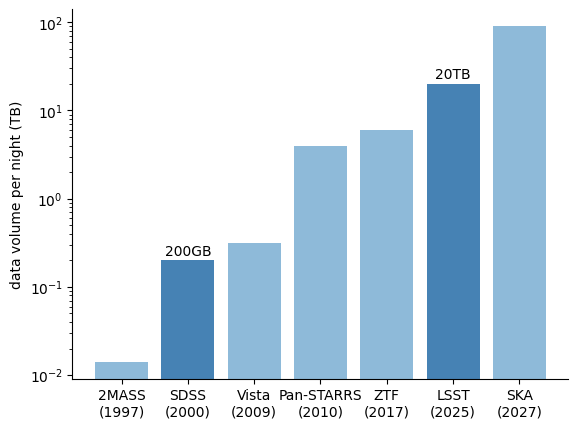
20Tb of data every night. That is equivalent to |
8,000 high definition movies
4,000 hours of tiktok videos
every night for 10 years
what's in a name?
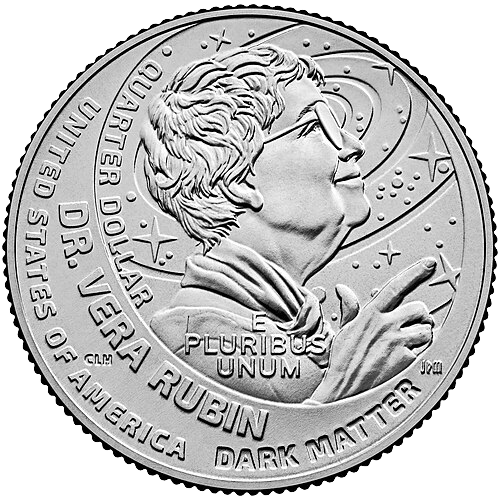
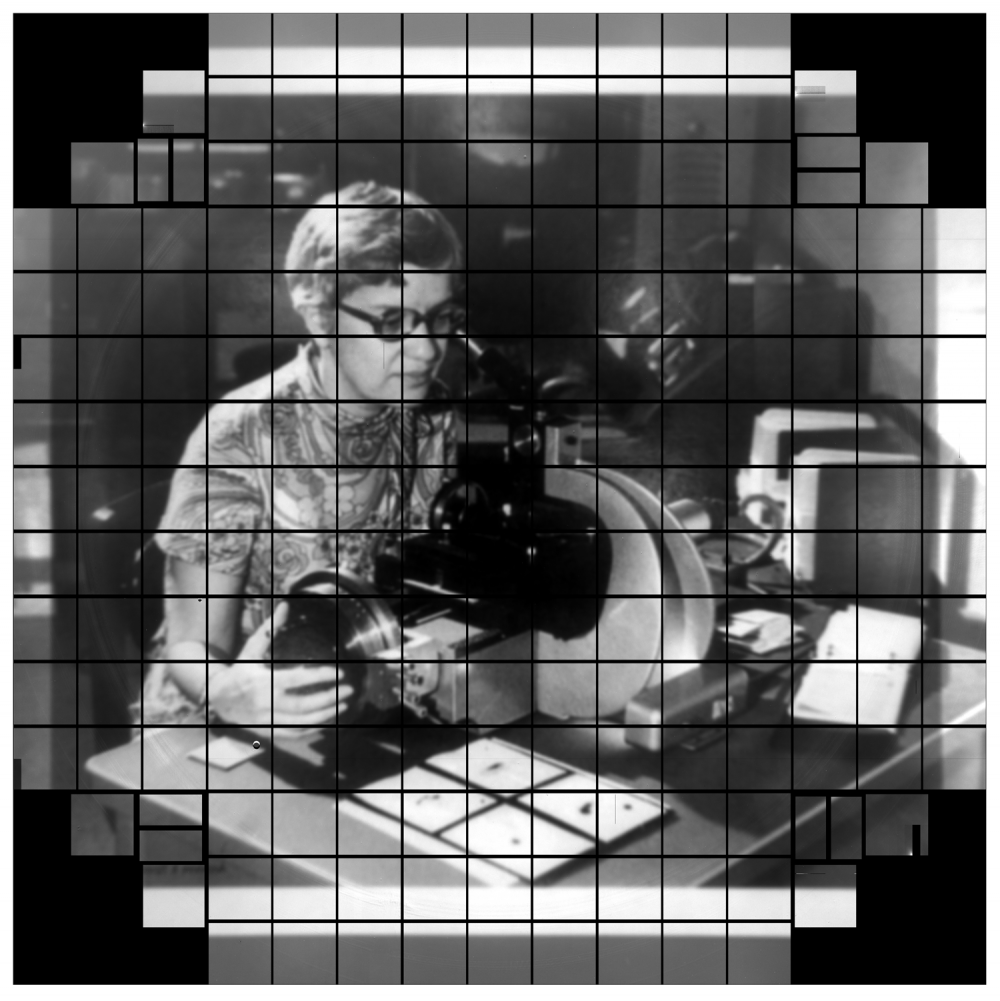
The first ground-based national US observatory named after a woman, Dr. Vera C. Rubin
what's in a name?
what's in a name?
The first ground-based national US observatory named after a woman, Dr. Vera C. Rubin
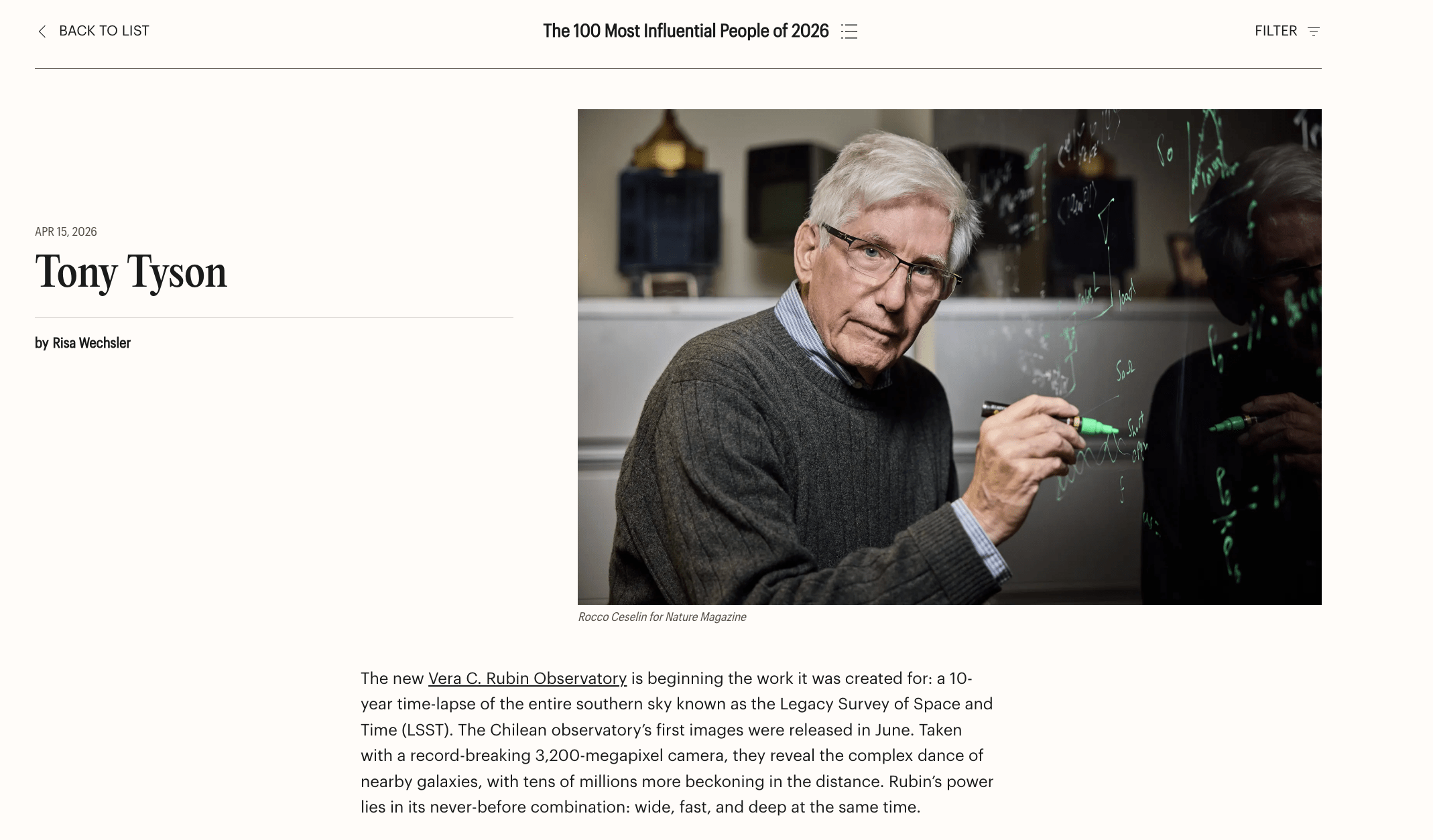
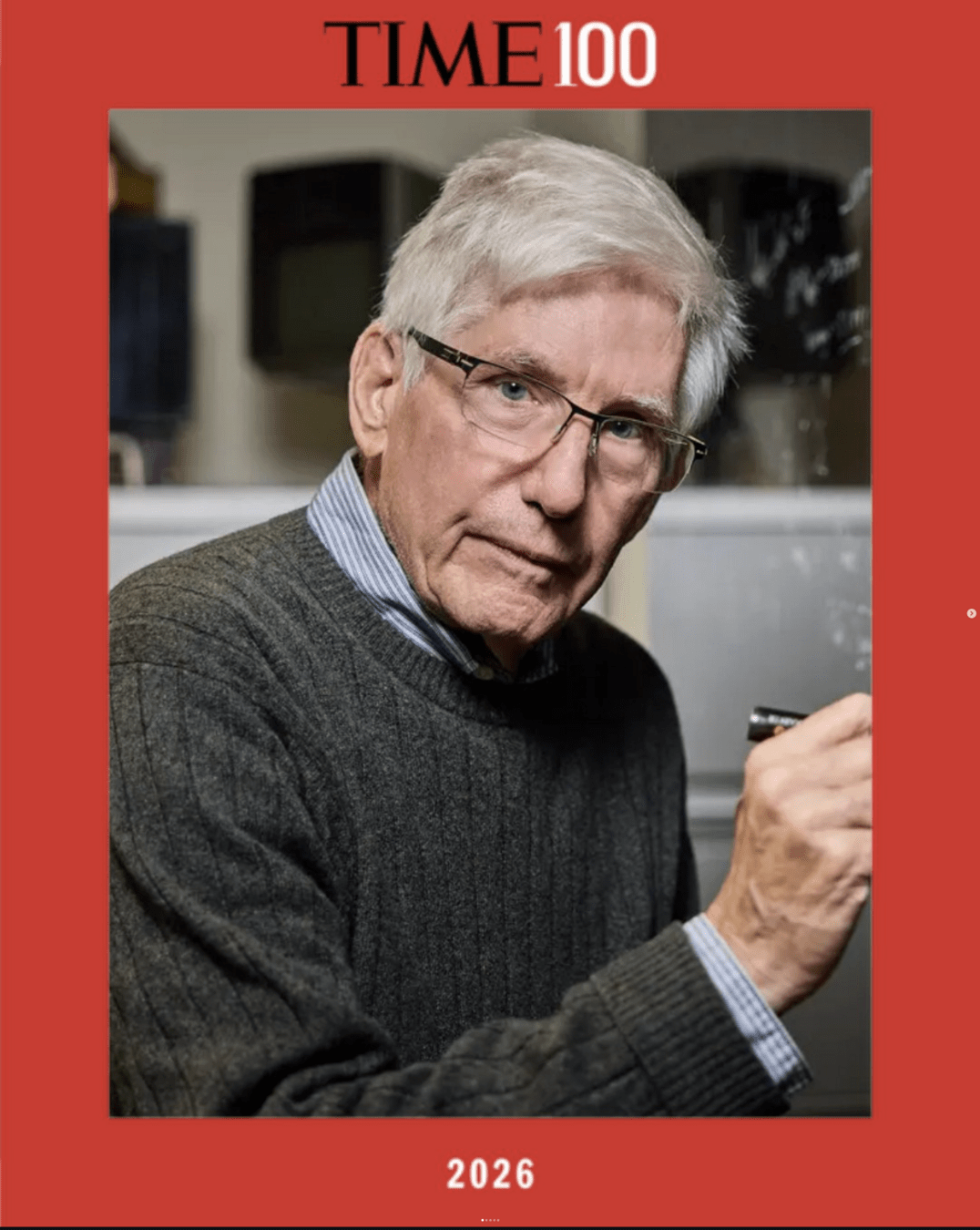
1996-1998 Tony Tyson, Roger Angel
How it started
with Zhoran Mandami,
Astronaut Reid Wiseman,
Activist Zabib Musa Loro,
Pope Leo XIV,
Olympic medalist Alysa Liu,
Benicio Del Toro.......
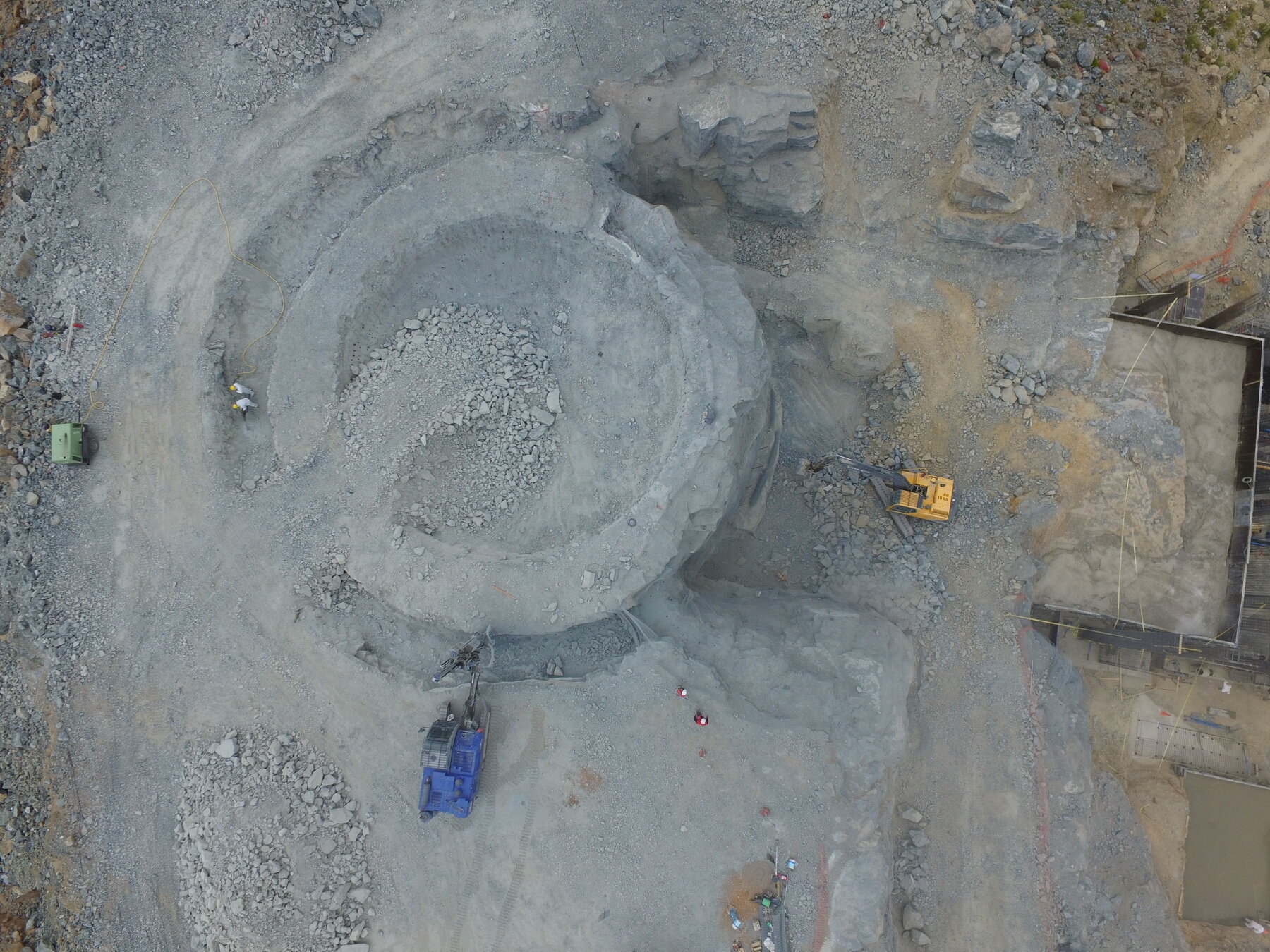
January 2016
March 2017
Fabruary 2020
June 2023
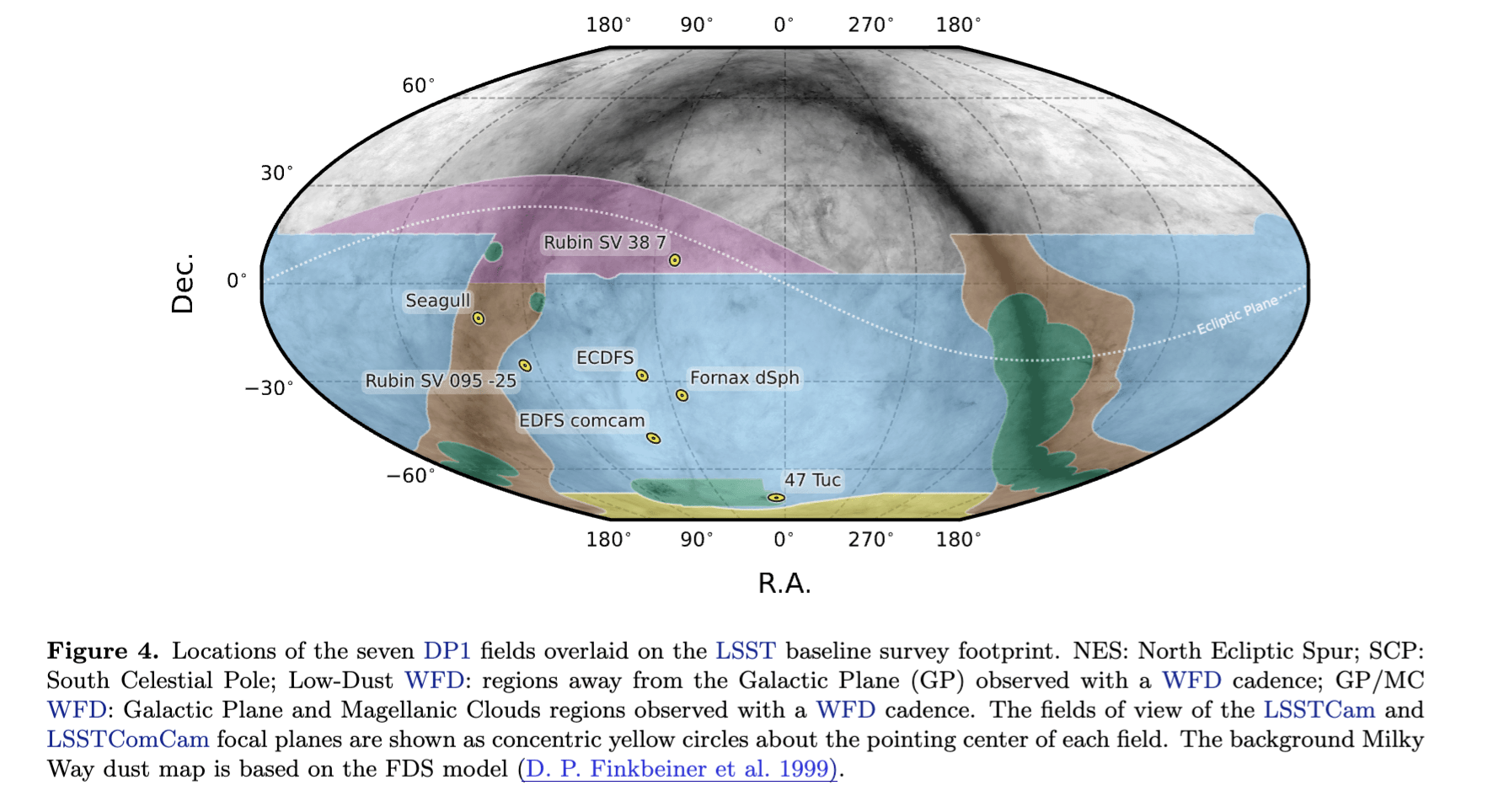
6 filters, 18,000 sq deg, 800 repeat observations, 1800 pointings, 5 fields with 8000 pointings, >3 special programs, 10 years
PI Bianco
Text
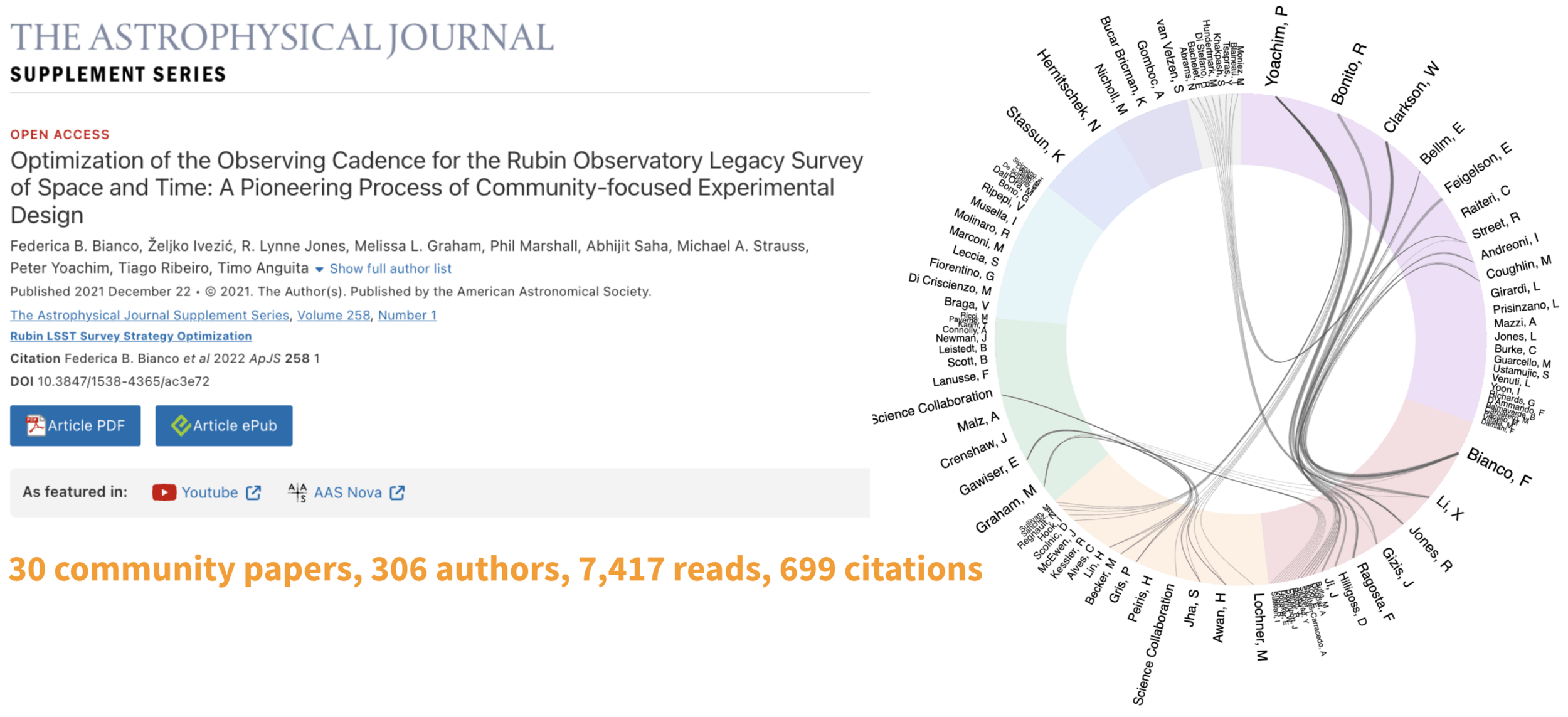
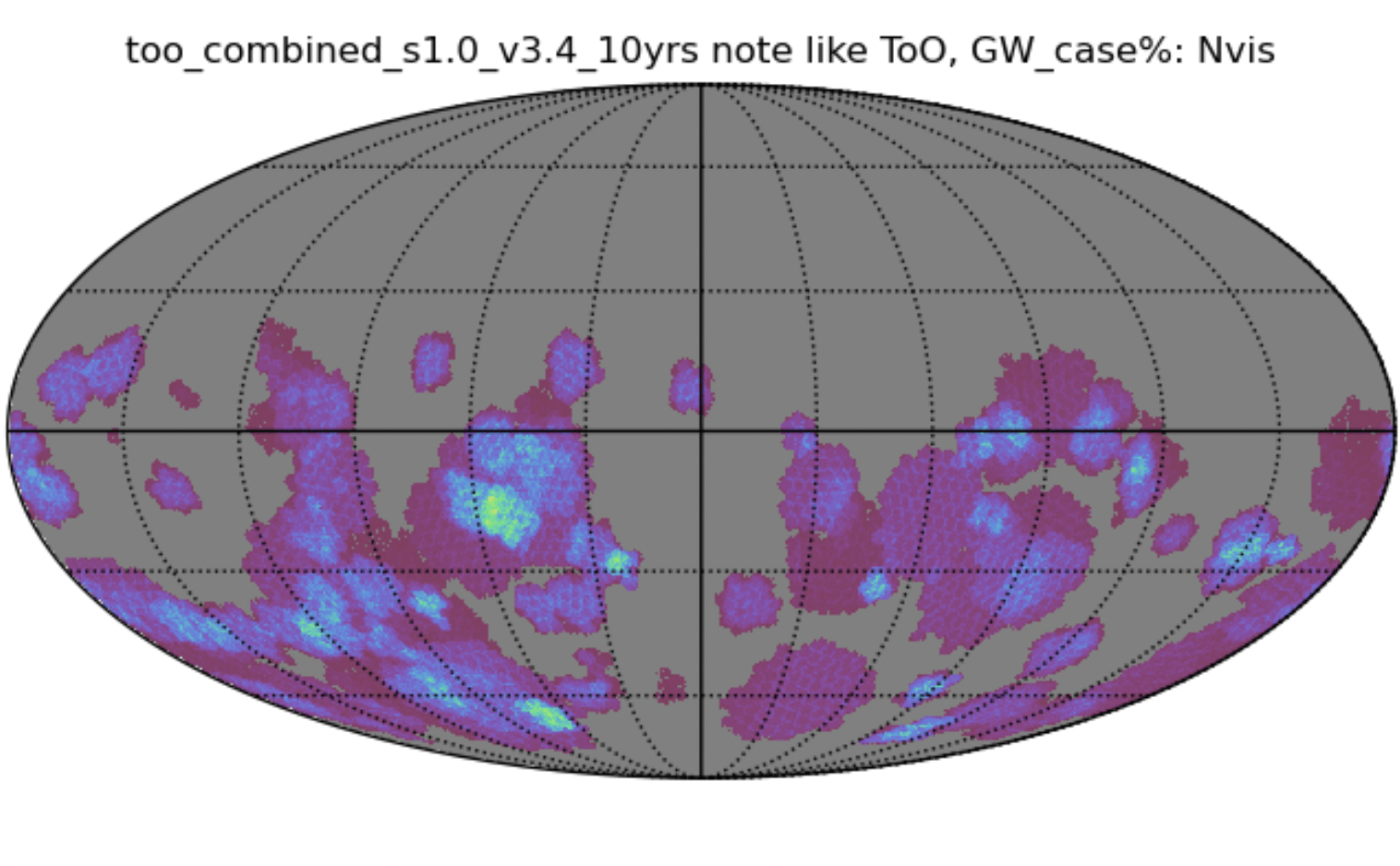
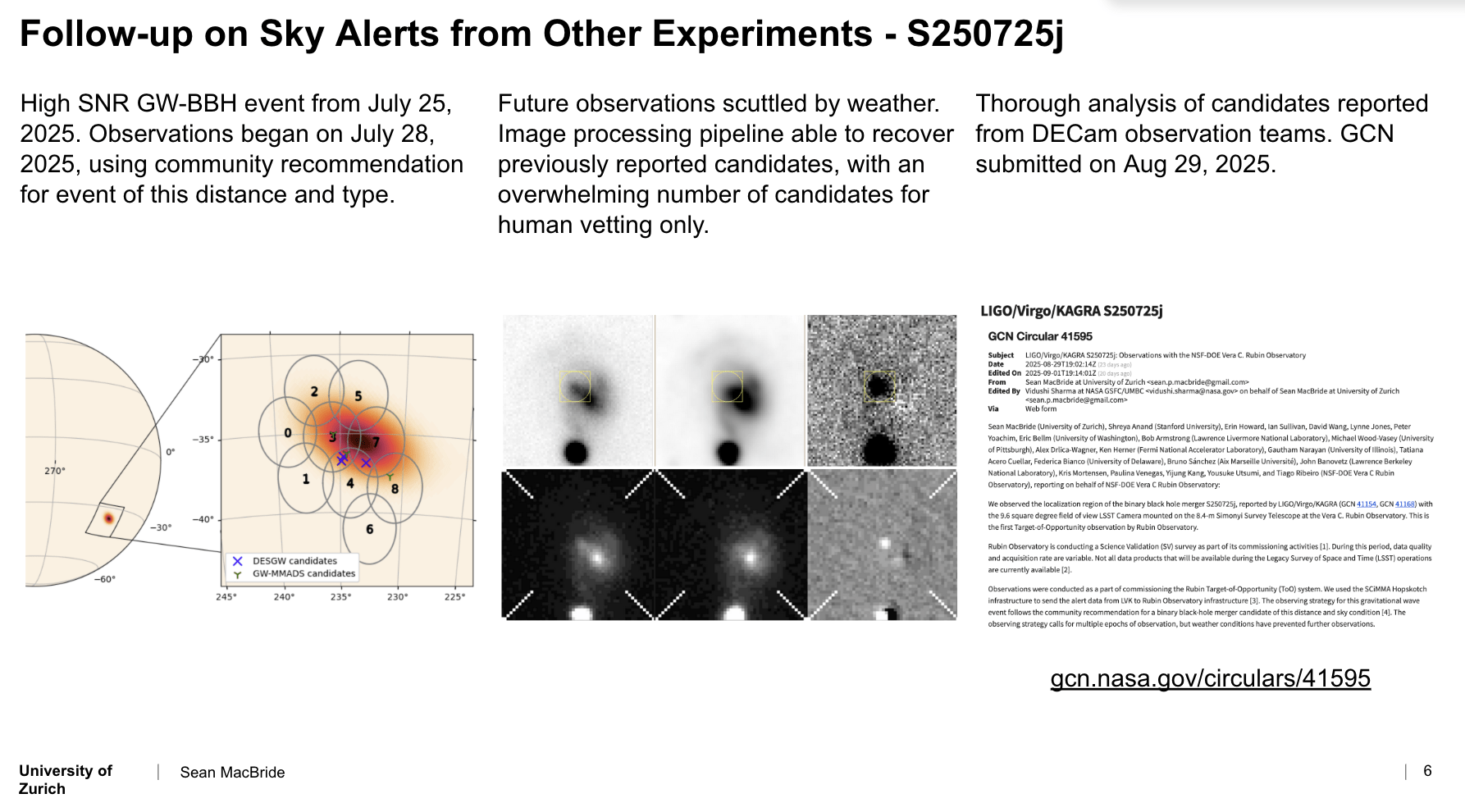
Rubin ToO Publications
Eye to the sky…on-sky engineering tests have begun at
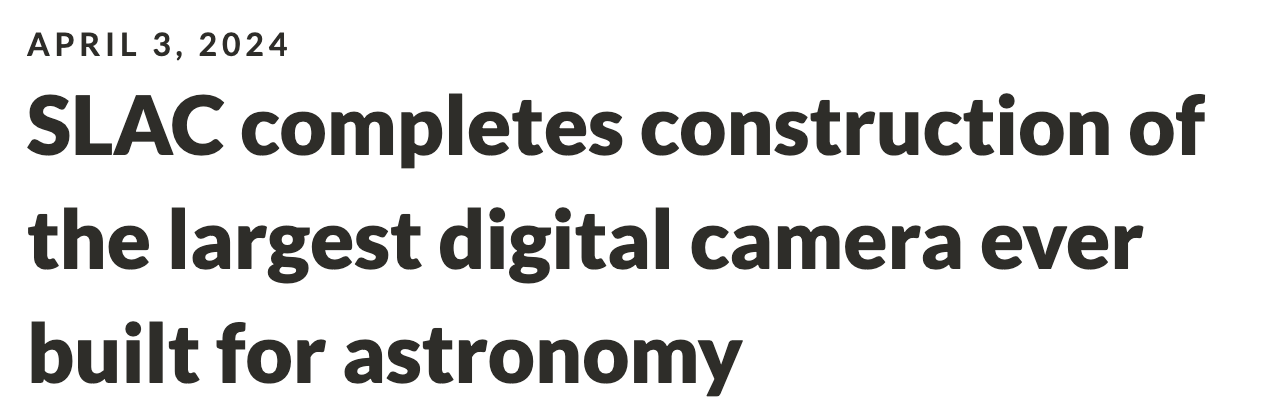
Rubin Observatory using the world’s largest digital camera!
June 23 2025
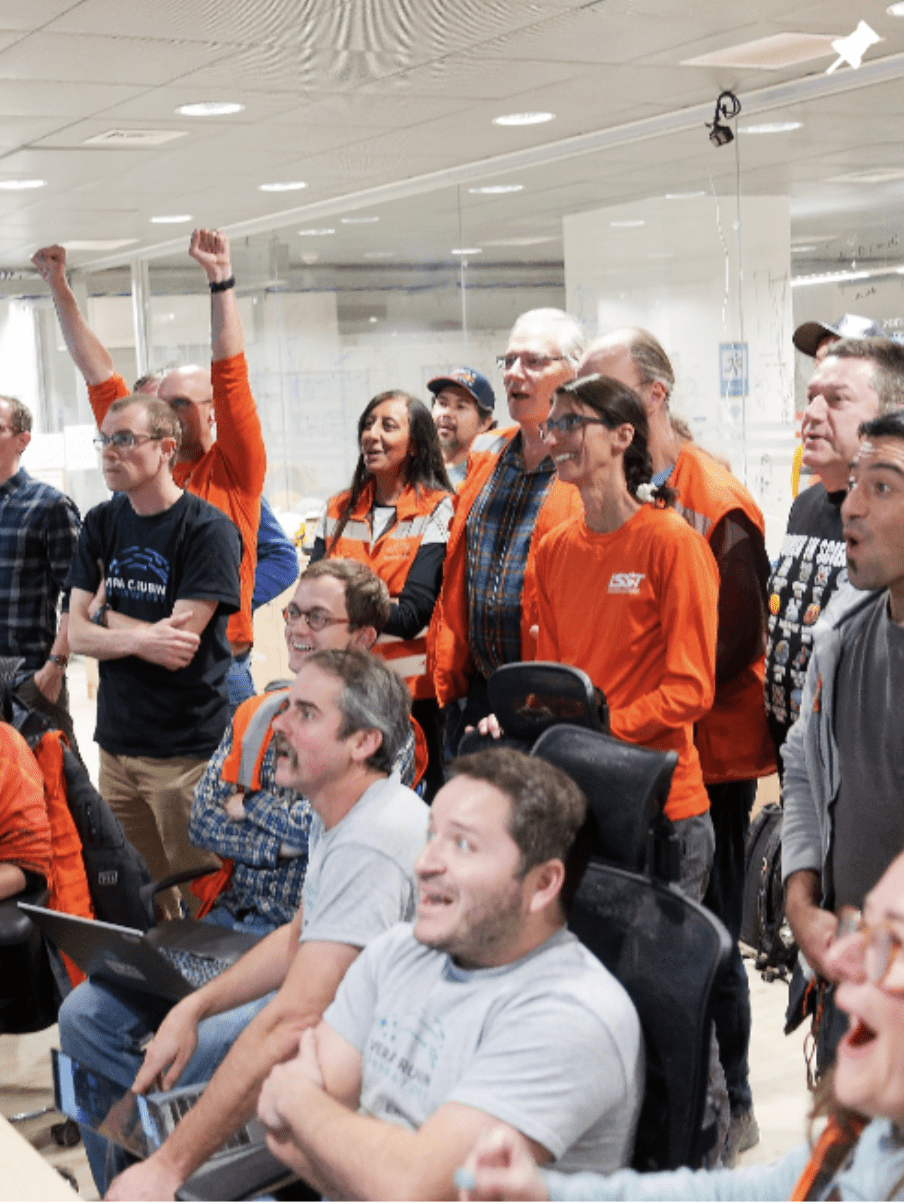
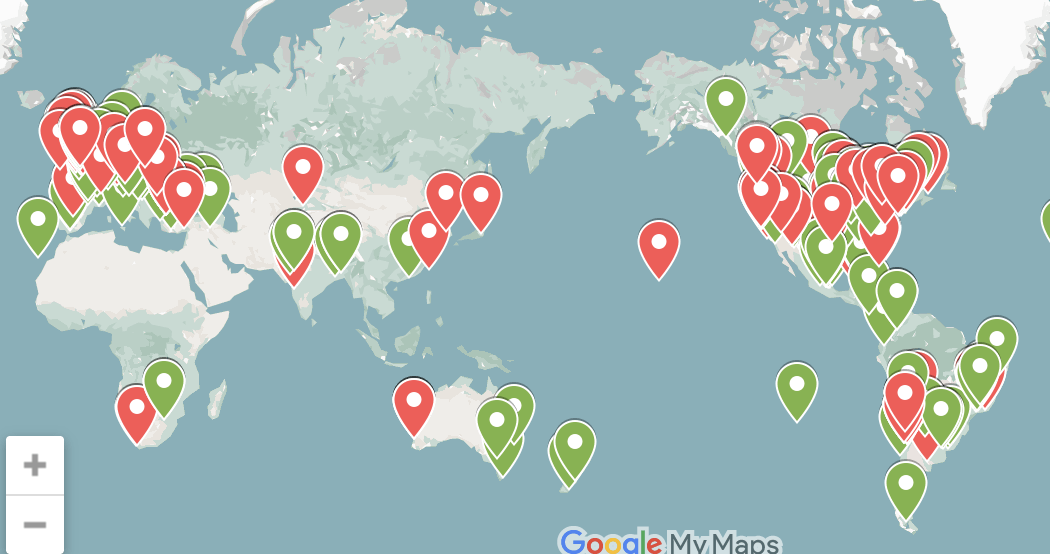
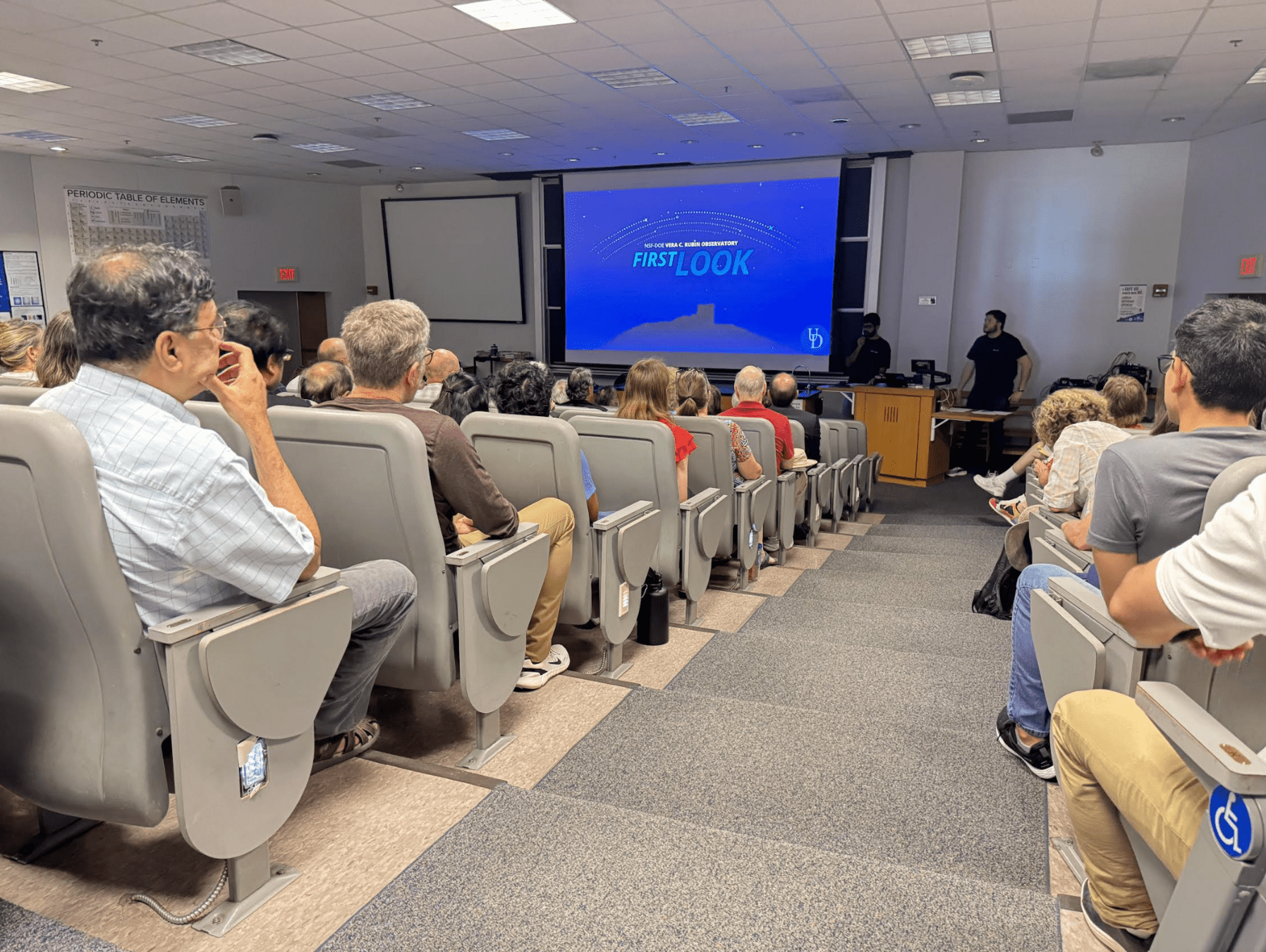
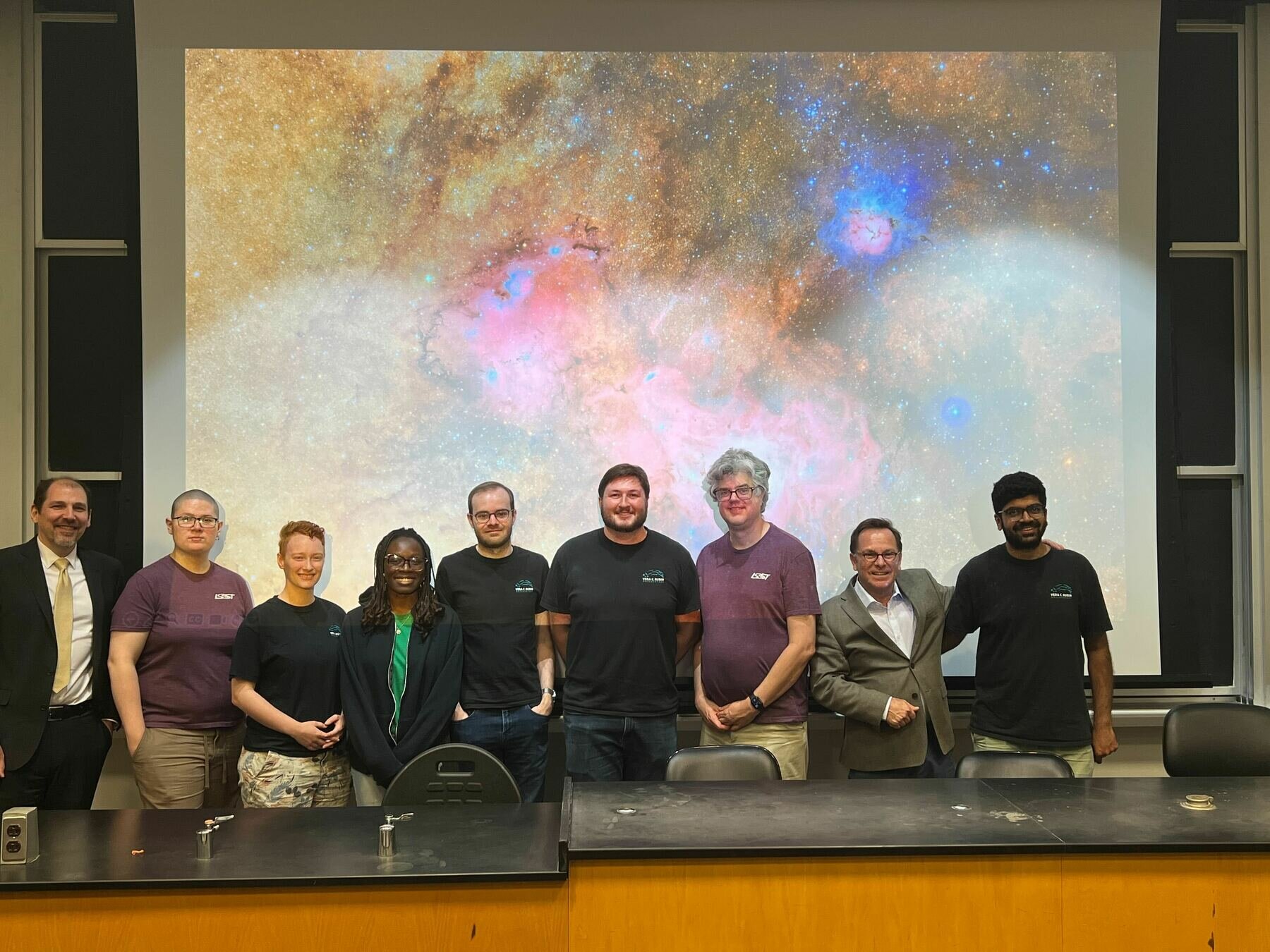
First Look party here at UD with 213 people signed up!
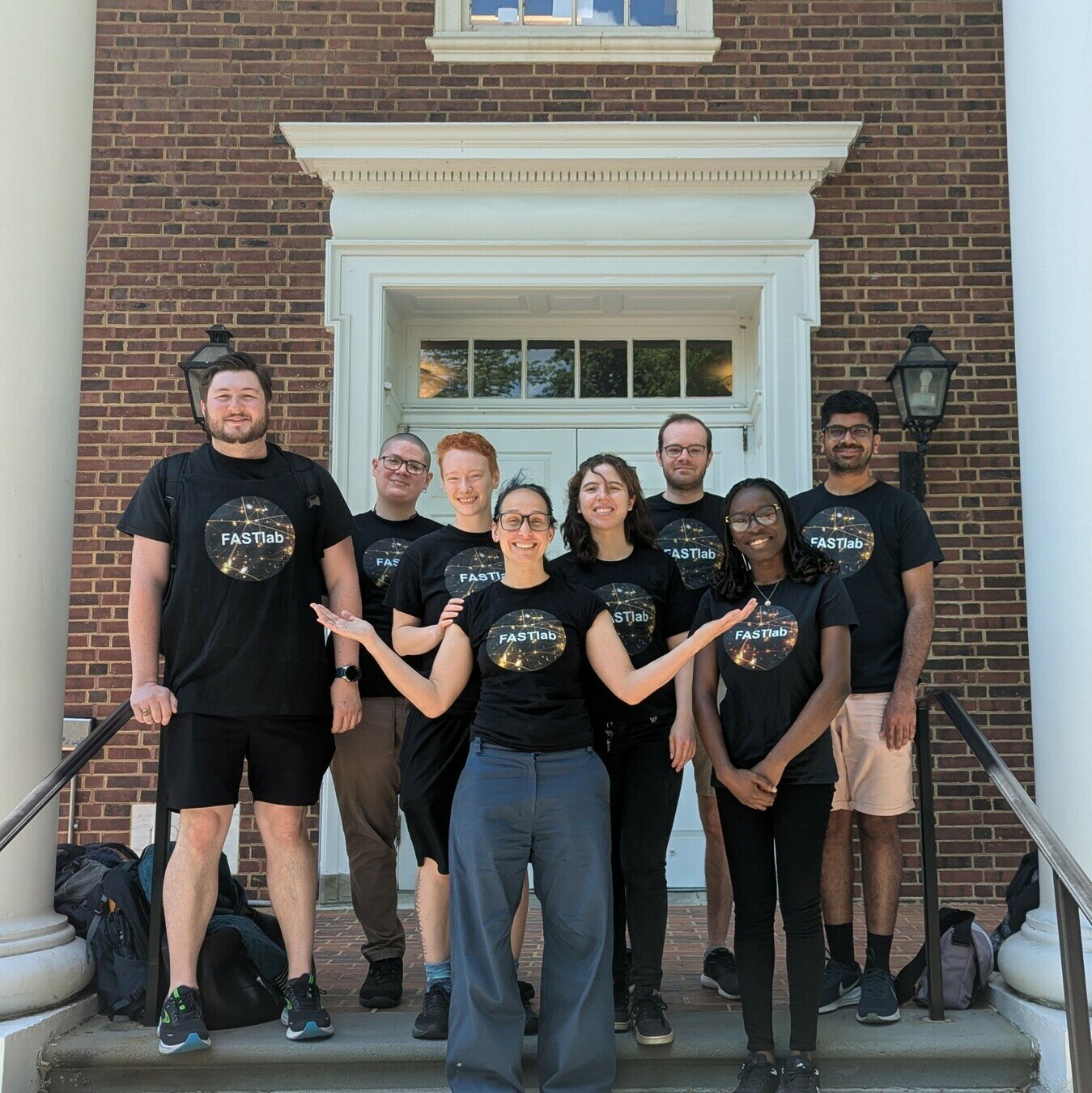
Organized by FASTLab
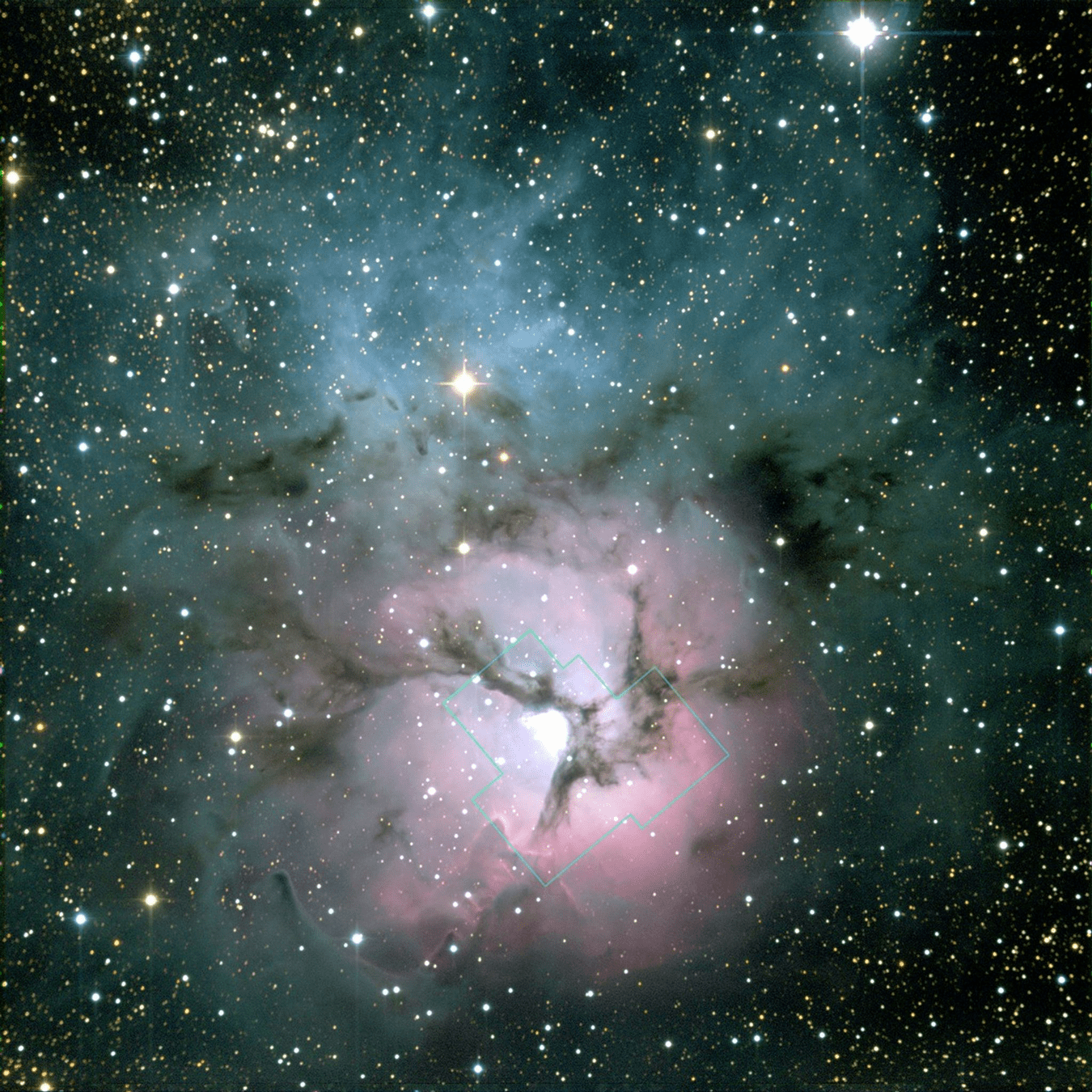
678 separate images taken in just over seven hours of observing time. Trifid nebula (top right) and the Lagoon nebula, which are several thousand light-years away from Earth. | NSF-DOE Vera C. Rubin Observatory
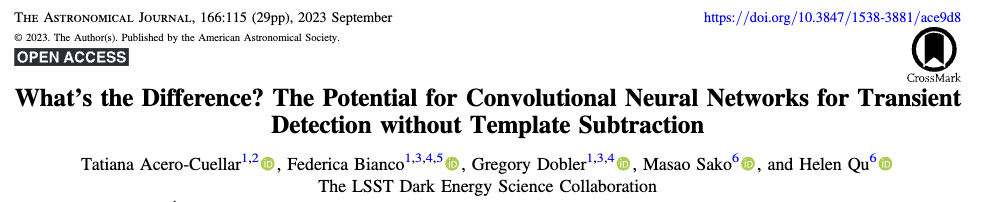
Acero-Cuellar+
The Astronomical Journal, 2026
Volume 171, Issue 6, id.360, 43 pp.
Acero-Cuellar et al. DESC submitted
Tatiana Acero-Cuellar
UNIDEL fellow
LSST Data Science Fellow, UD DSI Fellow
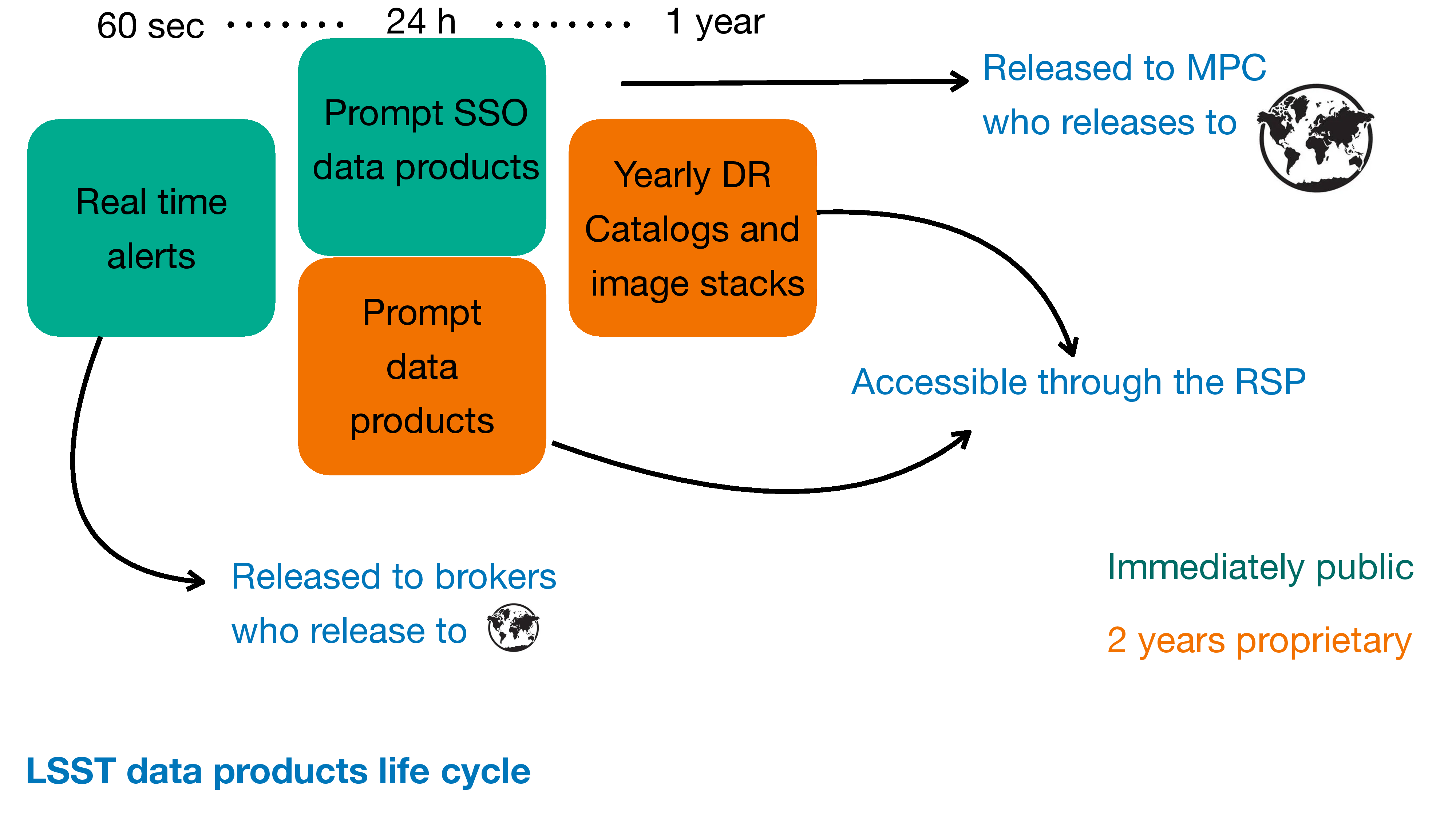
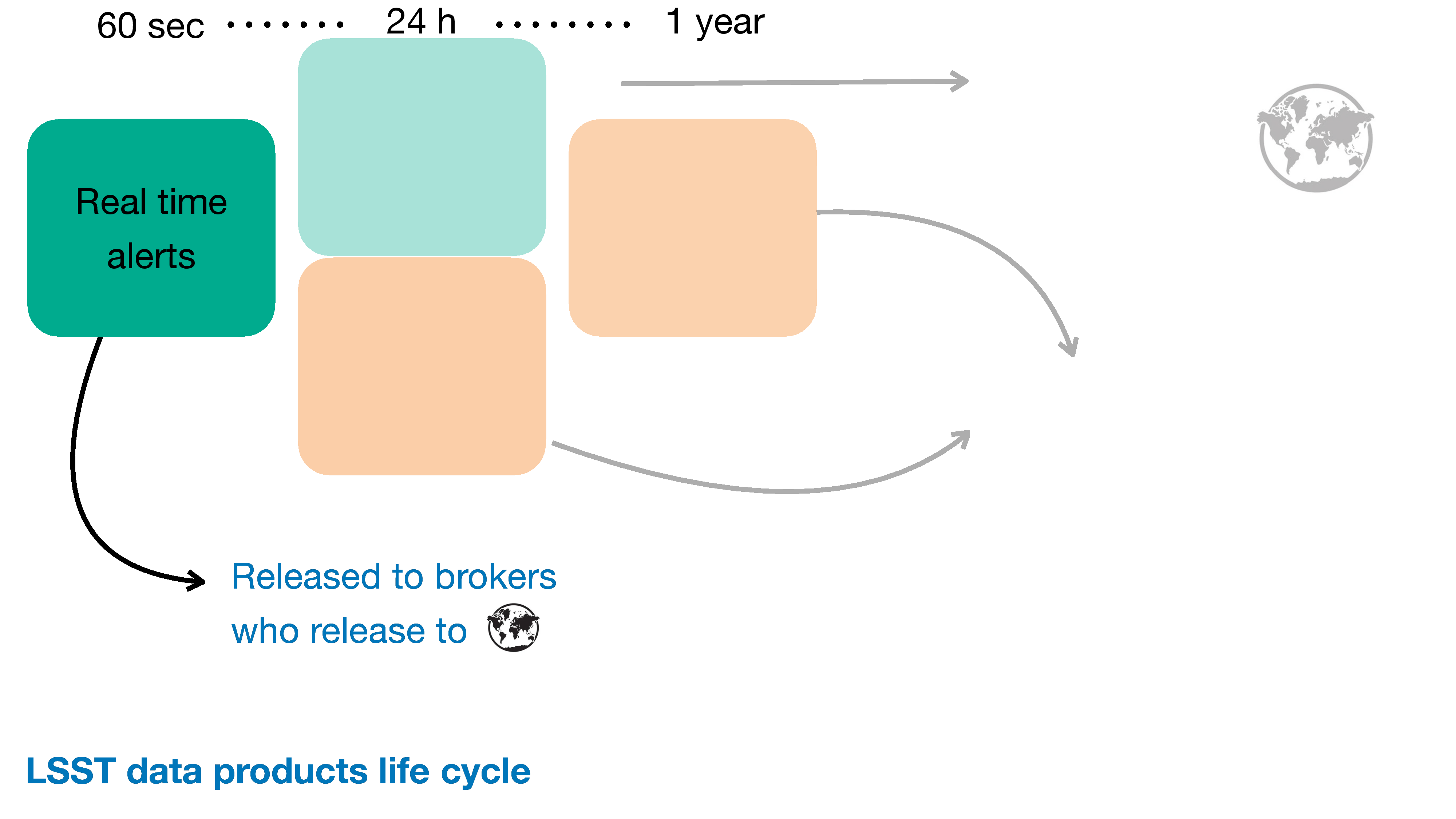
rapid accutare alert release
in 60 seconds:
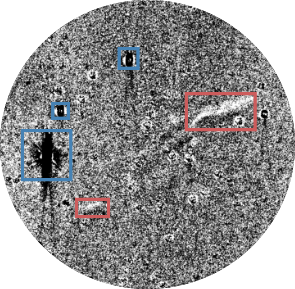
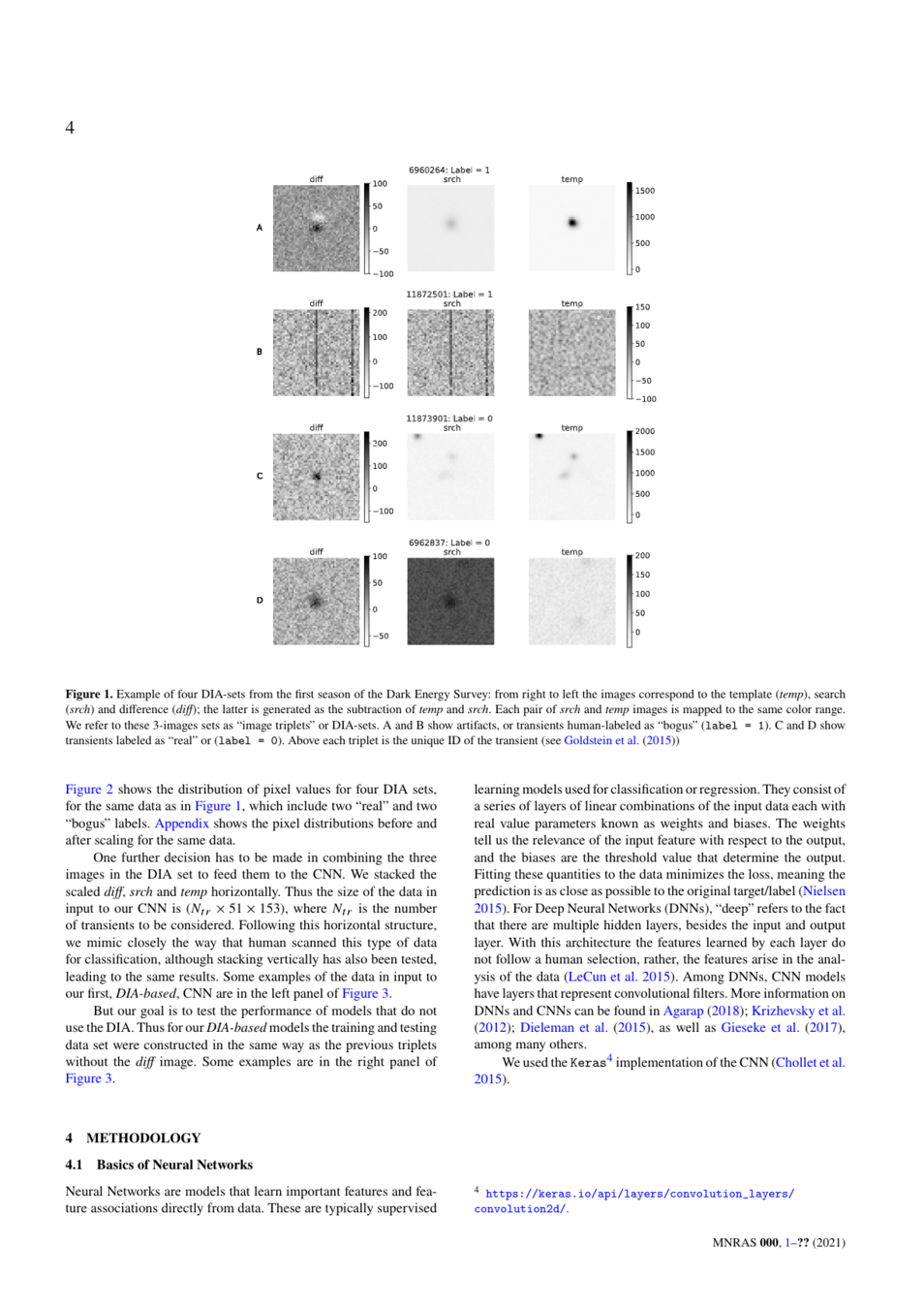
Difference Image Analysis
template
in 60 seconds:
Difference Image Analysis
template
difference image
in 60 seconds:
Difference Image Analysis
template
difference image
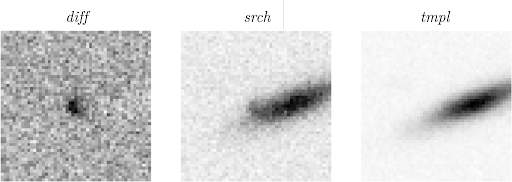
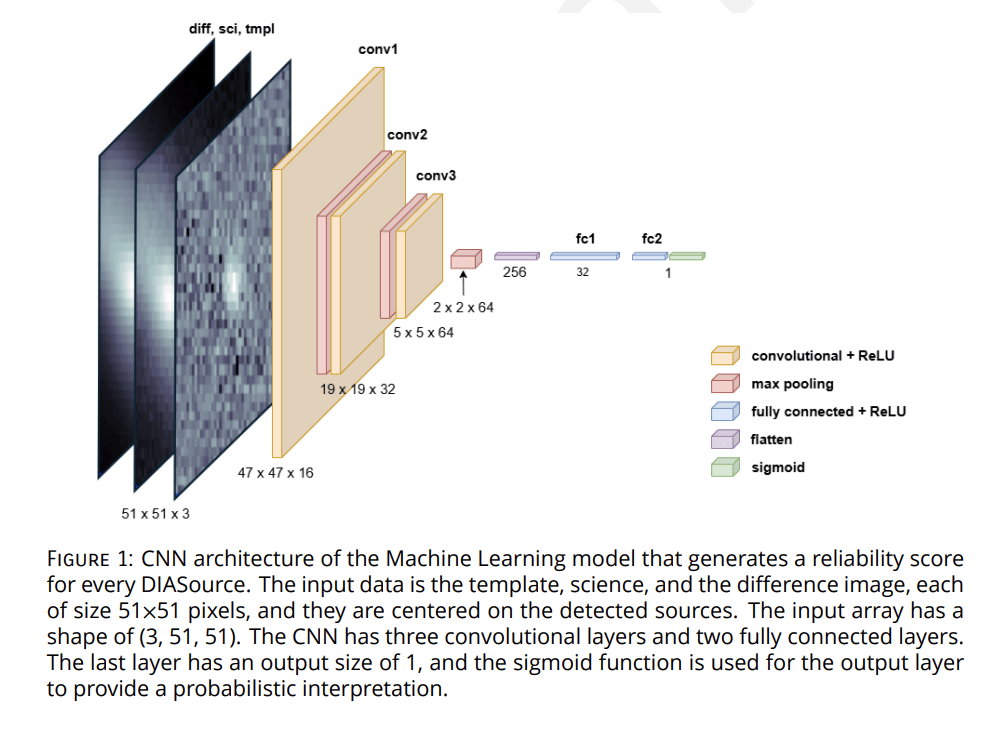
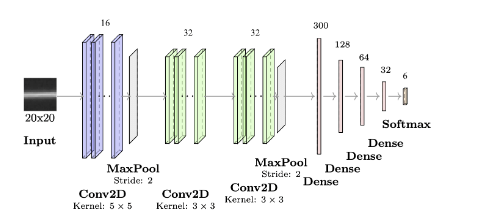
Can a NN replace difference imaging?
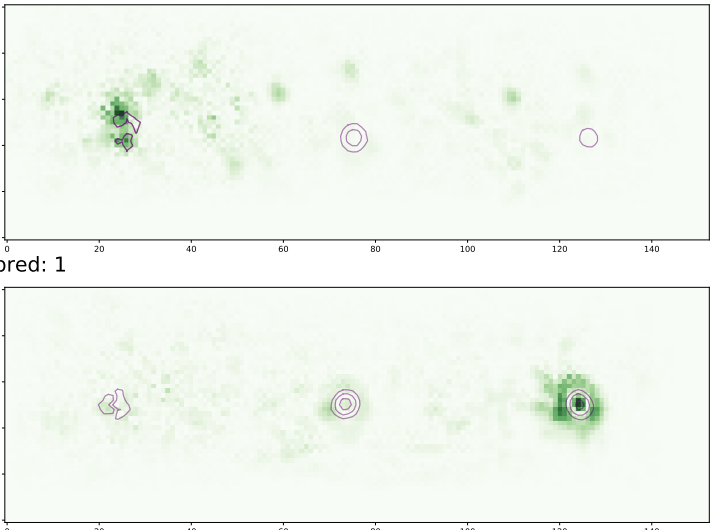
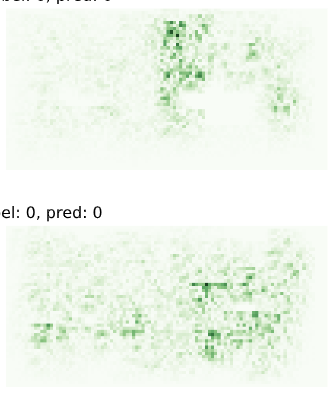
What is the AI learning and what can we learn from the AI?
search
template
difference
template
search
template
difference
template
Can a NN replace difference imaging?
What is the AI learning and what can we learn from the AI?
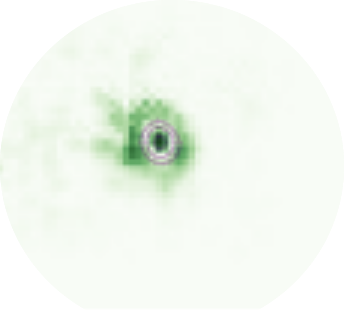
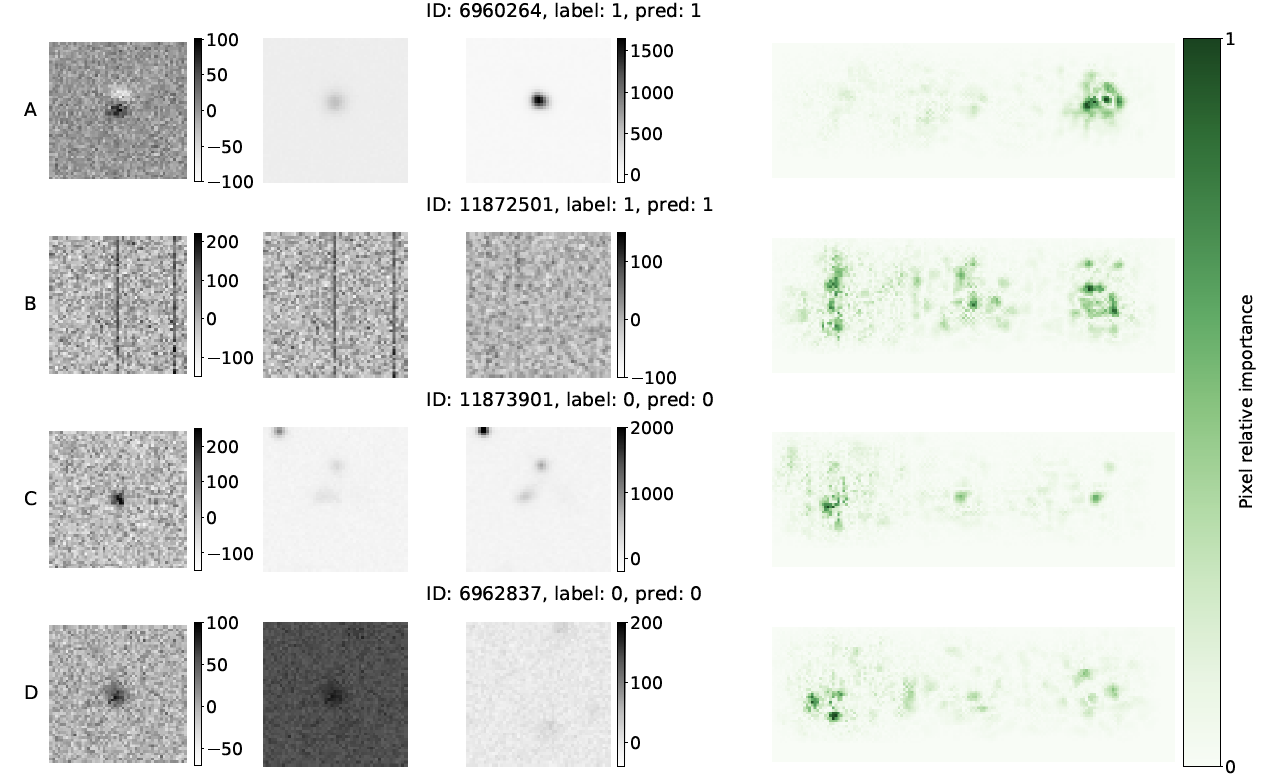
Saliency maps: what pixels matter?
search
template
difference
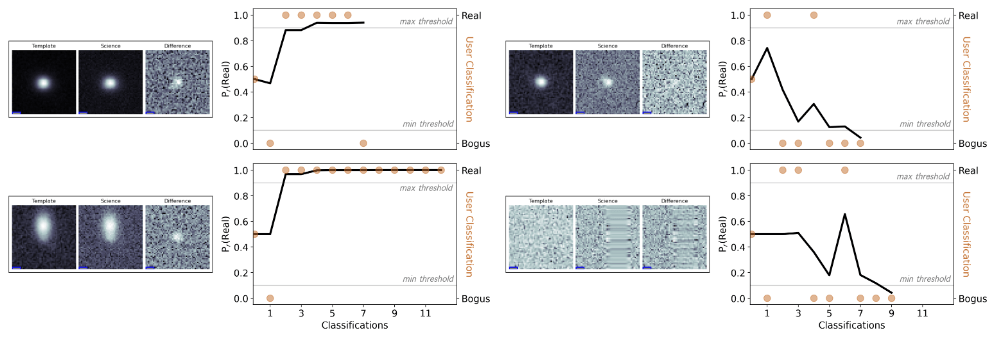
The Rubin LSST ML-Reliability Score (aka real-bogus)
Acero-Cuellar+ in prep 2026
Weston, Acero-Cuellar+ in prep 2026
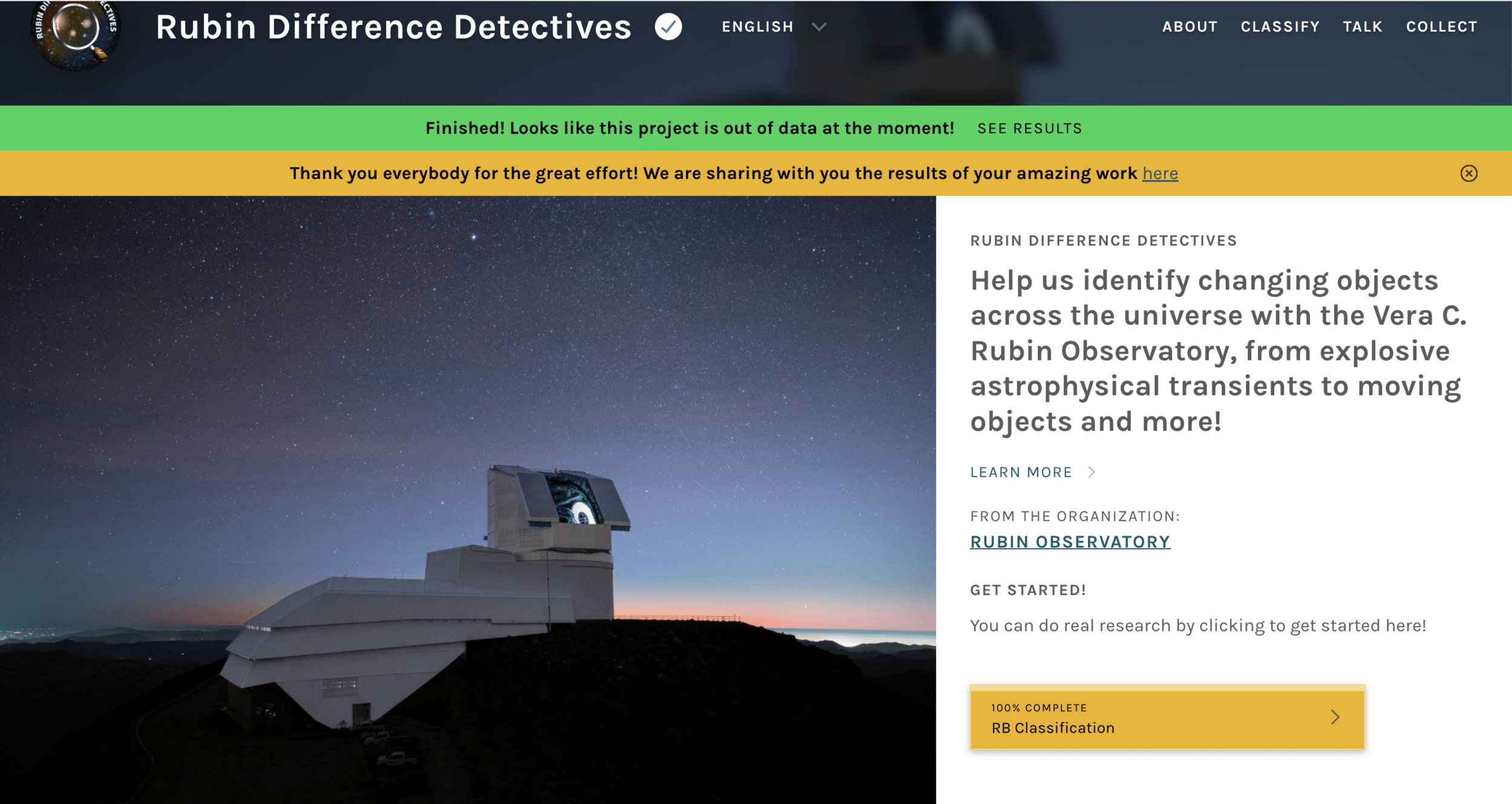
Bayesian analysis of citizens' labels
https://www.zooniverse.org/projects/ebellm/rubin-difference-detectives
Mathilda Nilsson
second year
DPA Ph.D. candidate
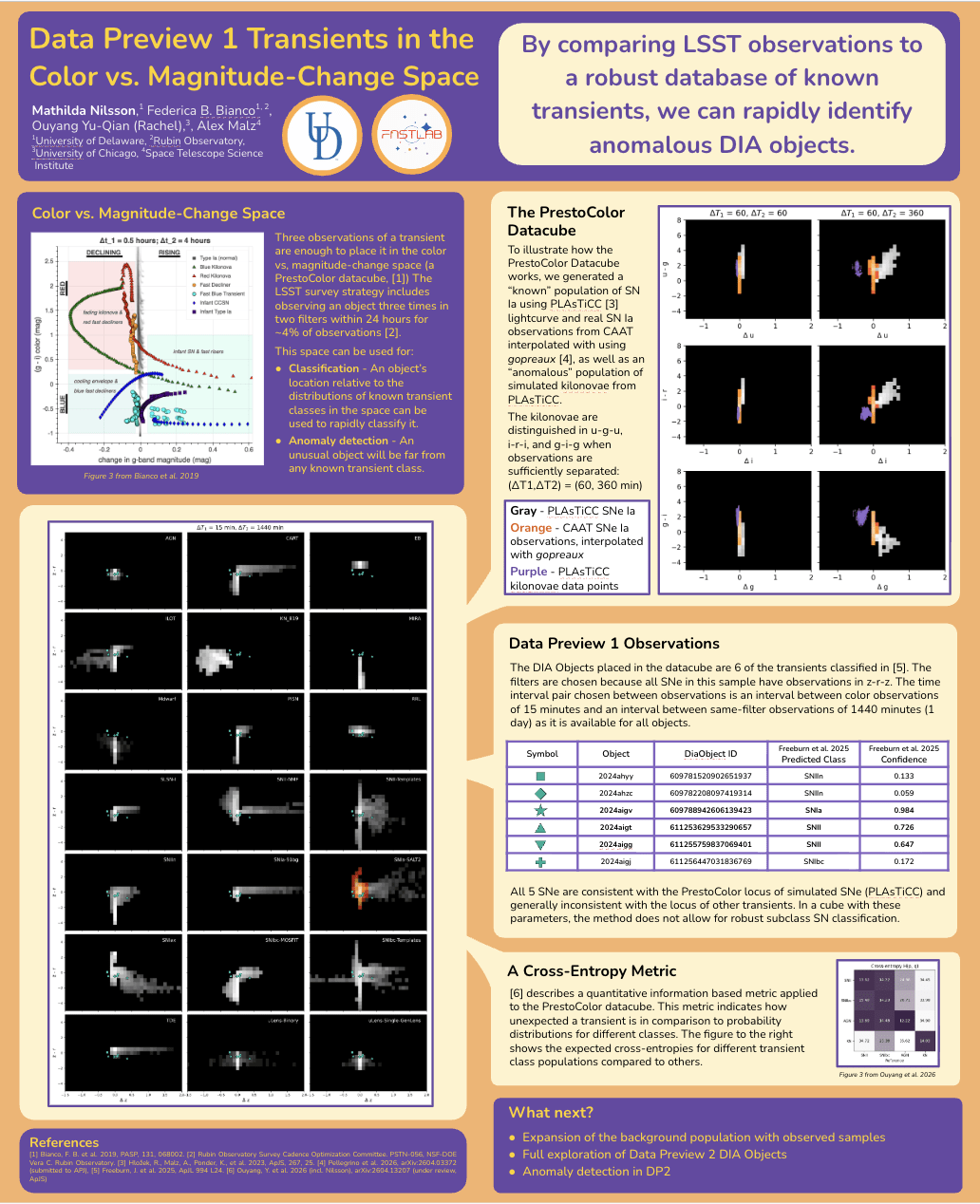
exploring evolutionary tracks of DP2 detections in a space of familiar transients
what can we find?
Easton Honaker
NASA Space Grant Fellow
from John's group
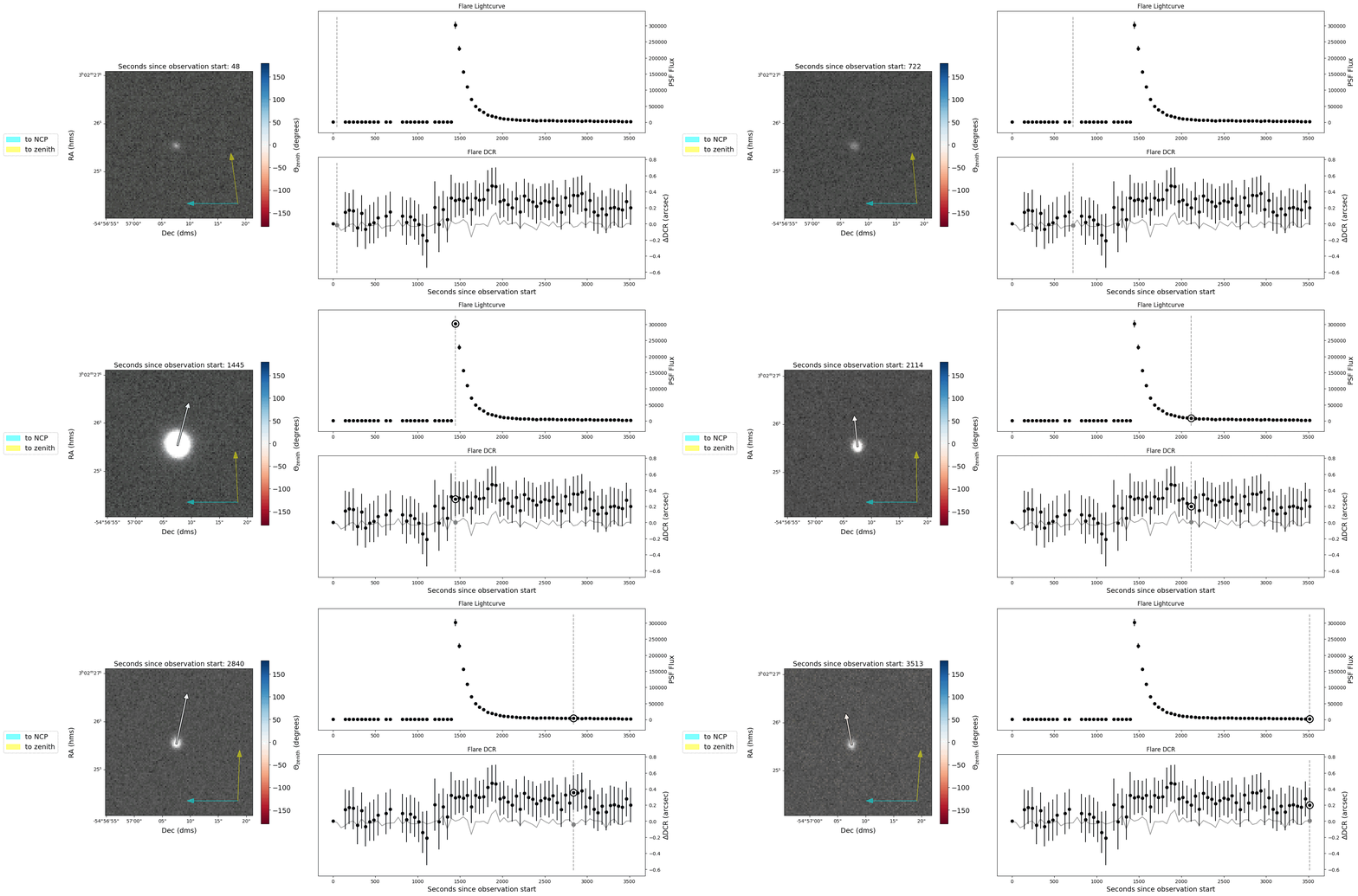
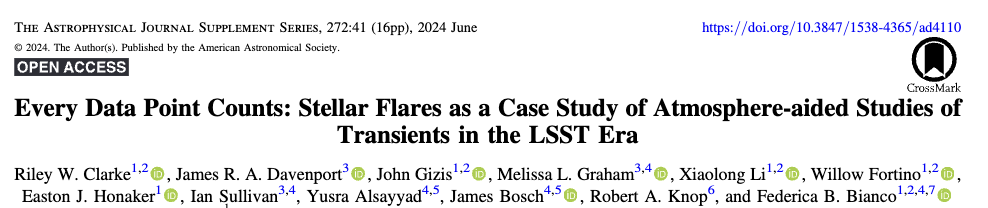
Dr. Riley Clarke, DPA graduate
Now Postdoc at the University of Singapore
LSST Discovery Alliance Grant
through the DSI ($17,000)
written 100% by the FASTLab students!
Text
Why do we study stellar explosions?
Why do we study stellar explosions?
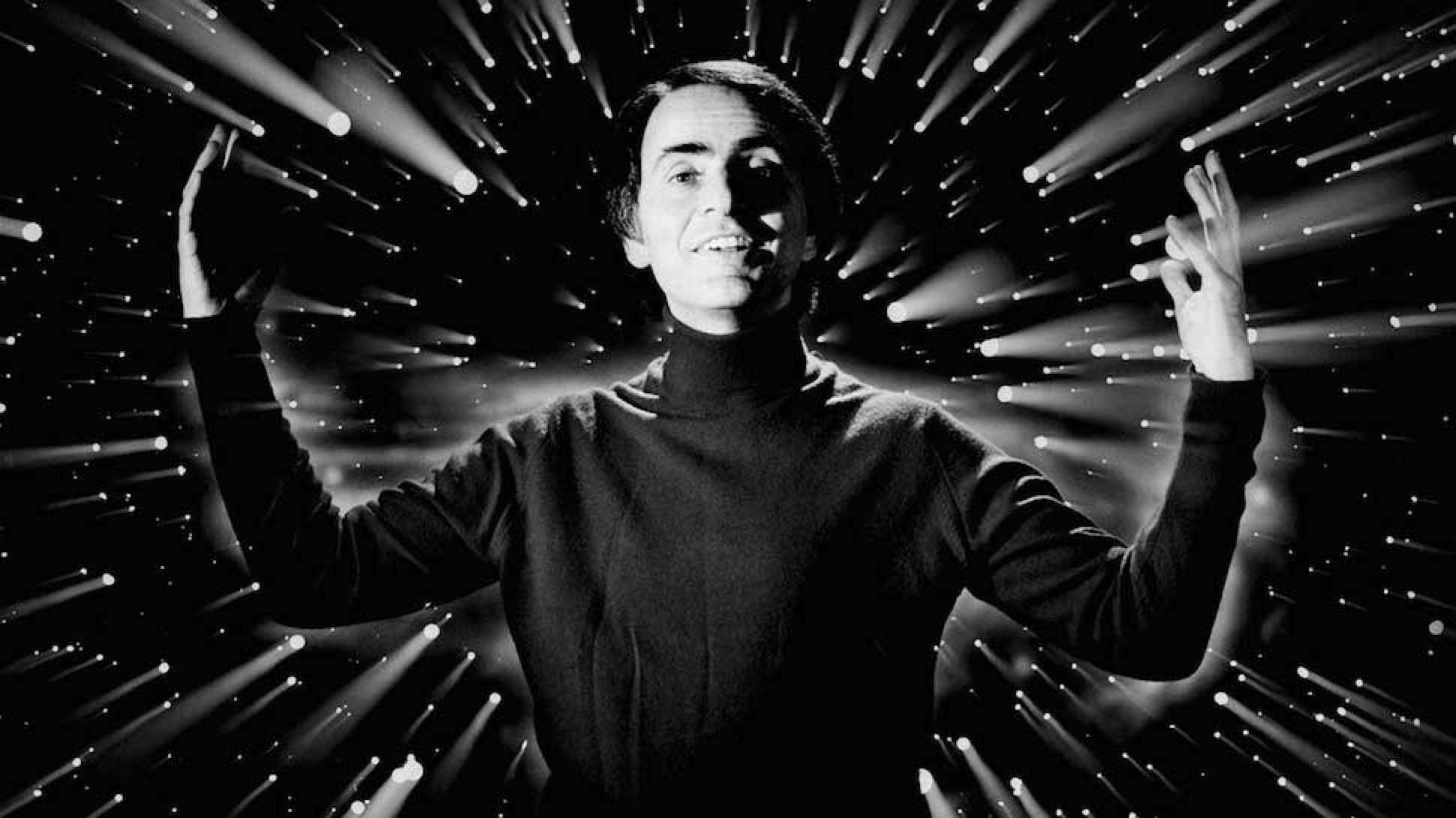
we are made of stars
The nitrogen in our DNA, the calcium in our teeth, the iron in our blood, the carbon in our apple pies were made in the interiors of collapsing stars.
We are made of starstuff.
― Carl Sagan, Cosmos
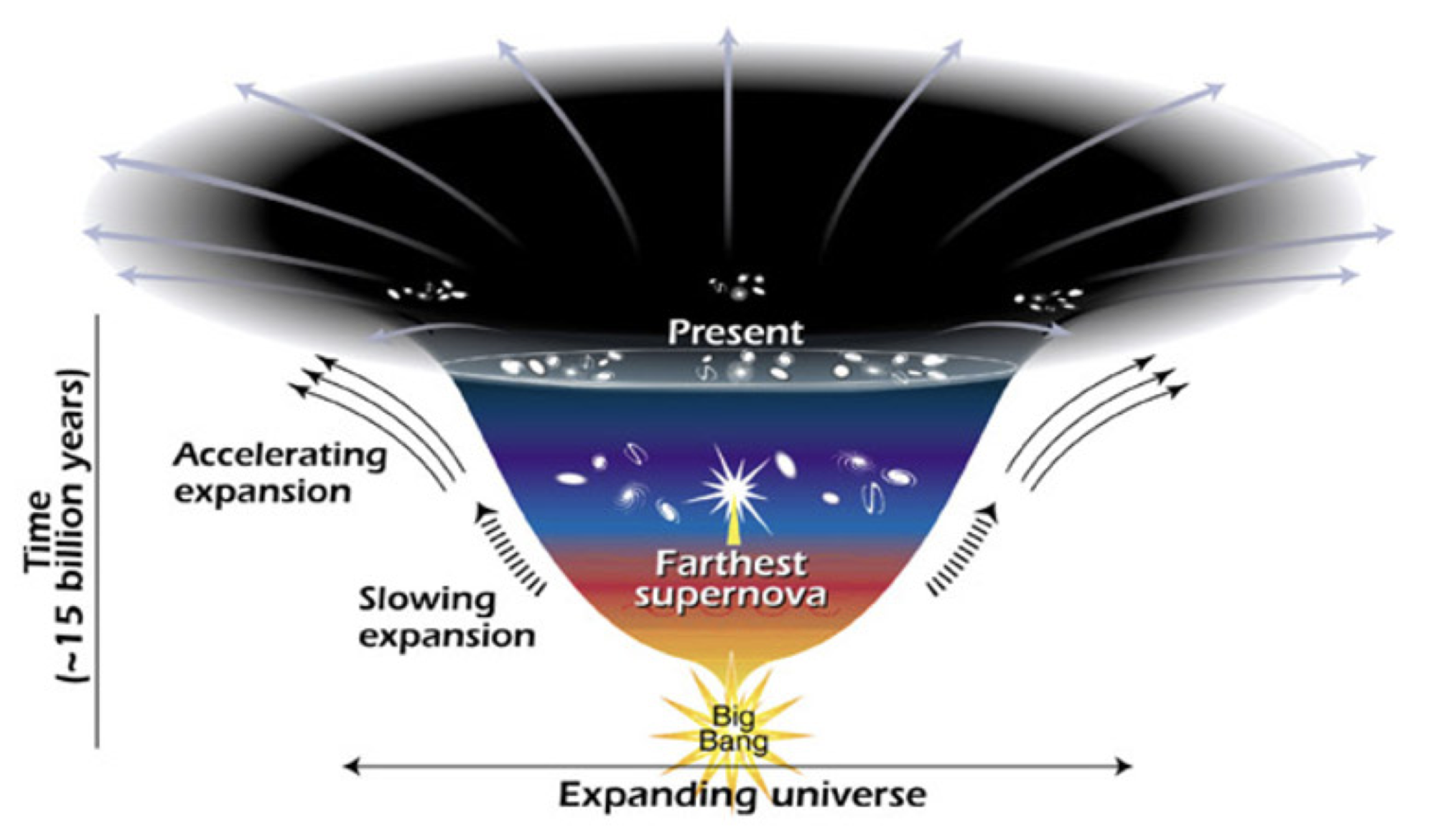
Farthest: 10.5 billion years ago
3 billion years after the Big Bang
redshift 4
Why do we study stellar explosions?
they are the best tool to "measure" the Universe
largest explosion on earth 10,000,000 erg
typical supernova....
Why do we study stellar explosions?
a unique opportunity to study extreme energy events
who'sploded?
10 stars explode in the universe every second
Until the 1900s we would see 1 in a century
Until the 1980s we would see 1 in a decade
Until the 2010s we would see 1 in a month
With the Vera C. Rubin Observatory we will see 1000 every night !
17B stars (x10) Ivezic+19
~10 million QSO (x10) Mary Loli+21
~50k Tidal Disruption Events (from ~150) Brickman+ 2020
~10k SuperLuminous Supernovae (from ~200) Villar+ 2018
~400 strongly lensed SN Ia (from 10) Ardense+24
~50 kilonovae (from 2) Setzer+19, Andreoni+19 (+ ToO)
> 10 Interstellar Objects fom 2.... ?)
SKA
(2025)
17B stars (x10) Ivezic+19
~10 million QSO (x10) Mary Loli+21
~50k Tidal Disruption Events (from ~150) Brickman+ 2020
~10k SuperLuminous Supernovae (from ~200) Villar+ 2018
~400 strongly lensed SN Ia (from 10) Ardense+24
~50 kilonovae (from 2) Setzer+19, Andreoni+19 (+ ToO)
> 10 Interstellar Objects fom 2.... ?)
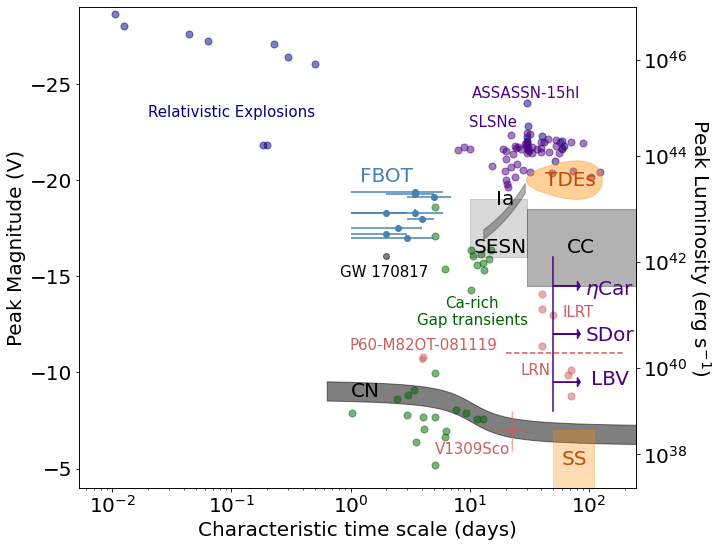
True Novelties!
"BUT BIG DATA DOES NOT MEAN BIG SCIENCE"
Yang Huang,
University of Chinese Academy of Sciences
SpecCLIP talk @UNIVERSAI
IAU workshop Greece June 2025
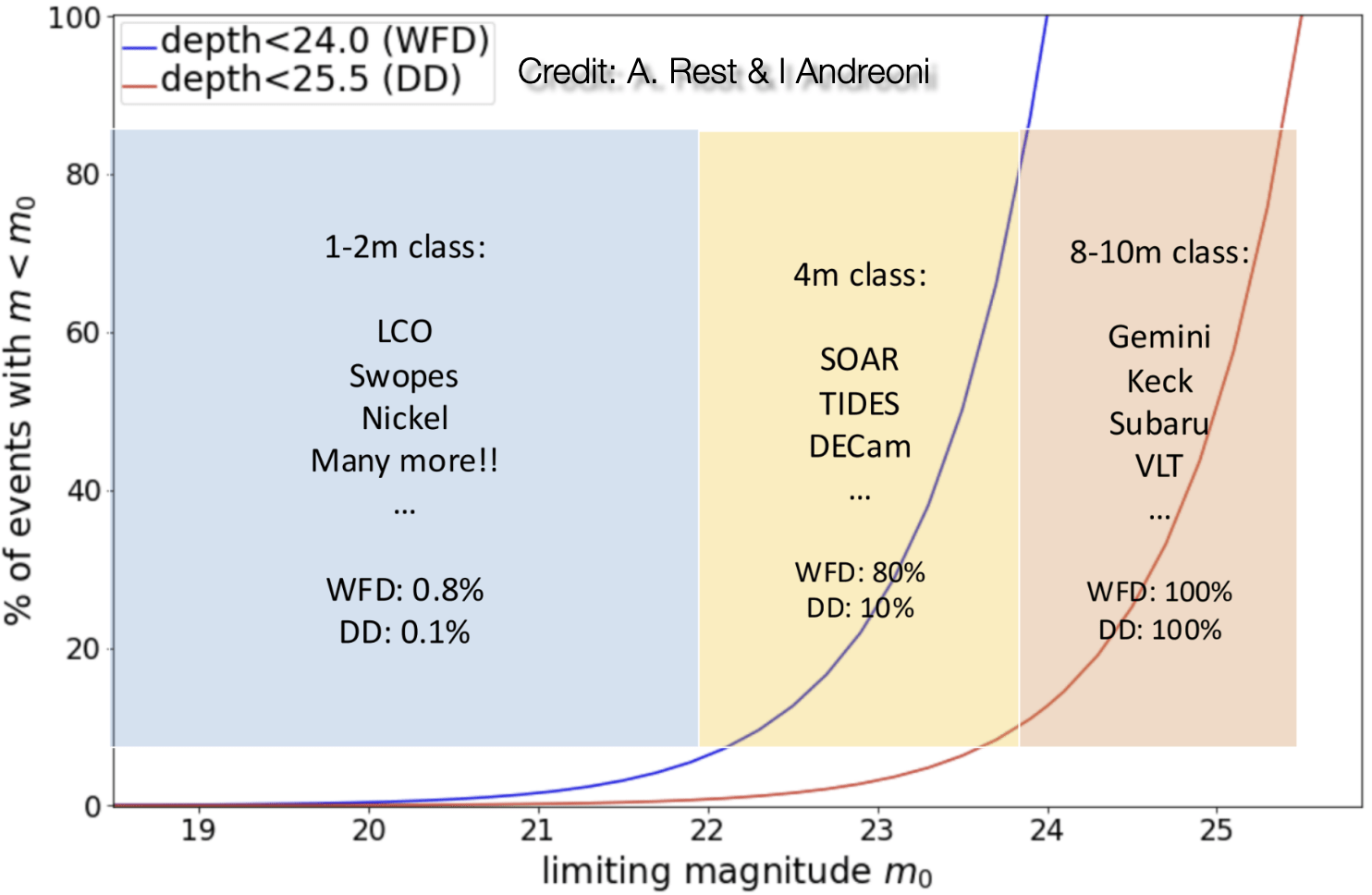
Challange
follow up
- There are 100s of 1-2 m class telescopes
mag limit ~19-22; %1 of the LSST events
- There are ~20 2-4m class telescopes
mag limit 22-24; %10 of the LSST events
- There are ~6 8m class telescopes
mag limit 24+; %100 of the LSST events
1000 SN in the LSST sky every night
Text
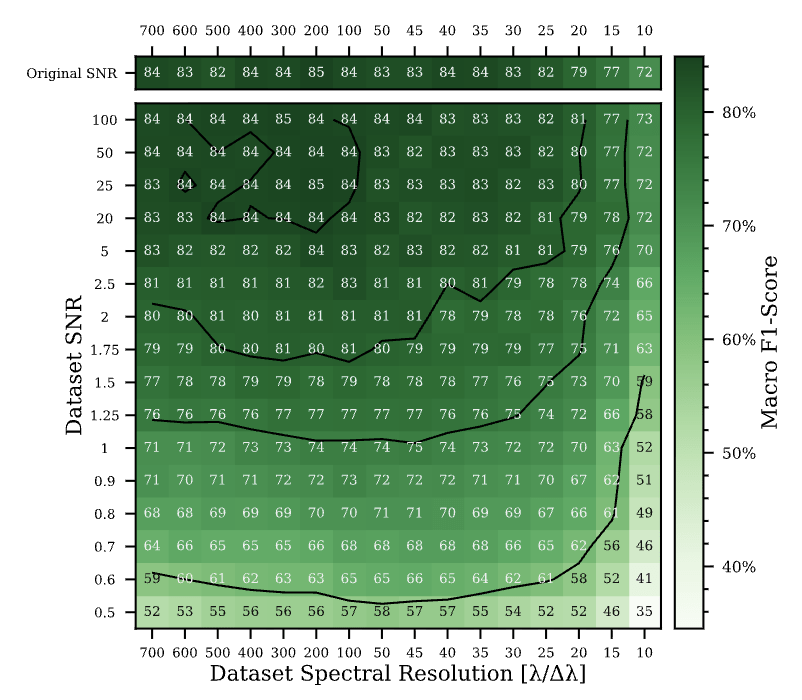
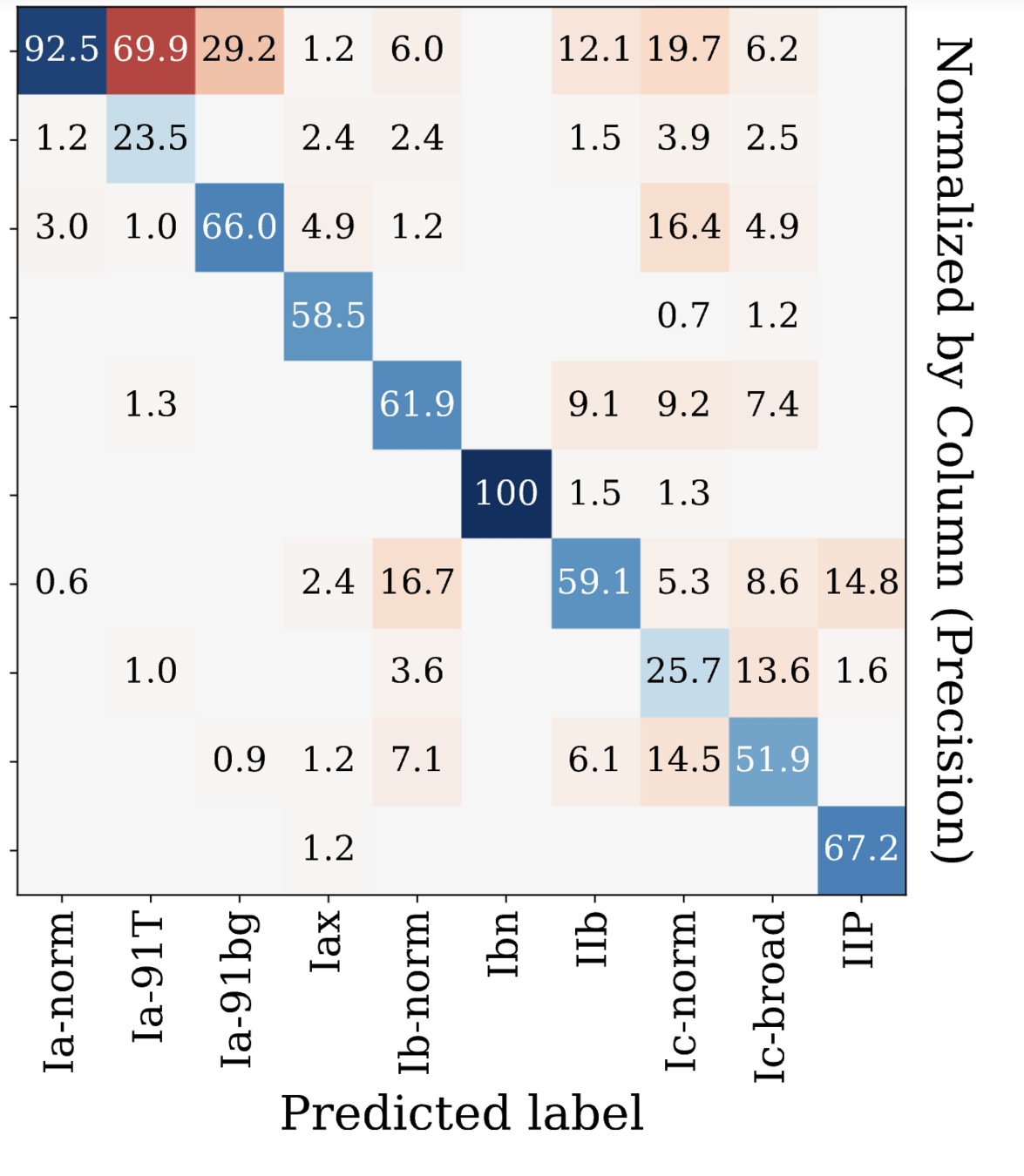
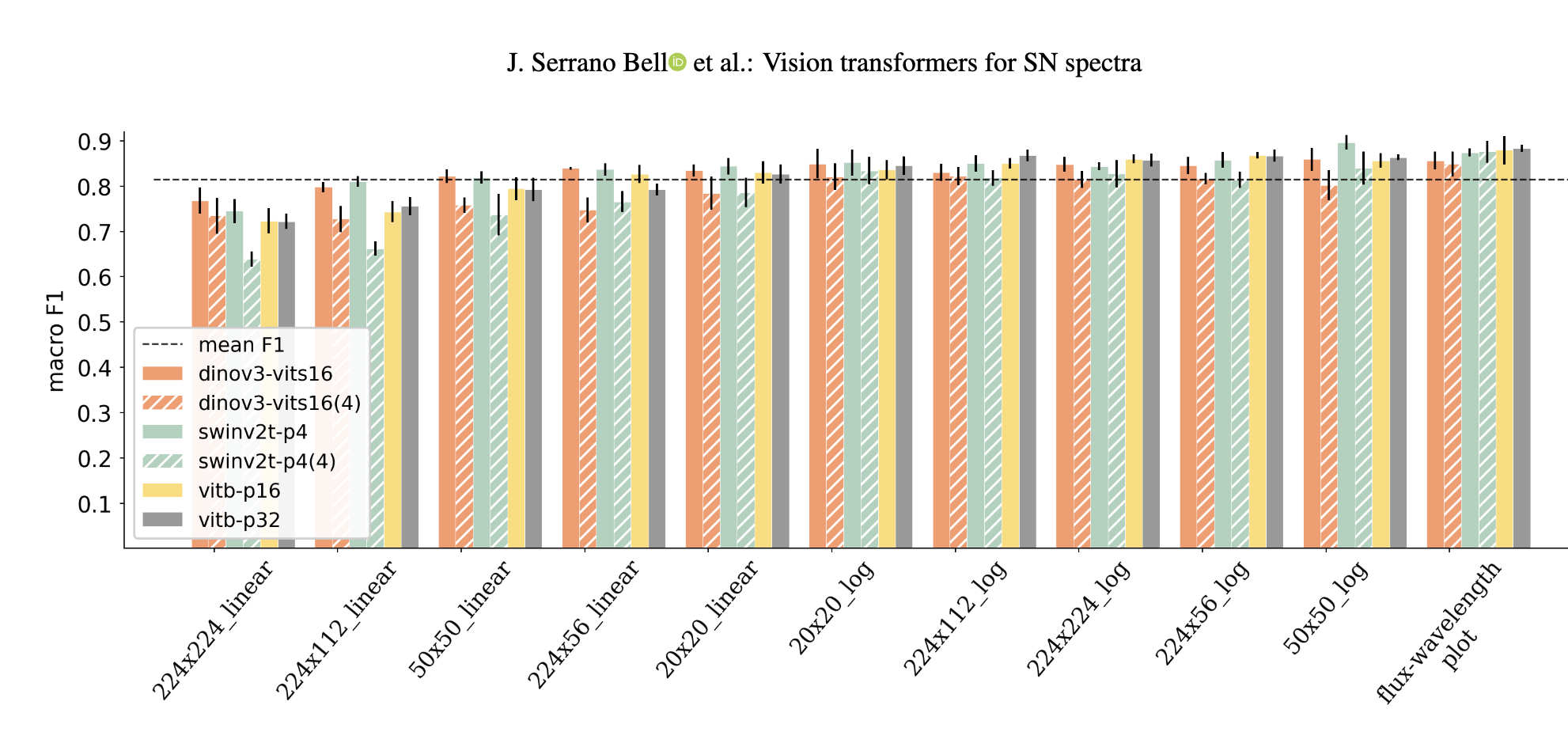
The first systematic study of resolution and signal requirements for spectral classification of supernovae
under review, The Open Journal of Astrophysics
arxiv.org/pdf/2607.03532a
Dr. Willow Fox Fortino
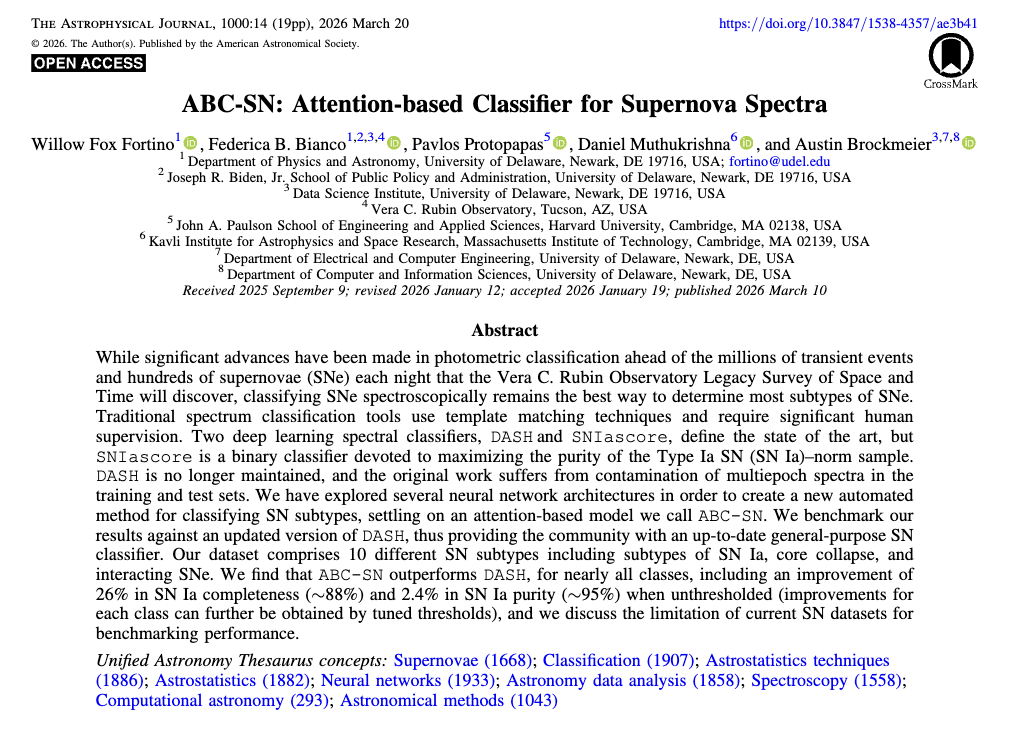
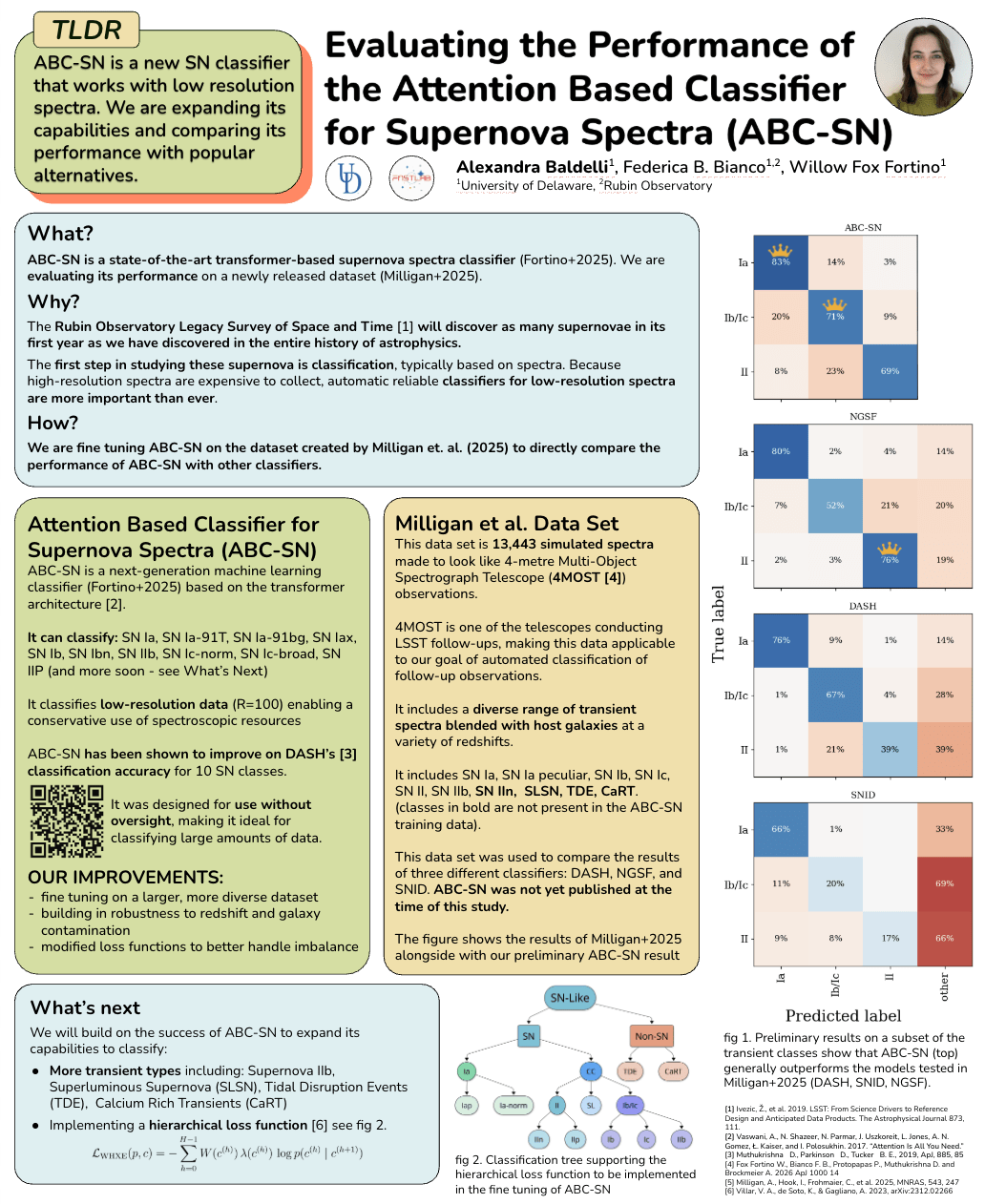
A new AI-based classifier for SN spectra at low resolution based on generative AI and transformers
Dr. Willow Fox Fortino
Ally Baldelli,
second year
DPA Ph.D. candidate
Poster presented ar:
Rubin Community Workshop, 2026
Time Domain Astronomy with LSST, 2026
new data,
more transient classes,
state of the art (hierarchical) loss function
Paula Gálvez Molina
DPA student with Frank
now in Dissertation Status!!
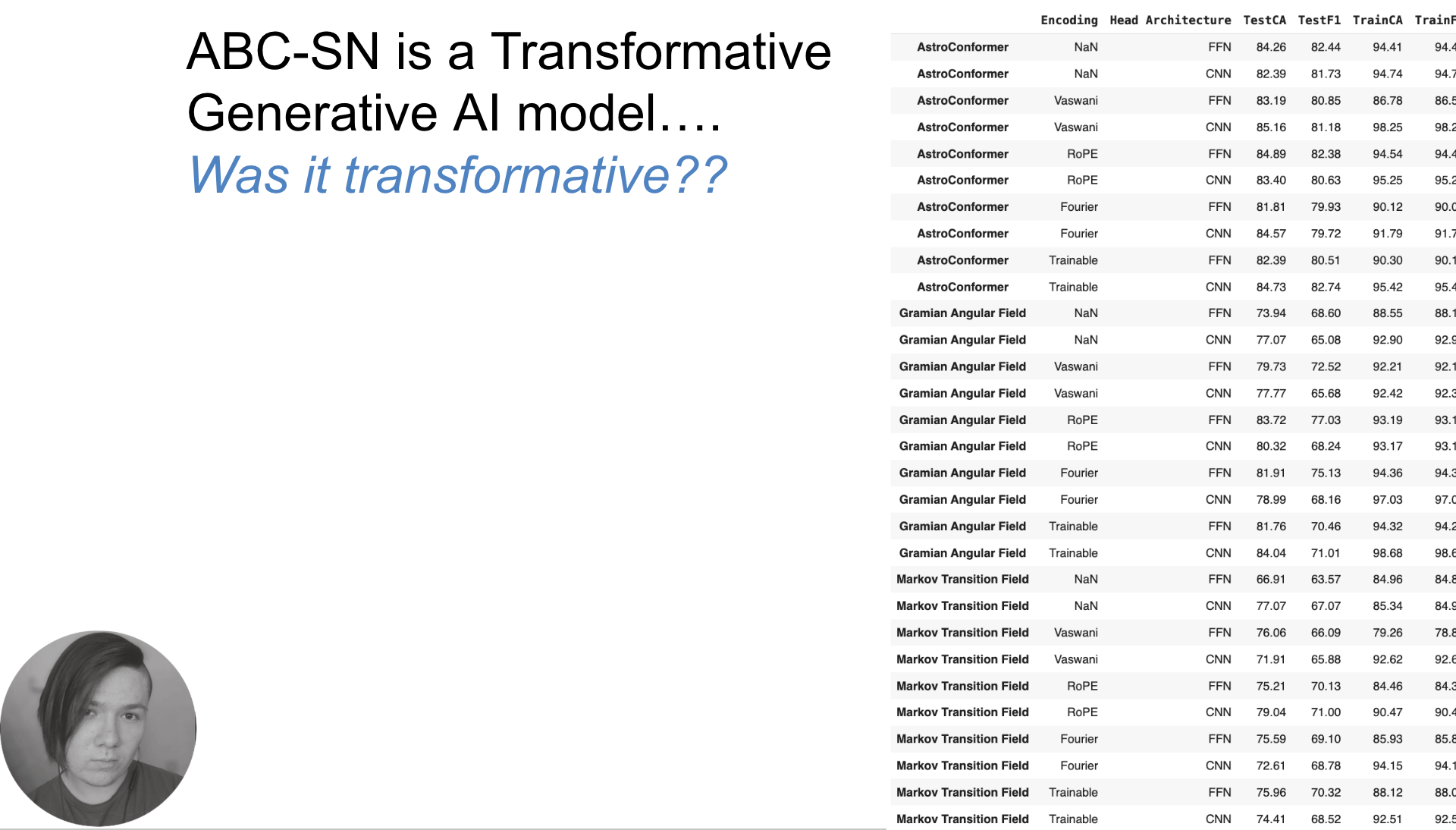
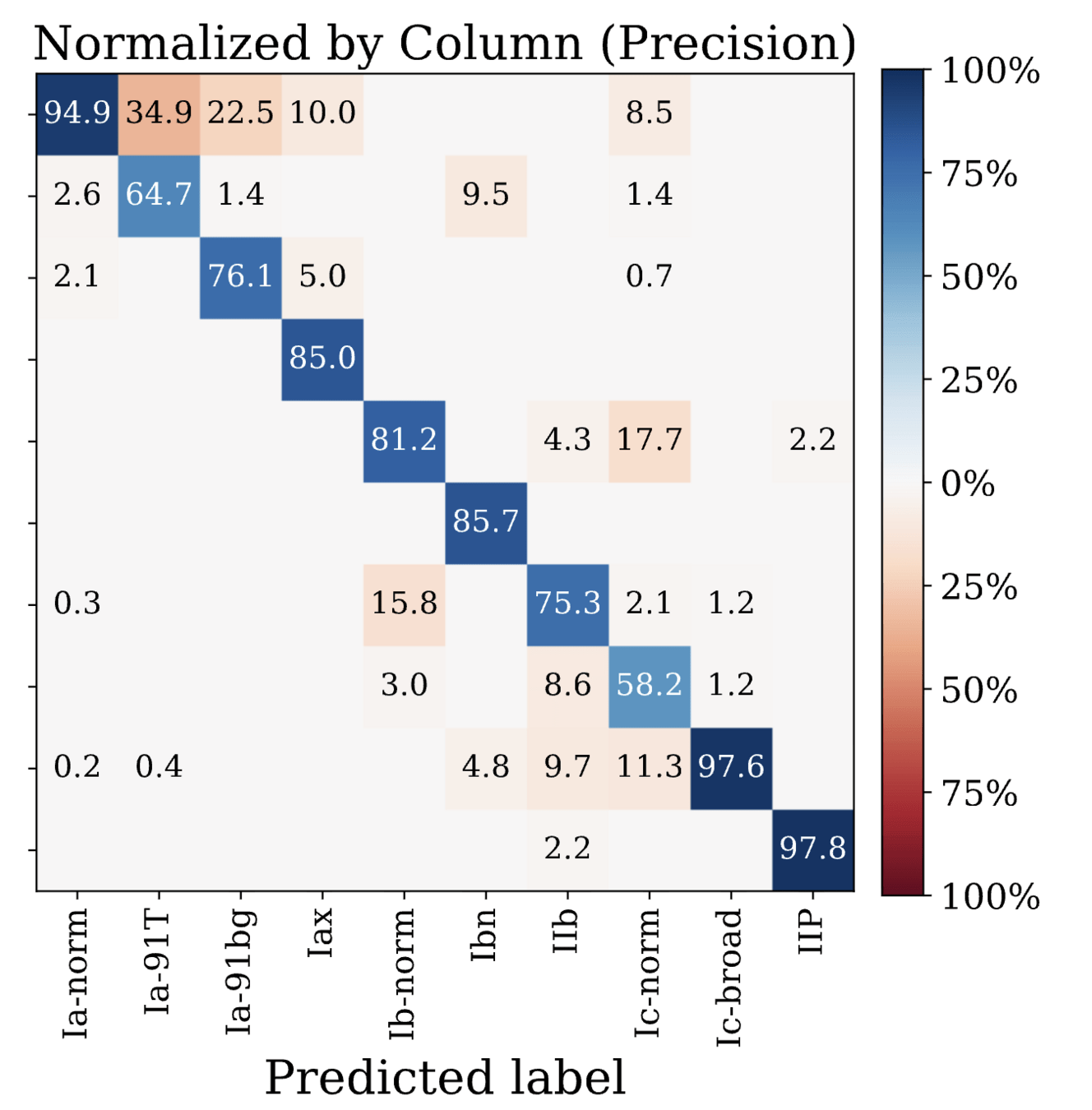
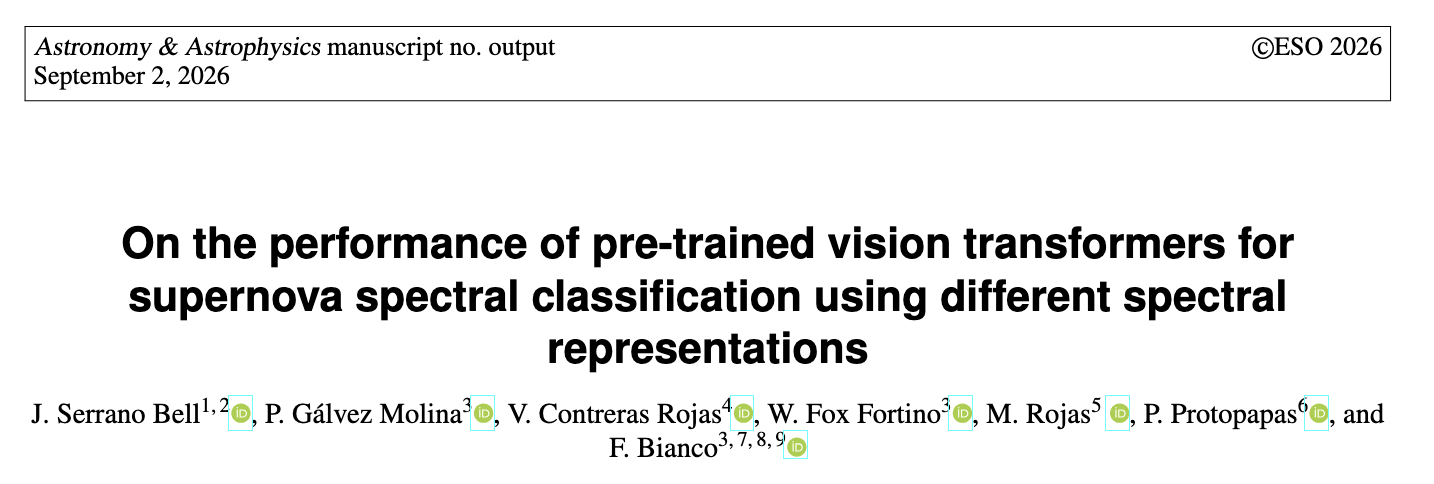
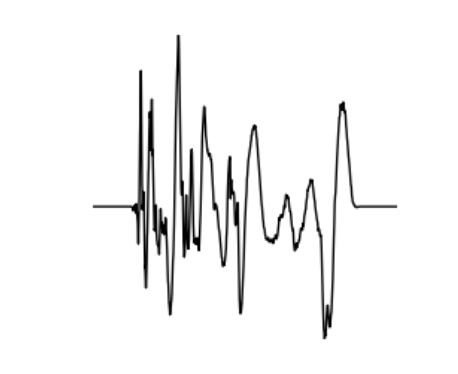
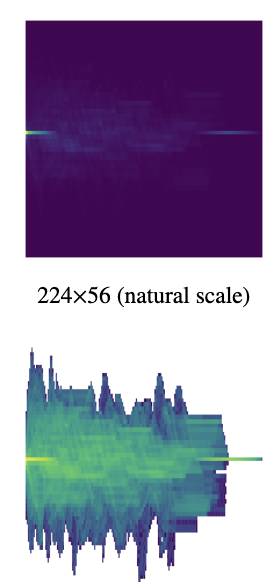
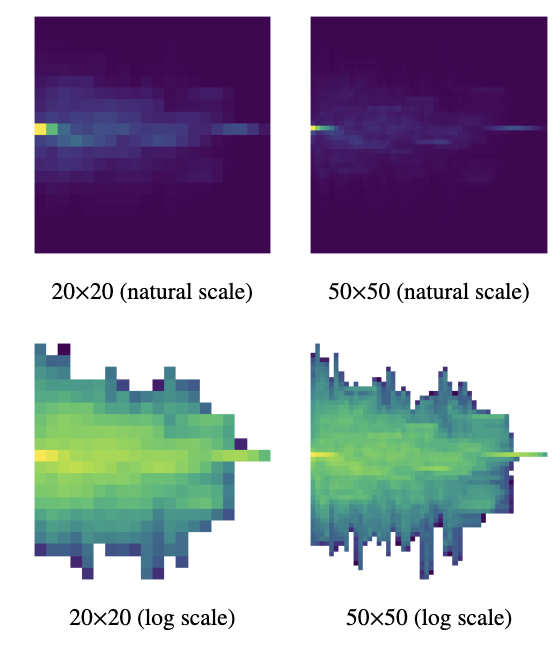
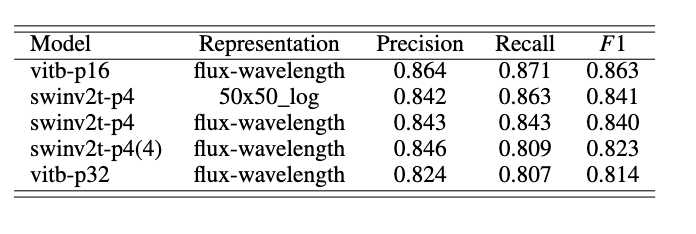
What kind of data encoding works for pretrained models?
spectral data visual encoding
Challange
data encoding
so you wanna study galaxies (or 2d nano materials in Lars's lab...)
visualizatoin and concept credit: Alex Razim
so you wanna study galaxies (or 2d nano materials in Lars's lab...)
visualizatoin and concept credit: Alex Razim
Boone 2017
7% of LSST data
Boone 2017
7% of LSST data
The rest
Text
we introduce
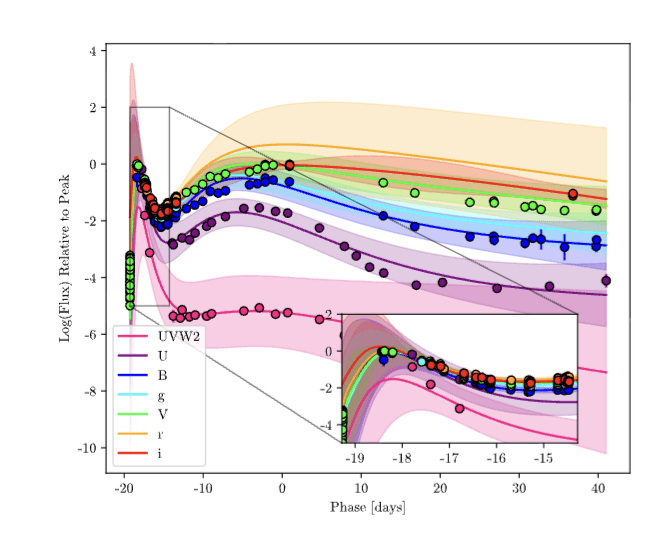
Gaussian process Optimized Photometric Regression of Extragalactic Archival Ultraviolet-infrared eXplosions, a.k.a GOPREAUX—
a Python package for Gaussian Process Regression of multi-wavelength transient photometry. [...]
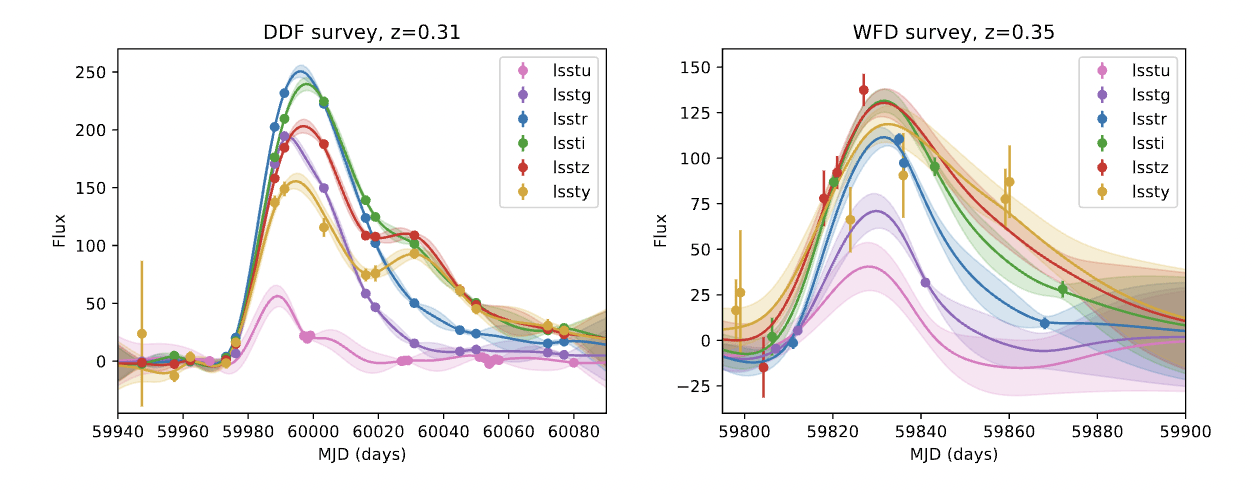
This allows for predictions of light curves [...] at higher redshifts, where the rest-frame UV emission is redshifted into the observer-frame optical or infrared.
under review, ApJ
Text
Dr. Somayeh Khakpash
LSST Catalyst Fellow
Lehigh University Visiting Prof.
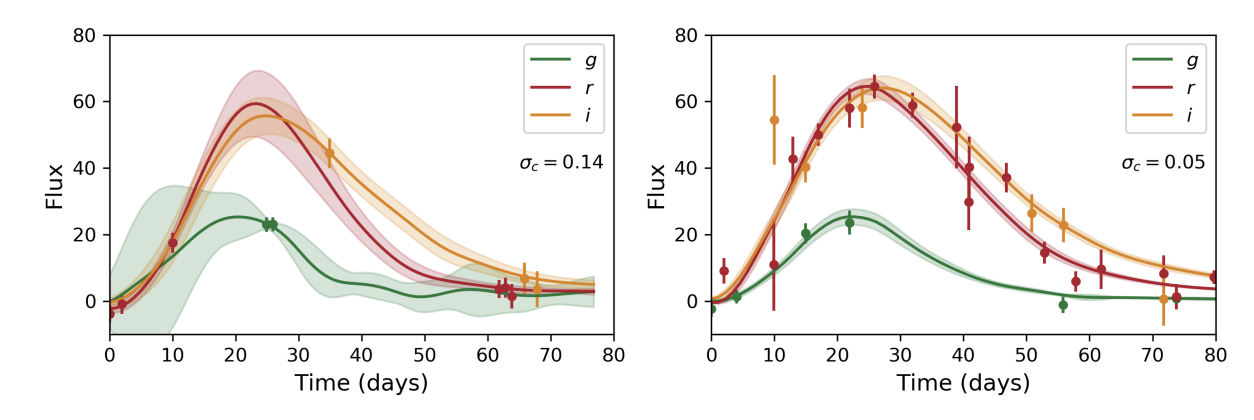
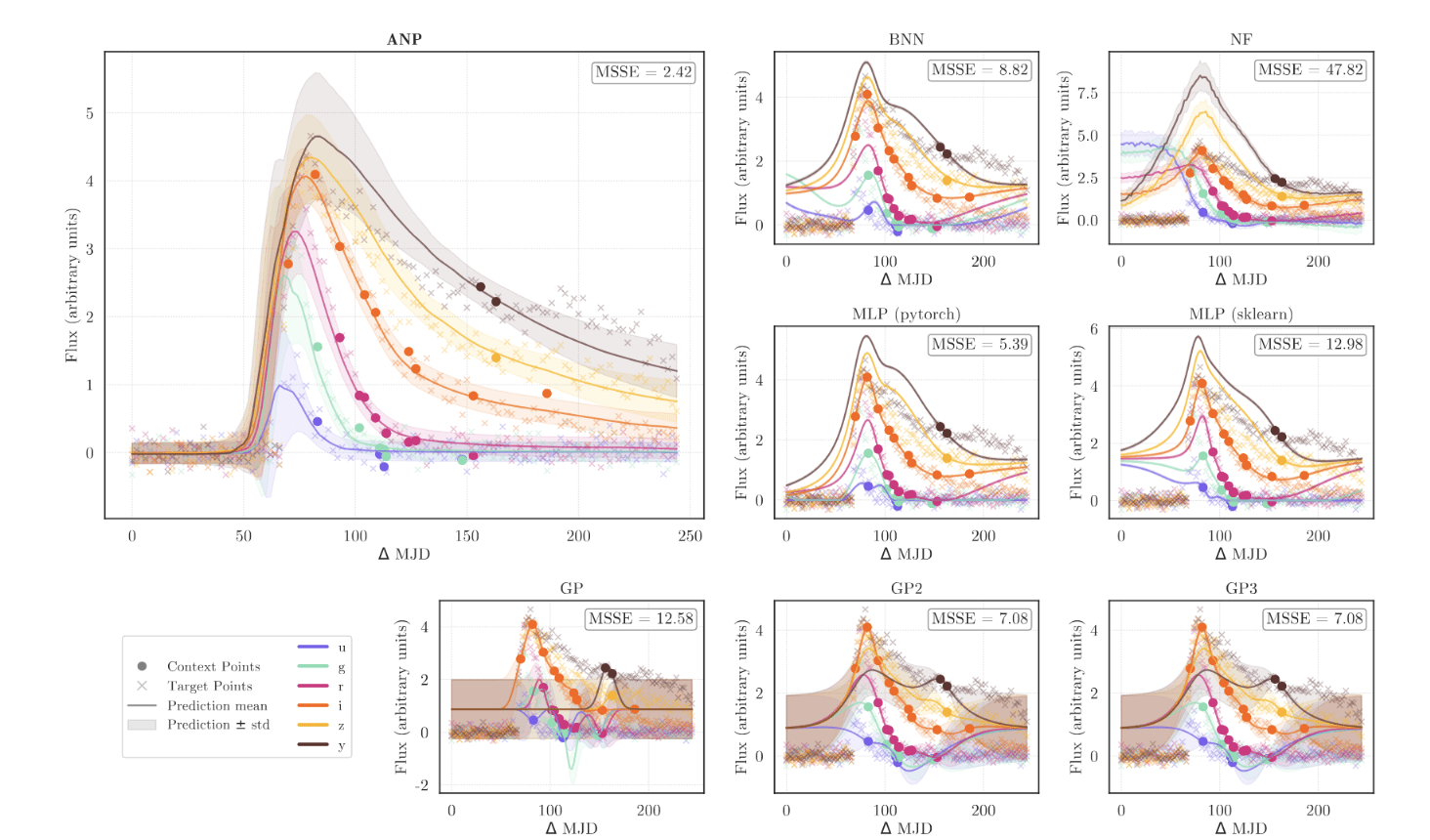
Gaussian processes work by imposing a kernel that represents the covariance in the data (how data depend on time or time/wavelength). Imposing the same kernel for different time-domain phenomena is principally incorrect
=> bias toward known classes
Methodological issues with these approaches
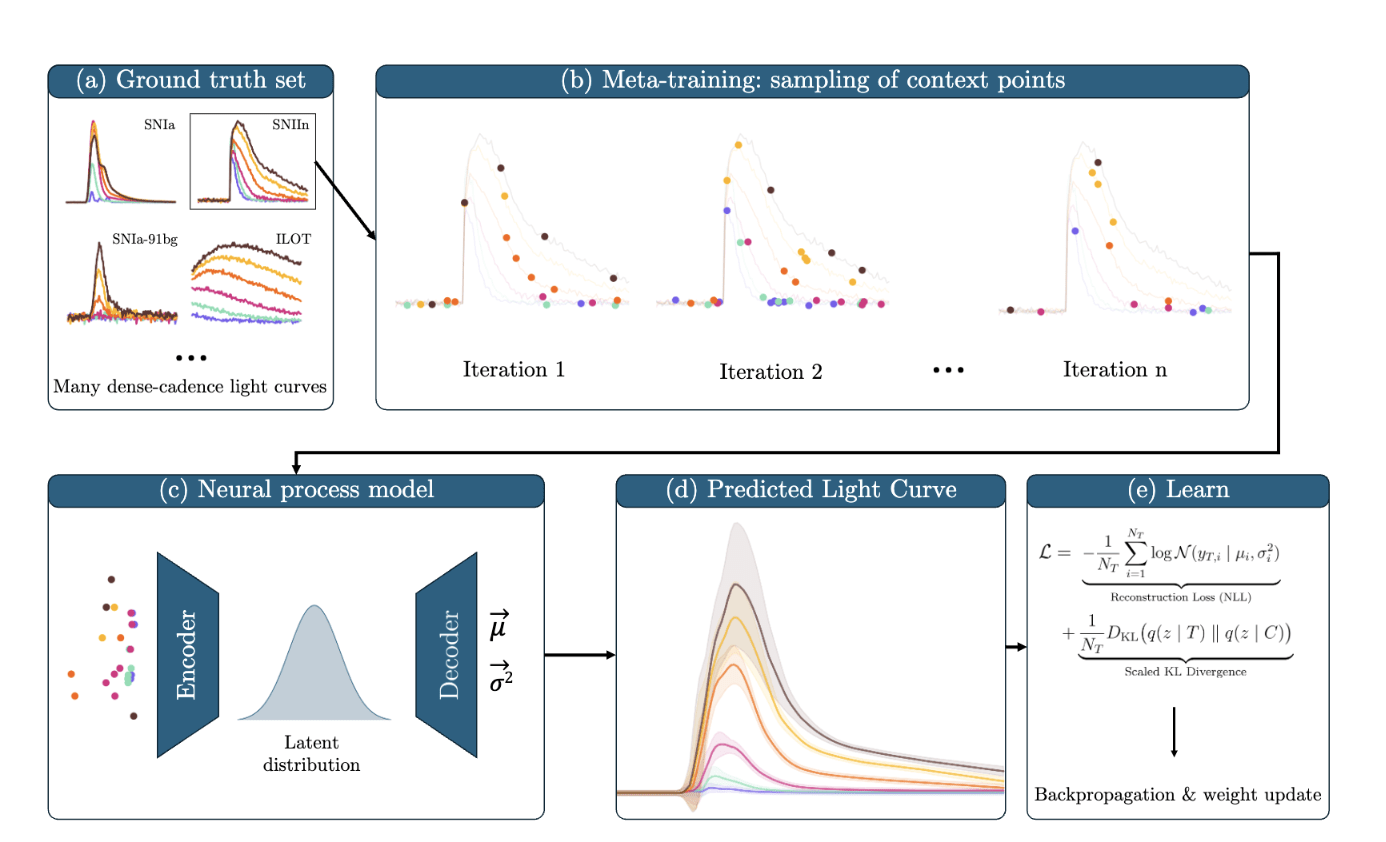
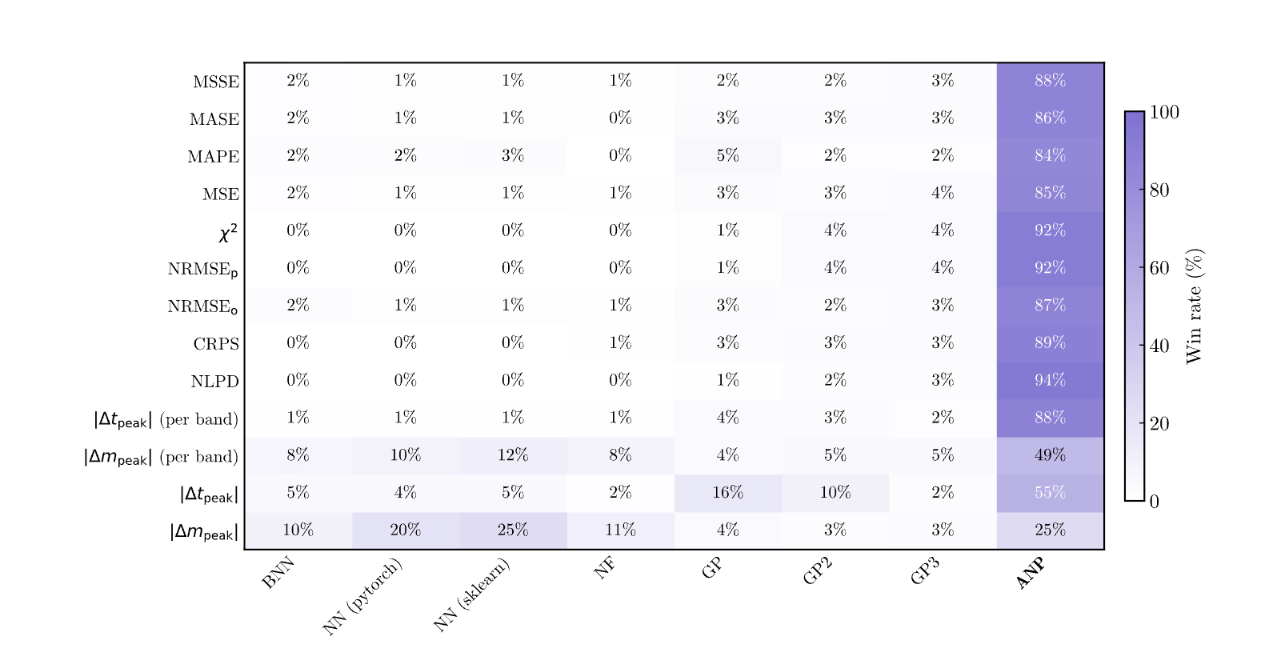
Neural processes replace the imposed kernel with a learned one
Siddharth Chaini
NASA FINESST Fellow
UD Excellence Fellow
DSI Fellow
under review, NEURIps
Siddharth Chaini
NASA FINESST Fellow
UD Excellence Fellow
under review, NEURIps
Siddharth Chaini
NASA FINESST Fellow
UD Excellence Fellow
Can the latent space of Neural Processes be used for represntation?
Lincoln University Research Interns
Siddharth Chaini
NASA FINESST Fellow
UD Excellence Fellow
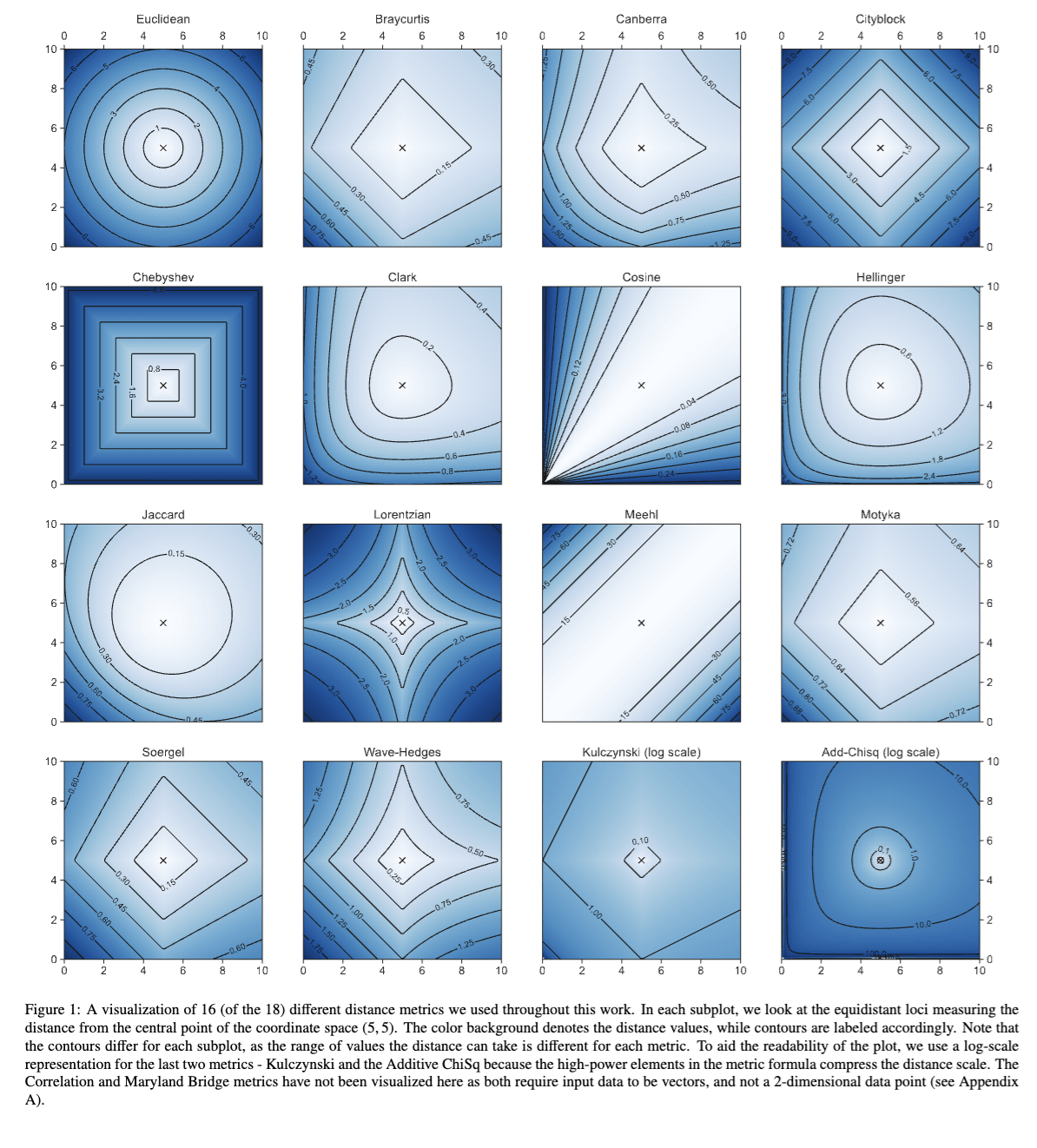
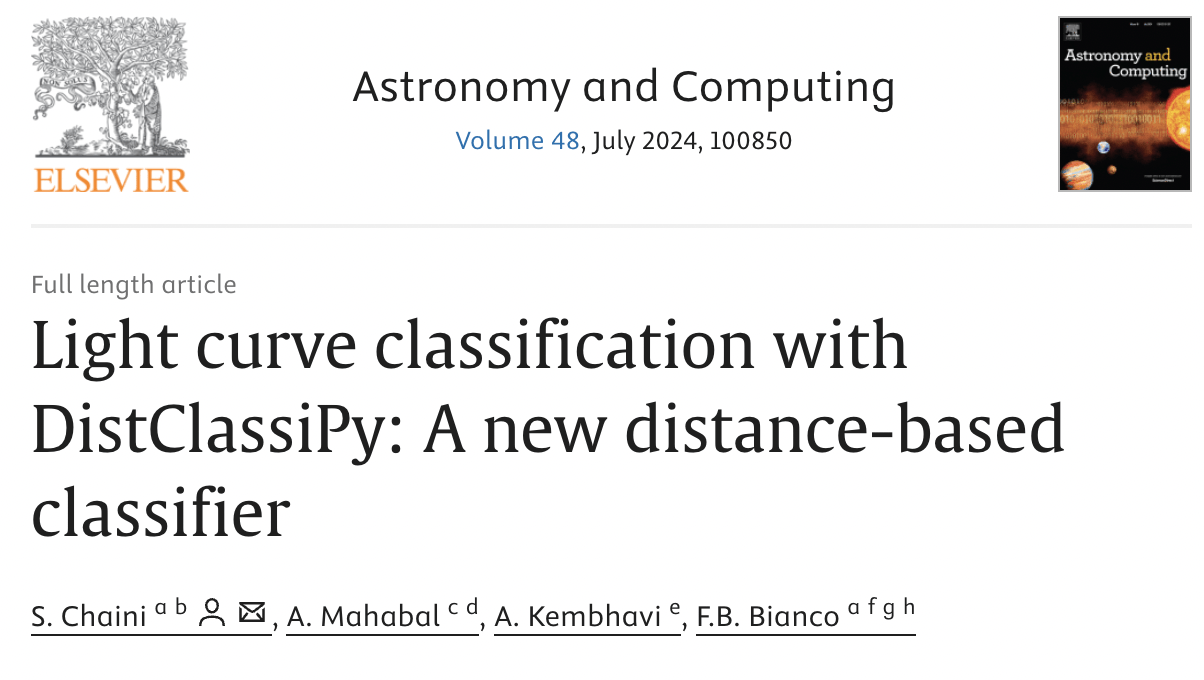
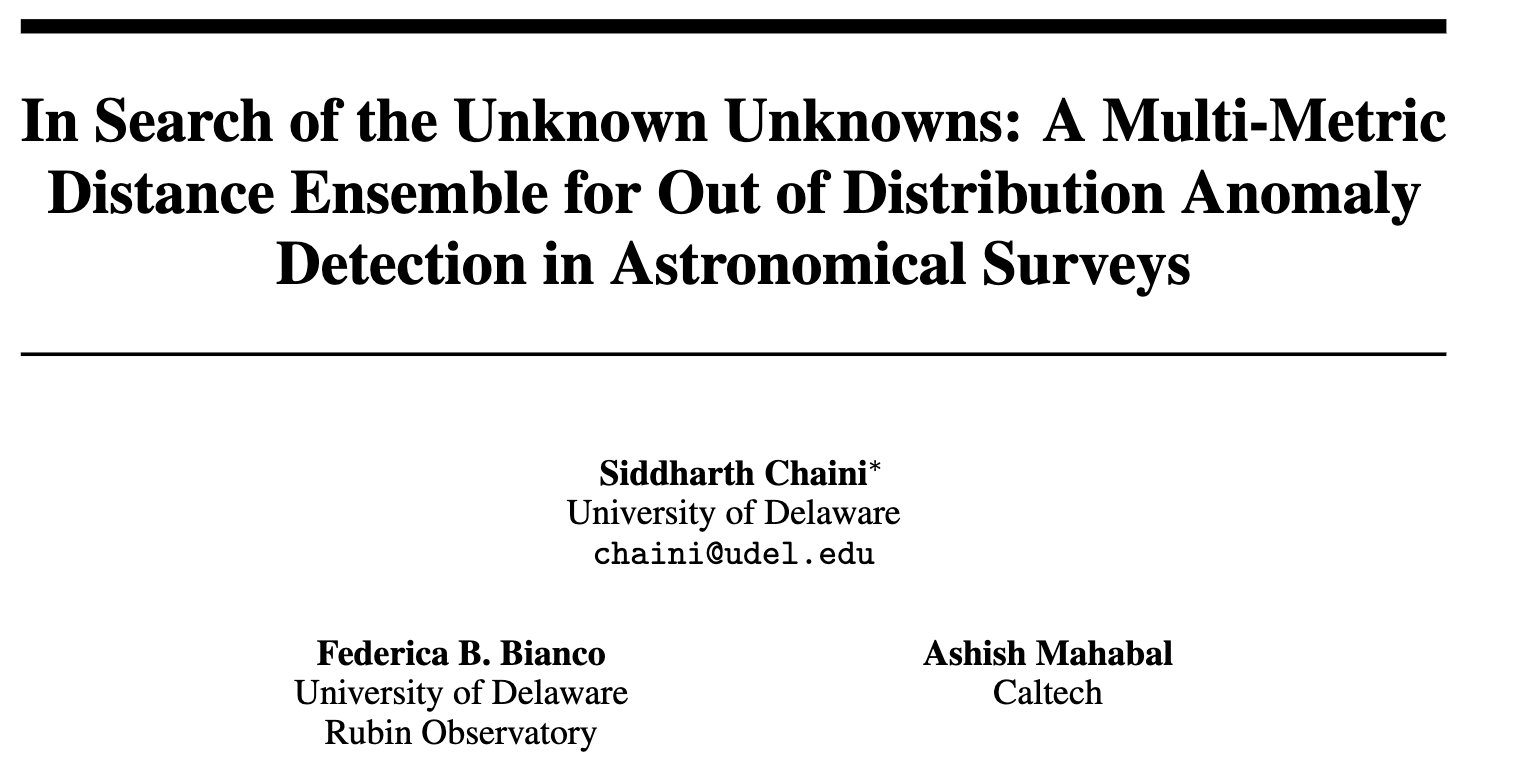
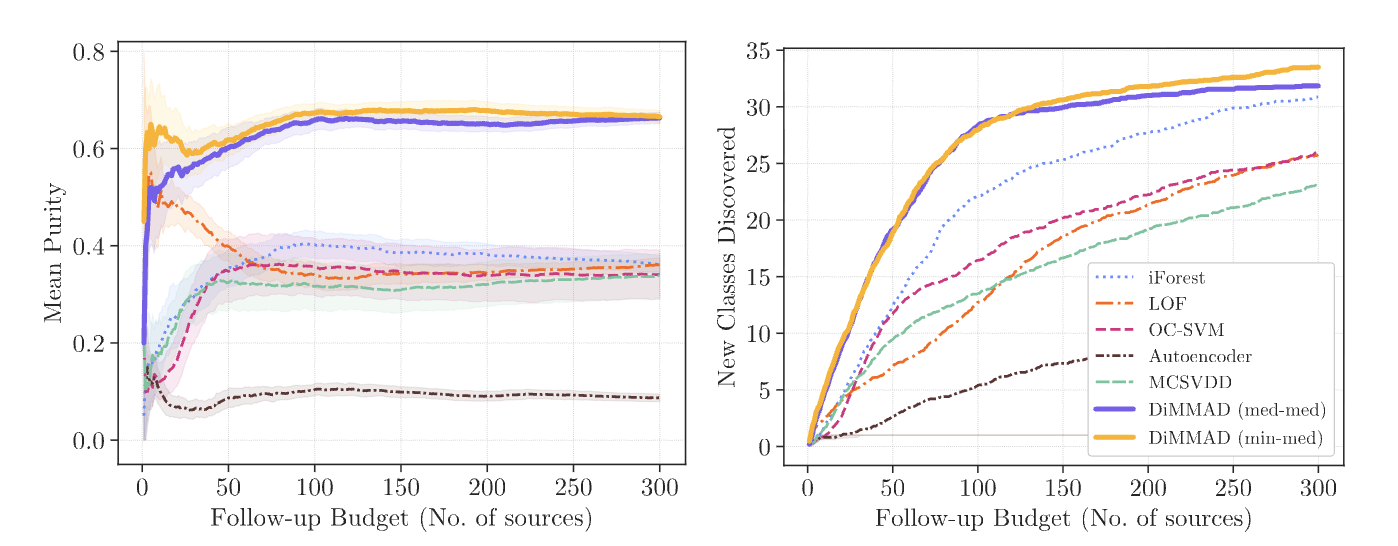
Ensambles of distance metrics are excellent for anomaly detection under a constrained budget:
they find true out of class events
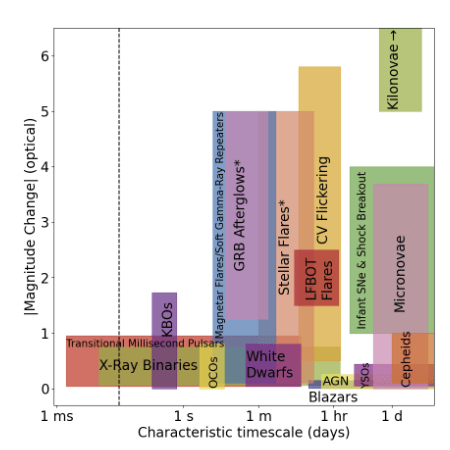
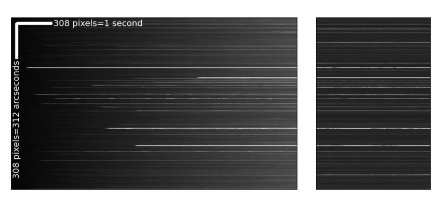
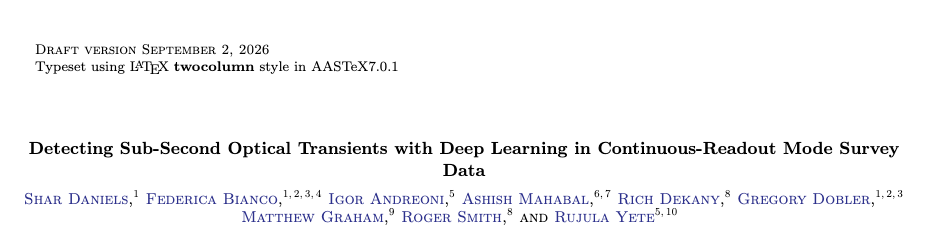
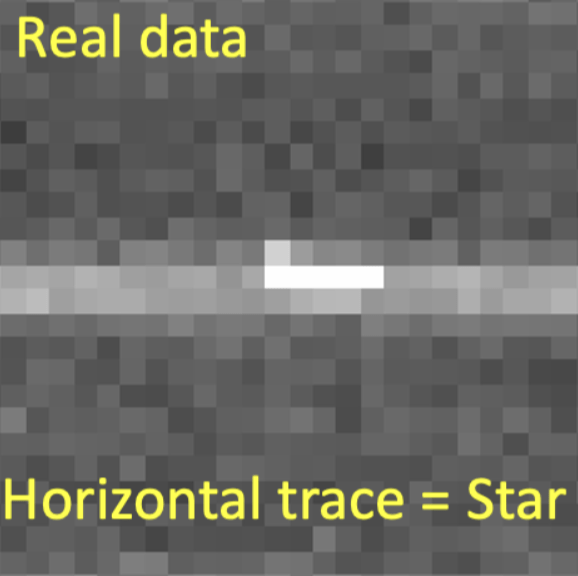
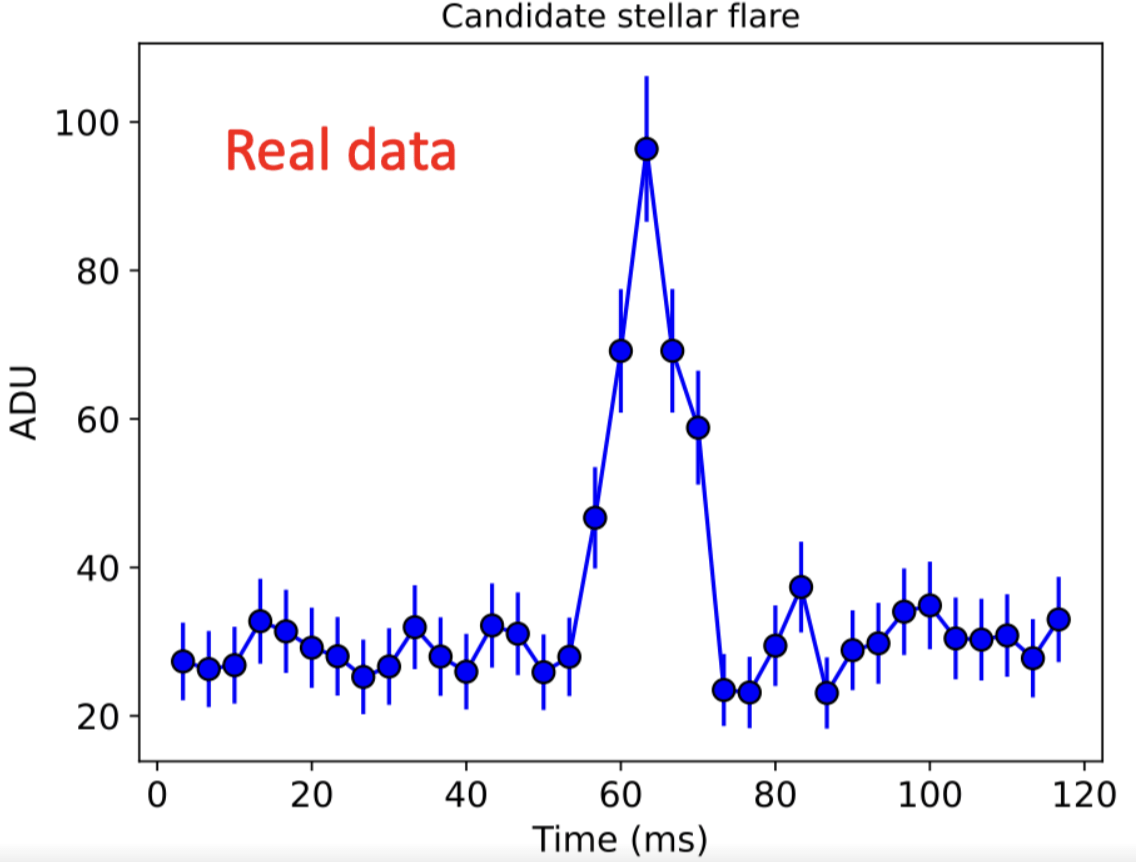
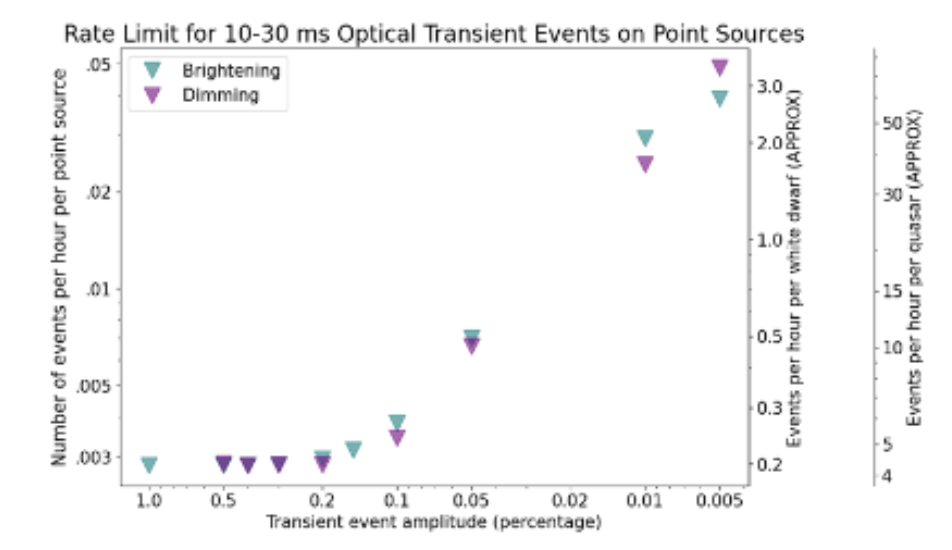
The violent and rapidly varying radiation from black holes, neutron stars, and white dwarfs makes them promising targets for high time resolution imaging.
The rotation, pulsation, and local accretion dynamics of these compact stellar remnants tends to occur on timescales ranging from seconds to milliseconds. Their extreme densities also makes them an excellent testing ground for nuclear, quantum, and gravitational physics.
Thomas and Kahn, 2018
Additional targets
cepheid
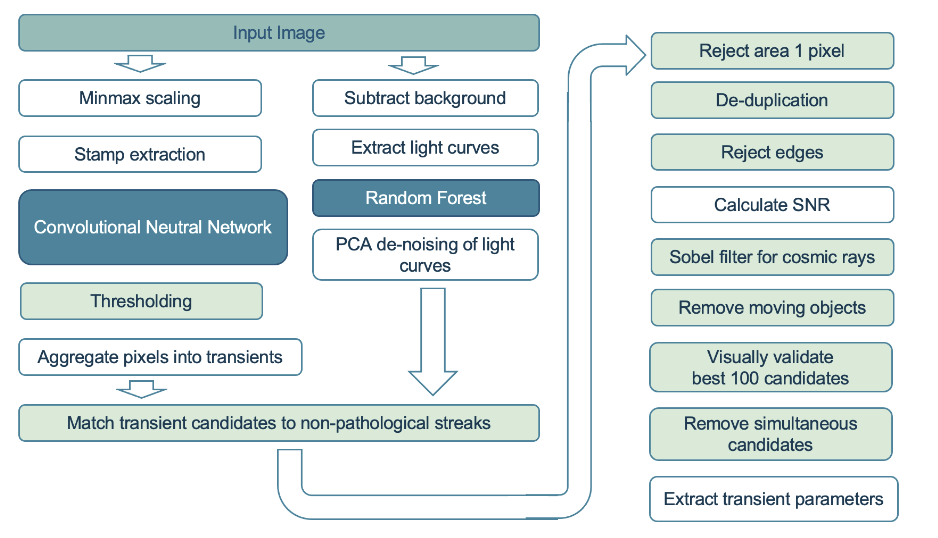
Shar Daniels,
NSF GRFP Fellow
UD DSI Fellow
under ZTF review
Shar Daniels,
NSF GRFP Fellow
UD DSI Fellow
under ZTF review
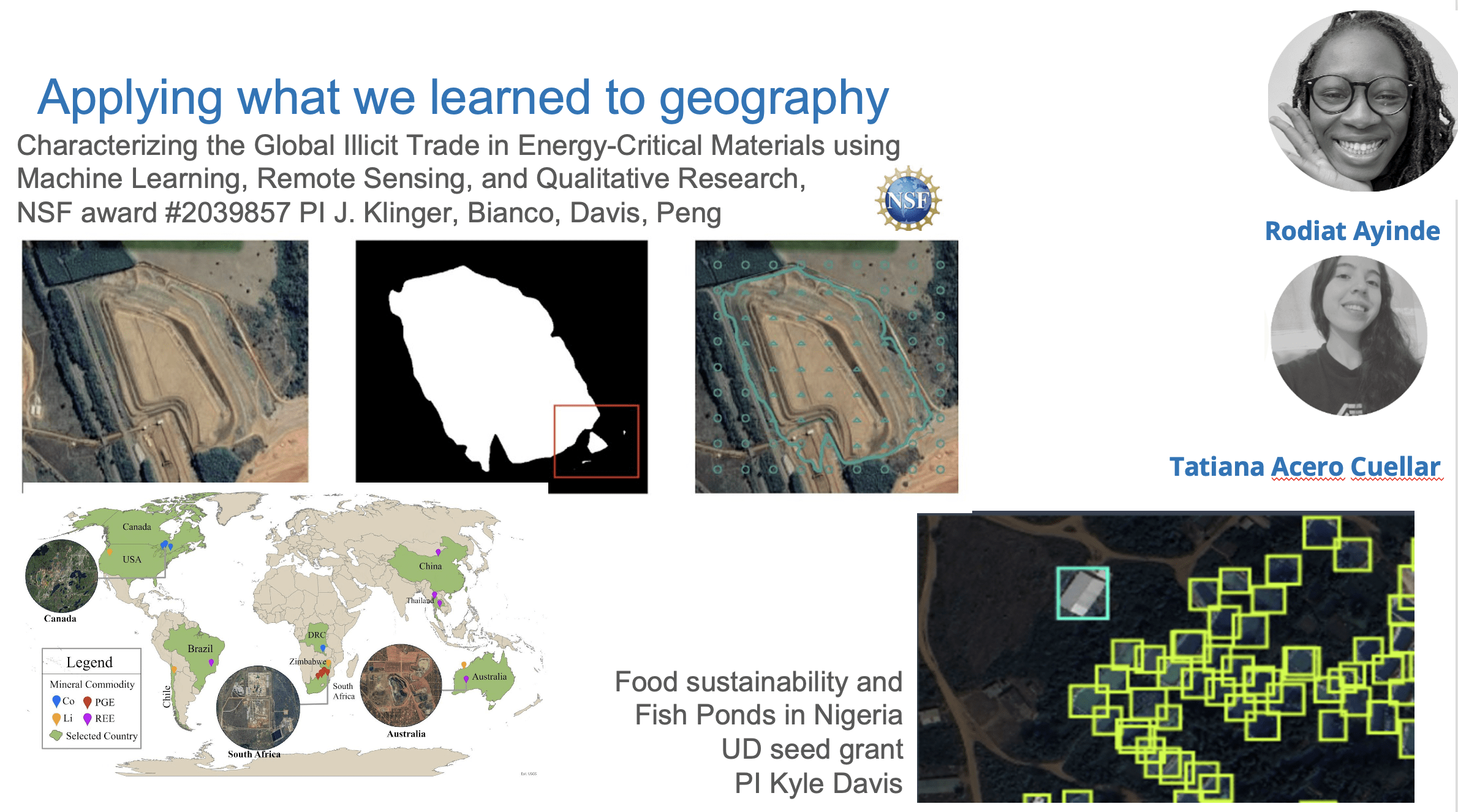
Rodiat Ayinde and Tatiana Acero Cuellar are applying the computer vision models they developed for astronomy to geography
Tatiana Acero Cuellar
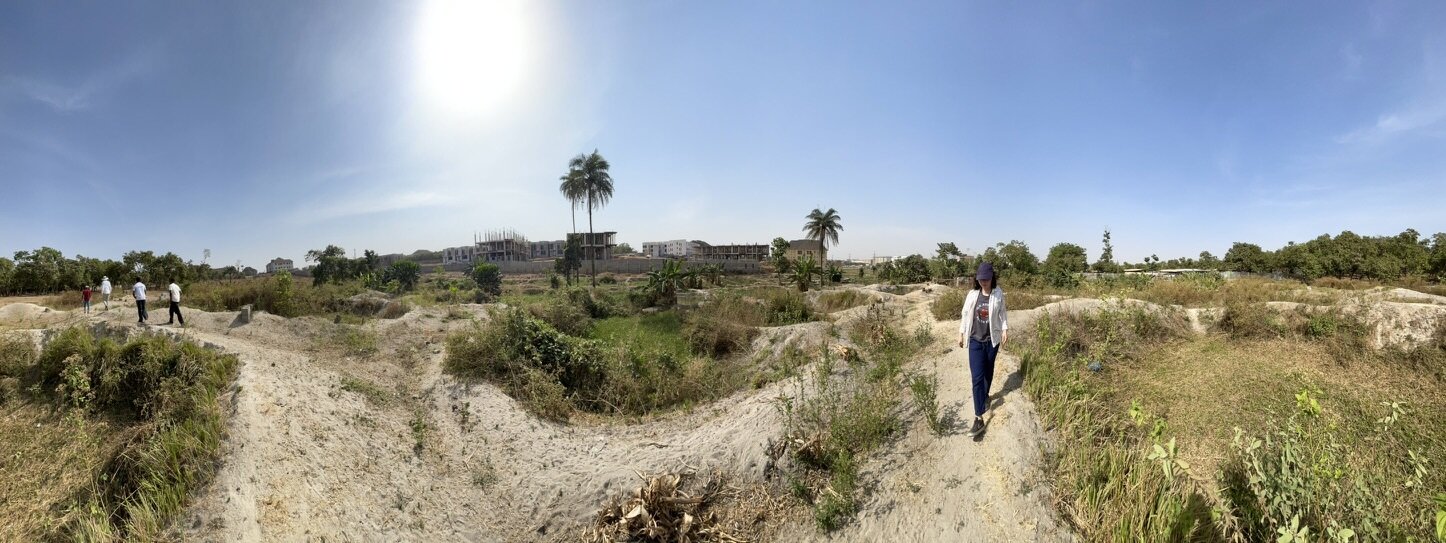
Field Work in Nigeria w Prof. Kyle Davis
Acero-Cuella et al.
Nature Scientific Data, 2026
A national fish pond dataset for Nigeria generated using automated detection and segmentation
Using industry models for light echoes
Using foundation models for out of task lightcurve studies
Caustic maps for cosmological microlensing with AI
Information theory conditioning of autoencoder loss functions for increased accuracy
NASA Jaden Clarke,
Delaware State University,
NASASpace Grant
Somayeh Khakpash, LSST Catalyst Fellow and former postdoc
Adrian Crawford, Ph.D. Candidate at University of Virginia
Rodiat Ayinde, Lincoln graduate, Ph.D. Candidate in New Zealand
Wenxin Wu
University of Delaware China
Dr. Xiaolong Li
JHU posdoc
thank you!
federica bianco
By federica bianco
Opportunities and Challenges of Machine Learning and AI for the next-generation time domain astronomical survey