

























































Andreas Park PRO
Professor of Finance at UofT
Stablecoins, Tokenization, and CBDCs
Instructor: Andreas Park
Only “Permitted Payment Stablecoin Issuers” may issue stablecoins under the GENIUS Act (Greenberg Traurig)
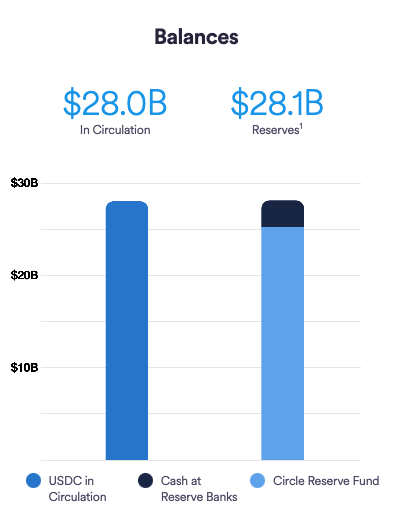
Reserve backing: 1:1 backing of issued stablecoins with “permitted” high-quality liquid assets (e.g. U.S. dollars, short-term Treasuries, repos) (Congress.gov)
Reserves must be held in segregated accounts; no rehypothecation or reuse (WilmerHale)
Monthly disclosure of reserve composition, certified by CEO/CFO and examined by independent public accountant (WilmerHale)
What's in it?
Capital, liquidity, and risk-management standards (including stress testing and diversification) (Gibson Dunn)
Prohibition on paying interest or yield on the stablecoins themselves (Skadden)
AML / Sanctions / BSA compliance (customer due diligence, transaction monitoring, reporting) (Gibson Dunn)
Foreign issuers must satisfy (i) comparable regulatory regime, (ii) register with the OCC, (iii) hold U.S. reserves to meet U.S. customer liquidity demands (Morgan Lewis)
Holder priority in insolvency: stablecoin holders receive priority claim over reserves ahead of other creditors (Greenberg Traurig)
What's in it?
What is money?
store of value
unit of account
method of exchange
What's the relationship of payments and monetary policy?
A
B
\(-\)
0
+
A
B
0
+
\(-\)
Option 1: borrow from BoC
lending rate:
deposit rate:
target rate
target rate\(+\)25bps
target rate\(-\)25bps
A
B
0
+
\(-\)
Option 2: borrow from another bank
target rate
Stablecoins
pulled from Nick Carter's talk on "Will stablecoins serve or subvert U.S. interests?"
JPM coin
USDC
USDT
TUSD
DAI, FEI
Collateral Backed Stablecoins: USDT & USDC
\(\Rightarrow\) 5% over-collateralized
primary market acces: 6 entities only
Collateral Backed Stablecoins: USDT & USDC
primary market acces: 560+ entities
What makes a Stablecoin stable?
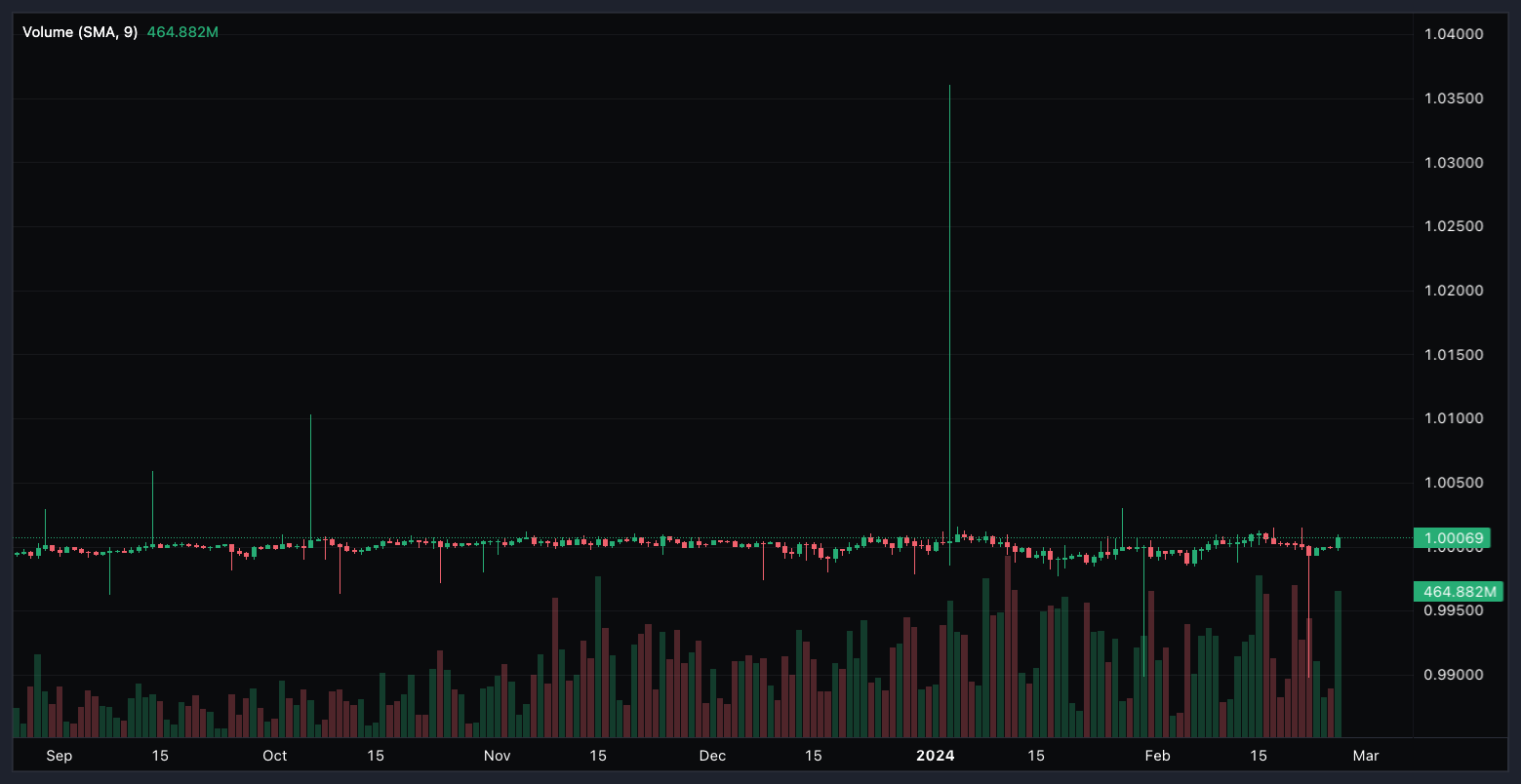
USD-USDT (6 months)
\(\Rightarrow\) need a primary/reference market mechanism to allow for forces of arbitrage to align prices
Arbitrage when price(stablecoin)>$1
collateralized stablecoin
arbitrageur
issuer/ primary market
secondary market
collateralized stablecoin
arbitrageur
Arbitrage when price(stablecoin)<$1
issuer/ primary market
secondary market
A thought experiment for a stablecoin
Option 1a (existing cash):
Option 1b (convert cash to digital):
Option 2 (overcollateralized):
Option 3 (exotic):
What are Apple's options?
Thought experiment: Apple Inc. wants to issue a stablecoin
MakerDAO's DAI
(or: Apple's Option 2)
4 ETH
(1 ETH = $375)
(Oct 15, 2020)
\(\approx\) $1,500
\(\vdots\)
1,500 DAI
(1 DAI = $1)
formally: this smart contract is a collateralized debt position (CDP)
fractional collateral \(\to\) collateralization factor \(=\) 150%
total collateral = $1,500
maximum loan = $1000
overcollateralization = $500
actual loan (example) = $500
buffer = $500
ETH \(\nearrow\) $500
value of ETH collateral = $2,000
maximum loan = $2,000/150%=$1,333
total collateral = $2,000
maximum loan = $1,333
overcollateralization = $667
actual loan (example) = $500
buffer = $500
overcollateralization = $667
new loan capacity= $333
ETH \(\searrow\) $187.5
value of ETH collateral = $750
maximum loan = $750/150%=$500
total collateral = $750
maximum loan = $500
overcollateralization = $250
actual loan (example) = $500
buffer = $0
for reference: former value of collateral
ETH \(\searrow\) $150
value of ETH collateral = $600
maximum loan = $600/150%=$400
total collateral = $600
maximum loan = $400
required overcollateralization = $200
actual loan (example) = $500
buffer = -$100
for reference: former value of collateral
\(\Rightarrow\) triggering of liquidation auction by "keeper"
sell 3.33 ETH=$500=500 DAI
repay $500=500 DAI loan
retain incentive
return remainding ETH to vault owner
borrowers of DAI need to pay interest \(\to\) stability fee
DSR paid on "locked" DAI
total amount of debt (or DAI) outstanding is limited
Sidebar: how is this decided?
\(\to\) special "governance" token MKR
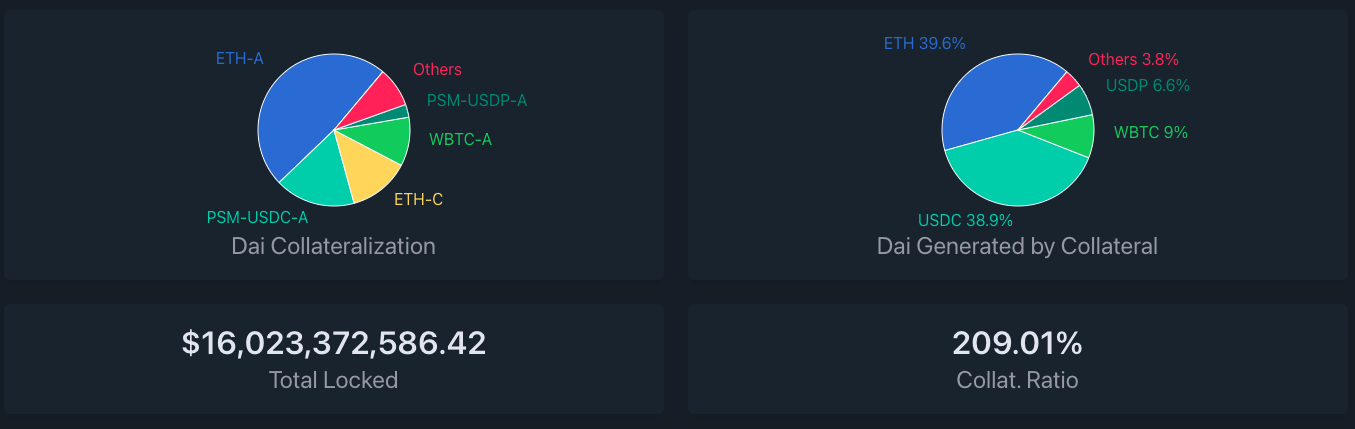
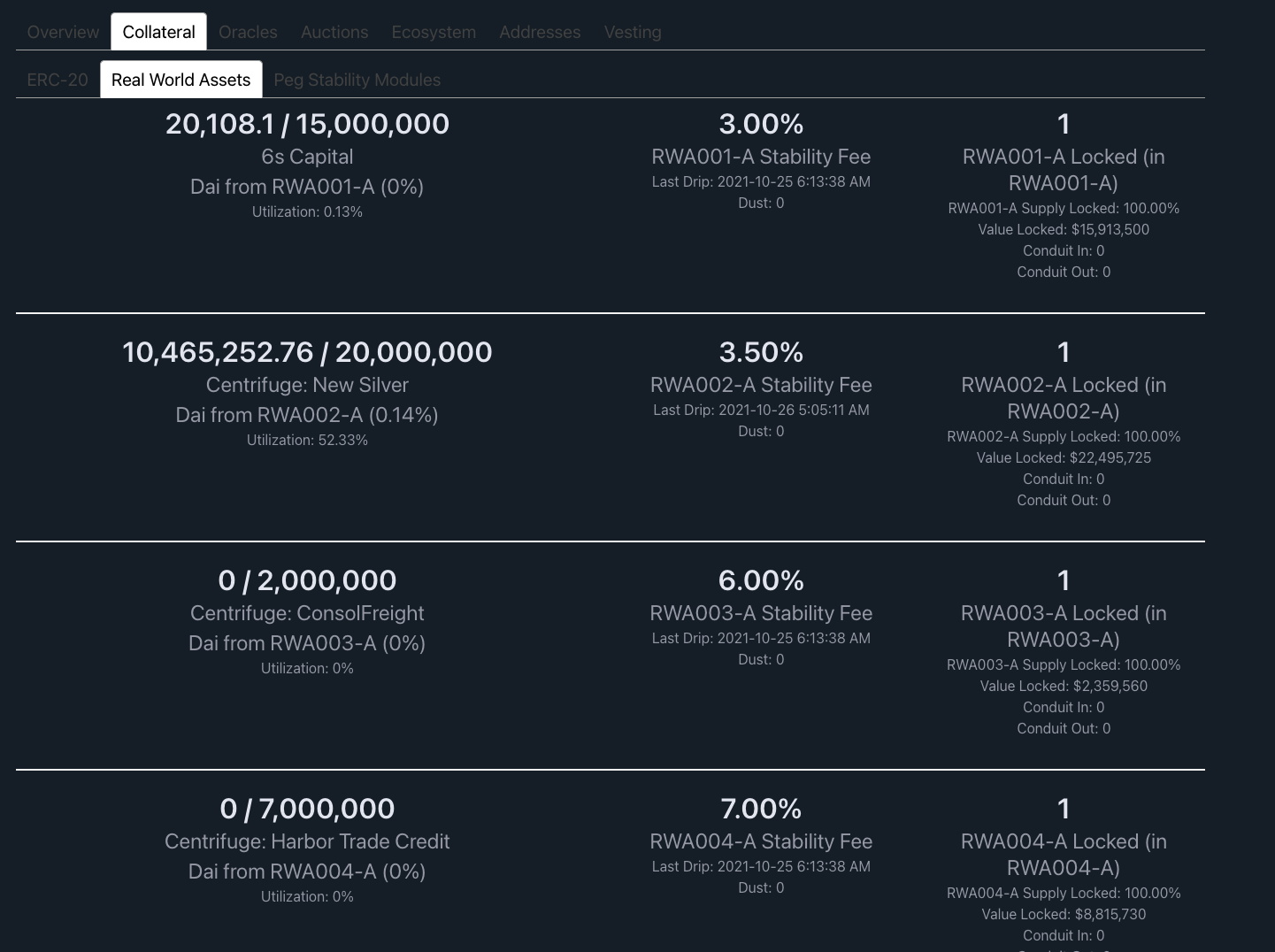
Source: daistats.com (Oct 27, 2021)
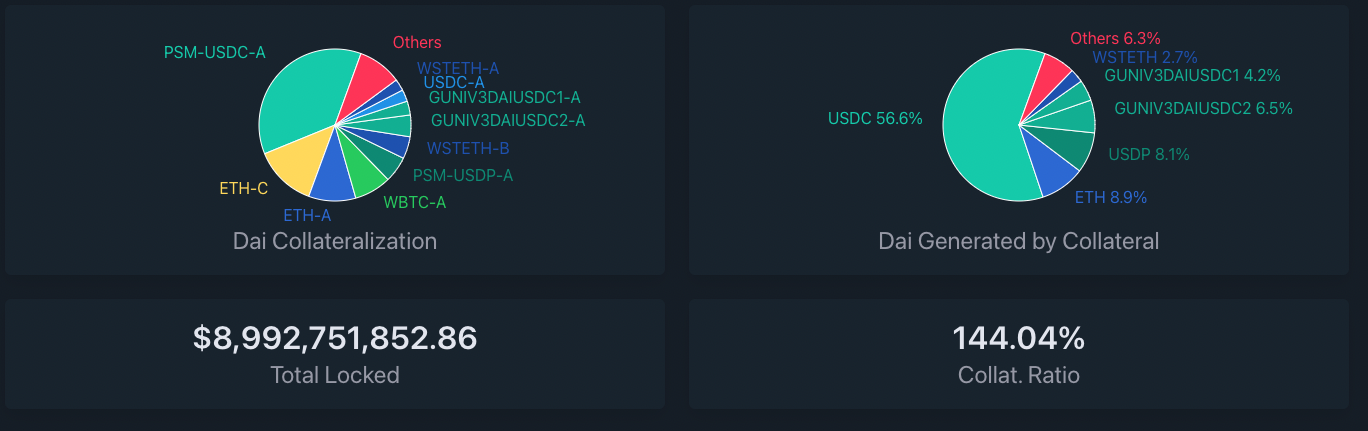
Source: daistats.com (Oct 26, 2022)
The Problem:
The Solution:
Note: In May 2021, ETH prices dropped again by >30% but no drama in DAI
Algorithmic Stablecoin: UST on Terra
(or: Apple's Option 3)
Case 2: price(1 SC) \(<\) 1 FU \(\to\) SC cheap
under-collateralized stablecoin
arbitrageur
issuer
market
Case 1: price(1 SC) \(>\) 1 FU \(\to\) SC cheap
arbitrageur
issuer
The Case of Luna-Terra
exchange LUNA for newly minted UST tokens at the prevailing $ market rate
market
LUNA market
Case 2: price(1 SC) \(<\) 1 FU \(\to\) SC cheap
arbitrageur
issuer
The Case of Luna-Terra
exchange SC for newly minted LUNA tokens at the prevailing $ market rate
market
LUNA market
Case 2: price(1 SC) \(<\) 1 FU \(\to\) SC cheap
DISCUSSION
POTENTIAL PROBLEMS
Case 2: price(1 SC) \(<\) 1 FU \(\to\) SC cheap
Case 2: price(1 SC) \(<\) 1 FU \(\to\) SC cheap
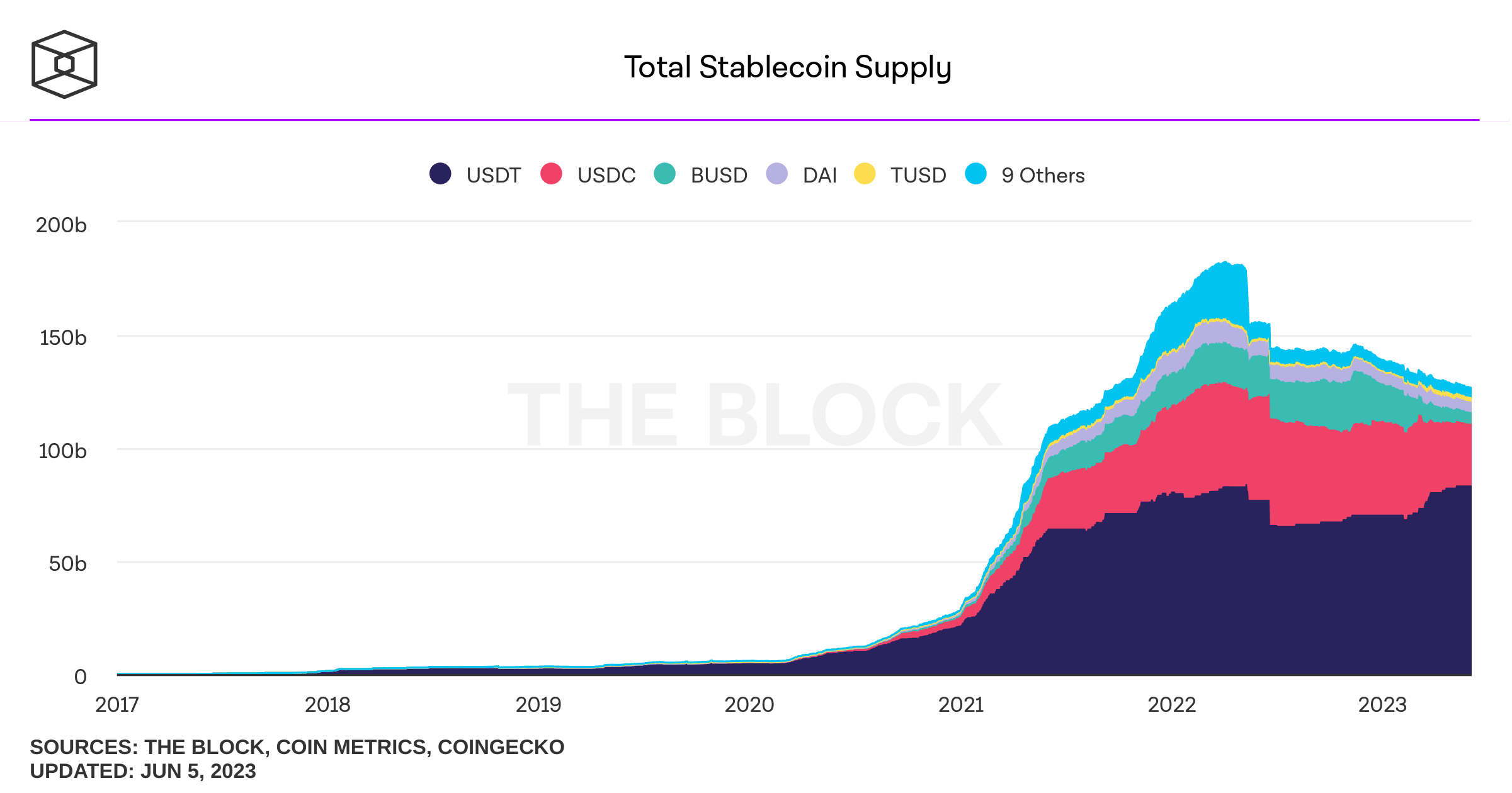
Stablecoin use cases
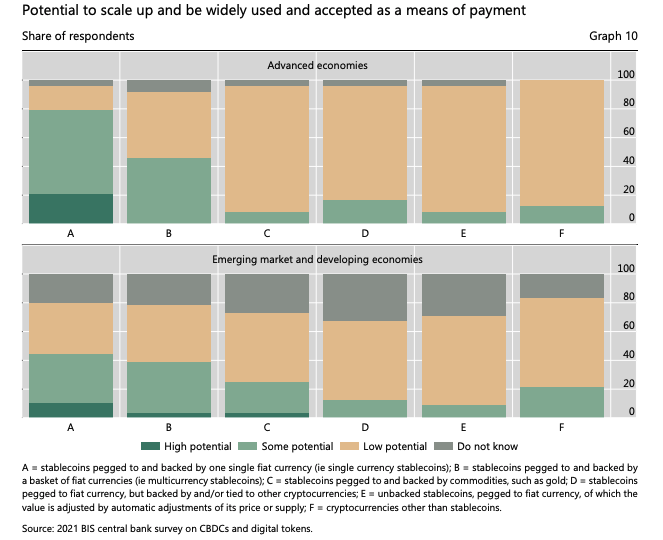
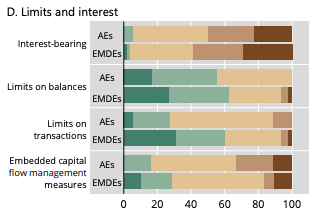
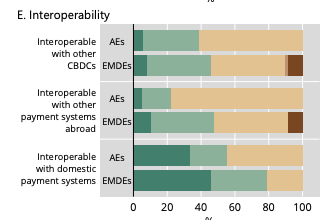
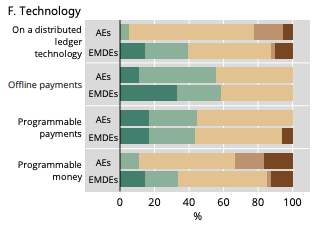
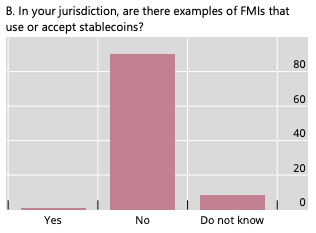
What do central bankers think about stablecoins?
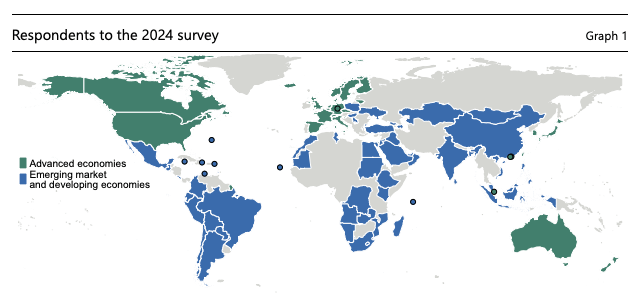
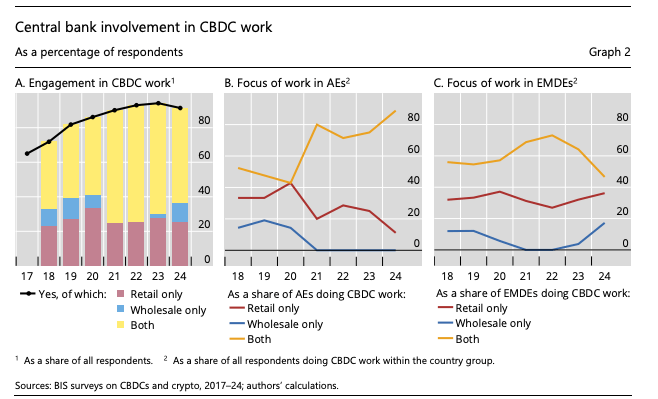
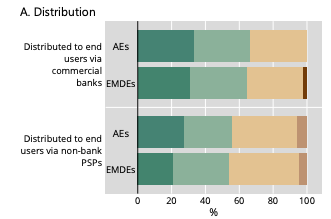
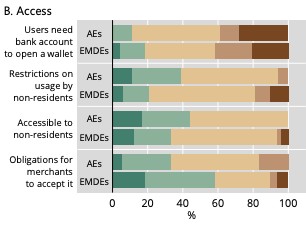
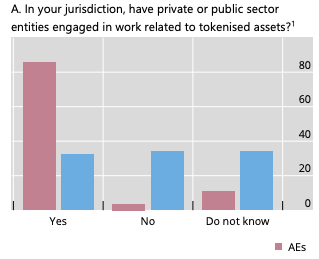
BIS Survey of Central Banks:
What do central bankers think about stablecoins?
Stablecoin use cases
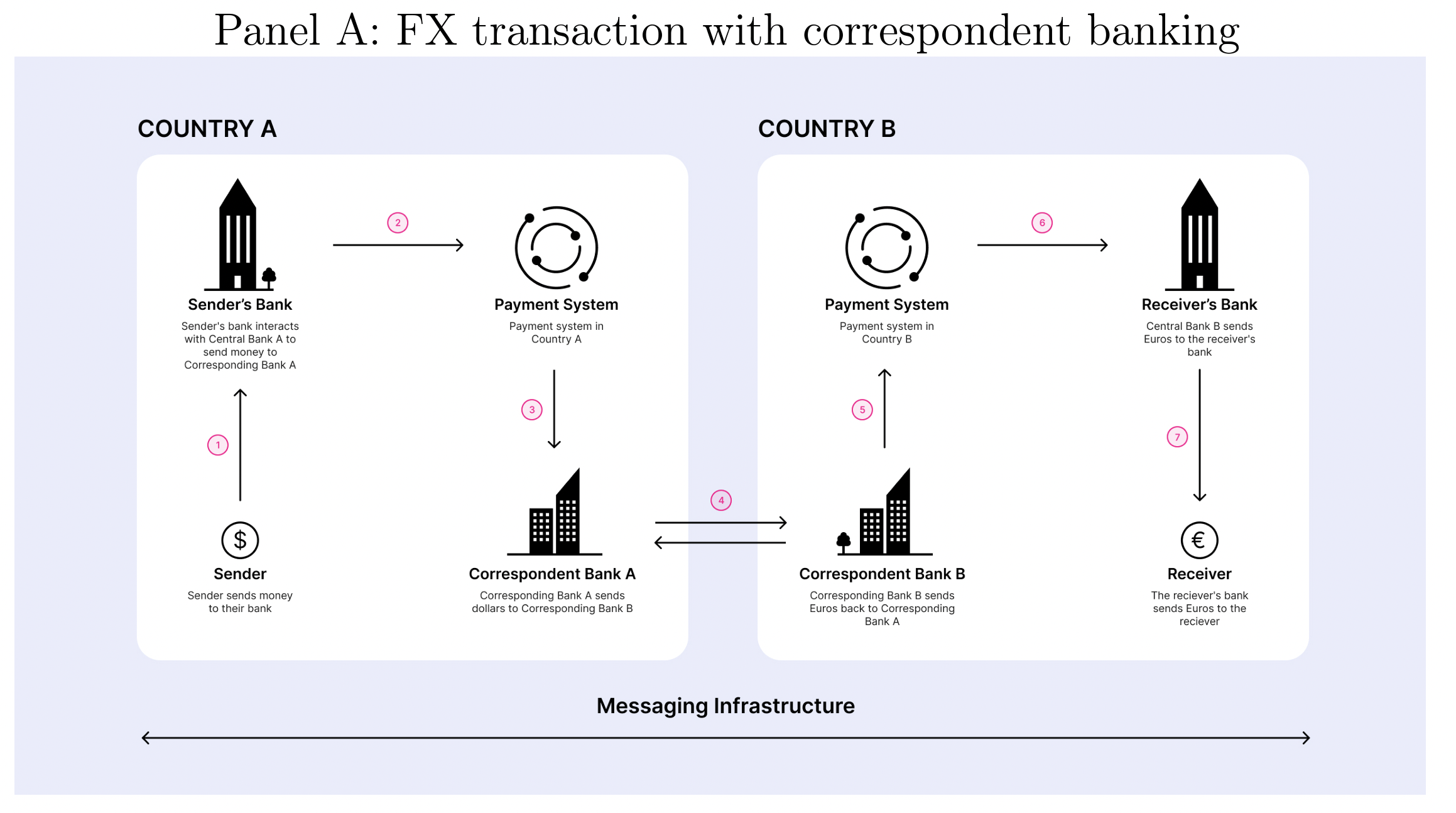
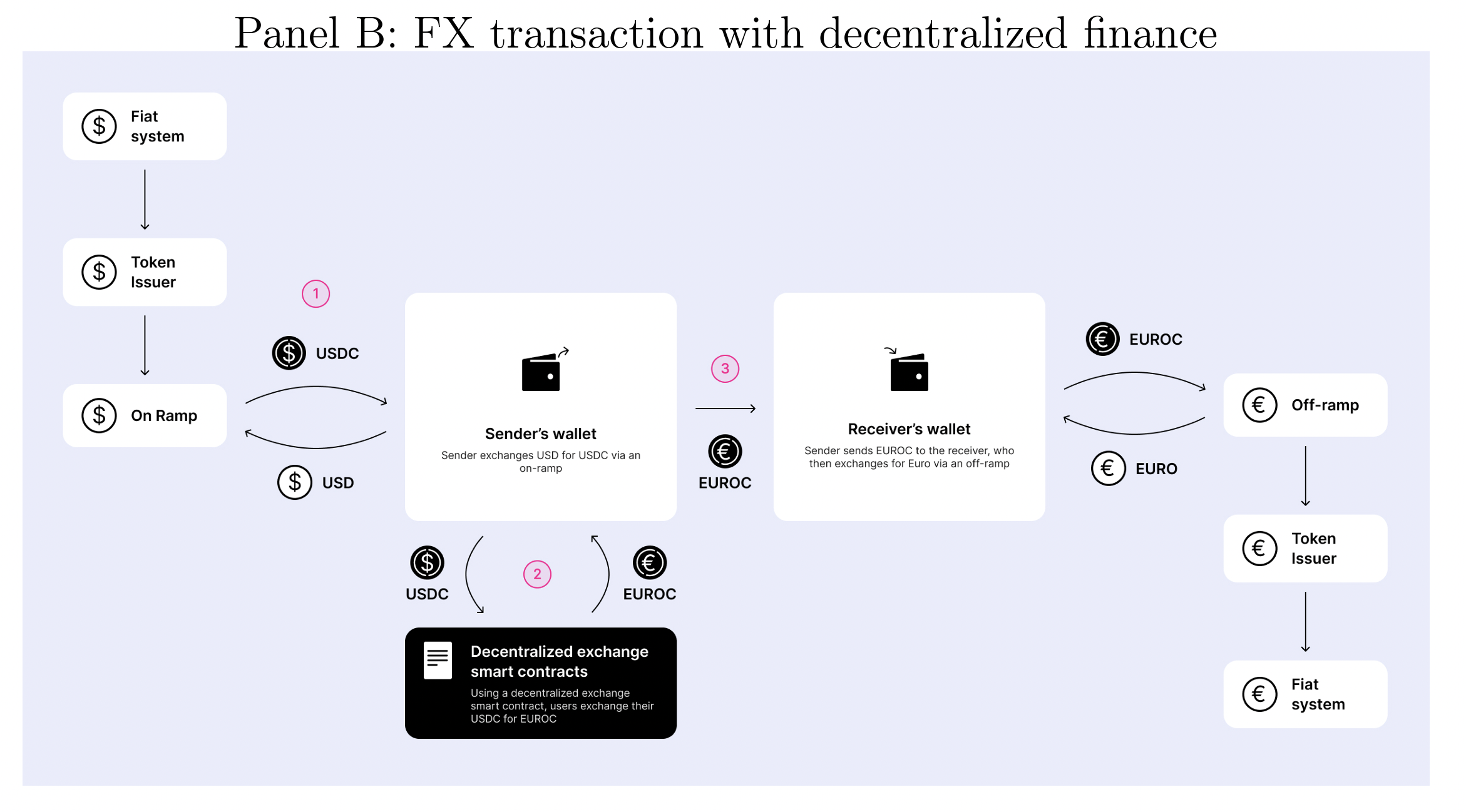
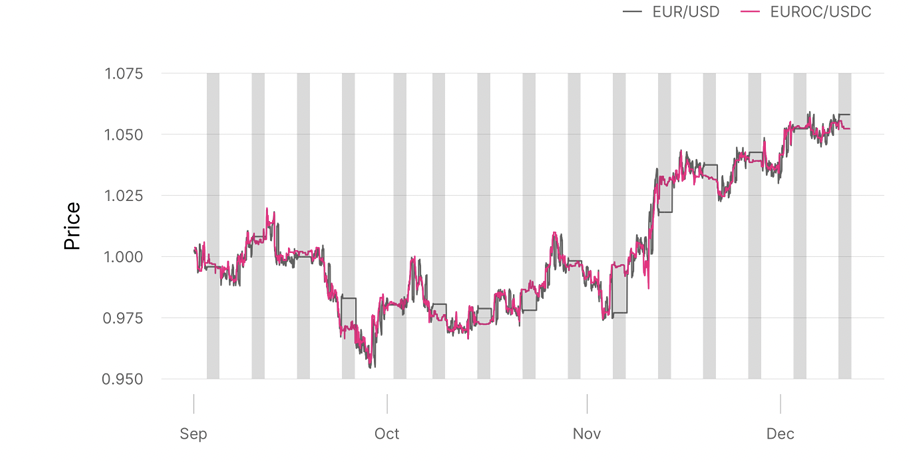
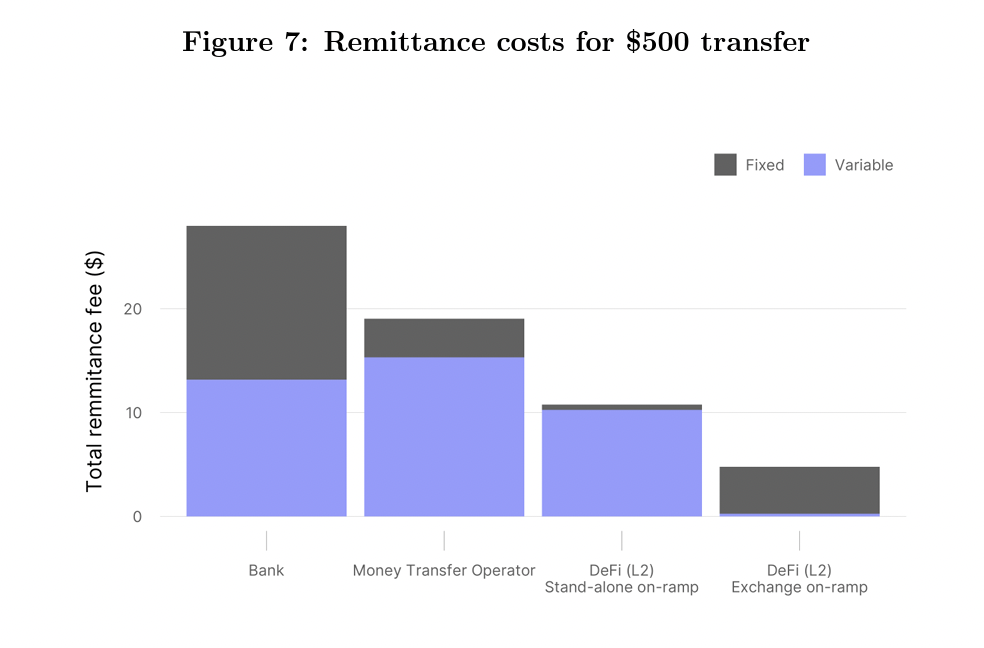
Source: On-chain Foreign Exchange and Cross-border Payments by Austin Adams, Mary-Catherine Lader, Gordon Liao, David Puth, Xin Wan (2023) [team from UniSwap Labs]
DeFi fees:
Risks to Financial Stability
Broad Blockchain Risks to Financial Stability
Lending capacity & Monetary transmission
Deposit mobility
AML/CFT/Sanction evasion
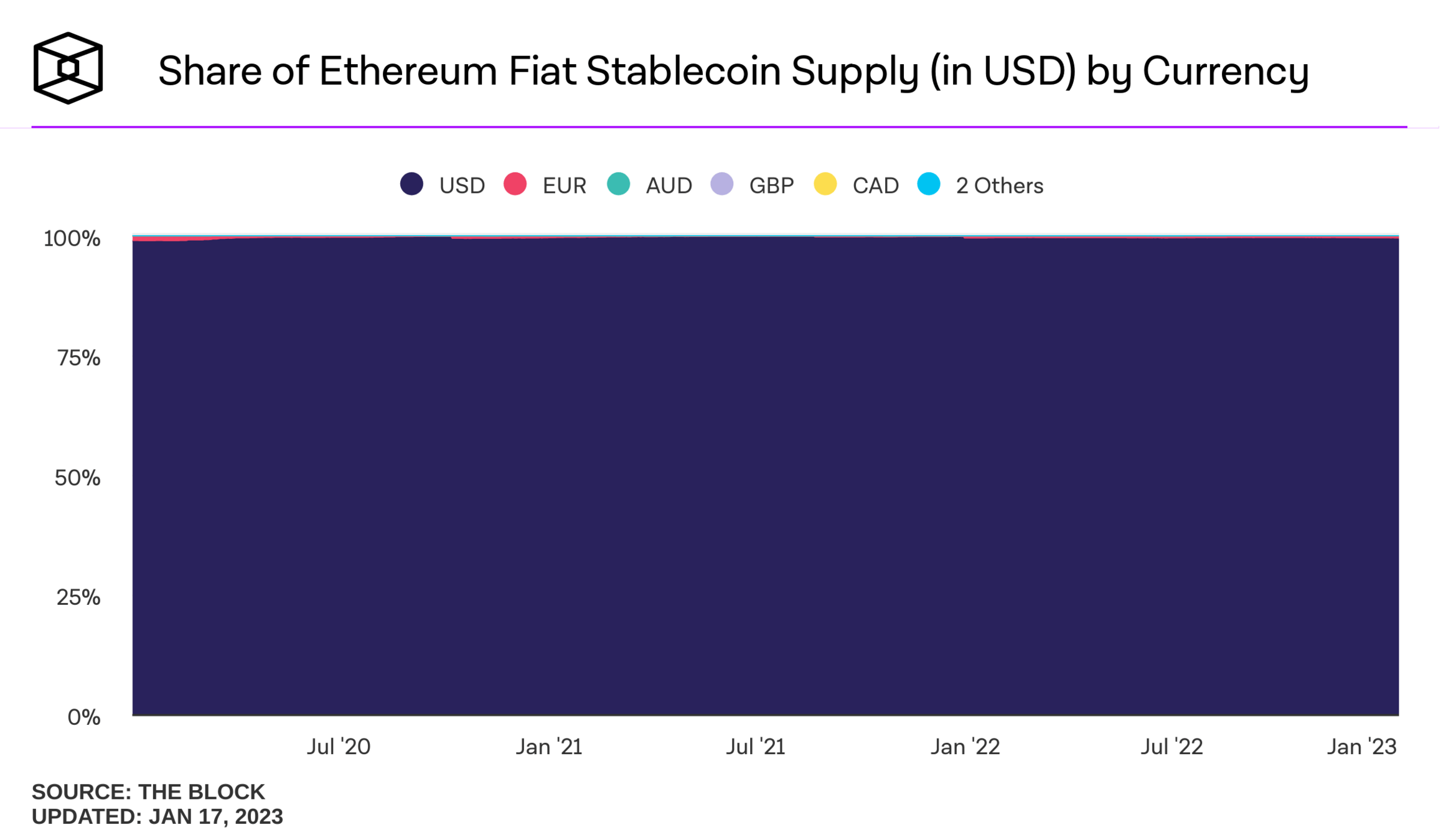
Dollarization
Failures/runs
New cyber-risks
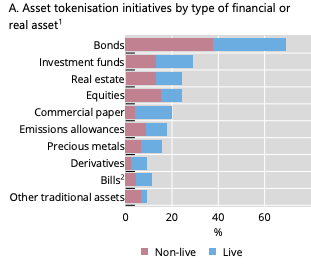
Asset Tokenization
Key Institutional Features of Equities
Institutional Differences: Crypto Asset Ownership, Accounts, Wallets, and Self Custody
Smart contract accounts
Externally owned accounts
controlled by private keys
private
key
public
key
(seed phrase)
public
address
wallet = software to keep and use private keys
Blockchain Ownership Attribution
Institutional Differences: The Investment Process
issuers
investors
services
needed & provided
A general purpose value management infrastructure:
intermediaries
separate institutions
The blockchain reality:
new institutions
will emerge
Asset Tokenization or
"The Creation of Asset-Linked Tokens"
Tokenization of stocks is nothing new: American Depository Receipts
foreign investor/
issuer
domestic bank with foreign representation
ADR issuing bank handles
Is this a workable model for blockchain- tokenization of existing assets?
foreign representation of domestic bank/ its custodian
domestic depository bank
S.E.C.
registration with form F-4
domestic broker
issues and cancels ADRs
domestic investor
lets investors own and trade ADRs
domestic
market
deposits shares
Blockchain Tokenization has many options
existing investor/
issuer
token issuance platform
investor
wallet
instruct to create tokens
deposits shares
custodian bank
deposits shares
creates tokens and sells to investors
centralized or decentralized
market
S.E.C.
registration
Token Standards
Some basic facts
Fact 1: Ownership of tokenized asset can be
Fact 2: By default issuers do not know who owns their tokens
Fact 3: Investors who hold tokens in DeFi smart contracts have fluctuating holdings.
Fact 4: General ownership restrictions are almost impossible to enforce, and transfer restriction would negate advantages of tokenization
Problems that require solving
ADR issuing bank handles
How are these functions performed with crypto-assets?
Fact 2: By default issuers do not know who owns their tokens
Some remedies for communication and dividends
All this needs a legal framework that adapts to a decentralized, digital world
Problems that require solving
ADR issuing bank handles
Remaining FIs handle
Fact 4: General ownership restrictions are almost impossible to enforce, and transfer restriction would negate advantages of tokenization
Legal and regulatory frameworks currently rely on intermediaries and are not prepared for self-custody
Broader Implications for the Financial Industry and the Financial System
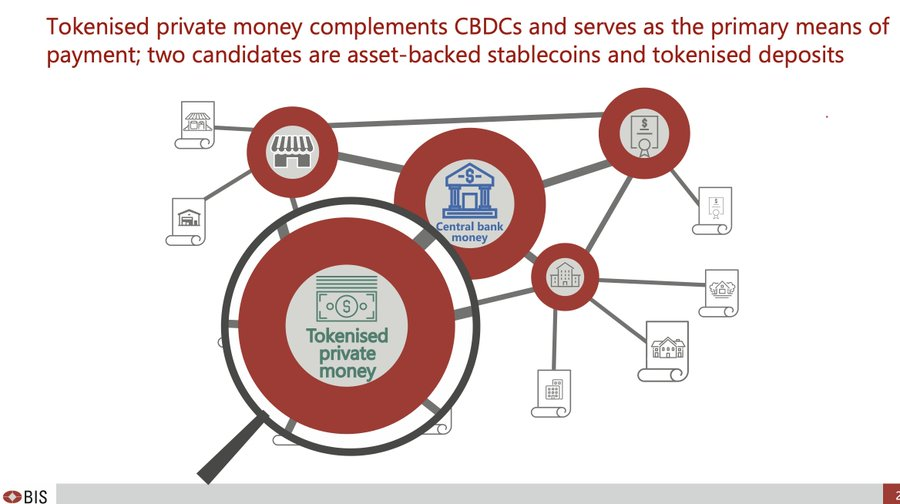
Asset tokenization would likely create a massive expansion in demand for stablecoins
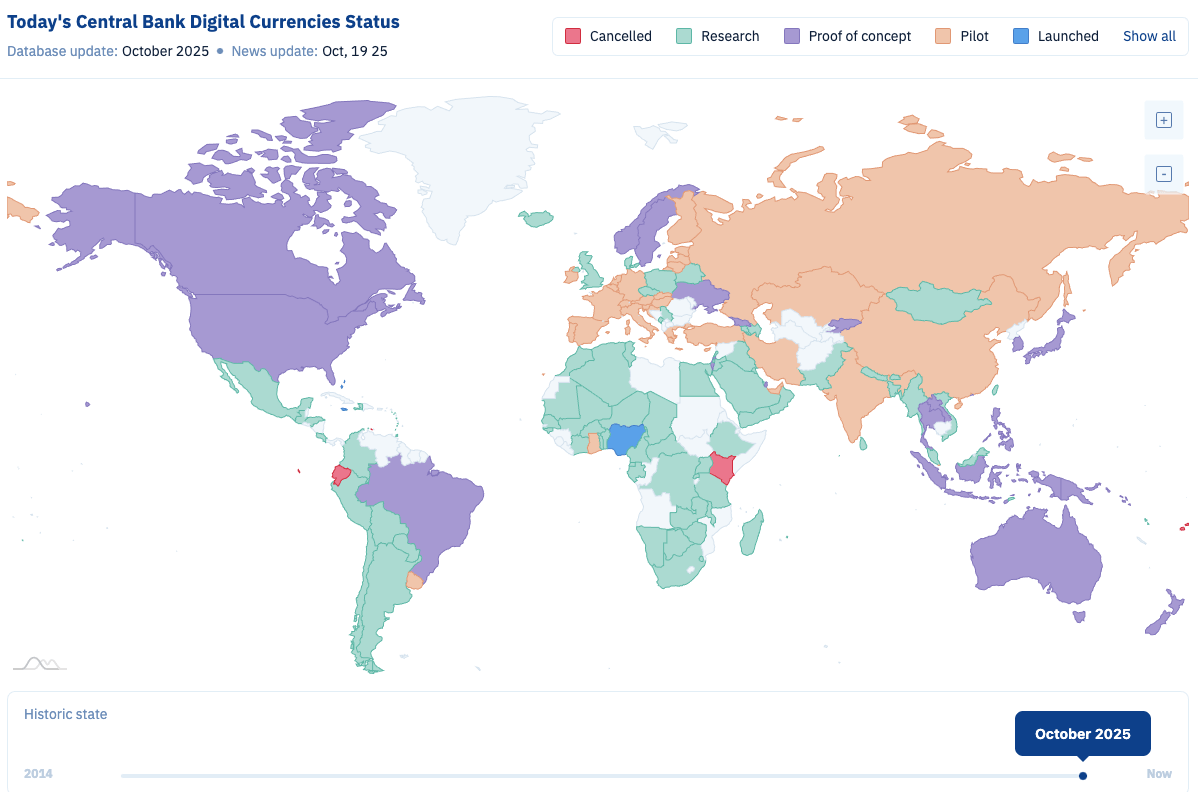
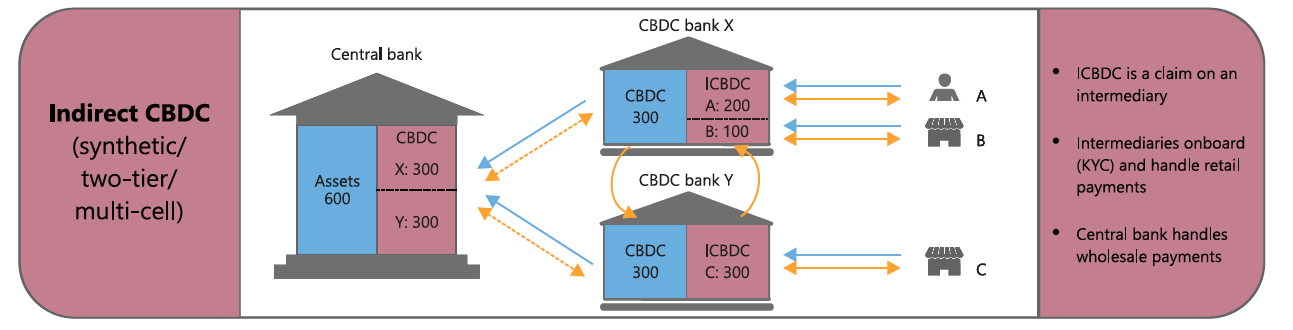
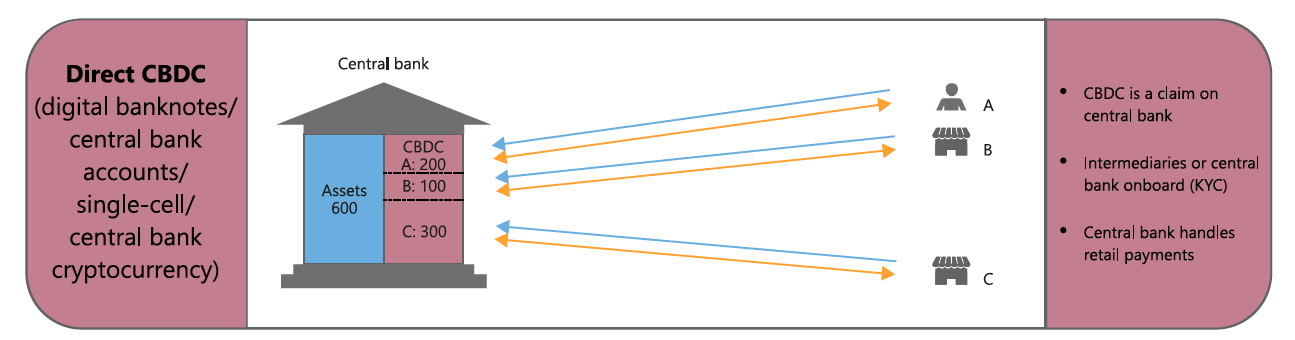
Central Bank-Issued Digital Currencies
Evolution
2008
2014/5
2019
2020 (announced)
2025 (framework
Source: CBDCtracker.org
Source: BIS Paper #159, 2024 BIS Survey on CBDCs (published 2025)
Source: BIS Quarterly Review, March 2020
The Year is 2008: what the Toronto a la cart program teaches us about CBDCs
Cautionary tales for central bank innovation
what people want
what we got
Features of Digital Money
fast money
CBDC run by
Central Bank
CBDC on new communually run system
bank-issued stablecoin on public blockchain
|
What? |
||||
|---|---|---|---|---|
| 24/7 instantaneous | ||||
| borderless | ||||
| programmable | ||||
| privacy | ||||
| p2p | ||||
| no commercial 3rd party | ||||
| nominal fee |
By Andreas Park