






Designing and building systems that organize data for future analysis.
Distinctions
Before Big Data
Life was simple-ish
Data amount was small (mostly limited to a single organization)
There wasn't a clear distinction between Data Scientist and Data Analyst (both did Excel spreadsheets)
Data was mostly processed with Data Marts and OLAP cubes
A single architect could be responsible for:
Data Schema
Star schema
Data Security
Data Management
SQL was the King of the Land
After Big Data
Life got more interesting :)
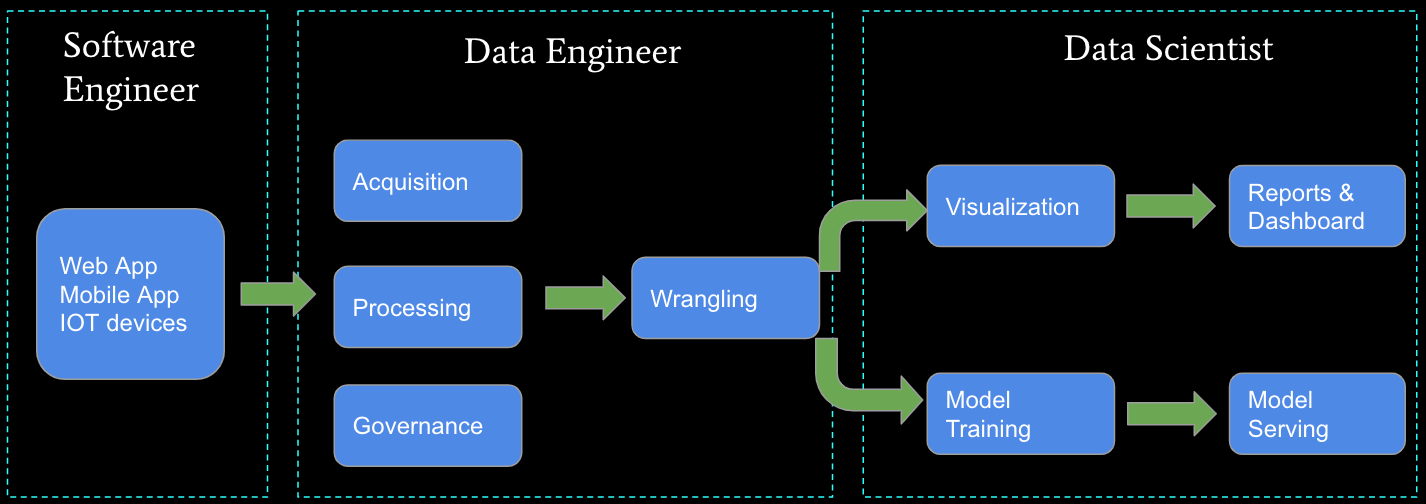
Now we have clear pipelines between speicalists. Data Engineering -> Data Science -> Data Analytics
Data sources couldn't store the volume
Data analytics tools didn't have enought speed
Data Analysts no longer have Excel and SQL :( (This is due to NoSQL and MapReduce patterns)
Now we have Data Engineering Architect, Data Security Architect, Data Science Architect, Data ....... Architect
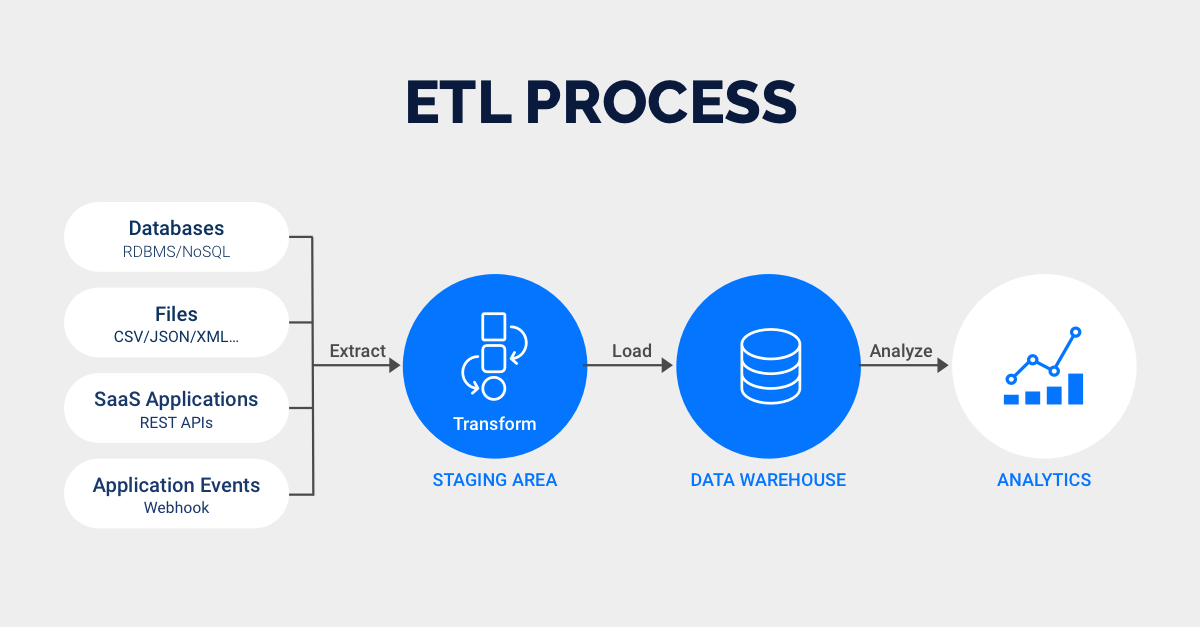
ETL (Extract, Transform, Load)
Data classification
Raw Data
Unprocessed data in arbitrary form (e.g. JSON, CSV)
Processed data
Raw data with schema applied
Stored in pipelines
Cooked data
Processed data that has to be summarized and decided upon
Data Properties
Volume
How much data you have
Velocity
How fast is data getting to you
Variety
How different is your data
Veracity
How reliable and clean is your data
Data processing methods
Batch processing
Under the batch processing model, a set of data is collected over time, then fed into an analytics system. In other words, you collect a batch of information, then send it in for processing.
Stream processing
Under the streaming model, data is fed into analytics tools piece-by-piece. The processing is usually done in real time.